Cat Coat Patterns and ColorsHow genetics paints every cat you meet
Cats come in a surprisingly small set of base colors, black and orange, which a handful of genes then dilute, mask, stripe, spot or splash with white. Almost every coat you see, from tuxedo to calico to Siamese points, is one of these building blocks combined with another. Color and pattern describe the coat, not the breed, so the same look turns up in pedigreed cats and in everyday domestic shorthairs.
Cat Colors and Patterns A to Z
The two pigments behind every coat
Every cat coat is built from just two pigments. Eumelanin produces black and its lighter relatives, chocolate and cinnamon. Pheomelanin produces orange, which breeders call red. Everything else is a question of how much pigment is made, where it goes on each hair and which parts of the body get any at all.
The orange gene sits on the X chromosome. That single fact explains why orange cats lean male and why calicos and tortoiseshells are nearly always female. A cat that carries one orange and one non-orange version of the gene shows both colors in patches.
On top of these two pigments sit a few switches. One decides whether hairs are banded (tabby) or solid. One lightens the color (dilution). One adds white patches, one restricts color to the cooler points of the body, and one removes pigment from the base of each hair. Learn these and you can read almost any cat.
Solid colors
A solid cat has the same color from root to tip with no visible stripes. For black-based cats this needs two copies of the recessive non-agouti gene, which switches off the banding that normally creates tabby markings. Solid black is the classic example, with chocolate and cinnamon as rarer versions mostly seen in Oriental-type breeds such as the Oriental Shorthair and Havana Brown.
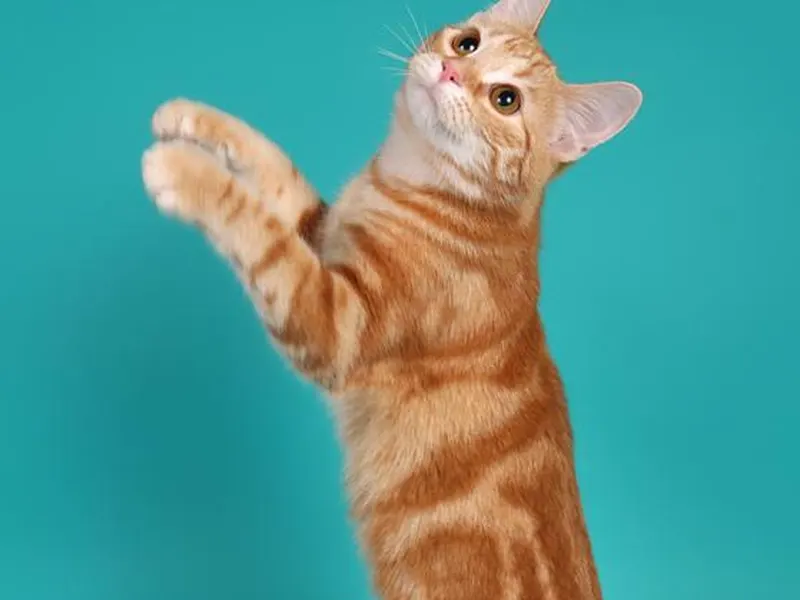
There is no truly solid orange cat. Orange pigment ignores the non-agouti switch, so even the deepest red cat usually shows some tabby striping, especially on the legs and tail.
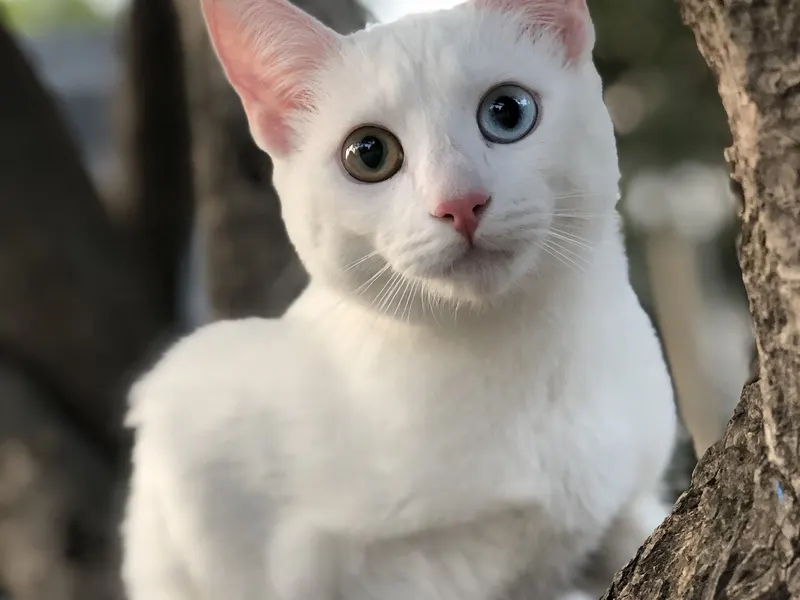
Solid white is a different story. The dominant white gene (W) stops pigment cells from reaching the skin and hair at all, hiding whatever color the cat carries underneath. It is linked to deafness, especially in white cats with one or two blue eyes.
Dilute colors
The recessive dilution gene (d) clumps pigment unevenly inside the hair, so less light is absorbed and the color looks softer. A cat needs two copies to show it, so two full-colored parents can still produce a dilute kitten if both carry one hidden copy. Dilution turns black into blue (gray), orange into cream, chocolate into lilac and cinnamon into fawn.
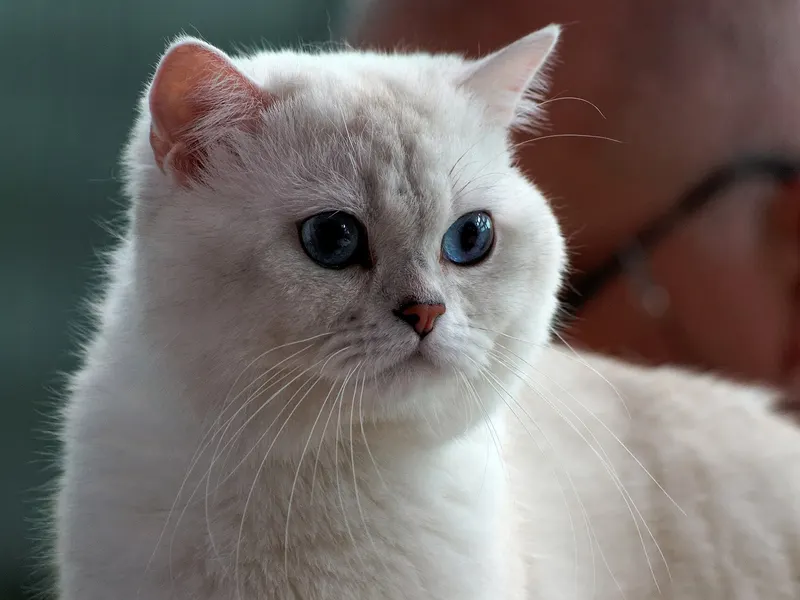
Gray cats such as the Russian Blue, Chartreux and British Blue are all dilute black. Dilution works with every pattern, which is why you also see dilute calicos in gray, cream and white.
Tabby and its four types
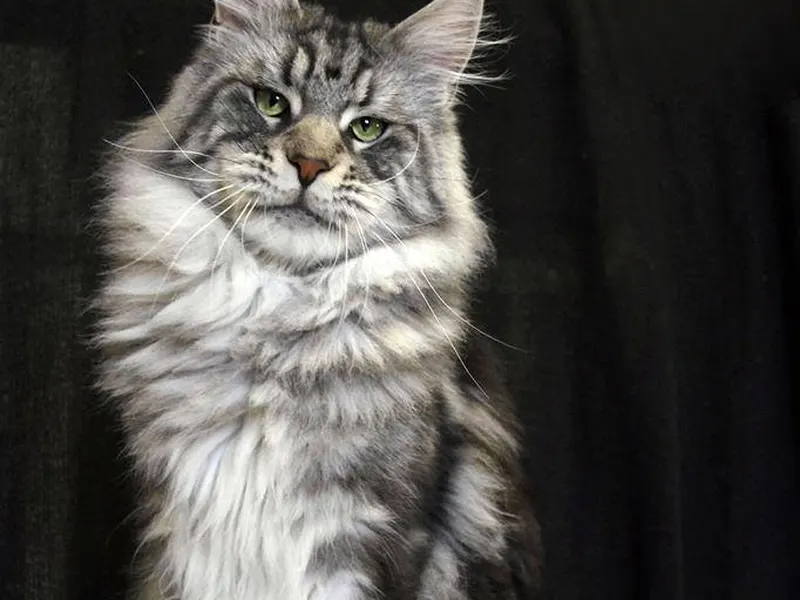
Tabby is the default wild-type coat, inherited from the African wildcat. The agouti gene bands each hair with light and dark pigment, and separate tabby genes then arrange the dark areas into a pattern. Every tabby has an "M" on the forehead.
- Mackerel: narrow vertical stripes down the sides, like a fish skeleton.
- Classic: broad swirls with a bullseye on each flank, also called blotched.
- Spotted: stripes broken into spots, seen in the Egyptian Mau, Ocicat and Bengal.
- Ticked: almost no body stripes, just banded hairs, as in the Abyssinian.
Orange cats nearly always show tabby markings, because the orange gene overrides the non-agouti gene that would otherwise hide them. Tabby can also be brown, gray, cream or silver, and it combines freely with white, so tabby-and-white cats are common too.
Bicolor and tuxedo
White patches come from the white spotting (piebald) gene, S. One copy usually gives a modest amount of white on the chest, paws and face. Two copies tend to give more white. The amount varies a lot, from a small locket to the "van" pattern, where color is limited to the head and tail.
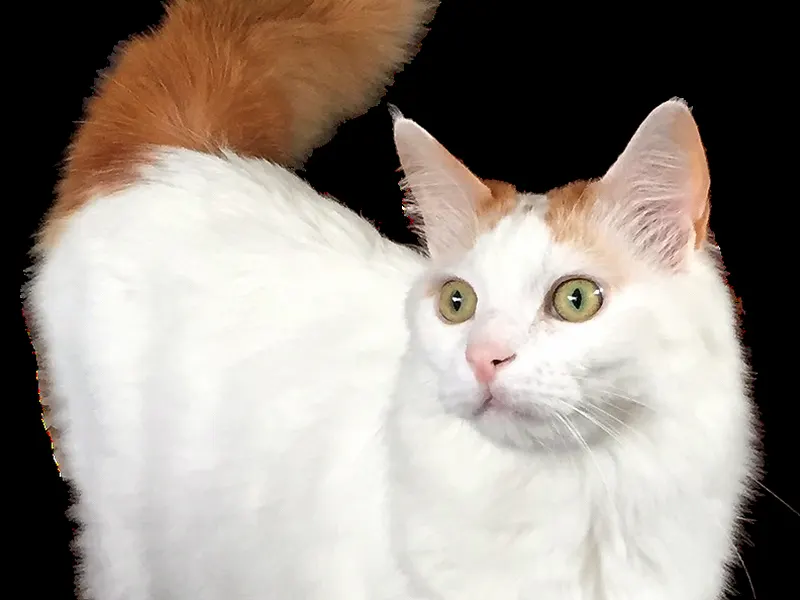
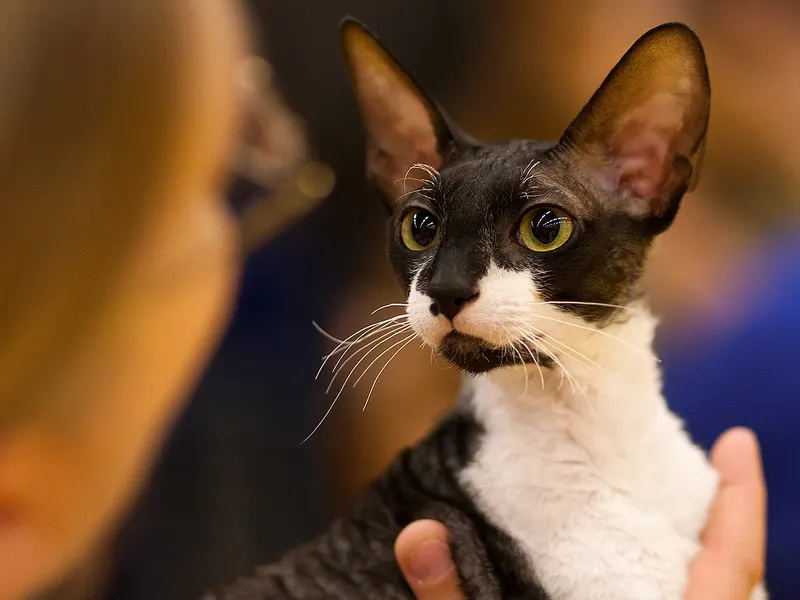
A black cat with a white chest, paws and often a white muzzle is called a tuxedo. Any color can be combined with white, so you also see orange-and-white, gray-and-white and tabby-and-white cats. Other informal names include cow cat for a mostly white cat with black patches and mask and mantle for color covering the head and back like a cape.
White areas usually grow over pink, unpigmented skin, so white ears and noses can sunburn in strong sun.
Tortoiseshell and calico
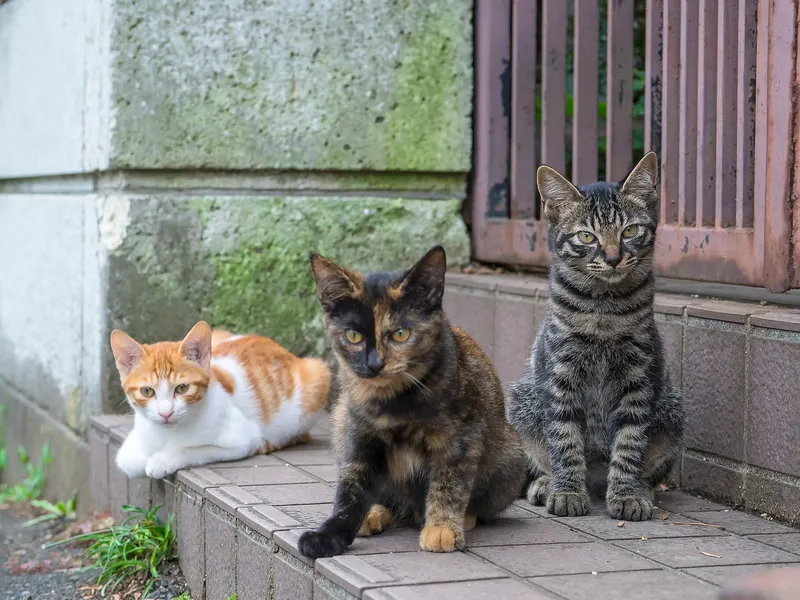
A tortoiseshell mixes black and orange in a brindled or patchy coat with little or no white. A calico is the same black and orange mix plus white spotting, which tends to separate the colors into larger, cleaner patches.
Both depend on having two X chromosomes, one carrying orange and one not. Early in development each cell randomly switches off one X, so different skin patches end up producing different colors. That is why nearly all torties and calicos are female. A tortie with tabby markings in the colored areas is often called a torbie, and a calico with tabby markings a caliby.
Colorpoint
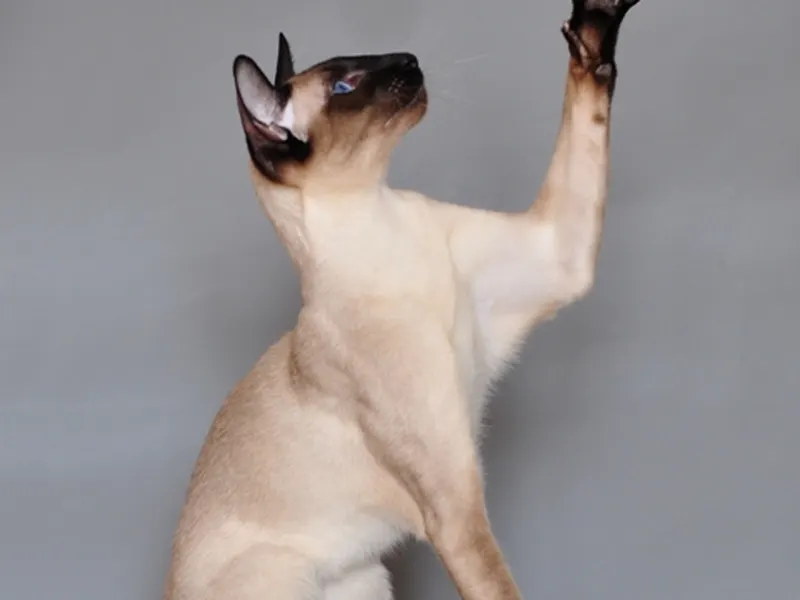
Colorpoint cats have a pale body with darker ears, face, paws and tail. The Siamese allele of the albino gene makes a heat-sensitive enzyme that only produces full pigment on cooler parts of the body. Kittens are born almost white and their points darken over the first months.
Because body temperature shapes the pattern, points can darken with age and in cold weather. Breeds known for points include the Siamese, Himalayan, Ragdoll, Birman and Balinese, and nearly all pointed cats have blue eyes. A related allele gives the Burmese its sepia shading, and combining the two produces the mink coat of the Tonkinese.
Smoke, shaded and silver
The dominant inhibitor gene (I) stops pigment from forming at the base of each hair, leaving a white or silver undercoat. On a solid cat this creates a smoke: the cat looks solid at rest, but a pale undercoat flashes through when the fur parts.
On a tabby the same gene creates a silver tabby with crisp black markings on a pale ground. When only the very tips of the hairs carry color, the result is called shaded, and with the least color of all, chinchilla or tipped. These looks are common in Persians, British Shorthairs, American Shorthairs and the Burmilla.
Cat Breeds in These Colors and Patterns
 British ShorthairLarge · 7–17 lb
 SiameseMedium · 6–14 lb
 Maine CoonLarge · 8–18 lb
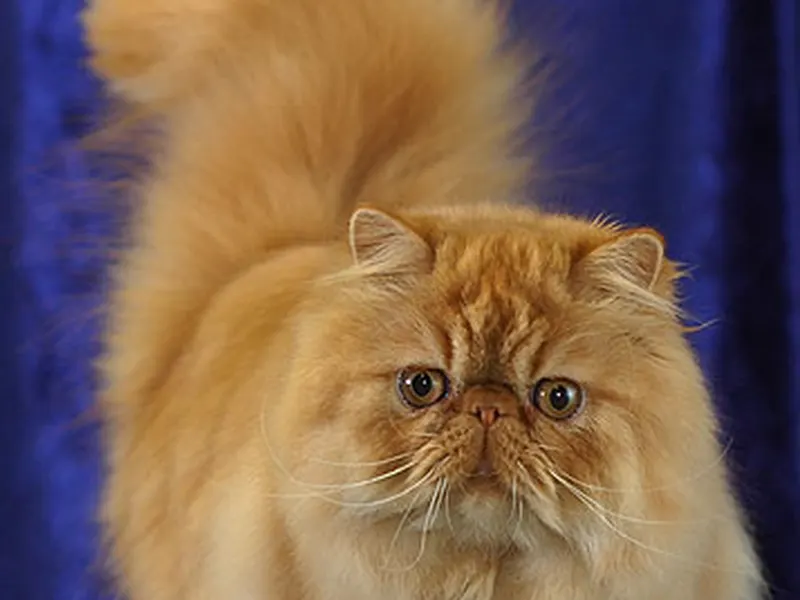 PersianMedium · 7–12 lb
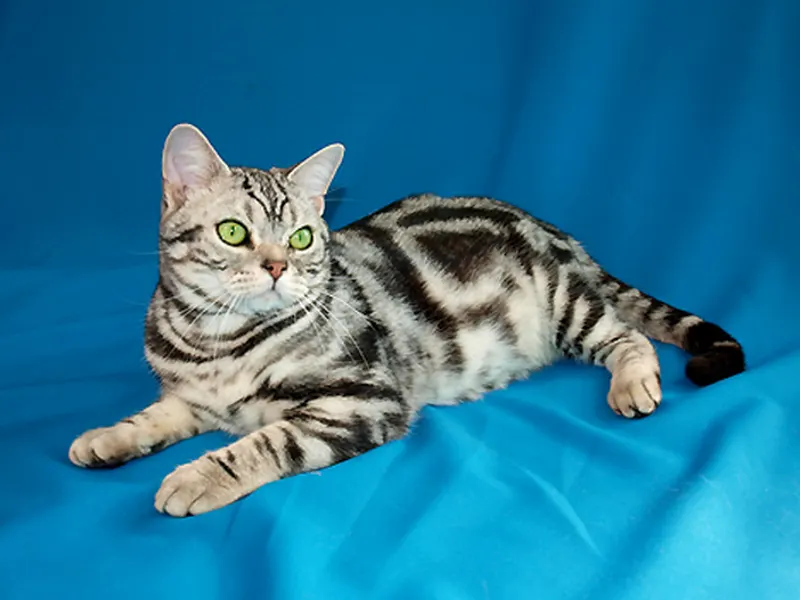 American ShorthairMedium · 7–15 lb
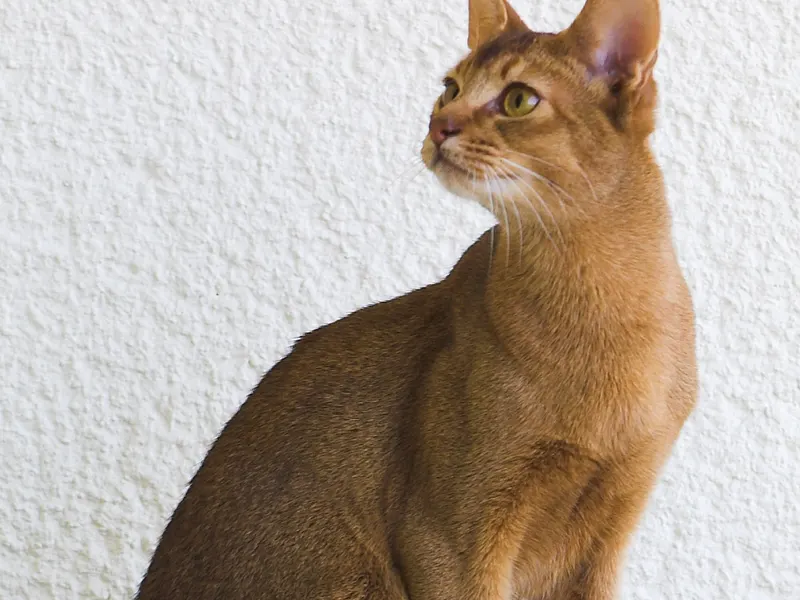 AbyssinianSmall · 6–10 lb
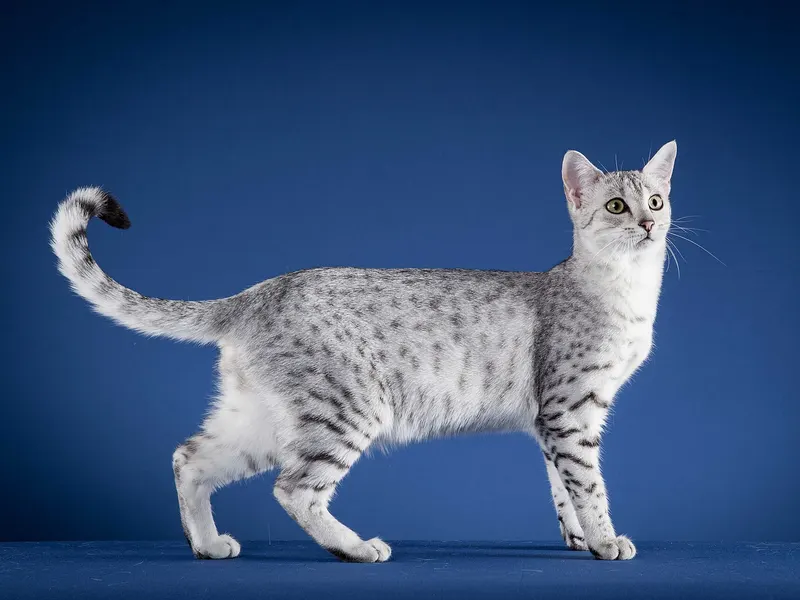 Egyptian MauMedium · 6–11 lb
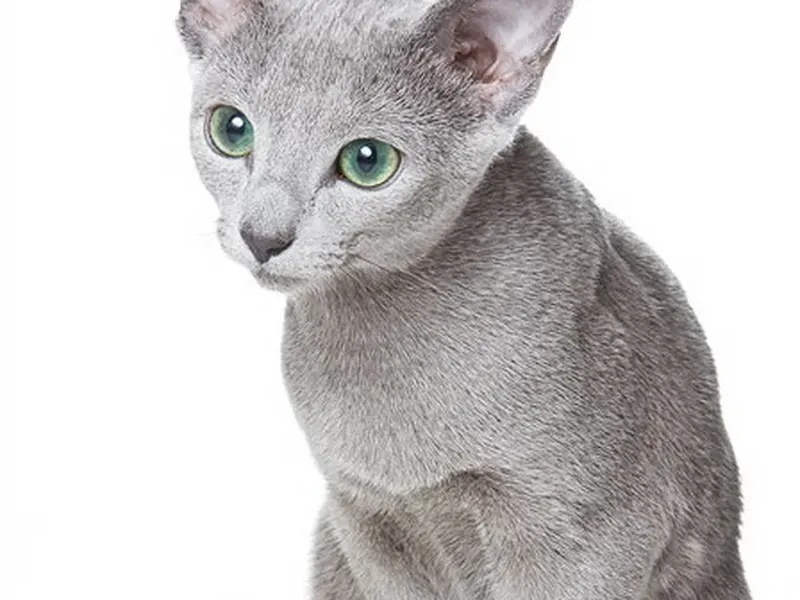 Russian BlueMedium · 7–15 lb
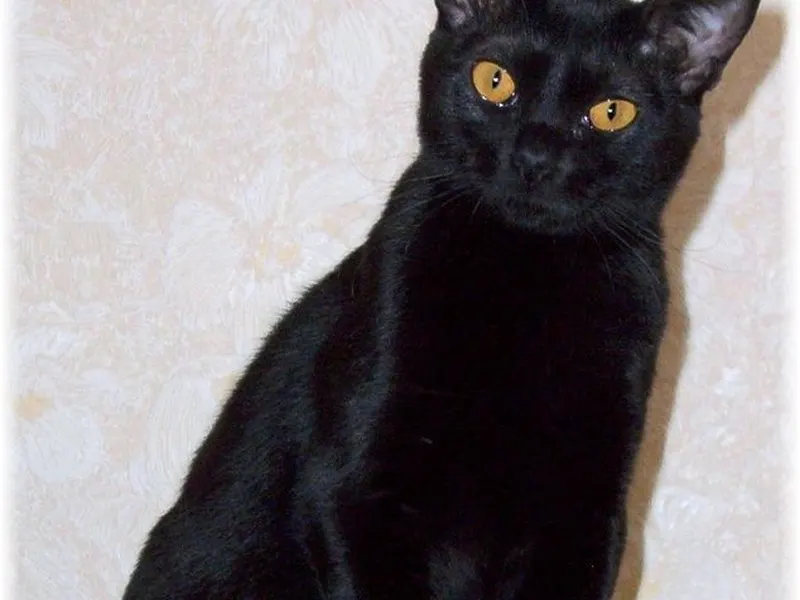 BombayMedium · 6–11 lb
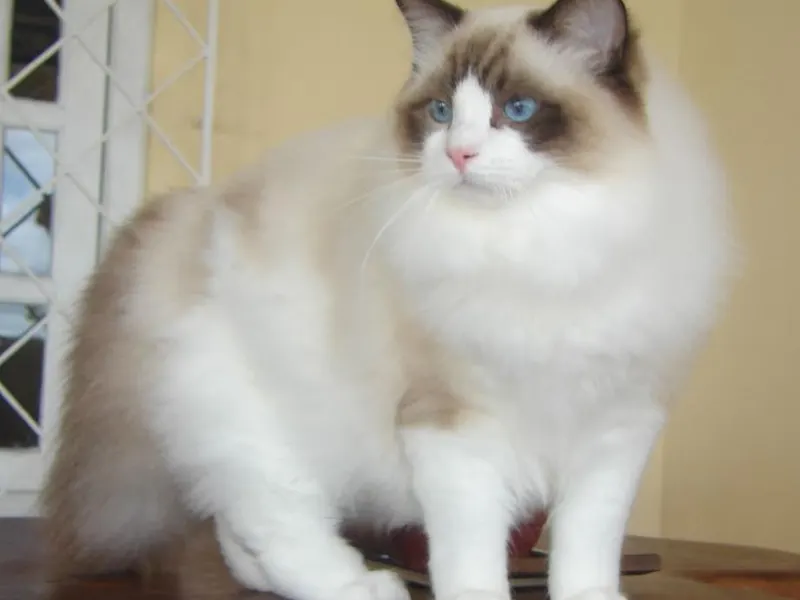 RagdollLarge · 10–20 lb
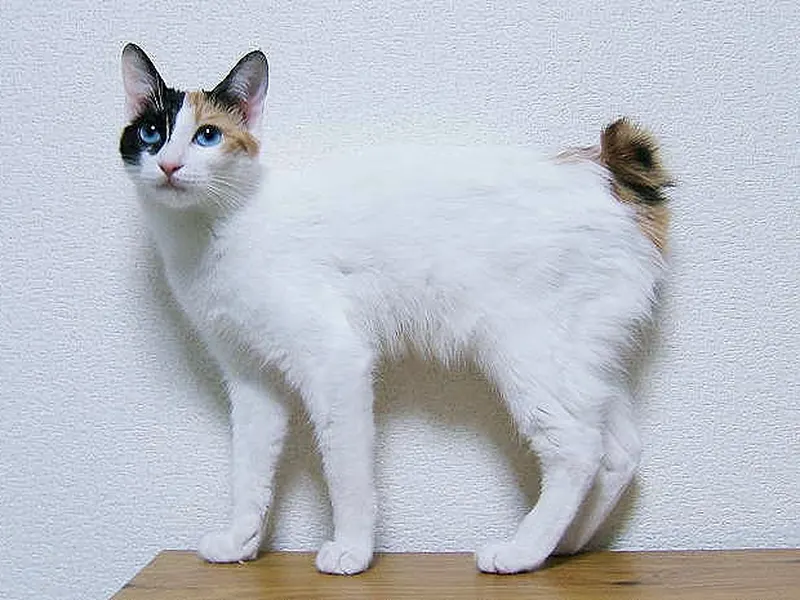 Japanese BobtailSmall · 6–10 lbTurkish VanLarge · 10–20 lb
Frequently Asked Questions
What is the most common cat coat pattern?
Tabby is generally considered the most common pattern, since it is the wild-type coat inherited from the African wildcat. It appears in mixed-breed cats worldwide and in many pedigreed breeds.
Is calico a breed of cat?
No. Calico is a coat pattern of black, orange and white that can appear in many breeds and in mixed-breed cats. The same is true of tabby, tuxedo and tortoiseshell.
What is the rarest cat color?
Rarity depends on the population, but colors that need several recessive genes, such as cinnamon, fawn and lilac, are uncommon outside specific breeds. Male calicos and tortoiseshells are also rare because they usually need an extra X chromosome.
Why are gray cats called blue?
Gray cats are dilute black, and breeders have long used the term blue for this color. Breed standards and show catalogs still use blue rather than gray.
Can a cat's coat color change over time?
Yes, to a degree. Colorpoint cats darken with age and cold, black cats can rust to a reddish brown in strong sun, and kittens often lose faint ghost tabby markings as they grow.
Does coat color affect a cat's personality?
There is no solid evidence that coat color determines personality. Owner surveys find people expect certain traits from certain colors, but individual temperament, early socialization and breed matter far more.
More About Cat Colors and Patterns
Looking for the right cat?
Answer 10 quick questions and get cat breeds ranked for your home, routine and family.