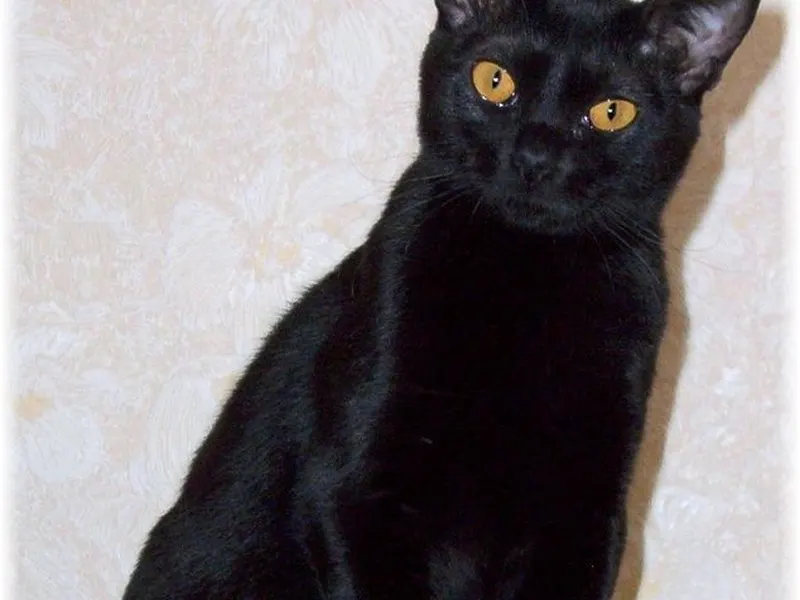
BombayA glossy black cat with copper eyes
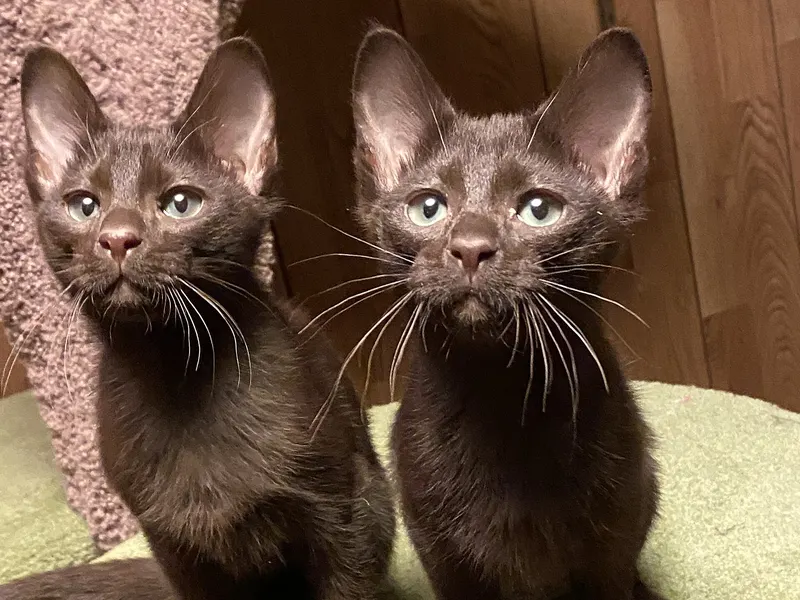
The Bombay is a medium-sized, jet-black cat with a patent-leather shine and round copper or gold eyes, bred to look like a miniature panther. Underneath the dramatic look is a warm, people-oriented cat that suits families who want a companion that stays close.
Why people love the Bombay
- Affectionate lap cat that seeks out its people
- Glossy short coat needs only a weekly wipe
- Confident and outgoing with visitors
- Often plays fetch and learns tricks
- Usually good with children and other pets
Things to consider
- Gains weight easily, loves food
- Dislikes long hours alone
- Some lines carry the Burmese head defect
- Relatively few US breeders, waiting lists normal
- Can be demanding when it wants attention
Is this breed right for you?
10 questions · live resultHistory and Origin
Despite the name, the Bombay comes from the United States. In the 1950s Nikki Horner, a breeder in Louisville, Kentucky, set out to create a "parlor panther" by crossing sable Burmese with black American Shorthairs. Her early attempts produced cats that looked too much like plain black shorthairs, but she persisted until the Burmese body type and glossy coat were fixed with the solid black color.
Horner named the breed after the Indian city, associated with the black leopard. CFA accepted the Bombay for registration in 1970 and granted championship status in 1976; TICA also recognizes it.
In Britain, a separate Bombay was developed from Burmese crosses and is classed by the GCCF within the Asian group, so the UK and US Bombay share a look but not an identical history.
Size, Coat and Color
The Bombay is a medium-size, muscular cat weighing 6 to 11 lb. It is surprisingly heavy for its size, with a compact, rounded body, medium-length legs and a straight tail of medium length. Males are usually larger and more solid than females.
The head is round with no flat planes, a short to medium nose with a visible stop, and medium ears that tilt slightly forward. The eyes are round and set wide apart, in shades from gold to deep copper, with copper preferred by CFA.
The coat is short, fine and close-lying, with a patent-leather sheen. There is one color:
- Solid black to the roots, including nose leather and paw pads
Kittens may show faint tabby ghost markings or a rusty tinge that clears as the adult coat comes in, often by about a year.
In the UK, the GCCF recognizes the Bombay as the black member of the Asian Self group, developed from Burmese crosses. It shares the look of the US Bombay but has a slightly different body type.
Personality and Temperament
Bombays are lap cats with a playful streak. They seek out warmth, whether that is a sunny spot, a laptop or a person, and many sleep under the covers.
They tend to be outgoing with visitors and confident in new situations, traits often credited to their Burmese ancestry. Most are moderately vocal, with a distinctive voice they use to ask for attention. A Bombay usually picks a favorite person but stays friendly with the whole family.
Are Bombay Cats Good for First-Time Owners?
Yes, Bombays are a good choice for first-time cat owners. They are affectionate, confident and adaptable, and their short coat needs very little grooming.
New owners should be ready for:
- A cat that wants company and attention
- Measured meals, as the breed gains weight easily
- Daily play sessions to burn energy
- Asking breeders about DNA tests for the Burmese head defect and HCM screening
Their outgoing nature makes them forgiving of beginner mistakes. They usually settle quickly in a new home and enjoy being involved in family life.
Can Bombay Cats Live With Dogs?
Yes, Bombays usually get along well with cat-friendly dogs. They are confident and sociable, traits often credited to their Burmese ancestry, and many enjoy playing with a calm dog.
For a smooth introduction:
- Keep the cat and dog separated at first and swap bedding to share scents
- Introduce them with the dog on a leash
- Give the cat high perches and escape routes
- Reward calm behavior from both
A dog with a strong chase instinct may not be safe with any cat, so assess the dog's temperament first. Most Bombays adapt quickly to a respectful canine housemate.
Can Bombay Cats Be Left Alone?
Bombays can manage a normal workday alone, but they do not thrive with long, regular isolation. They are people-oriented cats that seek warmth and company, and a lonely Bombay may become vocal or demanding when you return.
To help:
- Leave food puzzles and toys
- Provide warm resting spots, such as a heated bed
- Play actively before leaving and after returning
- Consider a second sociable cat if you work long hours
For trips longer than a day, arrange a cat sitter who can provide company as well as food.
Activity, Play and Enrichment
Bombays have moderate energy: bursts of play followed by long naps.
- Fetch is common, and many will bring a toy back for another throw.
- They learn tricks and harness walking readily, especially with food rewards.
- Food puzzles help, as the breed loves to eat and can gain weight easily.
Measure meals rather than free-feeding. A muscular Bombay feels surprisingly heavy for its size, so judge condition by feel, not by the scale alone.
Grooming and Shedding
The coat is short, fine and close to the body, with a natural shine. Grooming takes minutes:
- Wipe or stroke with a chamois or rubber mitt once a week to lift loose hair and polish the coat.
- Brush teeth regularly and trim nails every couple of weeks.
Shedding is light. Kittens may show a rusty tinge or faint markings that usually clear as the adult coat comes in. Strong sun can give a black coat a brownish cast.
Feeding and Nutrition
Bombays love to eat, and weight gain is one of the most common problems in the breed. Their muscular build makes them feel heavy, so judge condition by feel: ribs easy to find under a thin layer of fat and a visible waist from above.
Practical steps:
- Measure meals rather than free-feeding
- Feed two to four small meals a day
- Use puzzle feeders to slow eating and add activity
- Count treats in the daily ration
Kittens grow quickly in the first year. A kitten diet in several small meals supports growth; switch to adult food at about a year.
Hypertrophic cardiomyopathy has been reported, and obesity adds strain on the heart. Keeping your Bombay lean is one of the best ways to support long-term health. Some Bombays with shorter muzzles may find flat dishes easier to eat from. Fresh water should always be available; a fountain encourages drinking.
| Adult weight | Indoor, less active | Typical adult | Active or intact |
|---|---|---|---|
| 6 lb | 150 kcal | 180 kcal | 210 kcal |
| 8 lb | 180 kcal | 220 kcal | 260 kcal |
| 11 lb | 230 kcal | 280 kcal | 330 kcal |
Estimates use the resting energy formula veterinarians work with (70 × body weight in kg0.75) and standard activity factors. Use the feeding guide on your food as a starting point and adjust to body condition. Kittens, seniors, pregnant animals and pets that need to lose weight have different needs, so ask your vet.
Health and Lifespan
Bombays typically live 12 to 16 years and weigh about 6 to 11 lb (3 to 5 kg).
- Craniofacial defect: some Bombay lines carry the Burmese head defect, a severe and fatal malformation in kittens that inherit two copies. A DNA test exists, and breeding cats should be tested.
- Hypertrophic cardiomyopathy (HCM) has been reported; ask whether parents are screened by echocardiogram.
- Weight gain and related problems are common if meals are not controlled.
- Some cats with shortened muzzles can have tear staining or breathing noise; moderate faces are healthier.
Choose breeders who share test results, or look at breed rescue groups.
Bombay Price and Cost of Ownership
Typical breeder price in the US$800 to $2,000
A Bombay kitten from a reputable US breeder typically costs about $800 to $2,000. Prices vary by breeder, region and lines, and show-quality kittens cost more. Ask for DNA tests for the Burmese head defect and echocardiogram screening for HCM in the parents.
Black cats are common in shelters, and while most are domestic shorthairs, adoption is a good option if you love the look and do not need a pedigree.
Breed-specific ongoing costs:
- HCM screening if signs appear or as advised by your vet
- Weight management and food puzzles
- Dental care
- Pet insurance covering heart conditions
Grooming costs are minimal thanks to the short coat.
Is the Bombay Right for You?
A good match if you want an affectionate, sociable indoor cat that gets on with children and other pets, and you like the sleek black look. Apartment life suits them well.
Think twice if you are away most of the day with no other pet, or want an independent cat. Bombays like company.
Pet kittens in the US typically cost about $800 to $2,000, varying by breeder and region. Many black shelter cats look similar, but only a registered Bombay has the breed's predictable temperament and type.
Bombay Traits at a Glance
Bombay FAQ
Is a Bombay cat just a black cat?
No. A Bombay is a pedigree breed with Burmese ancestry, a muscular build, round head, glossy short coat and copper to gold eyes. Most black cats in shelters are domestic shorthairs.
Are Bombay cats rare?
They are less common than many breeds, and there are relatively few breeders in the US, so waiting lists are normal.
How big do Bombay cats get?
Adults usually weigh 6 to 11 lb. They are compact and muscular, so they feel heavier than they look.
Are Bombay cats good with kids?
Generally yes. They are sociable, playful and tolerant, and they enjoy family life.
How long do Bombay cats live?
Typically 12 to 16 years. Choose a breeder who DNA-tests for the Burmese head defect and screens for HCM.
How much does a Bombay cat cost?
Expect about $800 to $2,000 for a pet kitten from a US breeder, depending on breeder and region.