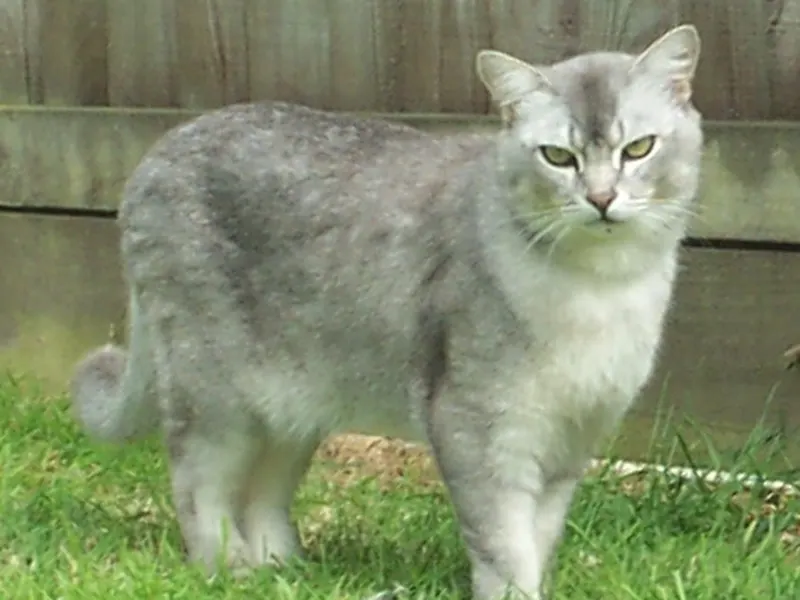
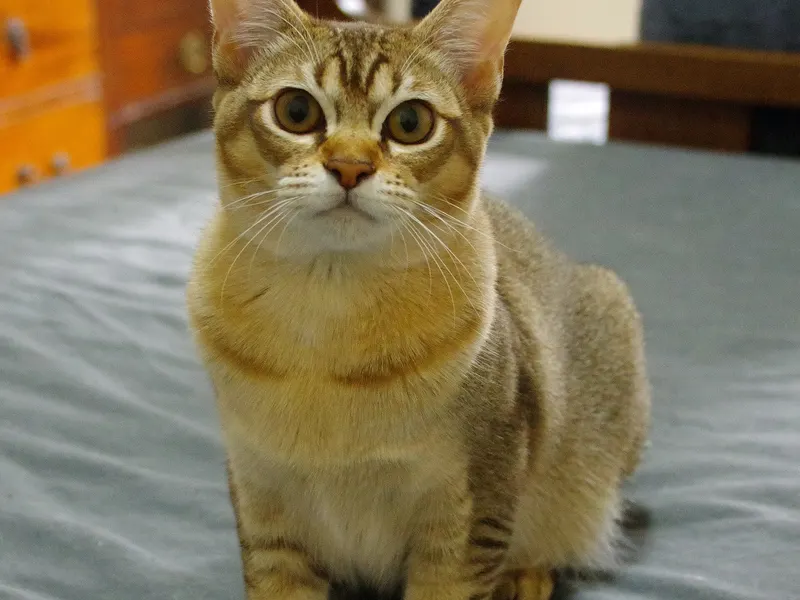
ToybobA naturally tiny, short-tailed Russian cat
<p>The Toybob is one of the smallest cat breeds, a well-proportioned cat with a short, kinked or curled tail, usually seen in a pointed pattern with blue eyes. Unlike dwarf breeds, its legs are in normal proportion to its body. It is gentle, affectionate and calm, suiting apartments and families with considerate children.</p>
Why people love the Toybob
- Tiny, kitten-sized cat with normal proportions
- Calm, gentle and people-oriented
- Usually quiet and rarely aggressive
- Easy to keep in an apartment
- Low-maintenance coat
Things to consider
- Very rare, waitlists are common
- Often requires import from Russia or Europe
- Little published health data
- Small size needs supervision around young children
- Not recognized by CFA or GCCF
Is this breed right for you?
10 questions · live resultHistory and Origin
The Toybob was developed in Rostov-on-Don, Russia, by breeder Elena Krasnichenko from the 1980s. Her program grew from pointed street cats, including a small, short-tailed seal point male, and from careful selection for small size and the short tail. The breed was first known as the Skif-Tai-Don and later as the Toybob.
The breed is recognized by TICA and has progressed through its new-breed process. It is not recognized by CFA or the GCCF. Numbers remain small, with most breeders in Russia and Europe and only a few in North America.
Size, Tail, Coat and Colors
The Toybob is one of the smallest cat breeds, with adults weighing about 4 to 7 lb. Despite its tiny size, the body has normal proportions, unlike dwarf breeds. Males are slightly larger than females, but both remain kitten-sized throughout life.
The body is compact and muscular, with a broad chest and medium-length legs. The head is a short, wide wedge with medium-sized ears and large, round eyes. The tail is the breed's signature: naturally short, often kinked or curled, typically about a third of normal length or less.
The coat comes in two varieties:
- Shorthair: dense, plush and soft, with a good undercoat.
- Semi-longhair: slightly longer with a fuller tail.
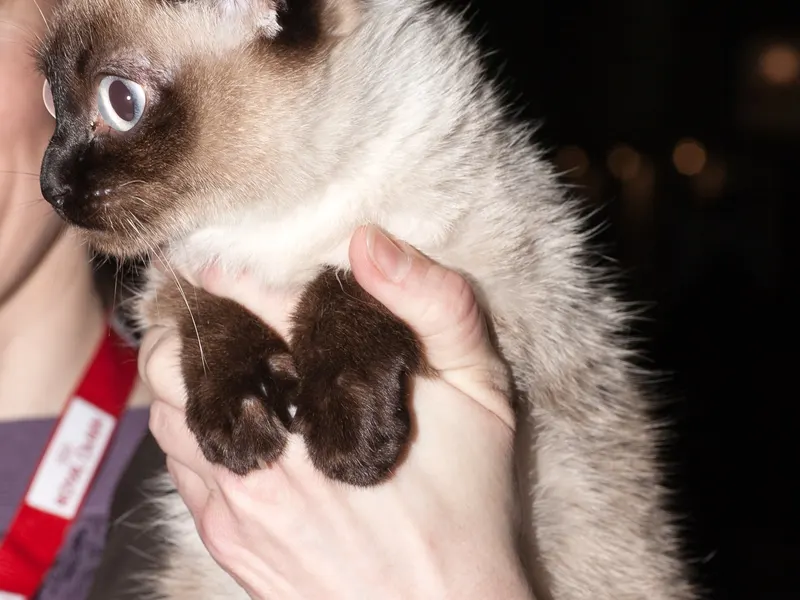
Seal point with blue eyes is the most common look, reflecting the breed's foundation cats. Other colors and patterns are permitted under TICA rules.
Personality and Temperament
Toybobs are friendly, gentle and people-oriented. Owners describe them as calm cats that like to stay close, sit on laps and follow family members around. They are usually quiet and rarely aggressive.
Despite their size, they are not fragile in temperament and are typically curious and playful. They generally get on with other cats and calm dogs. With children, supervise interactions because of the cat's small size.
Are Toybobs Lap Cats?
Yes, often. Toybobs are calm, people-oriented cats that enjoy staying close, sitting on laps and following family members around.
Their small size makes them comfortable lap companions, and many seek out warm spots on or near their owners. Personalities vary, so some may prefer to sit beside you. Gentle handling from kittenhood helps build tolerance for cuddles. Their calm nature makes them well suited to quiet homes and owners who want an affectionate companion. Many Toybobs also enjoy sleeping close to their owners at night and greeting them at the door.
Is the Toybob Good for First-Time Owners?
Yes, in terms of temperament. Toybobs are calm, gentle and easy to care for, making them suitable for first-time owners.
The main challenges are availability and limited health data. Breeders are few, and importing a kitten may be necessary. First-time owners should research breeders carefully, ask about health histories and ensure the kitten has normal proportions and no spinal or tail issues. Supervise young children because of the cat's small size. With these points considered, the Toybob is a delightful companion. Ask breeders about the kitten's parents and their temperaments.
Can Toybobs Live With Dogs?
Often yes, with calm dogs. Toybobs are generally friendly and adaptable, but their very small size requires careful introductions.
Choose a gentle, cat-friendly dog and introduce the animals gradually, with scent exchange before supervised meetings. Large or energetic dogs may accidentally injure a Toybob during play, so close supervision is essential. Give the cat high places and escape routes the dog cannot reach. Many Toybobs live happily with calm dogs once trust is established. Feed the cat separately from the dog to avoid any conflict over food.
Activity, Play and Enrichment
Toybobs are moderately active and enjoy short bursts of play with small toys, wand toys and balls. Many will fetch. Their small size makes them easy to keep in an apartment, but they still need a scratching post, a cat tree and daily interaction. Choose toys and climbing structures scaled to a small cat, and keep tiny items they could swallow out of reach.
Grooming and Shedding
The shorthair Toybob has a dense, plush coat with a soft undercoat that needs only weekly brushing. A semi-longhair variety also exists and needs combing once or twice a week. Shedding is light to moderate. Seal point with blue eyes is the most common look, though other colors and patterns are permitted.
Check the tail gently during grooming: kinks are normal for the breed, but the tail should not be painful to touch.
Feeding and Nutrition
The Toybob's very small size means portions are small, and even slight overfeeding can lead to weight gain. Use measured meals and check body condition regularly by feeling for ribs and looking for a waist.
Feed kittens a complete kitten food until about 12 months, offering small meals three to four times a day. Adults do well with two to three measured meals.
- Choose kibble or wet food pieces suitable for a small mouth.
- Encourage hydration with wet food, water fountains or multiple bowls.
- Dental care is important for small cats; discuss tooth brushing and checks with your vet.
- Keep tiny items and treats that could cause choking out of reach.
Treats should be very small and limited, as they make up a larger share of daily intake in a cat this size.
| Adult weight | Indoor, less active | Typical adult | Active or intact |
|---|---|---|---|
| 4 lb | 110 kcal | 130 kcal | 150 kcal |
| 6 lb | 150 kcal | 180 kcal | 210 kcal |
| 7 lb | 170 kcal | 200 kcal | 230 kcal |
Estimates use the resting energy formula veterinarians work with (70 × body weight in kg0.75) and standard activity factors. Use the feeding guide on your food as a starting point and adjust to body condition. Kittens, seniors, pregnant animals and pets that need to lose weight have different needs, so ask your vet.
Health and Lifespan
Because the Toybob is a young, rare breed, there is little published health data. Breeders commonly cite lifespans of about 12 to 16 years. No breed-specific inherited diseases are well documented.
Two points to discuss with breeders:
- The small size is not caused by dwarfism; ask how the breeder confirms normal proportions and skeletal health.
- The short, kinked tail should not come with spinal or mobility problems; ask whether any related cats have had such issues.
Small cats can be more sensitive to anesthesia dosing and cold, so tell your vet the breed.
Toybob Price and Cost of Ownership
No reliable typical US price is available for Toybob kittens. The breed is very rare, and most kittens are imported from Russia or Europe, which adds travel, shipping and paperwork costs. Prices vary widely by breeder and country. Expect long waitlists. Rescue Toybobs are extremely rare.
Breed-specific cost drivers include:
- Import costs, including transport and veterinary paperwork.
- Veterinary checks to confirm normal skeletal proportions and tail health.
- Small-sized cat trees, toys and carriers.
- Insurance, worth considering given limited health data.
Ask any breeder for TICA registration papers, and be cautious of sellers advertising very small cats that do not match the breed's normal proportions.
Is the Toybob Right for You?
A Toybob suits apartment dwellers, older adults and families with gentle children who want a calm, affectionate, very small cat. It is not a good choice if you need a kitten quickly: breeders are few, waitlists are common and importing may be necessary.
No reliable typical US price is available, as kittens are rare and often imported. Expect prices to vary widely by breeder and country.
Toybob Traits at a Glance
Toybob FAQ
How big do Toybob cats get?
Adults usually weigh about 4 to 7 lb (roughly 2 to 3 kg). They remain kitten-sized but with normal body proportions.
Is the Toybob a dwarf cat?
No. Unlike Munchkin-type breeds, Toybobs have normal leg length in proportion to their small bodies.
Why do Toybobs have short tails?
The breed carries a natural short, often kinked tail that was selected from its foundation cats.
Are Toybobs good with kids?
Yes, they are gentle, but their small size means young children should be supervised.
How long do Toybob cats live?
Breeders commonly cite about 12 to 16 years, though formal data is limited.