SingapuraA tiny, big-eyed cat with endless curiosity
The Singapura is one of the smallest cat breeds, with a ticked sepia coat, large ears and strikingly big eyes. Small as it is, it is a lively, curious and affectionate cat that suits people who want an involved companion.
Why people love the Singapura
- Tiny, lively and affectionate
- Short, ticked coat needs very little grooming
- Playful and kitten-like well into adulthood
- Soft voice used sparingly
- Usually good with gentle children and pets
Things to consider
- Very curious, gets into everything
- Needs daily interaction and play
- Dislikes long hours alone
- PK deficiency risk, needs DNA testing
- Rare, with waiting lists for kittens
Is this breed right for you?
10 questions · live resultHistory and Origin
The breed was developed from cats that Hal and Tommy Meadow, an American couple, brought to the United States from Singapore in the mid-1970s. Small, ticked street cats were known in Singapore, and the Meadows based their breeding program on these imports.
The origin story has been debated: later research suggested that some of the foundation cats may have been taken to Singapore from the US before being brought back, and that Abyssinian and Burmese genes may be involved. Registries accepted the breed regardless, and CFA granted championship status in 1988. It is recognized by TICA, CFA, FIFe and the GCCF.
Size, Coat and Color
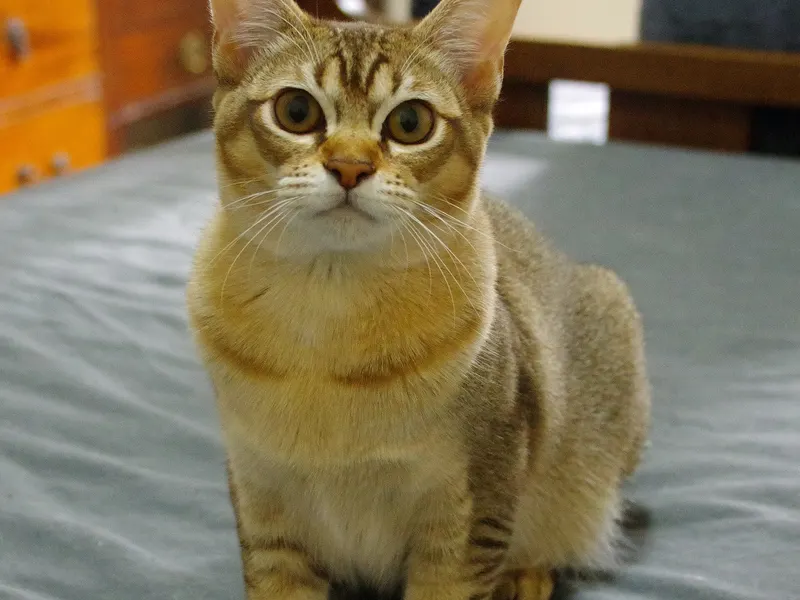
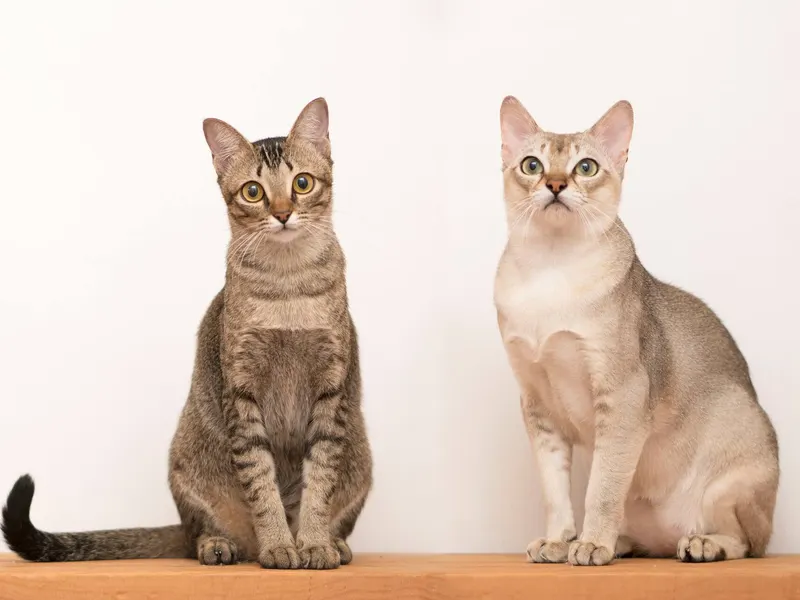
The Singapura is one of the smallest cat breeds, weighing 4 to 8 lb. It is small to medium in build but muscular and solid, with a moderately stocky body, strong legs and small, oval paws. Males usually weigh 6 to 8 lb and females 4 to 6 lb.
The head is rounded with a short, broad muzzle and very large, almond-shaped eyes in hazel, green or yellow, outlined in dark brown. The ears are large and deeply cupped, giving an alert, curious expression.
The coat is short, fine and silky, lying very close to the body. There is only one accepted color:
- Sepia agouti: each hair is ticked with dark brown bands on an ivory base, with an ivory or warm-toned underside
Dark lines run from the outer corners of the eyes, and the muzzle, chin and chest are lighter. Barring may appear on the inner legs. The tail tip is dark, matching the ticking.
Personality and Temperament
Singapuras are inquisitive and people-oriented. They want to see what you are doing, ride on shoulders and help with everything from unpacking groceries to typing.
They keep a playful, kitten-like attitude well into adulthood. Their voice is soft and used sparingly. Most are friendly with visitors, and they usually get along with gentle children and other pets, though their small size means very young children need supervision.
Owners often describe them as "in your face" cats: they sit on the newspaper you are reading, inspect your shopping and wait outside the bathroom door. That curiosity is charming, but it means cupboards and open windows need securing.
Are Singapura Cats Good With Kids?
Yes, Singapuras usually get along well with children who are gentle and respectful. They are playful, curious and enjoy interactive games, which makes them fun companions for older kids.
Because they are so small, supervision is important with young children:
- Teach kids to handle the cat gently and support its body
- Avoid rough play or chasing
- Give the cat high perches to escape when needed
A Singapura raised with children often bonds closely with them and joins in games. Their small size means they can be injured by rough handling more easily than larger breeds.
Can Singapura Cats Be Left Alone?
Singapuras do not cope well with long periods alone. They are people-oriented and curious, and they want to be involved in everything you do.
A Singapura left alone for full workdays may become bored or lonely. Helpful steps:
- Provide climbing routes and window perches
- Rotate puzzle toys and interactive feeders
- Play actively before leaving and when you return
- Consider a second Singapura or another sociable cat
Breeders often recommend a companion cat for owners who work outside the home. For trips, arrange a cat sitter who will play with them.
Can Singapura Cats Live With Dogs?
Yes, Singapuras can live with cat-friendly dogs. They are confident and curious, and many enjoy interacting with a calm, gentle dog.
Size is the main concern. A large or boisterous dog may injure a Singapura accidentally, so:
- Introduce slowly, with the dog on a leash
- Choose a dog with low prey drive
- Provide high perches and dog-free areas
- Supervise until they are relaxed together
Small, calm dog breeds are often the easiest match. Most Singapuras adapt well with careful introductions.
Activity, Play and Enrichment
Expect a busy cat.
- Provide climbing routes and high perches; Singapuras like to observe from above.
- Daily interactive play and puzzle toys keep them engaged.
- They often enjoy learning tricks and playing fetch.
Because they are small, choose toys sized for them and keep tiny items they could swallow out of reach. They do best with company, either a person at home or a compatible cat.
Grooming and Shedding
The coat is short, fine and close-lying, with each hair banded (ticked) in dark brown on an ivory base. This sepia agouti pattern is the only color accepted.
- A weekly stroke with a soft brush or mitt is enough.
- Trim nails and check teeth regularly.
Shedding is light. The dark "eyeliner" and cheetah-like lines from the eyes are part of the breed look, so do not mistake them for staining.
Feeding and Nutrition
Singapuras are small but active, and their energy needs reflect their busy nature. Feed measured portions of a high-quality diet and monitor body condition: ribs easy to feel, a visible waist and a solid, muscular build. Because they are small, even a little extra food can cause weight gain.
Kittens grow slowly and can take up to two years to reach full size. Feed a kitten diet in several small meals a day for the first year, then switch to adult food.
Practical tips:
- Choose small kibble sized for small mouths
- Feed two to four small meals daily
- Use puzzle feeders to engage a curious mind
- Count treats used in trick training
Accurate weight checks at vet visits are important, as small changes are significant in a small cat. Fresh water should always be available.
| Adult weight | Indoor, less active | Typical adult | Active or intact |
|---|---|---|---|
| 4 lb | 110 kcal | 130 kcal | 150 kcal |
| 6 lb | 150 kcal | 180 kcal | 210 kcal |
| 8 lb | 180 kcal | 220 kcal | 260 kcal |
Estimates use the resting energy formula veterinarians work with (70 × body weight in kg0.75) and standard activity factors. Use the feeding guide on your food as a starting point and adjust to body condition. Kittens, seniors, pregnant animals and pets that need to lose weight have different needs, so ask your vet.
Health and Lifespan
Singapuras typically weigh 4 to 8 lb (about 2 to 3.5 kg) and live around 11 to 15 years.
- Pyruvate kinase (PK) deficiency, an inherited form of anemia, occurs in the breed. A DNA test is available and breeding cats should be tested.
- Uterine inertia, where the uterus contracts too weakly during birth, has been reported, which matters to breeders.
- The breed has a small gene pool, so ask about relatedness of parents.
Because they are small, accurate weight checks at vet visits are important for spotting problems early.
Singapura Price and Cost of Ownership
Typical breeder price in the US$1,000 to $2,500
A Singapura kitten from a reputable US breeder typically costs about $1,000 to $2,500. Prices vary by breeder, region and lines. The breed is rare, with few breeders, so waiting lists are common. Ask for PK deficiency DNA results for both parents.
Adoption of pedigreed Singapuras is rare, though breed rescue occasionally places retired breeding cats.
Breed-specific ongoing costs:
- DNA testing for PK deficiency if not done by the breeder
- Climbing furniture and toys for an active cat
- A second cat for companionship, if needed
- Pet insurance
Food and grooming costs are low for a cat this size, but budget for regular weight checks at vet visits, since small changes matter in a 4 to 8 lb cat.
Is the Singapura Right for You?
A good match if you want a small, affectionate, playful cat for an apartment or busy family home and enjoy daily interaction.
Think twice if you want an independent cat or are out most of the day with no other pet.
Kittens are relatively rare. US pet kittens typically cost about $1,000 to $2,500, varying by breeder and region. Waiting lists are common.
Because they are so small, they suit apartments well, but they still need vertical space and daily play rather than just floor space.
Singapura Traits at a Glance
Singapura FAQ
Is the Singapura the smallest cat breed?
It is one of the smallest recognized breeds, with adults usually weighing 4 to 8 lb.
What colors do Singapura cats come in?
Only one: sepia agouti, a ticked brown coat on an ivory base.
Are Singapura cats affectionate?
Very. They are people-oriented, curious and like to be close to their owners.
Are Singapura cats hypoallergenic?
No. They shed lightly but still produce the Fel d 1 allergen like other cats.
How long do Singapura cats live?
Typically 11 to 15 years. Choose a breeder who tests for PK deficiency.
How much does a Singapura cost?
About $1,000 to $2,500 for a pet kitten in the US, depending on breeder and region.