Havana BrownThe rare chocolate cat with green eyes
The Havana Brown is a medium-sized cat with a rich, warm brown coat, vivid green eyes and a distinctive muzzle. It is affectionate and curious, suits people who want a gentle companion, and is rare enough that finding a kitten takes patience.
Why people love the Havana Brown
- Affectionate, gentle and curious
- Soft voice, much quieter than Siamese
- Minimal grooming for a short, glossy coat
- Good with considerate children and other pets
- Suits apartment living
Things to consider
- Rare, with long waiting lists
- Small gene pool raises inherited disease risk
- Dislikes long periods alone
- Few breeders in North America
- Color can take up to 18 months to develop
Is this breed right for you?
10 questions · live resultHistory and Origin
Solid brown cats were among the cats exported from Siam (Thailand) to Britain in the late 1800s. In the early 1950s, a group of British breeders deliberately recreated the solid brown cat by crossing Siamese with black domestic shorthairs. In 1952 a kitten named Elmtower Bronze Idol is widely credited as the foundation of the breed.
The name is often linked to the color of Havana cigars or to the Havana rabbit. In Britain, the breed developed in a more Oriental direction and is now part of the Oriental group. In North America, after cats were imported in the 1950s, breeders developed a distinct type with a rounder muzzle. CFA recognized the Havana Brown in 1964, and TICA also recognizes it.
Size, Build, Coat and Color
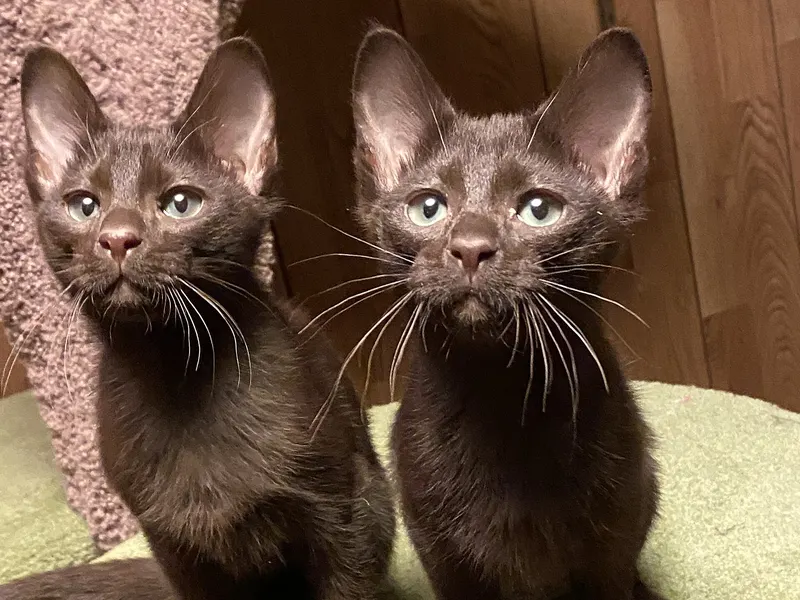
The Havana Brown is a medium-sized, muscular cat with a distinctive head and a rich mahogany coat. Adults weigh about 6 to 10 lb. Males are slightly larger and more muscular than females.
The head is longer than wide, with a distinct stop behind the whisker pads that gives the muzzle a corn-cob shape. The ears are large and tilted forward, and the eyes are oval and vivid green.
The coat is short, smooth and glossy, with a warm, even color. Whiskers and nose leather match the coat, and paw pads are rosy.
Colors:
- CFA recognizes only rich, warm brown
- TICA also recognizes lilac (lavender), a pinkish-gray shade
Kittens may show faint ghost tabby markings, which fade as the adult coat develops. Color can take up to about 18 months to mature. In the UK, similar cats are part of the Oriental group and look more slender.
Personality and Temperament
Havanas are affectionate and gentle, with a strong curiosity. A typical habit is reaching out with a paw to touch and examine things, including people.
They are social and like to be near their family, often following someone from room to room. Their voice is soft, much quieter than a Siamese. Most are friendly with visitors and do well with considerate children and other pets. They do not like being alone for long stretches.
Are Havana Brown Cats Lap Cats?
Many are. Havana Browns are affectionate and people-focused, and many enjoy sitting on laps, riding on shoulders or curling up beside their owners in the evening.
Their affection is gentle rather than demanding. A typical Havana will follow you from room to room, reach out with a paw to get your attention and settle close by once you sit down. Some individuals prefer sitting next to you rather than on you, so personality varies. Kittens raised in the breeder's home with plenty of handling tend to become the most cuddly adults. Ask the breeder how the parents behave, as temperament in this small breed often runs in families.
Are Havana Brown Cats Good for First-Time Owners?
Yes. Havana Browns are gentle, adaptable and easy to groom, which makes them a good choice for first-time owners who want a sociable, quiet cat.
The main challenges are practical. The breed is rare, so expect waiting lists and possibly travel to collect a kitten. Havanas also dislike long hours alone, so they suit owners who work from home or can provide a companion cat. Daily play with wand toys and puzzle games keeps their curious minds busy. Owners who can meet these needs usually find a Havana easy to live with, affectionate and well mannered.
Are Havana Brown Cats Good With Dogs?
Many get along well with cat-friendly dogs, especially when introduced gradually. Havanas are social and adaptable, and they often enjoy the company of other pets more than being alone.
Introductions should be calm and slow. Give the cat high escape routes and a dog-free room, and keep the dog on leash during the first meetings. Dogs should be trained to respect the cat's space and not chase. Havanas raised with dogs often form close bonds with them and may even sleep together. Very high-energy or prey-driven dogs are a riskier match for this gentle, medium-sized cat.
Activity, Play and Enrichment
Havanas are moderately active and playful.
- Wand toys and fetch games suit them.
- Puzzle toys play to their habit of exploring with their paws.
- A window perch and a medium cat tree provide enough climbing.
They tend to be happiest with an owner who works from home or with another friendly cat for company.
Grooming and Shedding
The coat is short, smooth and glossy, and grooming is minimal:
- Stroke with a rubber mitt or chamois weekly to remove loose hair and bring out the shine.
- Trim nails and brush teeth regularly.
Shedding is light. The whiskers are brown as well, matching the coat, which is part of the breed standard.
Kittens may show faint tabby markings, called ghost markings, that usually fade as the adult coat grows in. Color can take up to about 18 months to reach its final warm mahogany tone.
Feeding and Nutrition
Havana Browns are medium-sized, muscular cats that should feel firm rather than soft. Weight gain can creep up in indoor cats, so feed measured portions and check body condition every few weeks: ribs should be easy to feel and there should be a visible waist from above.
Because the breed has a small gene pool, routine health monitoring matters more than any special diet. No single breed-specific dietary issue dominates, but dental care and weight control are sensible priorities.
- Feed kittens three to four meals a day and adults at least two.
- Puzzle feeders suit the Havana's habit of exploring with its paws.
- Fresh water and some wet food support hydration and urinary health.
- Brush teeth regularly, or use vet-approved dental treats counted in the daily food.
Havanas are often food motivated, which makes treats useful for clicker training and gentle handling practice. Changes in appetite or weight are worth discussing with your vet early.
| Adult weight | Indoor, less active | Typical adult | Active or intact |
|---|---|---|---|
| 6 lb | 150 kcal | 180 kcal | 210 kcal |
| 8 lb | 180 kcal | 220 kcal | 260 kcal |
| 10 lb | 220 kcal | 260 kcal | 300 kcal |
Estimates use the resting energy formula veterinarians work with (70 × body weight in kg0.75) and standard activity factors. Use the feeding guide on your food as a starting point and adjust to body condition. Kittens, seniors, pregnant animals and pets that need to lose weight have different needs, so ask your vet.
Health and Lifespan
Havanas usually weigh 6 to 10 lb (about 3 to 4.5 kg) and commonly live 10 to 15 years.
The main concern is a small gene pool. In North America the breed has relatively few breeders and cats, which increases the risk of inherited problems through inbreeding. CFA has supported an outcross program to widen genetic diversity.
No single breed-specific disease dominates, but routine dental care, weight monitoring and annual vet checks are wise. Ask breeders about the health and relatedness of parents.
Havana Brown Price and Cost of Ownership
Typical breeder price in the US$1,000 to $2,500
A Havana Brown kitten from a reputable US breeder typically costs about $1,000 to $2,500. Prices vary by breeder, region and lines. Because the breed is rare, with relatively few breeders in North America, waiting lists are common and some buyers travel long distances. Ask about the health and relatedness of the parents and whether the breeder takes part in outcross programs to widen the gene pool.
Rescue Havanas are rare, but retired breeding cats are sometimes available.
Breed-specific ongoing costs include:
- Travel to reach a breeder
- Dental care over a long life
- Insurance for possible inherited conditions
- Toys and climbing furniture
- A cat sitter or second cat if you are away often
Is the Havana Brown Right for You?
A good match if you want a quiet, affectionate, curious cat that likes people and suits apartment life, and you can wait for a kitten.
Think twice if you need a kitten quickly, or are away from home for long hours without a second pet.
Because so few breeders exist, waiting lists are common. US pet kittens typically cost around $1,000 to $2,500, varying by breeder and region.
When contacting breeders, ask about the parents' temperaments and health, and whether the kitten has been raised in the home. Well-socialized Havanas adapt quickly to new families.
Havana Brown Traits at a Glance
Havana Brown FAQ
Why is it called a Havana Brown?
The name is usually linked to the color of Havana cigars or to the Havana rabbit, which has a similar brown coat.
Are Havana Brown cats rare?
Yes. There are relatively few breeders, especially in North America, and the breed works to maintain genetic diversity.
How big do Havana Brown cats get?
Adults usually weigh 6 to 10 lb, with a medium, muscular build.
Are Havana Browns vocal?
Not very. Their voice is soft, and they are much quieter than Siamese.
How long do Havana Brown cats live?
Typically 10 to 15 years.
Are Havana Browns good with kids?
Generally yes. They are gentle and social and do well with considerate children.