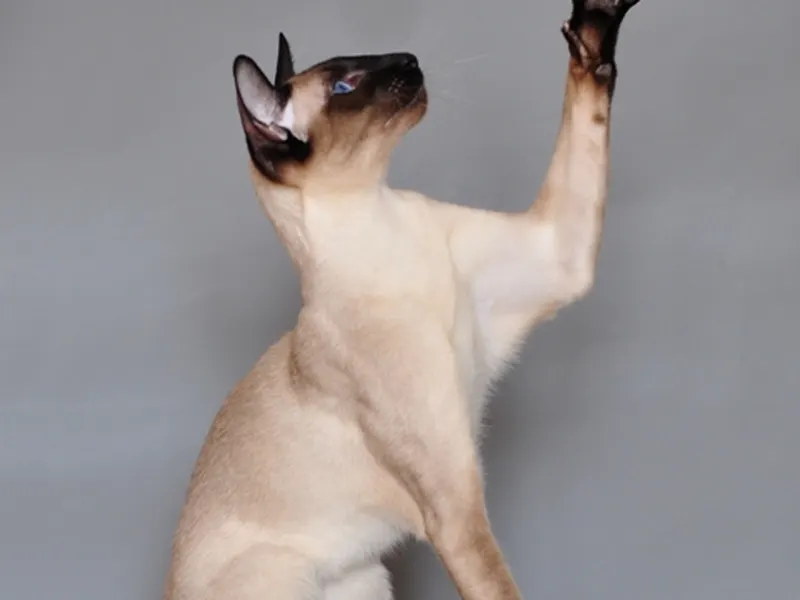
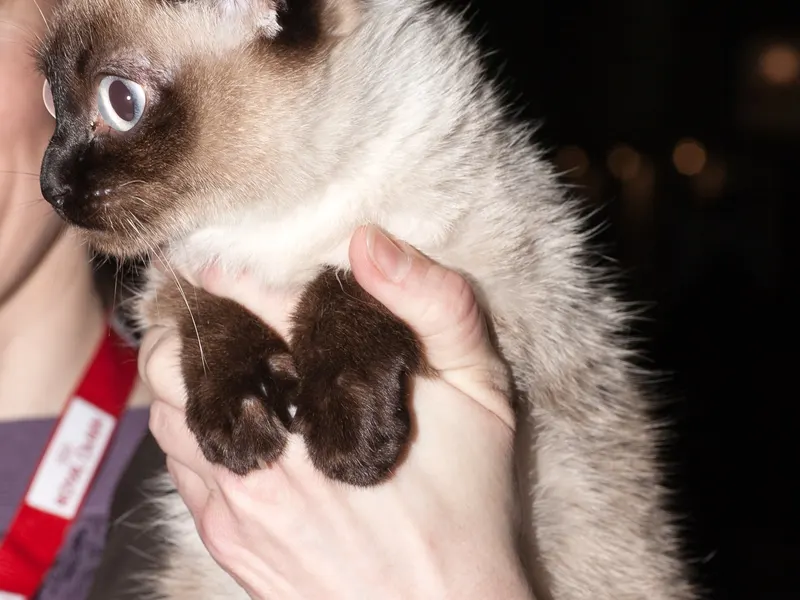
SnowshoeSiamese points with white mittened feet
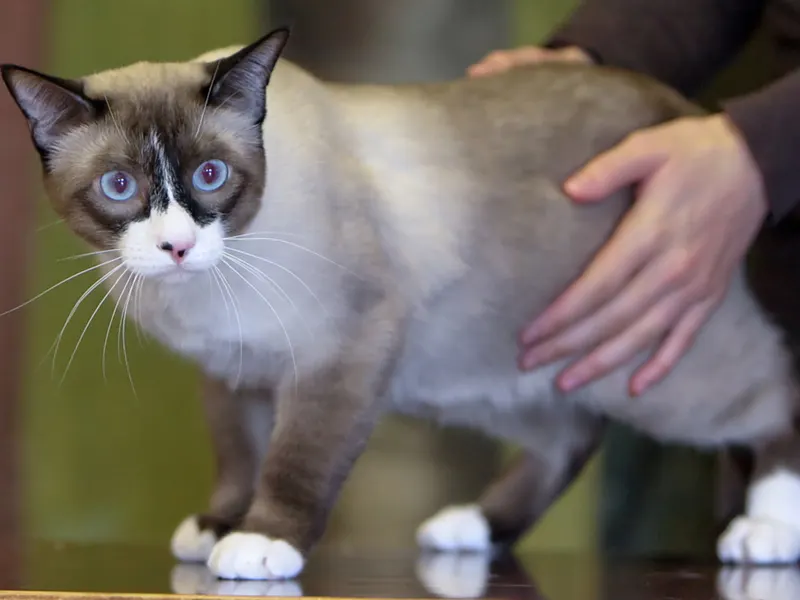
<p>The Snowshoe is a medium-sized, pointed cat with blue eyes and distinctive white feet, often with an inverted white "V" on the face. It blends Siamese sociability with the sturdier build of the American Shorthair. It suits people who want an interactive, talkative but not overbearing companion and who are home often.</p>
Why people love the Snowshoe
- Affectionate and people-oriented
- Softer, more melodic voice than a typical Siamese
- Short coat with light shedding
- Clever and trainable, often enjoys fetch and tricks
- Generally healthy with a long lifespan
Things to consider
- Dislikes being left alone for long periods
- Uncommon, so waitlists are typical
- Markings vary, so a perfect pattern is hard to find
- Can open doors and cabinets
- Fairly vocal when seeking attention
Is this breed right for you?
10 questions · live resultHistory and Origin
The Snowshoe began in the 1960s in Philadelphia, when breeder Dorothy Hinds-Daugherty noticed three Siamese kittens with white feet in a litter. She crossed them with bicolor American Shorthairs to fix the white markings while keeping the pointed pattern, and initially called the cats "Silver Laces." After she stepped back, breeder Vikki Olander continued the program and wrote an early standard.
Progress was slow because the pattern is hard to breed consistently: it depends on both the colorpoint gene and a white-spotting gene, and the amount and placement of white varies a lot. The Snowshoe gained championship status in TICA in the 1990s and is also recognized by the GCCF and FIFe, though it remains uncommon. CFA does not currently recognize it.
Size, Markings and Colors
The Snowshoe is a medium-sized, muscular cat that combines the long lines of the Siamese with the sturdier frame of the American Shorthair. Adults weigh about 7 to 14 lb. Males are noticeably larger and heavier, often at the top of the range, while females are smaller and more refined.
The coat is short, smooth and close-lying, with little undercoat. The breed's look comes from the combination of a pointed pattern and white markings:
- Mitted: white limited mainly to the paws, chest and chin
- Bicolor: more white, including an inverted V on the face and white extending up the legs
The classic colors are seal point and blue point, with the darker points on the ears, mask, legs and tail. Some registries accept additional point colors.
The eyes are always blue and walnut-shaped. The head is a broad, modified wedge with medium to large ears. Kittens are born white, and the points develop over the first months, often darkening with age.
Personality and Temperament
Snowshoes are affectionate and people-oriented. Many attach strongly to one person while staying friendly with the rest of the household. They are vocal, but their voices are usually softer and more melodic than a typical Siamese.
They tend to be curious and clever: some open doors or cabinets, and many enjoy learning tricks. Some Snowshoes are known for an interest in water, from playing in dripping faucets to joining you near the bath. They generally do well with considerate children and cat-friendly dogs but dislike being left alone for long periods.
Are Snowshoe Cats Lap Cats?
Many are. Snowshoes are affectionate and people-oriented, and many enjoy curling up on a lap or next to their favorite person, especially in the evening.
They are also active and curious, so they often prefer interaction during the day: following you around, playing fetch or watching what you do. A Snowshoe may choose to be close rather than on your lap, sitting beside you on the sofa or desk.
Many attach strongly to one person while staying friendly with others. If you want a cat that wants to be near you much of the time, the Snowshoe is a good fit.
Are Snowshoe Cats Good for First-Time Owners?
Yes, usually. Snowshoes are friendly, adaptable and generally healthy, and their short coat is easy to care for.
New owners should be ready for:
- A social cat that wants daily interaction and play
- A fair amount of vocal communication
- Some clever behavior, such as opening doors or cabinets
If you are home often or have another pet for company, a Snowshoe can be an easy, rewarding first cat. Owners who travel frequently or want a quiet, independent cat might find the breed more demanding than expected.
Can Snowshoe Cats Be Left Alone?
For a standard workday, many cope, but they are not ideal for owners who are away long hours every day. Snowshoes are social cats that prefer company and can become bored or vocal when alone too much.
To help a Snowshoe handle alone time:
- Play together before you leave and when you return.
- Provide a window perch, cat tree and puzzle feeders.
- Rotate toys to keep things interesting.
- Consider a second social cat for company.
For trips longer than a day or two, arrange a pet sitter who can spend time with the cat rather than just feeding it.
Activity, Play and Enrichment
Activity is moderate to high. Snowshoes like interactive games more than solo toys, so plan for daily play with you rather than a basket of balls they ignore.
- Fetch, wand toys and simple clicker training suit their social, food-motivated nature.
- A cat tree near a window and a few high shelves give them climbing options.
- For owners out all day, a second social cat can reduce boredom and calling.
Grooming and Shedding
The coat is short, smooth and close-lying, with little undercoat. A weekly brush keeps it in good shape and shedding is light. Kittens are born white and develop their points over the first months; the point color, typically seal or blue, can darken with age and in cooler temperatures.
Feeding and Nutrition
Snowshoes are medium-sized, muscular cats that can gain weight if their activity drops, especially after neutering or as they age. Feed a complete and balanced diet suited to their life stage and judge portions by body condition. You should feel ribs easily and see a slight waist.
- Feed measured meals, often two or three a day, rather than leaving food out all day.
- Use puzzle feeders and food-dispensing toys, which suit this clever breed.
- Use part of the daily ration for clicker training or fetch rewards.
- Encourage water intake with a fountain or wet food; many Snowshoes like moving water.
Dental disease is worth watching, as the breed shares ancestry with the Siamese. Regular tooth brushing and dental checkups are important, along with dental-friendly food textures if your vet recommends them.
Kittens need a complete growth diet until about a year old. Weigh adult cats every few months so that gradual weight gain is caught early.
| Adult weight | Indoor, less active | Typical adult | Active or intact |
|---|---|---|---|
| 7 lb | 170 kcal | 200 kcal | 230 kcal |
| 10 lb | 220 kcal | 260 kcal | 300 kcal |
| 14 lb | 280 kcal | 340 kcal | 390 kcal |
Estimates use the resting energy formula veterinarians work with (70 × body weight in kg0.75) and standard activity factors. Use the feeding guide on your food as a starting point and adjust to body condition. Kittens, seniors, pregnant animals and pets that need to lose weight have different needs, so ask your vet.
Health and Lifespan
Snowshoes are generally considered a healthy breed and commonly live 12 to 18 years. No breed-specific inherited disease is well established, but they share ancestry with Siamese and American Shorthairs, so dental disease and obesity are worth watching. Some Snowshoes inherit crossed eyes or a kinked tail, which are cosmetic faults in the show ring rather than health problems in most cats.
Choose a breeder who does general health checks on breeding cats and offers a health guarantee, and keep up with routine dental care.
Snowshoe Price and Cost of Ownership
Typical breeder price in the US$800 to $2,000
A Snowshoe kitten from a reputable US breeder typically costs about $800 to $2,000. Prices vary by breeder, region and lines, and kittens with show-quality markings often cost more. Because the breed is uncommon, waitlists are typical.
Pointed cats with white feet often turn up in shelters as Snowshoe-type mixes, and they can share much of the breed's personality, so adoption is a good option.
Breed-specific ongoing costs include:
- Dental cleanings and regular dental checkups
- Interactive toys, puzzle feeders and climbing structures
- A second cat or pet sitter for social company
- Routine health checks for breeding cats if you buy from a breeder
- Insurance that covers dental disease
Is the Snowshoe Right for You?
A Snowshoe is a good match for households that want an engaged, talkative cat, especially if someone works from home or there is another pet for company. It is less suited to people who want a silent, independent cat or who travel often.
Because the breed is uncommon, you may need to join a waitlist. US pet kittens typically cost about $800 to $2,000, varying by breeder and region. Pointed cats with white feet in shelters are often Snowshoe-type mixes and can share much of the same personality.
Snowshoe Traits at a Glance
Snowshoe FAQ
How big do Snowshoe cats get?
Most adults weigh 7 to 14 lb (about 3 to 6.5 kg), with males larger. They are muscular and medium-sized, heavier than a modern Siamese.
Are Snowshoe cats rare?
Yes. The pattern is hard to produce consistently, so relatively few breeders work with them and kittens can involve a waitlist.
Do Snowshoe cats talk a lot?
They are fairly vocal, but their voices are generally softer than a Siamese. Most use their voice to start conversations or ask for attention.
Do Snowshoe cats shed?
They shed lightly thanks to a short coat with little undercoat. Weekly brushing is enough.
Are Snowshoe cats good with other pets?
Usually yes, with proper introductions. Their sociable nature often makes them happier with a companion animal.
How long do Snowshoe cats live?
Commonly 12 to 18 years with good care.