AbyssinianThe busy, ticked-coat athlete
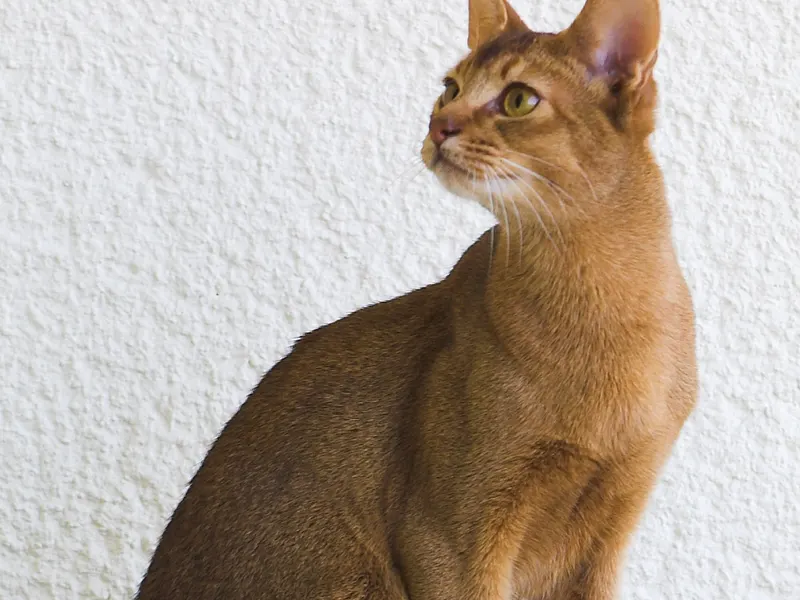
The Abyssinian is a lithe, medium-sized cat with a warm ticked coat that shimmers like a wild cat's. It is one of the most active and inquisitive breeds, best suited to owners who enjoy a cat that is always on the move rather than on the lap.
Why people love the Abyssinian
- Curious, confident and endlessly entertaining
- Gets along well with active children and friendly dogs
- Short, fine coat needs only weekly brushing
- Soft voice; not especially chatty
- Quick learner; many fetch and walk on a harness
Things to consider
- Very active; needs daily play and climbing space
- Not a lap cat; prefers short cuddles
- Prone to gum disease and dental problems
- Inherited PK deficiency and PRA in some lines
- Bored cats knock things off shelves and open drawers
Is this breed right for you?
10 questions · live resultHistory and Origin
The breed is named after Abyssinia, now Ethiopia. A cat called Zula, brought to England by the wife of Captain Barrett-Lennard after the 1868 British military campaign in Abyssinia, is often cited as an early ancestor, although her link to today's cats is uncertain.
Genetic studies suggest the breed's roots may lie in coastal regions of the Indian Ocean and Southeast Asia rather than Ethiopia. Whatever the origin, the Abyssinian was developed in Britain in the late 1800s and was among the first breeds to be recognized. Numbers fell sharply during both World Wars, and imports from Britain helped rebuild the breed in the United States, where it has been shown since the early 1900s.
Size, Ticked Coat and Colors
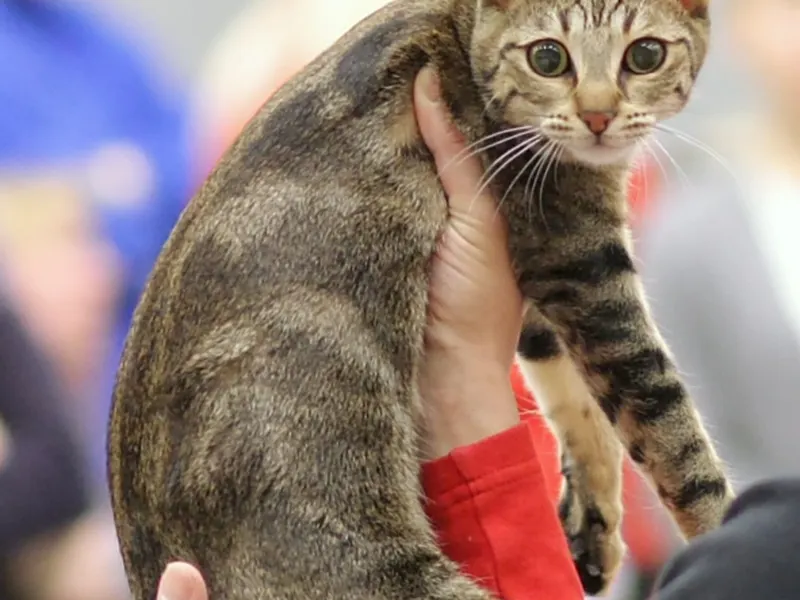
The Abyssinian is a medium-sized, lithe, muscular cat with a slightly arched back and long, slender legs, giving it the look of a small wild cat. Adults typically weigh 6 to 10 lb. Males are usually a little larger and more muscular than females, but the difference is modest.
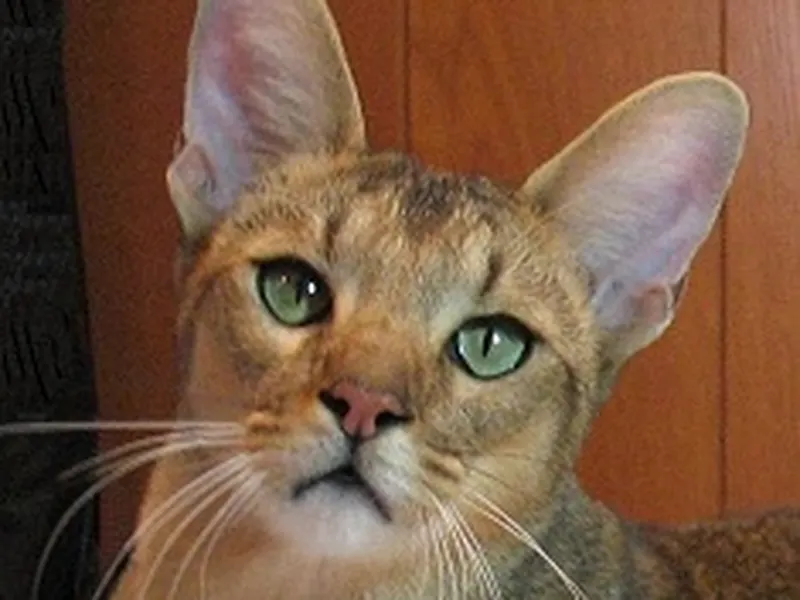
The head is a gently rounded wedge with large, alert ears and almond-shaped eyes in gold, copper or green, outlined in a dark line that looks like eyeliner. A faint M on the forehead is common.
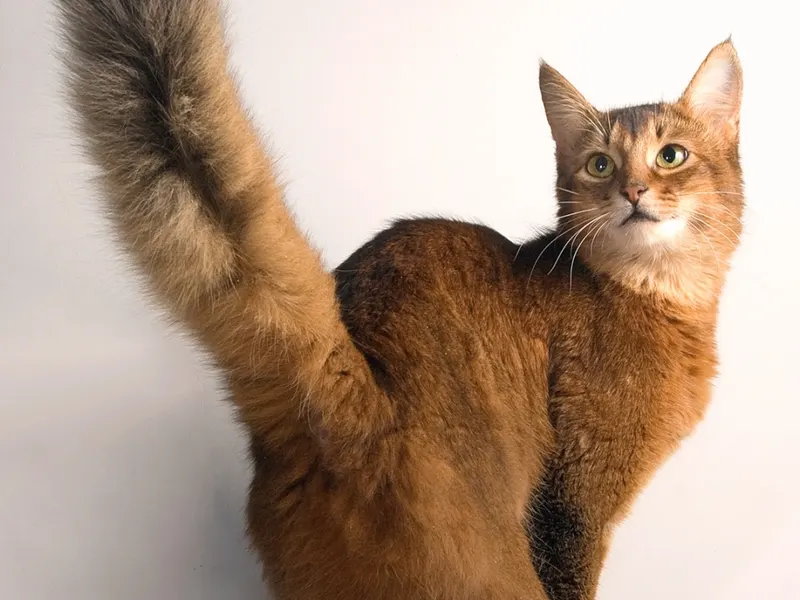
The coat is short, fine and close-lying, with each hair banded in several colors, a pattern called ticking. This gives the coat its warm, shimmering look. A darker line often runs along the spine and the tail tip. Ideally, there are no tabby markings on the legs or body.
Colors: the four classic colors are ruddy (usual), red (sorrel), blue and fawn. Some registries also accept silver variants and additional colors. The Somali is the longhaired version of the Abyssinian.
Personality and Temperament
Abyssinians are curious, confident and busy. They investigate every bag, cupboard and shelf, and they like to be involved in what you do, often by sitting on the highest point in the room to watch.
They are affectionate on their own terms: many enjoy a quick cuddle, then go back to exploring. Their voice is soft and they are not especially chatty. They tend to do well with active children and friendly dogs, and many enjoy the company of another playful cat.
Many Abyssinians like to ride on a shoulder or supervise from the top of a door. They are quick learners and often figure out how to open drawers, so childproof latches can be useful.
Are Abyssinian Cats Good With Dogs?
Yes, Abyssinians are usually good with dogs, especially friendly, cat-savvy dogs. Their confidence and curiosity help them accept a canine housemate quickly.
Many Abyssinians enjoy playing with dogs, chasing and being chased, and they hold their own thanks to their speed and climbing skills. Introductions should still be gradual: keep the animals separate at first, swap scents, then let them meet under supervision. Make sure the cat has high escape routes such as cat trees and shelves. Dogs with a strong prey drive toward cats are not a good match, however friendly the Abyssinian.
Can Abyssinian Cats Be Left Alone?
Abyssinians can handle a normal workday alone, but they are busy, social cats that get bored easily, so long or frequent absences are not ideal.
A bored Abyssinian will find its own entertainment, which may include opening cupboards, knocking objects down or climbing curtains. Before you leave, provide a play session, puzzle feeders, rotating toys and window perches. Many owners who work full time keep two cats, and a second playful cat, often another Abyssinian or a similarly active breed, makes a real difference. For trips longer than a day, arrange a sitter who visits and plays daily.
Are Abyssinians Good for First-Time Owners?
Abyssinians can be a good choice for first-time owners who want an active, interactive cat and are prepared to provide daily play and enrichment.
Their care is simple: weekly brushing, regular dental care and routine vet checks. The main challenge for new owners is the breed's energy and intelligence. An Abyssinian needs floor-to-ceiling climbing options, interactive play at least twice a day and puzzle feeders to keep its mind busy. Cat-proofing the home and using childproof latches on cupboards help. First-time owners who expected a calm, cuddly lap cat may be surprised, so be clear about the breed's personality before buying.
Activity, Play and Enrichment
This breed needs real exercise and stimulation every day.
- Floor-to-ceiling cat trees, shelves and safe high perches are essential.
- Interactive play with wands and chase toys, at least twice a day.
- Puzzle feeders, treat balls and clicker training keep their brains busy.
- Many Abyssinians learn to fetch or walk on a harness.
A bored Abyssinian will invent its own games, which may include knocking things off shelves. Cat-proof your home before the kitten arrives.
Grooming and Shedding
The coat is short, fine and close-lying, with each hair banded in several colors (ticking). It needs little care: a weekly brush or rubber mitt is enough, with a bit more during seasonal shedding.
The usual colors are ruddy (also called usual), red or sorrel, blue and fawn, with silver variants accepted by some registries. Shedding is light to moderate. Brushing the teeth helps, since the breed is prone to gingivitis.
Feeding and Nutrition
Abyssinians are active, muscular cats that typically stay lean if fed appropriately. Their body should feel firm, with ribs easy to feel and a visible waist. Because they are so active, some owners overestimate their needs; weigh your cat regularly and adjust portions to keep it athletic rather than thin or overweight.
Kittens: feed a complete, balanced kitten diet until around one year, divided into several small meals a day. Adults do well on two or more measured meals.
Dental health: Abyssinians are prone to gingivitis and gum disease. Daily tooth brushing, regular veterinary dental checks and professional cleanings when advised are important. Food alone does not prevent dental disease.
Kidney health: renal amyloidosis is reported in some lines. Regular blood and urine tests help catch kidney problems early, and any dietary management should be guided by your vet.
Enrichment: puzzle feeders, treat balls and food used in clicker training suit this intelligent breed and slow down eating. Count training treats in the daily amount, and encourage water intake with a fountain or wet food.
| Adult weight | Indoor, less active | Typical adult | Active or intact |
|---|---|---|---|
| 6 lb | 150 kcal | 180 kcal | 210 kcal |
| 8 lb | 180 kcal | 220 kcal | 260 kcal |
| 10 lb | 220 kcal | 260 kcal | 300 kcal |
Estimates use the resting energy formula veterinarians work with (70 × body weight in kg0.75) and standard activity factors. Use the feeding guide on your food as a starting point and adjust to body condition. Kittens, seniors, pregnant animals and pets that need to lose weight have different needs, so ask your vet.
Health and Lifespan
Abyssinians usually live 12 to 15 years. Inherited conditions to be aware of include:
- Pyruvate kinase (PK) deficiency: an inherited cause of anemia. A DNA test is available.
- Progressive retinal atrophy (PRA): the rdAc form causes gradual blindness; a DNA test exists.
- Renal amyloidosis: a protein deposit disease affecting the kidneys, reported in some lines.
- Gum disease and dental problems.
Ask breeders for DNA test results for PK deficiency and PRA on both parents, and schedule regular dental checks.
Abyssinian Price and Cost of Ownership
Typical breeder price in the US$1,000 to $2,000
A pet-quality Abyssinian kitten from a reputable US breeder typically costs around $1,000 to $2,000. Prices vary by breeder, region and lines, with show-quality kittens, rarer colors and cats for breeding priced higher. Ask for DNA results for PK deficiency and PRA (rdAc) for both parents.
Adoption is possible through breed rescues, though purebred Abyssinians are less common in shelters than many other breeds.
The main ongoing cost drivers are dental care, including professional cleanings under anesthesia, which many Abyssinians need regularly, and monitoring for kidney disease. Enrichment is also a genuine expense for this breed: sturdy cat trees, wall shelves, puzzle feeders and interactive toys. Pet insurance can help cover dental and kidney care, especially if purchased while the cat is young.
Is the Abyssinian Right for You?
Abyssinians suit active households, families with older children and owners who enjoy daily play and training. They do well with other pets and adapt to indoor life if they have plenty to climb and do.
They are not ideal for people seeking a lap cat or a quiet, decorative pet. If you are out all day, consider a second playful cat to keep an Abyssinian company.
Expect a cat that remains kitten-like for years. Owners who enjoy that energy describe Abyssinians as endlessly entertaining; owners who wanted a calm decoration on the sofa are often surprised.
Abyssinian Traits at a Glance
Abyssinian FAQ
Are Abyssinian cats affectionate?
Yes, but in an active way. They like to be near you and involved, but most prefer short cuddles to long lap sessions.
Do Abyssinian cats shed?
Shedding is light to moderate. A weekly brush removes most loose hair.
How big do Abyssinian cats get?
Adults typically weigh 6 to 10 lb (about 3 to 4.5 kg), with a slim, muscular build.
Are Abyssinian cats hypoallergenic?
No. They produce Fel d 1 like other cats, though their short coat sheds less than many longhaired breeds.
How long do Abyssinian cats live?
Usually 12 to 15 years. Choosing parents tested for PK deficiency and PRA helps.
How much does an Abyssinian kitten cost?
Pet-quality kittens from US breeders usually cost about $1,000 to $2,000, depending on breeder and region.