BengalA spotted athlete with a busy brain
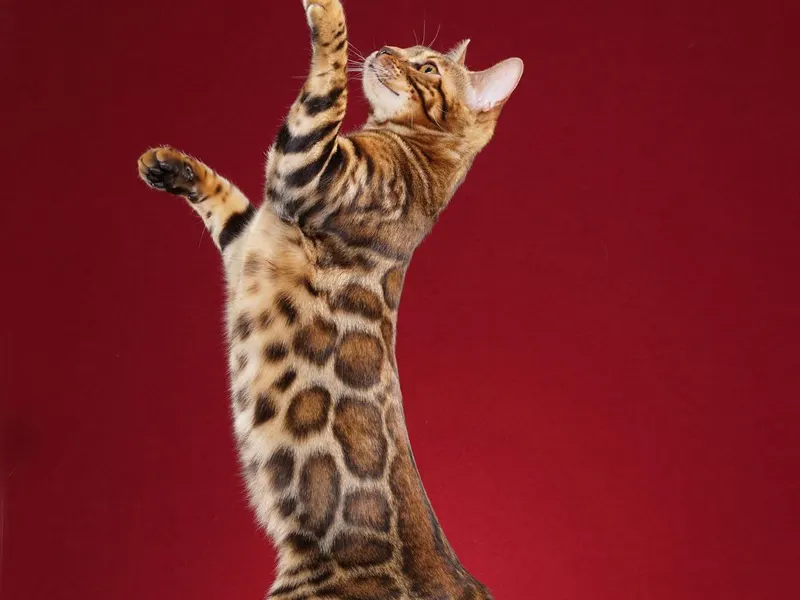
The Bengal is a domestic cat with the look of a small leopard: a glittering, spotted or marbled coat, a muscular build and a confident, athletic way of moving. It is one of the most active and inventive breeds you can bring home, which makes it a great match for people who want to play, train and build climbing space, and a poor match for anyone hoping for a quiet lap cat.
Why people love the Bengal
- Stunning spotted or marbled coat with optional glitter
- Highly intelligent, trainable and often enjoys water
- Light shedding and easy grooming
- Confident and sociable with active families
- Great companion for owners who love interactive play
Things to consider
- Very high energy and needs daily play
- Gets into cupboards, opens doors, knocks things over
- Loud and talkative when bored
- Restricted or banned in some US states and cities
- Rarely a quiet lap cat
Early generations (F1 to F4) count as hybrids in some places: several US states and cities (for example Hawaii and New York City) ban or restrict Bengals or early generations, and some other countries regulate them. Check local rules.
Is this breed right for you?
10 questions · live resultHistory and Origin
The Bengal began with crosses between the Asian leopard cat (Prionailurus bengalensis), a small wild cat from South and East Asia, and domestic cats. California breeder Jean Mill produced a leopard cat hybrid in 1963 and restarted her program in the early 1980s, using hybrid females from research by Dr. Willard Centerwall, who was studying the leopard cat's resistance to feline leukemia virus.
Mill and other breeders crossed these hybrids with domestic cats, including an Indian street cat and spotted domestic lines, to fix the wild look in a cat with a domestic temperament. TICA accepted the Bengal for registration in the 1980s and granted championship status in 1991. The GCCF and FIFe followed. CFA, the largest US registry, still does not recognize the breed.
Today's pet Bengals are usually many generations removed from the leopard cat, labeled SBT (stud book traditional), and are fully domestic cats.
Size, Coat Patterns and Colors
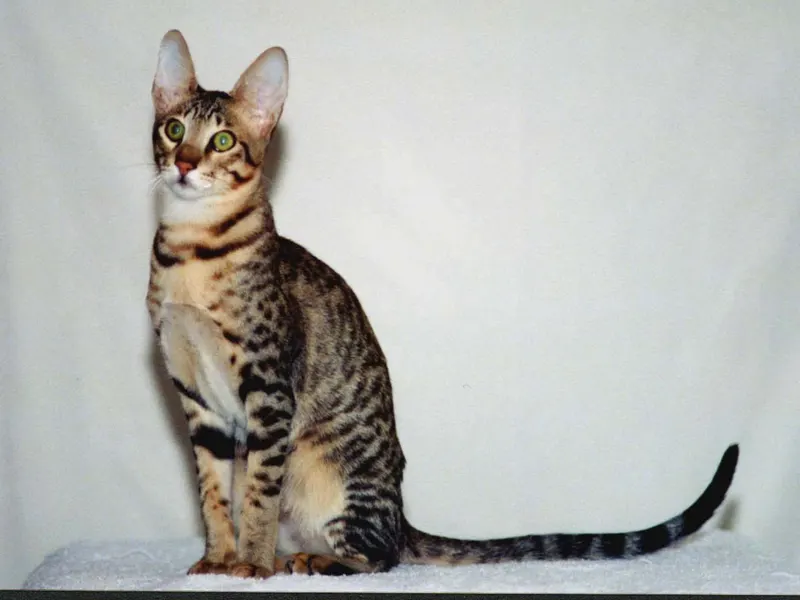
The Bengal is a medium to large, long and muscular cat weighing about 8 to 15 lb, with males clearly larger than females. It has a strong, athletic body, hind legs slightly longer than the front, a broad, wedge-shaped head with small, rounded ears and a thick, low-carried tail with a black tip.
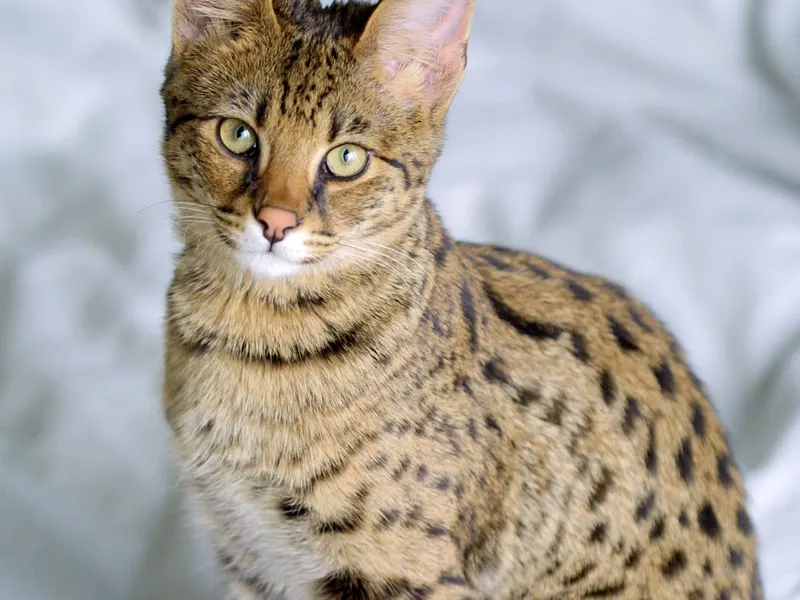
The short, dense coat feels unusually soft, often compared with a pelt, and some cats have glitter, a shimmering sheen on the hair tips.
Two patterns are recognized. Spotted Bengals show random spots or rosettes, ideally two-toned with a darker outline. Marbled Bengals have swirling, horizontal patterns. Common colors include brown (from golden to deep orange), snow (seal lynx point, seal mink and seal sepia, with blue or aqua eyes in some) and silver. Charcoal and blue are also seen, and recognition varies by registry. A pale, white belly is preferred. Kittens often go through a fuzzy stage before their adult pattern clears.
Personality and Temperament
Bengals are curious, bold and quick to learn. They follow you from room to room, investigate every cupboard and are famous for learning to open doors and turn on taps. Many enjoy water and will paw at a dripping faucet or join you near the shower.
They are affectionate on their own terms: most like being near their people and joining in, but fewer want long cuddles. They are also talkative, with a range of chirps and loud calls when they want attention or are bored.
- Very confident with new things and often good with active, respectful children
- Usually fine with cat-friendly dogs when introduced slowly
- Can be pushy with calmer cats and may chase small pets such as birds, fish or rodents
Are Bengal Cats Lap Cats?
Most Bengals are not lap cats in the traditional sense. They are affectionate and want to be with their people, but they usually show it by following you, joining in with whatever you are doing and inviting play rather than settling for long cuddles.
Many Bengals will curl up next to you or sleep on the bed in the evening, especially after a good play session, and some become more cuddly with age. Kittens raised with gentle, frequent handling also tend to be more relaxed about being held. If a calm lap cat is your top priority, though, a breed such as the Burmese or Ragdoll is a more reliable match.
Can Bengal Cats Live with Dogs?
Yes, Bengals often live well with dogs. Their confidence and playfulness mean many enjoy a cat-friendly dog as a playmate, and they tend to hold their own rather than hide.
The best matches are calm, cat-tolerant dogs without strong chase drive, or dogs raised with cats. Introductions should be gradual:
- Keep animals separated at first, swapping bedding to share scents.
- Meet through a gate or with the dog on leash.
- Provide tall cat trees and shelves so the cat can escape.
- Keep the cat's food and litter box out of the dog's reach.
Bengals can be rough players, so watch that play stays friendly on both sides.
Can Bengal Cats Be Left Alone?
Bengals can stay home alone during a normal workday, but they cope less well with boredom than most breeds. A Bengal left alone for long hours without stimulation may open cupboards, knock things off shelves, raid food or become loud and demanding when you return.
To make alone time work:
- Play hard for 15 to 20 minutes before leaving.
- Leave puzzle feeders, rotating toys and window perches.
- Provide tall cat trees and climbing shelves.
- Secure cupboards and remove breakable items from shelves.
Many owners find that a second active cat, ideally another Bengal or similarly energetic breed, makes long days much easier.
Activity, Play and Enrichment
Energy is the defining trait of the breed. A bored Bengal tends to invent its own projects, such as knocking items off shelves, raiding food cupboards or harassing other pets. Plan for at least two interactive play sessions a day, 15 to 20 minutes each, with wand toys that let the cat stalk, sprint and leap.
- Tall, sturdy cat trees and wall shelves, because Bengals love height
- Puzzle feeders and food scattered for foraging
- Clicker training: many Bengals learn to sit, high-five and fetch
- Harness walks or a secure outdoor enclosure (catio) for safe outdoor time
- A cat wheel works well for some individuals
They can live indoors happily, but only with real investment in space and play.
Grooming and Shedding
The short, dense coat feels silky, often described as a pelt, and some cats have a golden or pearly shimmer called glitter. Shedding is relatively light, and a weekly brush with a rubber grooming mitt is usually enough. Trim nails every two to three weeks and check teeth regularly. A few Bengals tolerate baths, and some actively enjoy water, but bathing is rarely needed.
Feeding and Nutrition
Bengals are muscular, active cats, and their diet should support lean muscle rather than weight gain. Feed by body condition: you should feel the ribs easily, and the cat should have a defined waist. Indoor Bengals with less space to run need careful portion control.
Sensitive digestion is reported in the breed, with some cats prone to loose stools. Change foods gradually over a week or more, keep the diet consistent and talk to your vet if stools stay soft, rather than switching foods repeatedly.
- Feed several smaller meals a day, or use puzzle feeders, which suit the Bengal's hunting instincts and reduce boredom.
- Many Bengals love water. A fountain or several water bowls encourage drinking, which supports urinary health.
- Use part of the daily food as rewards for clicker training.
- Secure food storage, since Bengals learn to open cupboards and bins.
- Kittens grow quickly and need more frequent meals than adults.
| Adult weight | Indoor, less active | Typical adult | Active or intact |
|---|---|---|---|
| 8 lb | 180 kcal | 220 kcal | 260 kcal |
| 12 lb | 250 kcal | 300 kcal | 350 kcal |
| 15 lb | 290 kcal | 350 kcal | 410 kcal |
Estimates use the resting energy formula veterinarians work with (70 × body weight in kg0.75) and standard activity factors. Use the feeding guide on your food as a starting point and adjust to body condition. Kittens, seniors, pregnant animals and pets that need to lose weight have different needs, so ask your vet.
Health and Lifespan
Bengals typically live 12 to 16 years. Inherited conditions to know about include:
- Hypertrophic cardiomyopathy (HCM): thickening of the heart muscle; ask for regular echocardiogram screening of breeding cats, since no DNA test covers it in Bengals
- Progressive retinal atrophy (PRA-b): a recessive form of blindness; a DNA test is available
- Pyruvate kinase (PK) deficiency: an inherited anemia; a DNA test is available
- Patellar luxation and sensitive digestion are also reported in the breed
Choose a breeder who shares DNA results and recent heart scans for both parents, or look at Bengal-specific rescues.
Bengal Price and Cost of Ownership
Typical breeder price in the US$1,500 to $4,000
Pet-quality Bengal kittens from reputable US breeders typically cost about $1,500 to $4,000. Prices vary by breeder, region and lines, with snow and silver colors or exceptional patterns often costing more. Breeding or show-quality cats are priced higher. Look for TICA-registered breeders who share DNA results for PRA-b and PK deficiency and recent heart scans of the parents.
Bengals do appear in rescues, often because owners underestimated their energy, so adoption is an option.
Breed-specific cost drivers include sturdy cat trees, wall shelves, a cat wheel or a catio, and a steady supply of toys. Heart screening for HCM and digestive issues can add vet costs, so insurance is worth comparing. Check local laws before buying, as some areas restrict Bengals or require permits for early generations.
Is the Bengal Right for You?
A Bengal suits active households with time for daily play, room for climbing and an interest in training. They do well with older children and confident pets, and they are often best with another energetic cat for company.
Think twice if you are away long hours, live in a small space with no room for vertical territory, or keep small pets. Also check local rules: some US states, cities and countries restrict or ban Bengals, usually early generations (F1 to F4). Pet-quality kittens typically cost about $1,500 to $4,000 in the US, depending on breeder and region.
Bengal Traits at a Glance
Bengal FAQ
How big do Bengal cats get?
Adult Bengals usually weigh 8 to 15 lb (about 3.5 to 7 kg), with males at the upper end. They look bigger than they are because of their long, muscular build.
Are Bengal cats hypoallergenic?
No cat is hypoallergenic. Bengals shed relatively little thanks to their fine pelt, so some people with mild allergies cope better, but they still produce the Fel d 1 allergen.
Do Bengal cats shed?
They shed lightly compared with most cats. A weekly rub with a rubber mitt removes most loose hair.
How much does a Bengal cat cost?
Pet-quality Bengal kittens from US breeders typically cost about $1,500 to $4,000. Prices vary with breeder, region and coat quality.
Are Bengal cats legal everywhere?
Not everywhere. Some US states, cities such as New York City, and some countries restrict Bengals or early generations, so check local rules before buying.
How long do Bengal cats live?
Most live 12 to 16 years. Heart screening and DNA testing of the parents help reduce inherited risks.