SerengetiServal looks without the wild genes
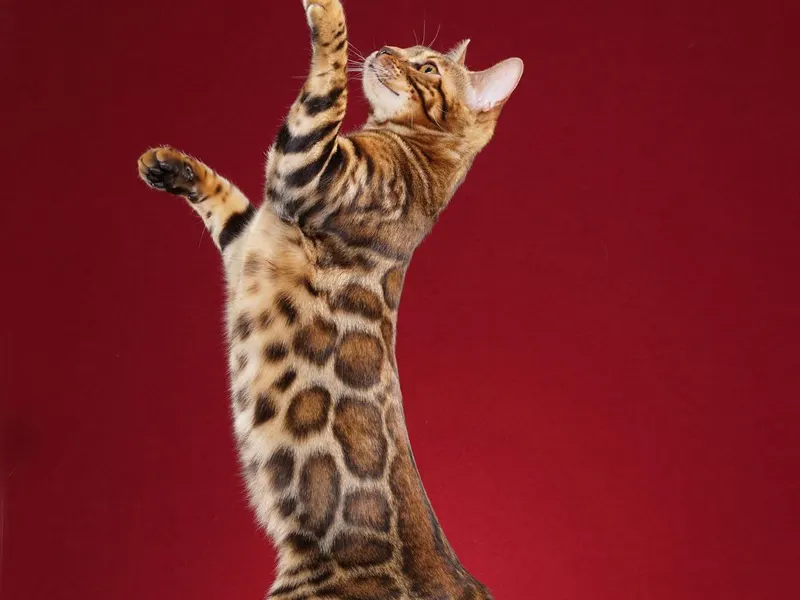
The Serengeti is a tall, long-legged spotted cat with large upright ears, bred to resemble the African serval without adding new wild cat blood. It is confident, very active and talkative, best suited to people who want an athletic, involved cat.
Why people love the Serengeti
- Bold, curious and affectionate
- Striking serval-like look from domestic breeds only
- Short coat needs little care
- Athletic, playful and often enjoys fetch
- Not a wild hybrid
Things to consider
- High energy; needs daily play and climbing space
- Often vocal
- Very rare; long waiting lists
- Limited health data for a young breed
- Can be shy at first in new situations
Is this breed right for you?
10 questions · live resultHistory and Origin
The breed was started in 1994 by Karen Sausman of Kingsmark Cattery in California, who had a background in conservation biology. Her aim was a domestic cat with the look of a serval: long legs, large ears and bold spots. She crossed Bengals with Oriental Shorthairs, and other breeders later joined the program.
Because the Bengal was itself developed from the Asian leopard cat many generations earlier, the Serengeti has distant wild ancestry, but no wild cat is used in its breeding. TICA accepts the Serengeti in its new breed program. It remains rare, with few breeders worldwide.
Size, Coat and Spotted Colors
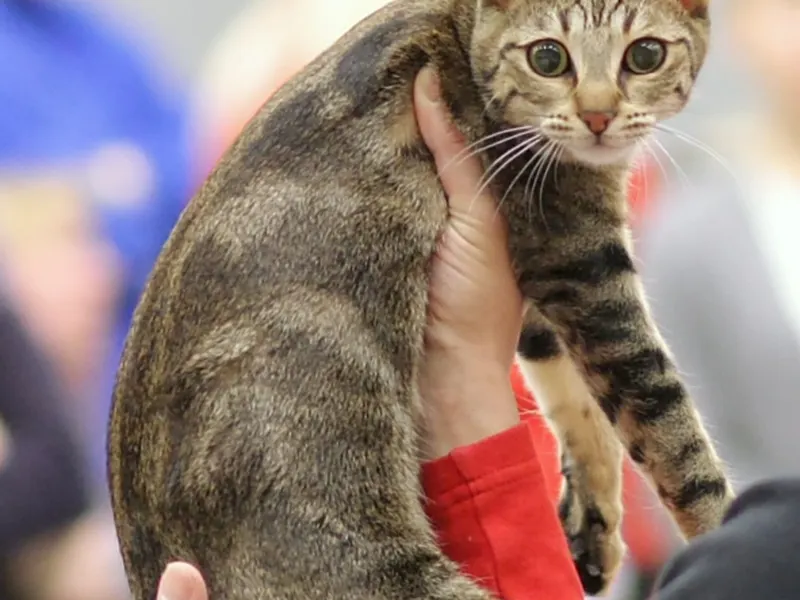
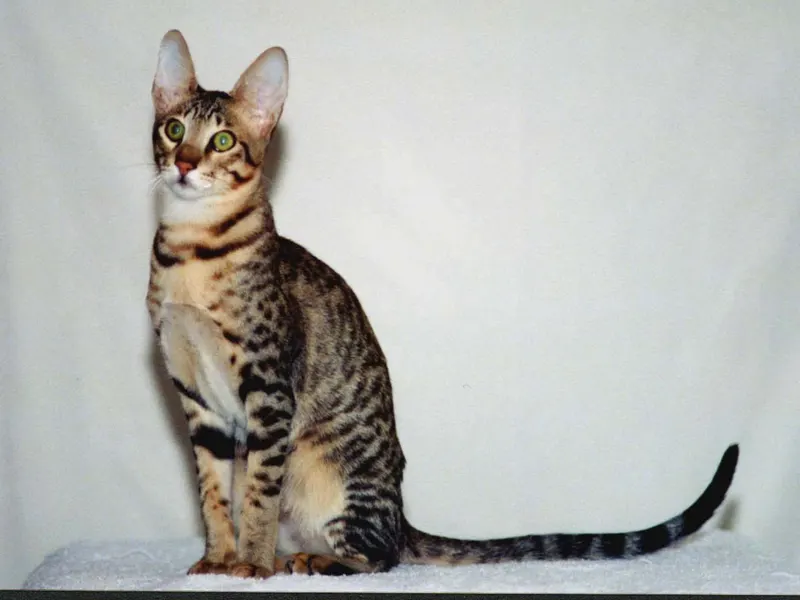
The Serengeti is a medium-sized, tall, athletic cat weighing roughly 8 to 15 lb. Males are larger and more muscular than females. The body is long and lean, with long legs that give the cat a tall stance, and a medium-length tail.
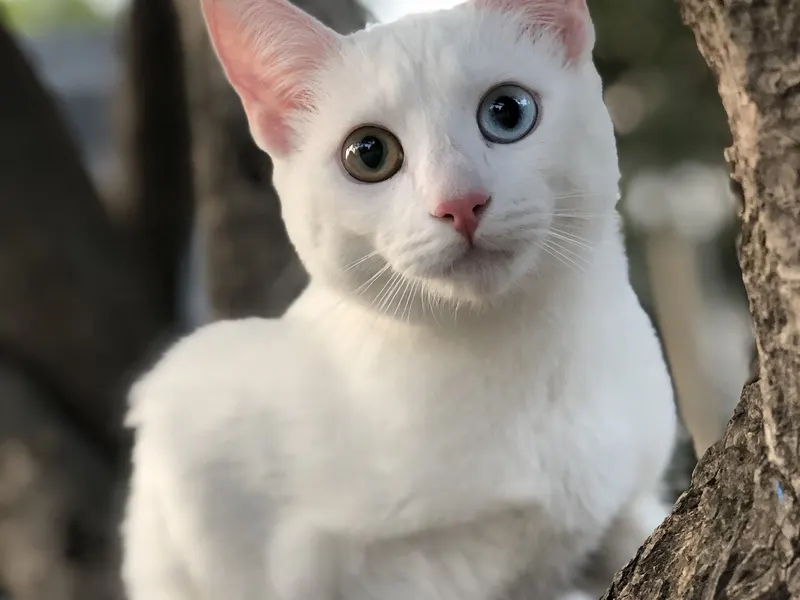
The head is a modified wedge, with very large, upright ears set high on the head, giving a serval-like silhouette. The eyes are large and round, in gold or green.
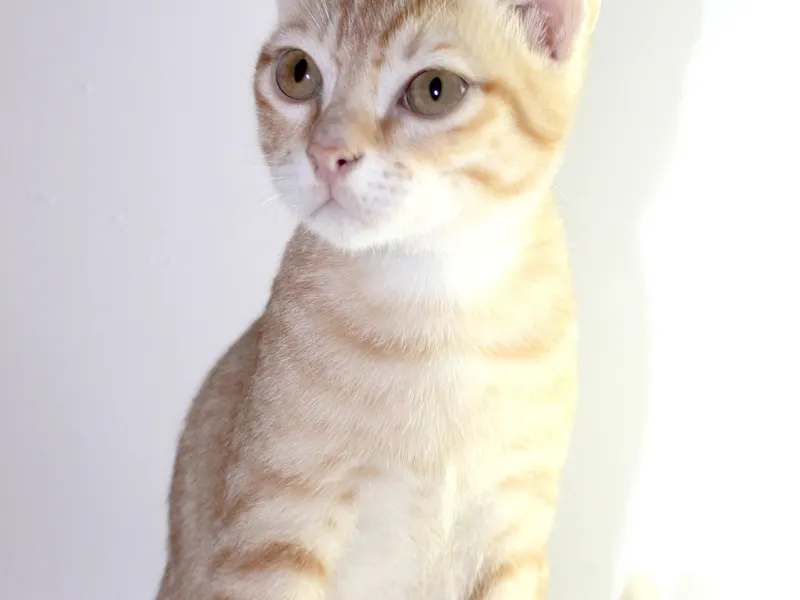
The coat is short, close-lying and soft. TICA recognizes brown spotted tabby, black silver spotted tabby, solid black and smoke. The spots should be bold and well separated, ideally round or oval, giving the striking wild look the breed was developed for. Solid and smoke cats often show ghost spotting in certain light.
Personality and Temperament
Serengetis are bold, curious and affectionate. They tend to be shy for a short time in new situations, then become confident and very involved with their people. They are often vocal, a trait from their Oriental side.
- Usually good with active, respectful children
- Can get on with cat-friendly dogs and other cats after slow introductions
- Follow owners around and like to be in the middle of things
Are Serengeti Cats Lap Cats?
Generally no. Serengetis are affectionate and like to be in the middle of things, but they are too active and curious for long lap sessions.
They show affection by following their owners, joining in household activities and seeking interaction. Some individuals enjoy short cuddles, especially after play. If you want an engaging cat that is always near you but not necessarily in your lap, a Serengeti may suit you. Many like to sleep near their owners at night, even if they will not stay still on a lap during the day.
Are Serengeti Cats Good for First-Time Owners?
They can be, if the owner is prepared for an active, vocal cat. Serengetis are affectionate, easy to groom and generally sociable.
The challenges are their energy and the breed's rarity. They need tall, sturdy cat furniture and several play sessions daily. Health data are limited because the breed is young, so choosing a breeder who uses DNA tests and heart screenings is important. First-time owners who enjoy interactive play and can wait for a kitten often do well with the breed. Expect a cat that wants to join in rather than watch from the sidelines.
Are Serengeti Cats Good with Kids and Dogs?
Generally yes, with active, respectful children and cat-friendly dogs. Serengetis are bold and curious and often enjoy family activity once they settle in.
They may be shy at first in new situations, so slow introductions are best. Teach children to play gently with wand toys rather than hands. With dogs, choose calm, cat-friendly breeds and introduce gradually with escape routes and high perches. Most Serengetis adapt well once they feel secure. Supervise early interactions until everyone is relaxed. Small caged pets should be kept secure.
Activity, Play and Enrichment
This is a high-energy, athletic breed with impressive jumping ability. Plan for tall, sturdy cat furniture, several play sessions a day and food puzzles. Many enjoy fetch and harness training. A playful second cat can help when you are out.
Grooming and Shedding
The short, close-lying coat needs little care. Brush weekly with a rubber mitt. Recognized colors are brown spotted tabby, black silver spotted tabby, solid black and smoke. Shedding is light.
Feeding and Nutrition
Serengetis are tall, athletic cats with high energy, and they usually maintain a lean, muscular build with enough play. Feed a complete, high-quality diet in measured meals, adjusting portions to activity and body condition.
Many Serengetis do well with two or three meals a day plus food puzzles and foraging games, which suit their active, curious nature.
Health data for the breed are limited, but conditions in its source breeds include hypertrophic cardiomyopathy and amyloidosis. Keeping cats lean and scheduling regular veterinary checks helps catch problems early.
Fresh water should always be available. Some Serengetis enjoy running water from a fountain. Use small treats for training, as many enjoy learning tricks and harness walking. Kittens grow fast and need several meals a day, moving gradually to two or three as adults. Weigh your cat every few months, since long legs and a lean frame can hide changes, and adjust portions after neutering, when energy needs often drop.
| Adult weight | Indoor, less active | Typical adult | Active or intact |
|---|---|---|---|
| 8 lb | 180 kcal | 220 kcal | 260 kcal |
| 12 lb | 250 kcal | 300 kcal | 350 kcal |
| 15 lb | 290 kcal | 350 kcal | 410 kcal |
Estimates use the resting energy formula veterinarians work with (70 × body weight in kg0.75) and standard activity factors. Use the feeding guide on your food as a starting point and adjust to body condition. Kittens, seniors, pregnant animals and pets that need to lose weight have different needs, so ask your vet.
Health and Lifespan
Serengetis are expected to live about 10 to 15 years, but health data are limited because the breed is young and small. Inherited conditions known in its source breeds include HCM and PK deficiency and PRA-b from the Bengal side, and amyloidosis and PRA (rdAc) from the Siamese family behind the Oriental. Ask breeders which DNA tests and heart screenings they use.
Serengeti Price and Cost of Ownership
Serengeti kittens are hard to find, with few breeders worldwide, and prices vary widely. There is no reliable typical US price range. Prices vary by breeder, region and lines. Expect waiting lists. Ask breeders which DNA tests and heart screenings they use, given the conditions in the Bengal and Oriental source breeds.
Rescue Serengetis are very rare.
Ongoing costs are moderate. Grooming is minimal. Main cost drivers include tall, sturdy cat trees and climbing spaces for this athletic breed, plus toys and puzzle feeders. Pet insurance is worth considering, given limited health data. Because the Serengeti has no recent wild ancestry, hybrid-cat permits are generally not required, but check local rules if you are unsure.
Is the Serengeti Right for You?
A Serengeti suits active households with time for daily play and space for climbing. It is not a good fit for someone wanting a calm lap cat or a quiet home.
Kittens are hard to find and prices vary widely, so there is no reliable typical US range. Expect waiting lists.
Serengeti Traits at a Glance
Serengeti FAQ
Is the Serengeti a hybrid cat?
Not in the usual sense. It is bred from Bengals and Oriental Shorthairs without adding wild cats, so it is treated as a domestic breed.
How big do Serengeti cats get?
They weigh about 8 to 15 lb (3.5 to 7 kg) and look tall because of their long legs.
Is a Serengeti the same as a Savannah?
No. The Savannah is a hybrid with the serval, while the Serengeti only imitates the serval look using domestic breeds.
Are Serengeti cats vocal?
Many are, often with a wide range of calls inherited from their Oriental ancestors.
Do Serengeti cats shed?
Lightly. Weekly brushing is enough.