Arabian MauA natural cat of the Arabian desert
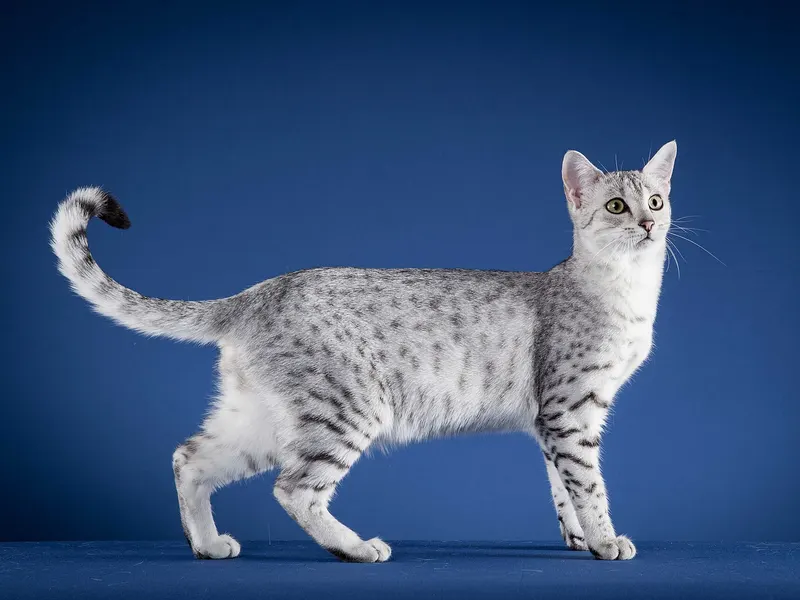
The Arabian Mau is a natural breed from the Arabian Peninsula: a lean, muscular shorthair with large ears, long legs and a coat that has no undercoat. It is active, loyal and confident, and suits owners who want an alert, athletic cat with a down-to-earth background.
Why people love the Arabian Mau
- Robust natural breed with no well-documented inherited disease
- Loyal, active and intelligent
- Short single coat needs only weekly brushing
- Light shedding
- Generally social with other cats
Things to consider
- Very rare outside the Middle East
- Not recognized by major US or UK registries
- Reserved with strangers at first
- Thin coat offers little warmth in cold climates
- Energetic; needs daily play and climbing space
Recognized by the World Cat Federation (WCF), not by TICA, CFA, FIFe or GCCF.
Is this breed right for you?
10 questions · live resultHistory and Origin
Cats of this type have lived for centuries in the deserts and later the towns and cities of the Arabian Peninsula. Living in extreme heat with limited food shaped them into lean, long-legged cats with big ears, which help release body heat, and a thin single coat.
In the early 2000s breeders in the United Arab Emirates, particularly in Dubai, began a program to document and preserve the type from local street cats. The World Cat Federation (WCF) recognized the Arabian Mau in 2008, making it one of the very few registered breeds from the region. TICA, CFA, FIFe and GCCF do not recognize it, and it remains rare outside the Middle East.
Size, Coat and Colors
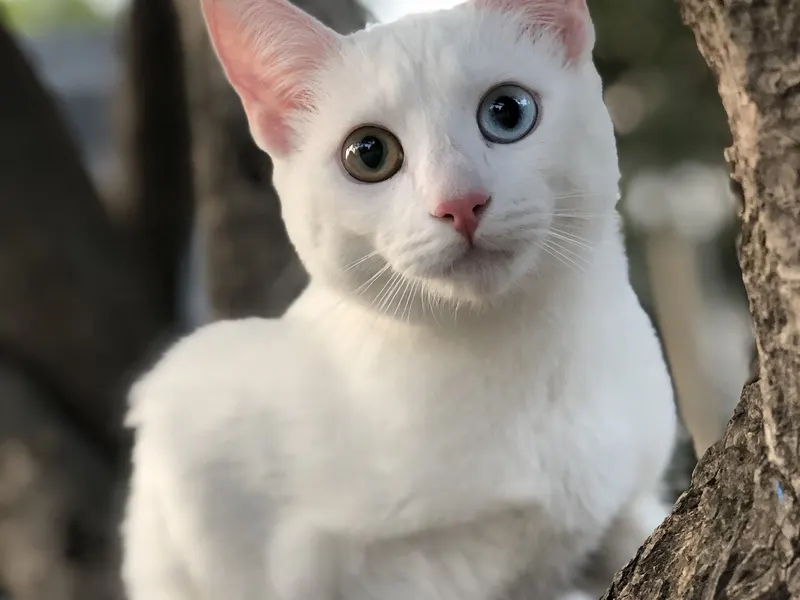
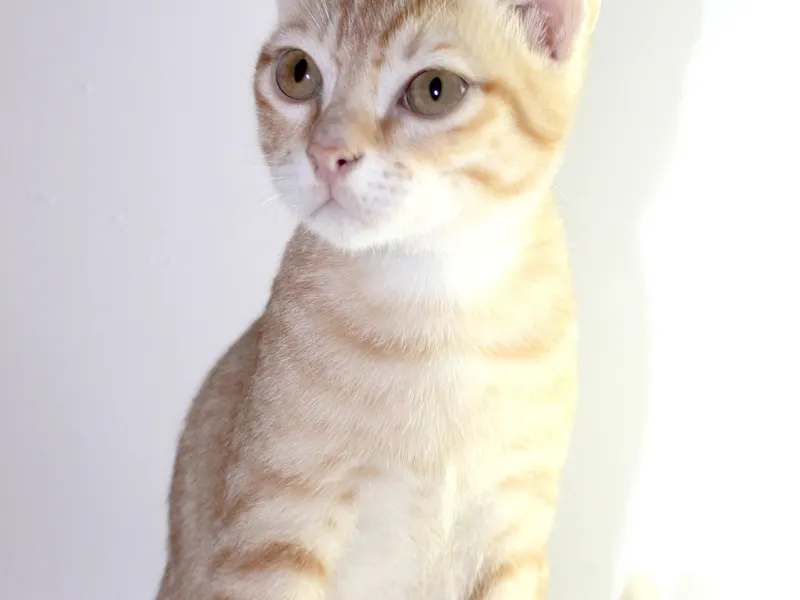
The Arabian Mau is a medium to large, lean, muscular shorthair with long legs, a slightly rounded head and large, pointed ears, adaptations that helped its ancestors cope with desert heat. Adults typically weigh about 8 to 15 lb. Males are usually larger and more muscular than females, with broader heads.
The eyes are large, slightly oval and set at a slight angle. The paws are oval, and the tail is medium length, tapering to the tip.
The coat is short, firm and close-lying, with no undercoat, so it feels smooth and sleek rather than plush. This single coat helps the cat stay cool in hot weather but offers little insulation in cold climates.
Colors: because the breed descends from local street cats, many colors and patterns occur. Common examples include:
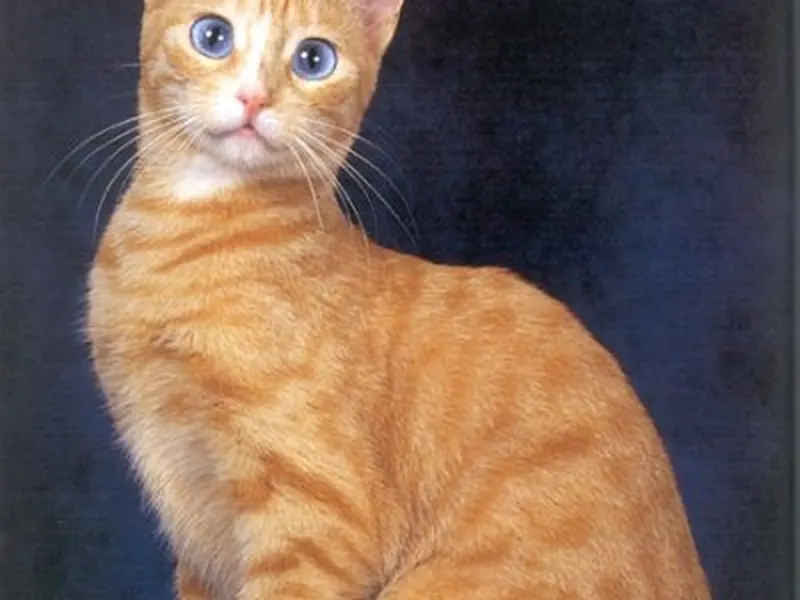
- solid colors such as white, black and red
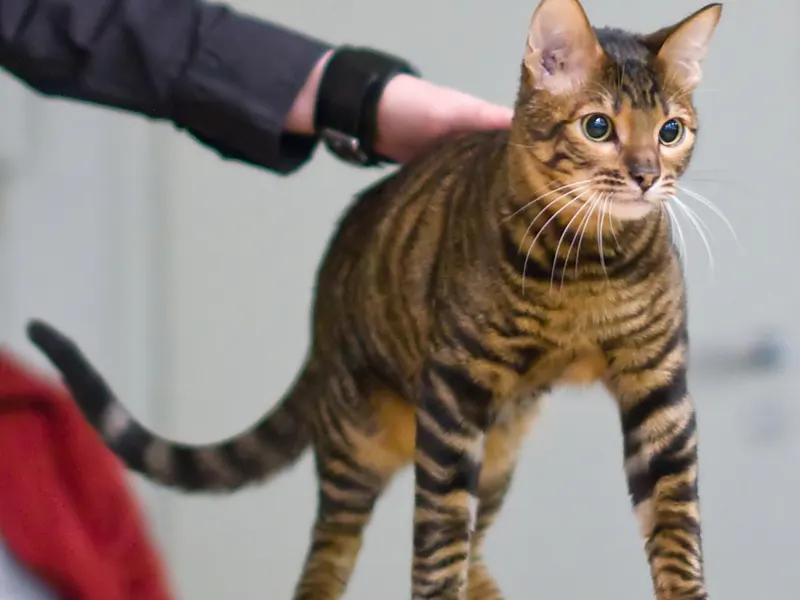
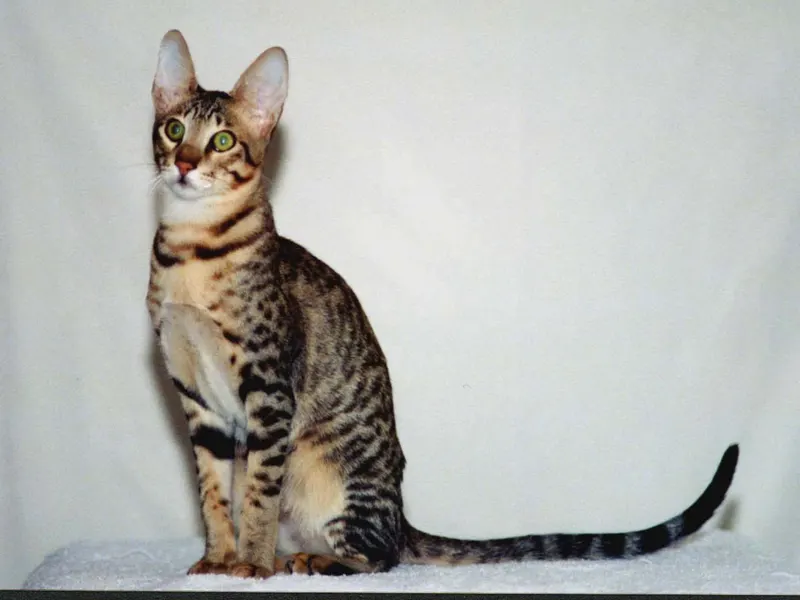
- tabby patterns, including brown tabby
- bicolors, with white combined with another color
The World Cat Federation, which recognizes the breed, sets the color rules. Because registered breeding is limited, appearance varies more than in long-established breeds.
Personality and Temperament
Arabian Maus are usually described as loyal, active and intelligent. They tend to bond closely with their household and like to stay near their people, but they keep an independent streak inherited from generations of fending for themselves.
Many are reserved with strangers at first and observe before approaching. They are generally social with other cats. With dogs, slow and careful introductions work best. Their voice is moderate; they will ask for food or attention but are not as chatty as Siamese-type breeds.
Are Arabian Maus Good With Kids?
Arabian Maus can do well with respectful children, especially older kids who enjoy active play. They are loyal and playful within their own household.
Because they are often reserved with strangers at first and have an independent streak, they prefer calm, gentle handling. Children should learn to let the cat approach them, use wand toys for play and avoid picking it up against its will. A quiet retreat, such as a high perch, gives the cat a place to rest. With young children, supervision is wise. Cats raised in busy family homes are usually more relaxed with kids.
Can Arabian Maus Live With Dogs?
Arabian Maus can live with dogs, but slow and careful introductions work best, as the breed tends to be cautious with new animals.
Start by keeping the cat and dog separate, swapping scents, then allowing short, supervised meetings. Make sure the cat has high escape routes, such as tall cat trees and shelves, and its own safe space with food, water and a litter box. Calm, cat-friendly dogs are the best match; dogs with a strong chase instinct are not. Arabian Maus raised with a dog from kittenhood usually adapt more easily.
Can Arabian Maus Be Indoor Cats?
Yes, Arabian Maus can live happily indoors, provided they get enough exercise, climbing space and mental stimulation.
Bred from street cats that hunted for a living, they are energetic and quick, so they need daily chase games, tall cat trees, wall shelves and puzzle feeders. Window perches let them watch birds and activity outside. A secure catio or harness walks give safe outdoor time without the risks of roaming. In colder climates, indoor living is especially sensible, because their thin single coat offers little protection from cold, wet weather. Provide warm sleeping spots in winter.
Activity, Play and Enrichment
Bred from street cats that hunted for a living, Arabian Maus are energetic and quick.
- Daily chase games with wand toys, balls and toy mice.
- Tall, stable cat trees and wall shelves for climbing and watching.
- Puzzle feeders that make them work for food.
- A secure catio or harness walks if you want to offer outdoor time safely.
Bored cats may become restless, so plan at least two play sessions a day.
Grooming and Shedding
The coat is short, firm and lies close to the body with no undercoat, which makes grooming simple. A weekly brush or rubber mitt is enough, and shedding is light.
Many colors and patterns occur, including solids, tabbies and bicolors, reflecting the breed's street cat roots. Their thin coat offers little insulation, so in colder climates provide warm sleeping spots and keep them indoors in winter.
Feeding and Nutrition
The Arabian Mau descends from cats shaped by scarce food in a desert climate, and it tends to be a lean, efficient cat. On rich diets with free-feeding, it can gain weight easily, especially indoors. Feed measured meals, check for a visible waist and ribs you can feel easily, and weigh your cat regularly.
Kittens: feed a complete, balanced kitten diet until around one year, divided into several small meals a day. Adults do well on two or more measured meals.
Hydration: like many cats with desert ancestry, Arabian Maus may not drink much on their own. Encourage water intake with a fountain, several water bowls or some wet food, which supports urinary health.
Activity and climate: active cats that hunt toys every day need more food than sedentary ones. In colder homes, a thin-coated cat may use a little more energy to stay warm, but adjust portions based on body condition, not assumptions.
Enrichment: puzzle feeders make the cat work for food, as its ancestors did. Count treats in the daily amount, and brush teeth regularly.
| Adult weight | Indoor, less active | Typical adult | Active or intact |
|---|---|---|---|
| 8 lb | 180 kcal | 220 kcal | 260 kcal |
| 12 lb | 250 kcal | 300 kcal | 350 kcal |
| 15 lb | 290 kcal | 350 kcal | 410 kcal |
Estimates use the resting energy formula veterinarians work with (70 × body weight in kg0.75) and standard activity factors. Use the feeding guide on your food as a starting point and adjust to body condition. Kittens, seniors, pregnant animals and pets that need to lose weight have different needs, so ask your vet.
Health and Lifespan
Arabian Maus are considered a robust natural breed, with a typical lifespan of roughly 12 to 16 years. No breed-specific inherited disease is well documented, but published health data is limited, so standard preventive care matters:
- Vaccinations, parasite control and annual vet checks.
- Dental care, since gum disease affects cats of every breed.
- A lean body condition: a cat built for scarce food can gain weight on rich diets and free feeding.
Arabian Mau Price and Cost of Ownership
The Arabian Mau is very rare outside the Middle East, and there is no established breeder market in the United States, so a reliable US price range cannot be given. Most registered cats are bred in the United Arab Emirates and nearby countries, and importing one adds transport, travel, health certificate and paperwork costs. Prices vary by breeder, region and lines.
Because the breed is recognized by the World Cat Federation but not by TICA, CFA, FIFe or GCCF, showing options in the US and UK are limited.
Adoption is a realistic alternative if you mainly like the type: lean, short-coated, big-eared domestic cats are common in shelters.
Ongoing costs are similar to other medium-sized shorthair cats. The main drivers are enrichment, dental care and routine preventive care. Warm beds may be needed in cold climates.
Is the Arabian Mau Right for You?
An Arabian Mau suits active owners who want a loyal, intelligent cat and can offer daily play and climbing space. It adapts to indoor life if kept busy.
Outside the Middle East the breed is very rare and finding a registered kitten may require import. There is no reliable US price range, and adopting a similar-looking cat from a shelter is an option if you mainly like the type.
Arabian Mau Traits at a Glance
Arabian Mau FAQ
Is the Arabian Mau a recognized breed?
It is recognized by the World Cat Federation (WCF) since 2008, but not by TICA, CFA, FIFe or GCCF.
How big do Arabian Mau cats get?
Adults typically weigh about 8 to 15 lb (about 3.5 to 7 kg), with a lean, muscular build and long legs.
Do Arabian Maus shed?
Shedding is light because they have a short single coat with no undercoat.
Are Arabian Maus friendly?
They are loyal and affectionate with their own family but often reserved with strangers at first.
How long do Arabian Maus live?
Roughly 12 to 16 years, though reliable breed-specific data is limited.
Are Arabian Maus hypoallergenic?
No. They produce the Fel d 1 allergen like other cats, even though they shed lightly.