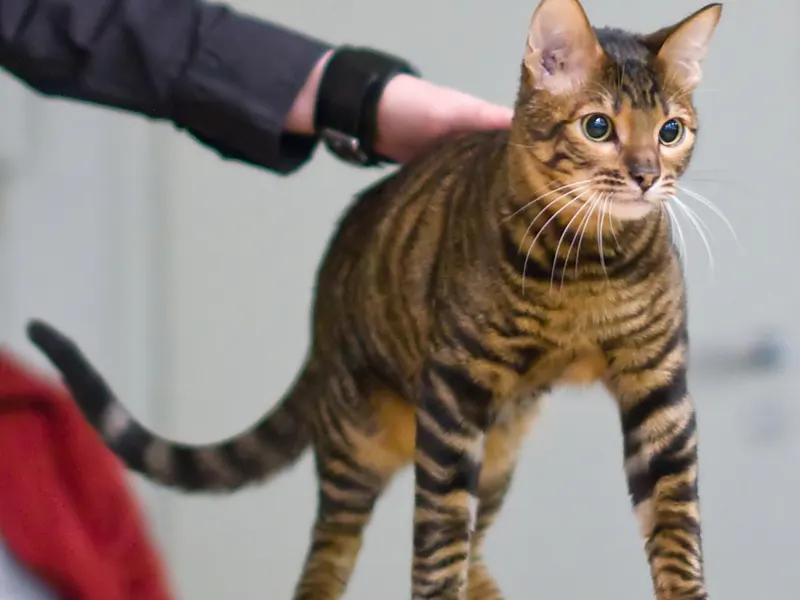
ToygerA designer cat with tiger stripes
The Toyger is a striped domestic cat deliberately bred to resemble a miniature tiger, with bold, branching mackerel stripes on a bright orange background. It is easygoing, sociable and trainable, and suits families who want a wild look without a wild temperament.
Why people love the Toyger
- Striking tiger-like stripes with a relaxed temperament
- One of the more trainable cat breeds
- Usually good with children, cats and dogs
- Short coat needs only weekly brushing
- Adapts well to indoor and apartment life
Things to consider
- Rare; expect waiting lists and higher prices
- Prefers company; not ideal for long absences
- Young breed with limited long-term health data
- Food motivation can lead to weight gain
- Needs daily play to stay content
Is this breed right for you?
10 questions · live resultHistory and Origin
The Toyger was created by Judy Sugden in California in the 1980s. She started with a striped domestic shorthair and a Bengal, and later added a street cat from Kashmir, India, which had distinctive markings on its head. Judy Sugden is the daughter of Jean Mill, the breeder behind the Bengal.
Her stated aim was a cat that might raise awareness of tiger conservation by making people think about wild tigers. Toygers are domestic cats; although Bengals feature in the early pedigree, today's cats are many generations removed from any wild ancestor. TICA granted championship status in 2007, and the breed is still being refined toward its goal of a rounder head, small rounded ears and vertical, broken stripes.
Size, Stripes and Coat
The Toyger is a medium-sized, muscular cat with a long, low-slung body, a deep chest and strong legs, often described as a small tiger walking. Adults typically weigh 7 to 15 lb. Males are usually larger and more muscular, while females sit toward the lower end of the range.
The head is long with a strong chin and nose, small rounded ears and small, deep-set eyes. The long-term breeding goal is a rounder head and smaller ears, and many cats are still developing toward this look.
The coat is short, dense and plush, sometimes with glitter, a sparkly sheen on the hair tips.
Color and pattern: only brown mackerel tabby is accepted. The ideal pattern includes:
- bold, vertical, branching stripes, rather than parallel tabby lines
- circular markings on the head, rather than the usual tabby M
- a bright orange background, with high contrast against dark stripes
- a pale or white belly and inner legs
Pet-quality Toygers may have softer or less contrasting stripes.
Personality and Temperament
Toygers are typically friendly, relaxed and confident. They enjoy company and tend to follow their people around without being clingy. Most are only moderately vocal.
They are known as one of the more trainable breeds and often learn to walk on a harness, come when called or play fetch. Their laid-back nature means they usually get on with children, other cats and dogs, and they tend to settle quickly in new situations.
Are Toygers Lap Cats?
Toygers are affectionate and sociable, but most are not dedicated lap cats. They prefer to stay close to their people and join in what they are doing.
Many Toygers follow their owners around, sit beside them on the sofa and enjoy being petted, then go back to playing or exploring. Some individuals, especially older cats, do enjoy lap time. Their relaxed, confident personality makes them easy to handle and usually tolerant of being picked up. If lap sitting is important to you, ask the breeder about the parents' habits and look for a kitten that seeks out human contact when you visit.
Are Toygers Good for First-Time Owners?
Yes, Toygers are a good choice for first-time owners. They are friendly, easygoing and adaptable, with simple grooming needs and a relaxed temperament.
New owners should plan for daily interactive play, climbing space and enrichment, since Toygers are active and intelligent. Their trainability is a plus: many learn to walk on a harness, come when called or play fetch, which helps new owners build a strong bond. The main hurdles are the price and waiting lists, as the breed is rare. Choose a breeder who raises kittens in a busy household, so the cat is already used to everyday noise.
Can Toygers Be Left Alone?
Toygers can manage a normal workday alone, but they enjoy company and are happiest when someone is home for much of the day or they have another pet.
Before you leave, give your Toyger a play session and provide puzzle feeders, toys and a window perch. A second cat or a cat-friendly dog makes long days easier, and Toygers generally get on well with other pets. For trips of more than a day, arrange a pet sitter who visits and plays daily. Kittens need more attention and should not be left alone for long while they settle in.
Activity, Play and Enrichment
Toygers are active and athletic but not as intense as Bengals. Daily play keeps them fit and content.
- Clicker training and trick sessions suit their intelligence and food motivation.
- Leash walks in a quiet garden or yard are a good outlet.
- Tall, stable cat trees and a window perch for watching birds.
- Puzzle feeders and hide-and-seek games with treats.
Two short, focused play sessions a day are usually enough to prevent boredom.
Grooming and Shedding
The coat is short, dense and plush, sometimes with glitter, a sparkly sheen to the tips of the hairs. A weekly brush or rubber mitt keeps it in good condition. Shedding is light to moderate.
Colors are limited to brown mackerel tabby, with the brightest orange and the darkest black stripes preferred, and a pale belly. Check ears and teeth regularly and trim nails every couple of weeks.
Because the breed standard is so focused on markings, pet-quality Toygers may simply have stripes that are less crisp or a coat that is less bright than show cats. That makes no difference to them as companions.
Feeding and Nutrition
Toygers are muscular, active cats, and they should stay lean and athletic. Because many are highly food-motivated, which makes them easy to train, weight gain is a common risk, especially for indoor cats. Feel for the ribs and check for a slight waist, and weigh your cat regularly.
Kittens: feed a complete, balanced kitten diet until around one year, divided into several meals a day. Adults do well on measured meals rather than free-feeding.
Training treats: use small pieces of the daily food or very small, light treats during clicker training and harness work. Count every treat in the daily amount.
Enrichment feeding: puzzle feeders, treat balls and hide-and-seek games with food tap into the breed's intelligence and slow down eating.
Hydration: encourage water intake with a fountain, wide bowls or wet food, which supports urinary health.
Dental health: brush teeth regularly and schedule vet dental checks, since dental disease is a common, preventable problem.
| Adult weight | Indoor, less active | Typical adult | Active or intact |
|---|---|---|---|
| 7 lb | 170 kcal | 200 kcal | 230 kcal |
| 11 lb | 230 kcal | 280 kcal | 330 kcal |
| 15 lb | 290 kcal | 350 kcal | 410 kcal |
Estimates use the resting energy formula veterinarians work with (70 × body weight in kg0.75) and standard activity factors. Use the feeding guide on your food as a starting point and adjust to body condition. Kittens, seniors, pregnant animals and pets that need to lose weight have different needs, so ask your vet.
Health and Lifespan
Toygers usually live 10 to 15 years. As a young breed with a relatively small gene pool, there is limited long-term health data, but no major breed-specific inherited disease is well documented.
- Heart murmurs and cardiomyopathy have been mentioned in some breed literature; asking about heart screening is sensible.
- As with many breeds, dental disease and obesity are common preventable problems.
Ask breeders about the health of related cats, vet checks on parents and how they keep the gene pool diverse.
Toyger Price and Cost of Ownership
Typical breeder price in the US$1,500 to $3,000
A pet-quality Toyger kitten from a reputable US breeder typically costs around $1,500 to $3,000. Prices vary by breeder, region and lines, and show-quality kittens with exceptional markings cost more. The breed is rare, so expect a waiting list. Ask breeders about heart screening of the parents and how they maintain genetic diversity in a small gene pool.
Adoption of a purebred Toyger is uncommon, though striped domestic shorthairs with similar looks are widely available in shelters.
Ongoing costs are similar to other medium-sized shorthair cats. The main drivers are enrichment, such as sturdy cat trees, harnesses and puzzle feeders, dental care and routine health checks. Because the breed is young and health data is limited, pet insurance can help with unexpected costs, including heart conditions if they appear.
Is the Toyger Right for You?
Toygers suit families, first-time owners and multi-pet homes that want an active, trainable cat with a striking look. They adapt well to indoor life and apartments if given play and climbing space.
They are rare, so expect waiting lists and higher prices. They also prefer company, so households where nobody is home for long periods should consider a second cat.
When choosing a breeder, ask to meet the parents or see videos of them at home. A Toyger's relaxed temperament is one of its main selling points, so look for kittens raised in a busy household and used to everyday noise.
Toyger Traits at a Glance
Toyger FAQ
Is a Toyger part tiger?
No. Toygers are fully domestic cats bred to look like tigers. There is no tiger DNA in the breed.
How big do Toyger cats get?
Adults typically weigh 7 to 15 lb (about 3 to 7 kg), with a long, muscular body.
How much does a Toyger cat cost?
Pet-quality kittens in the US typically cost around $1,500 to $3,000, though prices vary by breeder and region.
Are Toygers good pets?
Yes, they are generally friendly, trainable and good with children and other pets.
Do Toygers shed?
They shed lightly to moderately. A weekly brush is usually enough.
Are Toygers hypoallergenic?
No. They produce Fel d 1 like other cats and are not suitable for people with significant cat allergies.