Egyptian MauNaturally spotted, green-eyed and fast
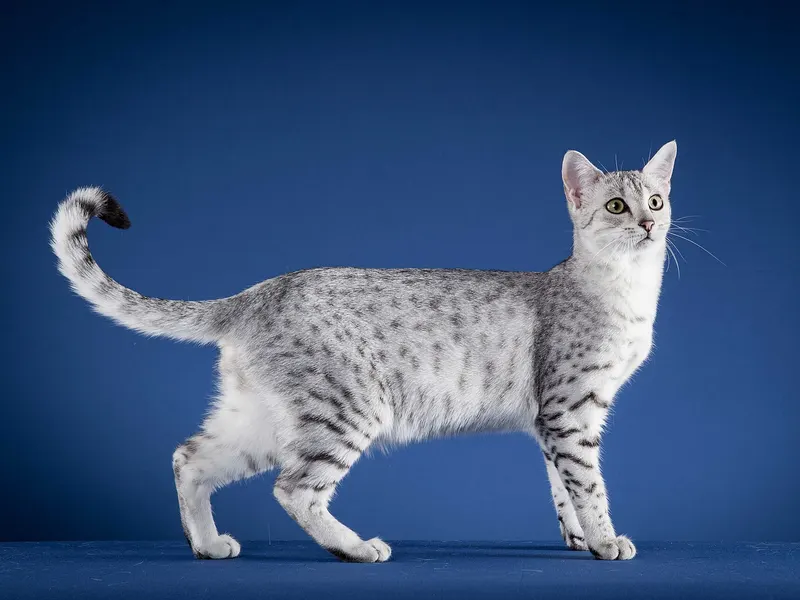
The Egyptian Mau is one of the few naturally spotted domestic breeds, with gooseberry-green eyes and a worried expression. It is athletic, loyal to its own people and suits owners who want an active cat with a striking, wild look.
Why people love the Egyptian Mau
- Naturally spotted coat with a striking, wild look
- Loyal and devoted to its family
- Athletic, playful and fun to engage
- Short coat sheds lightly and needs little care
- Generally sound breed with a DNA test for PK deficiency
Things to consider
- Often shy or reserved with strangers
- Sensitive to loud noise and sudden change
- Strong hunting drive; small pets need protection
- Rare, with waiting lists for kittens
- Needs daily active play and climbing space
Is this breed right for you?
10 questions · live resultHistory and Origin
Spotted cats appear in ancient Egyptian art, and the word mau simply means cat in ancient Egyptian. A direct link between those cats and today's breed cannot be proven, but the modern Egyptian Mau does descend from street cats of Egypt and the Middle East.
The breed as we know it began in 1956, when Russian exile Princess Nathalie Troubetzkoy brought three Maus from Rome to the United States, including a silver female named Baba. The gene pool was very small, and later imports from Egypt and India helped broaden it. CFA granted championship status in 1977.
The breed also has a longer history in Britain, where some cats called Egyptian Maus in the past were actually Oriental-type spotted cats bred from Siamese lines. Today the name refers to the naturally spotted breed from Egyptian stock, and it remains uncommon on both sides of the Atlantic.
Size, Colors and Coat
The Egyptian Mau is a medium-sized, muscular cat weighing roughly 6 to 11 lb, with an elegant yet powerful build. Males are typically larger and more muscular than females. The hind legs are slightly longer than the front legs, giving the impression that the cat stands on tiptoe. A loose flap of skin from flank to back knee allows a long stride.
The head is a slightly rounded wedge, and the large, alert ears are moderately pointed. The eyes are almond-shaped and gooseberry green, though kittens may have amber-tinted eyes that turn green by about 18 months.
The coat is short, silky and fine, with random spots that are naturally occurring. Three colors are accepted for showing:
- Silver: charcoal spots on a pale silver ground
- Bronze: dark brown spots on a warm bronze ground
- Smoke: jet black spots on a smoky gray ground
Black and dilute colors occur but are not shown.
Personality and Temperament
Maus are devoted to their families and can be reserved, even shy, with strangers. Many choose one or two favorite people. They show contentment with a distinctive behavior owners call wiggling: treading with the back feet and twitching the tail.
Their voice is often a soft, melodious chirp. They are sensitive to loud noise and sudden change. With patient children and calm dogs who respect their space, they adapt well.
Many Maus are food-motivated and quickly learn routines, such as when dinner is due. They often enjoy being up high and may prefer watching visitors from a shelf before deciding to approach. Give a new Mau a quiet room to settle into before introducing it to the whole household.
Are Egyptian Maus Lap Cats?
Some are, but most Egyptian Maus are more active and loyal than lap-oriented. They usually show affection by following their people, chirping and wiggling their tails rather than sitting still on laps for long.
Many Maus enjoy cuddling with their favorite person, especially in the evening or when the house is quiet. They bond strongly with one or two people and may choose a shoulder or nearby shelf instead of a lap. A Mau that has been well socialized as a kitten and handled gently is more likely to enjoy lap time.
Is the Egyptian Mau Good for First-Time Owners?
It can be, for a calm first-time owner who wants an active cat. Maus are loyal and generally sound, and their short coat is easy to care for.
Beginners should be ready for a sensitive, sometimes shy cat that takes time to trust new people and dislikes loud, chaotic homes. Daily active play and plenty of climbing space are essential. A quiet room to settle in, a predictable routine and patience go a long way. Finding a kitten also takes research, as the breed is rare and waiting lists are common.
Can Egyptian Maus Live With Dogs?
Yes, many Egyptian Maus live well with calm, cat-friendly dogs that respect their space. Maus are confident on their own terms and often enjoy a dog's company once trust is built.
Introductions should be slow and quiet, as Maus are sensitive to noise and sudden movement. Provide tall cat trees and shelves so the Mau can watch the dog from above. Energetic or noisy dogs may stress a Mau. Small pets such as birds, hamsters or rabbits are a different matter, as the Mau's strong hunting drive makes them vulnerable.
Activity, Play and Enrichment
The Mau has a loose flap of skin from flank to back leg that allows a long stride, and it is often called the fastest domestic cat breed. Speeds around 30 mph are frequently quoted, though not formally measured.
- Daily chase games with wand toys or thrown balls let them sprint.
- Tall cat trees and shelves satisfy their urge to climb.
- Puzzle feeders tap into their strong hunting drive.
Keep small pets like birds and rodents well protected.
Grooming and Shedding
The short, silky coat needs little care: a weekly brush or rub with a grooming mitt is enough. Shedding is light.
Three colors are recognized by most registries: silver, bronze and smoke, each with random spots and a scarab or M marking on the forehead. Pay attention to dental care, and trim nails regularly.
Feeding and Nutrition
Many Egyptian Maus are food-motivated and quickly learn when meals are due, which can make them prone to begging and weight gain if portions are not measured. Keep the lean, athletic shape that suits this fast, agile breed.
- Feed measured meals, typically two or three a day for adults, rather than free-feeding.
- Kittens need more frequent meals until around six months.
- Use puzzle feeders to tap into the Mau's strong hunting drive and slow down eager eaters.
Keep treats to a small share of the daily diet, and use them for training or routines. Encourage drinking with a water fountain or wet food to support urinary health. PK deficiency is a genetic blood disorder, not a dietary issue; ask your breeder for test results. Weigh your cat monthly and adjust portions to activity.
| Adult weight | Indoor, less active | Typical adult | Active or intact |
|---|---|---|---|
| 6 lb | 150 kcal | 180 kcal | 210 kcal |
| 8 lb | 180 kcal | 220 kcal | 260 kcal |
| 11 lb | 230 kcal | 280 kcal | 330 kcal |
Estimates use the resting energy formula veterinarians work with (70 × body weight in kg0.75) and standard activity factors. Use the feeding guide on your food as a starting point and adjust to body condition. Kittens, seniors, pregnant animals and pets that need to lose weight have different needs, so ask your vet.
Health and Lifespan
Egyptian Maus generally live 12 to 15 years and are considered fairly sound. Points to be aware of:
- Pyruvate kinase (PK) deficiency occurs in the breed; a DNA test is available.
- Leukodystrophy has been reported in some lines, though it is rare.
- Maus may be sensitive to anesthesia and to cold temperatures because of their lean build; mention the breed to your vet.
Choose a breeder who DNA-tests for PK deficiency and is open about family health.
Egyptian Mau Price and Cost of Ownership
Typical breeder price in the US$800 to $2,000
An Egyptian Mau kitten from a reputable US breeder typically costs around $800 to $2,000. Prices vary by breeder, region and lines, and show-quality kittens can cost more. The breed is rare, so waiting lists are common. Ask for PK deficiency DNA test results.
Maus occasionally appear in rescues, but adoption options are limited. Breed clubs sometimes know of retired breeding cats looking for pet homes.
Breed-specific ongoing cost drivers include:
- Tall cat trees and wall shelves for climbing
- Pre-anesthetic bloodwork and careful anesthesia planning, as Maus may be sensitive
- Pet insurance covering inherited conditions
- Interactive toys and puzzle feeders to keep an active cat engaged
Is the Egyptian Mau Right for You?
Maus suit calm households with people who enjoy active play and want a loyal cat. They are a good choice for indoor homes with climbing space.
They are less suitable for chaotic homes, frequent visitors or owners who want a cat that loves everyone. Their rarity means waiting lists are common.
Expect a strong bond rather than instant friendship. Owners who put in the time with patient play and a predictable routine are usually rewarded with a loyal, playful companion that follows them around the house and chirps to greet them.
Egyptian Mau Traits at a Glance
Egyptian Mau FAQ
How fast is an Egyptian Mau?
They are often called the fastest domestic cat, with speeds around 30 mph commonly quoted, but this figure has not been formally measured.
How big do Egyptian Maus get?
Adults typically weigh 6 to 11 lb (about 3 to 5 kg), with males larger.
Are Egyptian Maus hypoallergenic?
No. They produce Fel d 1 like other cats, although their short coat sheds lightly.
Are Egyptian Maus friendly?
They are very affectionate with their families but often reserved with strangers.
How long do Egyptian Mau cats live?
Typically 12 to 15 years with good care.
How much does an Egyptian Mau kitten cost?
Pet-quality kittens from US breeders usually cost about $800 to $2,000, and waiting lists are common.