Russian BlueQuiet, loyal and silver-blue
The Russian Blue is a slender, graceful cat with a dense, silver-tipped blue coat and vivid green eyes. It is gentle, quiet and deeply attached to its own people while staying reserved with strangers, a good fit for calm homes and for owners who like routine.
Why people love the Russian Blue
- Gentle, affectionate and quietly devoted
- Soft-voiced and rarely demanding
- Copes well alone during a working day
- Low-maintenance short coat
- Often lives 15 to 20 years
Things to consider
- Shy with strangers and dislikes noisy chaos
- Prone to weight gain; food-motivated
- Sensitive to changes in routine
- Bonds closely with one or two people
- Can remember unpleasant experiences
Is this breed right for you?
10 questions · live resultHistory and Origin
The breed is believed to come from the port of Arkhangelsk (Archangel) in northern Russia, and British sailors are said to have brought cats from there to England in the 1860s. That origin story is traditional rather than documented, but blue cats called Archangel Cats were shown at the Crystal Palace in London in 1875.
The breed nearly disappeared during the Second World War. Breeders in Britain and Scandinavia rebuilt it using Siamese and British Blue crosses, which changed the look for a time, and later worked back toward the original type. In the US, the modern breed developed mainly from the 1940s onward, combining Scandinavian and British lines. In the UK it is registered simply as the Russian.
Coat, Color and Build
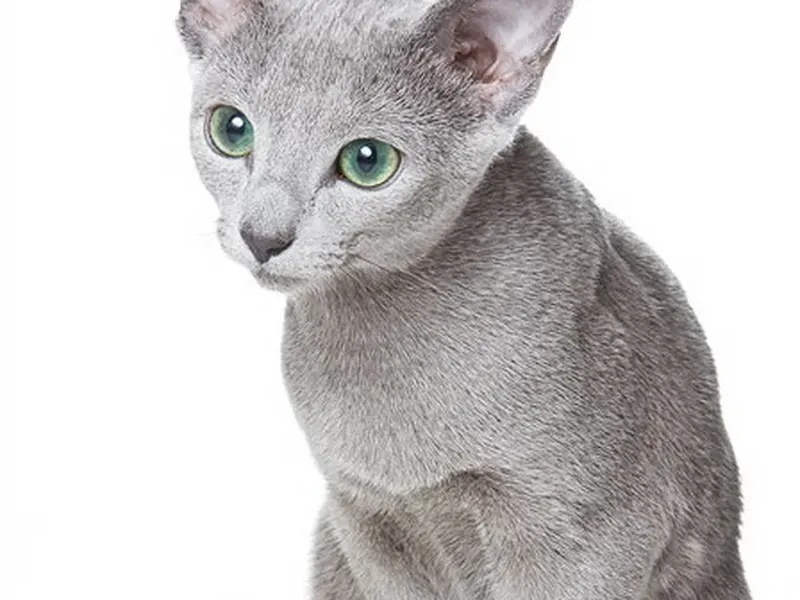
The Russian Blue is a medium-sized, fine-boned but muscular cat weighing about 7 to 15 lb. It has a long, graceful body, long legs, small oval paws and a long, tapering tail. The head is a modified wedge with a flat top, large, wide-set ears and vivid green eyes. Kittens are born with yellow eyes that gradually turn green over the first year or two.
The coat is short, dense and plush, a double coat that stands out from the body. It is famously soft and holds a finger trace. Each hair is tipped with silver, giving the coat a shimmering, silvery sheen.
In CFA and TICA, the only accepted color is an even, bright blue-gray with silver tipping. Some registries in other countries also recognize Russian White, Black or other colors as separate varieties. Males are usually larger and heavier than females, with broader heads and more muscular bodies.
Personality and Temperament
Russian Blues are affectionate, gentle and sensitive. They tend to bond closely with one or two people and follow them around quietly. With guests they often hide at first and come out only once they feel safe.
- Soft-voiced and rarely demanding
- Prefer predictable routines and dislike noisy chaos
- Good with calm, older children and patient pets
- Generally cope well alone during a working day
They are playful and smart, and many learn to fetch or open doors.
Owners often describe Russian Blues as sensitive to mood. They tend to seek out a person who is upset or unwell and settle quietly nearby. They also remember unpleasant experiences, so gentle handling and positive vet visits from kittenhood pay off.
Once they trust you, they show affection through head-butts, sitting close and following you between rooms rather than demanding constant attention.
Are Russian Blue Cats Good for First-Time Owners?
Yes, the Russian Blue is a good choice for first-time cat owners who have a calm, predictable home.
The breed is gentle, low-maintenance and generally healthy. It does not need much grooming and copes well alone during working hours. The main things to understand are its sensitivity and shyness. Russian Blues prefer quiet routines, may hide when visitors arrive and need time to trust new people. First-time owners who are patient, keep routines consistent and manage portions carefully usually find the breed very rewarding.
Are Russian Blue Cats Good with Kids?
Russian Blues do well with calm, older children who handle them gently.
They are affectionate and playful but dislike noisy chaos and rough handling. Toddlers and young children who chase or grab may cause the cat to hide. Teach children to let the cat approach them, to play with wand toys rather than hands and to respect the cat's retreat spaces. In calm family homes, Russian Blues often form close bonds with children who are gentle and patient.
A quiet retreat space helps the cat feel secure.
Can Russian Blue Cats Live with Dogs?
Russian Blues can live with calm, cat-friendly dogs, especially when introduced slowly.
They are sensitive and may be stressed by boisterous or noisy dogs. A quiet, respectful dog that does not chase is the best match. Introduce the two gradually, starting with scent swapping and separated spaces, and give the cat high perches and escape routes. Patience pays off: once a Russian Blue feels safe, it often accepts a gentle dog as part of the household.
Give the cat dog-free zones such as a baby-gated room.
Activity, Play and Enrichment
Energy is moderate. Russian Blues enjoy daily play sessions with feather wands, small toys to bat around and puzzle feeders. Climbing shelves and a window perch keep them content in an apartment.
They are food-motivated, so measure meals and use play to manage weight. Introduce changes in furniture, people or pets gradually, since abrupt change can stress them.
Good enrichment ideas for this breed include:
- Fetch with small toys, which many Russian Blues learn on their own
- Treat balls and snuffle mats to slow down eating
- A quiet, elevated hideaway where they can retreat when guests arrive
Keep routines for meals and play consistent; this breed handles change better when the rest of the day is predictable.
Grooming and Shedding
The double coat is short, thick and stands out from the body, so it holds a finger trace. It needs little work: brush or comb once a week to remove loose hair, and more often during seasonal shedding. Trim nails and check teeth regularly.
Feeding and Nutrition
Russian Blues are food-motivated and prone to weight gain, which is the most common health problem in the breed. Obesity raises the risk of diabetes and joint problems. Measure meals carefully and avoid free-feeding. You should be able to feel the ribs easily without pressing, and the cat should have a visible waist.
- Feed kittens three or four small meals a day and adults two or three measured meals.
- Use puzzle feeders and treat balls to slow eating and add mental stimulation.
- Count treats in the daily ration and keep them small.
Some Russian Blues are prone to bladder stones and urinary issues. Encourage water intake with fresh water in several places, a water fountain and, if your vet agrees, some wet food in the diet. Russian Blues prefer routine, so keep meal times consistent and introduce diet changes gradually. As they age, regular vet checks with blood and urine tests help catch kidney and thyroid problems early.
| Adult weight | Indoor, less active | Typical adult | Active or intact |
|---|---|---|---|
| 7 lb | 170 kcal | 200 kcal | 230 kcal |
| 11 lb | 230 kcal | 280 kcal | 330 kcal |
| 15 lb | 290 kcal | 350 kcal | 410 kcal |
Estimates use the resting energy formula veterinarians work with (70 × body weight in kg0.75) and standard activity factors. Use the feeding guide on your food as a starting point and adjust to body condition. Kittens, seniors, pregnant animals and pets that need to lose weight have different needs, so ask your vet.
Health and Lifespan
The Russian Blue is generally considered a healthy, robust breed, and many live 15 to 20 years. No major breed-specific inherited disease is well documented.
- Obesity is the most common problem, often leading to diabetes and joint strain
- Bladder stones and urinary issues are seen in some cats, so encourage water intake
- Routine dental care and yearly checkups still apply
Because many Russian Blues reach their late teens, plan for senior care: twice-yearly vet visits after about age 10, with blood and urine tests to catch kidney disease and thyroid problems early.
Russian Blue Price and Cost of Ownership
Typical breeder price in the US$1,000 to $3,000
A Russian Blue kitten from a reputable US breeder typically costs about $1,000 to $3,000. Prices vary by breeder, region and lines, and show-quality or breeding cats may cost more. Many gray cats are sold as Russian Blues without papers, so ask for registration and pedigree.
Adoption is a good option. Adult Russian Blues sometimes come up through breed rescues and shelters, and a calm adult can suit a quiet home well.
Breed-specific ongoing costs are modest. The coat needs no professional grooming. Budget for routine vet care, dental cleanings and, because many Russian Blues live 15 to 20 years, senior care with regular blood and urine tests. Insurance that covers urinary problems and diabetes is worth comparing while the cat is young.
Is the Russian Blue Right for You?
A Russian Blue suits quiet homes, apartments, singles and couples, and families with older children. It is a good choice if you work outside the home and want a cat that is affectionate without being needy.
It is less suited to busy, noisy households with frequent visitors. Pet-quality kittens typically cost about $1,000 to $3,000 in the US, depending on breeder and region, and adult cats sometimes come up through breed rescues.
Russian Blue Traits at a Glance
Russian Blue FAQ
Are Russian Blue cats hypoallergenic?
No cat is fully hypoallergenic. Russian Blues are often cited as easier for some allergy sufferers, possibly due to lower Fel d 1 levels in some individuals and their dense coat, but this is not guaranteed.
Do Russian Blues shed?
They shed lightly to moderately, with more during seasonal changes. Weekly brushing is usually enough.
How big do Russian Blue cats get?
Adults weigh about 7 to 15 lb (3 to 7 kg); males are larger.
Are Russian Blue cats affectionate?
Yes, with their own family. They are loyal and gentle but often shy with strangers.
How much does a Russian Blue cost?
Pet-quality kittens usually cost about $1,000 to $3,000 in the US, varying by breeder and region.
How long do Russian Blues live?
Typically 15 to 20 years, making them one of the longer-lived breeds.