ManxThe round, tailless cat from the Isle of Man
The Manx is a sturdy, round cat from the Isle of Man, best known for having no tail or only a short stump. It is a calm, loyal and often dog-like companion, but its taillessness is linked to real spinal health risks that buyers should understand.
Why people love the Manx
- Calm, loyal and often dog-like companion
- Usually good with children and cat-friendly dogs
- Soft trilling voice rather than loud meowing
- Playful but not frantic, with moderate activity needs
- Shorthair and longhair varieties to choose from
Things to consider
- Tailless gene linked to spinal defects (Manx syndrome)
- Buying requires a breeder who understands Manx genetics
- Thick double coat sheds more in spring and fall
- Rear-end hygiene may need help in tailless cats
- Breeding for taillessness is restricted in some countries
Health note: this breed is affected by health concerns linked to its body shape or coat. Read the health section and choose a breeder who screens their cats and breeds responsibly.
Germany's animal-welfare breeding rules (Qualzucht, section 11b of the Animal Welfare Act) are widely interpreted to cover breeding for taillessness; check local rules in Europe.
Is this breed right for you?
10 questions · live resultHistory and Origin
Tailless cats have lived on the Isle of Man, in the Irish Sea between Britain and Ireland, for centuries. The trait comes from a natural dominant mutation that spread easily in the island's small, isolated cat population. Folk tales explain the missing tail with stories of Noah's Ark or shipwrecked cats, but none of these have a factual basis.
The Manx was among the early breeds shown in Britain in the late 1800s and was one of the first breeds recognized by CFA. A longhaired form exists: CFA treats it as the Manx Longhair, while TICA calls it the Cymric. The Isle of Man features the cat on coins and stamps.
Tail Types, Coat and Colors
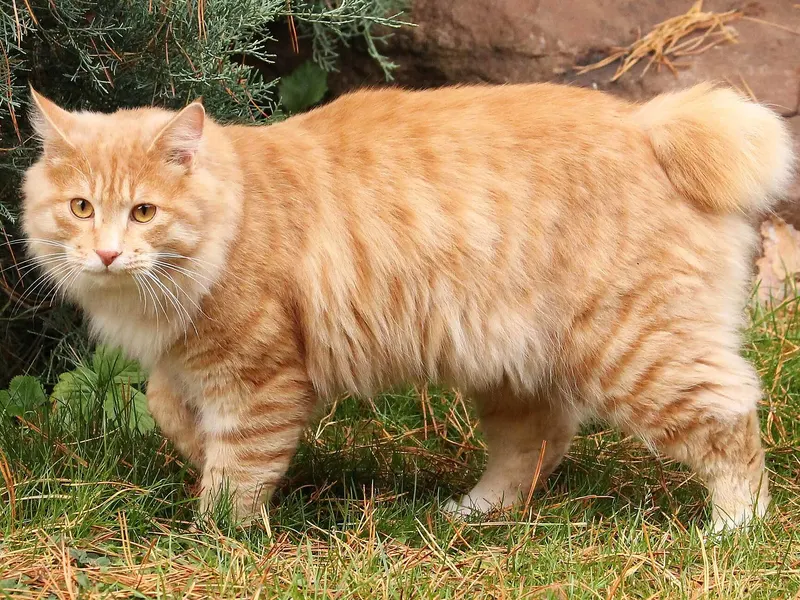
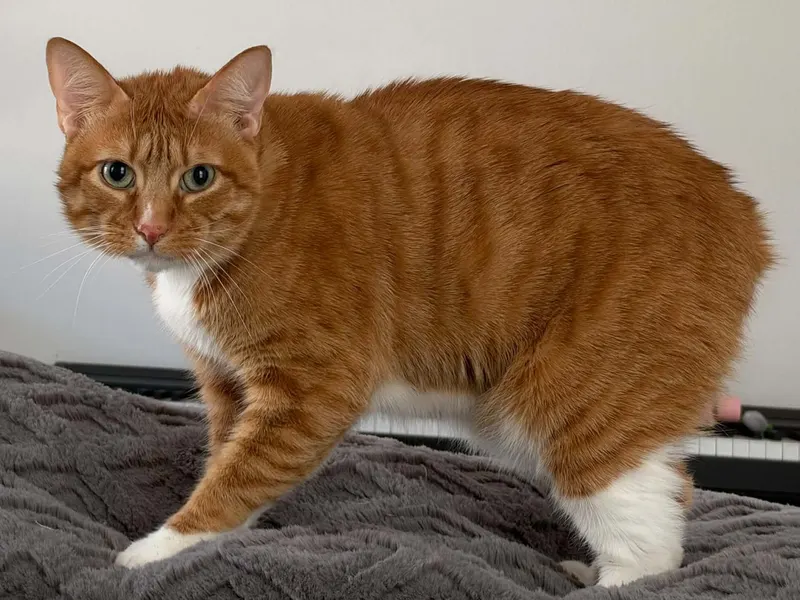
The Manx is a compact, round cat with a short back, broad chest and hind legs noticeably longer than the front, which raises the rump and creates a distinctive rounded outline. The head is round with full cheeks, and the eyes are large and round.
Adults weigh about 7 to 13 lb. Males are larger with heavier jowls, while females are slightly smaller but still solid and muscular.
Tail length varies even within one litter:
- Rumpy: no tail, sometimes with a dimple at the base of the spine
- Rumpy riser: a small rise of bone under the skin
- Stumpy: a short, often curved or kinked tail
- Longy: a near-normal or full tail
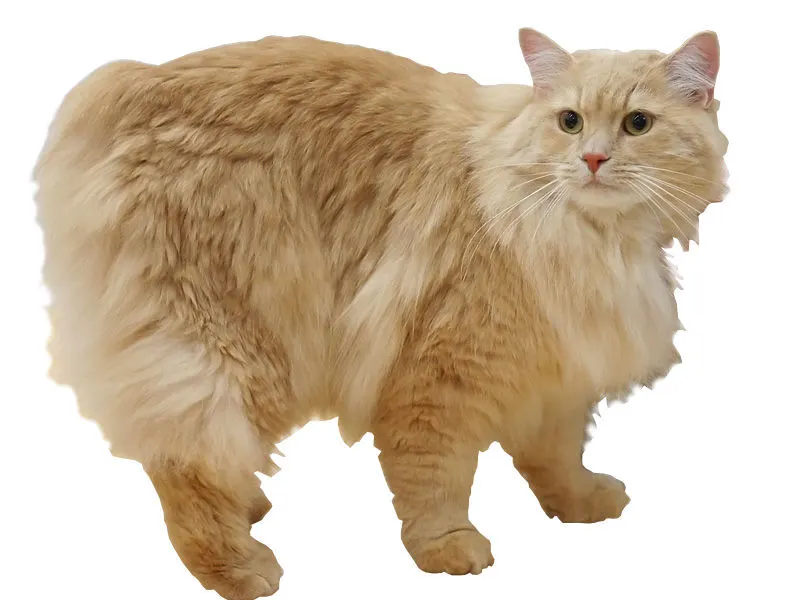
The shorthair has a dense, padded double coat. The longhair, called the Cymric by TICA, has a medium-long, silky coat. Almost all colors and patterns are accepted, including tabby, solid, tortoiseshell and bicolor, though some registries exclude pointed colors.
Personality and Temperament
Manx cats are often called dog-like. Many learn to fetch, come when called and follow their person from room to room. They are usually even-tempered, playful but not frantic, and form strong bonds with their family.
They tend to speak in soft trills rather than loud meows. Manx are typically good with children and dogs, though some are reserved with strangers at first. Historically they were valued as mousers on farms and ships, and that hunting interest remains.
Are Manx Cats Lap Cats?
Many Manx are affectionate lap cats, though they usually choose when. They form strong bonds with their families, follow their people from room to room and often settle on a lap in the evening.
Manx are also playful and moderately active, so they mix cuddles with games of fetch and chasing. Many prefer sitting next to you or on the arm of the sofa to being held. Some are reserved with strangers at first and save their lap time for familiar people. If you handle a Manx kitten gently and often, it is more likely to grow into a relaxed adult lap cat.
Are Manx Cats Good With Kids?
Yes, Manx cats are usually good with children. They are even-tempered, playful and tolerant, and many enjoy games of fetch and chase with kids.
Children should learn to handle the cat gently, support its body when lifting and avoid touching the rump and lower back, which may be sensitive in tailless cats. Supervise young children until they understand how to read the cat's body language. A Manx should always have high perches and quiet places to retreat. With respectful handling, many Manx become devoted family companions that seek out children for play.
Can Manx Cats Be Left Alone?
Yes, most adult Manx handle a normal workday well. They are affectionate but not as demanding as highly social breeds, and they can entertain themselves with toys and climbing furniture.
Provide sturdy cat trees, puzzle feeders and a window perch, and plan play sessions before and after work. Manx are known for figuring out doors and cupboards, so secure anything you do not want opened. For trips longer than a day, use a pet sitter. Watch for changes in litter box habits when you return home, since early signs of spinal or bowel problems in tailless cats are easy to miss.
Activity, Play and Enrichment
The Manx has long hind legs and powerful hindquarters, which gives it a rounded rump and strong jumping ability. Some move with a slight hop.
- High perches and sturdy cat trees suit their jumping.
- Fetch, chase toys and puzzle feeders keep their minds busy.
- They are known for figuring out doors and cupboards, so childproof latches can help.
Manx tend to be moderately active, so two daily play sessions usually meet their needs.
Grooming and Shedding
The shorthaired Manx has a thick, double coat that feels padded. Brush once or twice a week, and more often in spring and fall when shedding increases. The longhaired form needs brushing several times a week to prevent mats.
Because tailless cats can find it harder to clean their rear end, check the area under the rump regularly and gently clean if needed. Watch for any change in litter box habits, which can be an early sign of spinal problems.
Feeding and Nutrition
The Manx is a solid, round cat by nature, which makes it easy to miss weight gain. Check body condition with your hands: you should feel the ribs under a thin layer of fat. Extra weight is especially unwelcome in a breed with a shortened spine.
- Kittens need three or four meals a day of a complete kitten food. Manx mature slowly, so growth continues into the second year.
- Adults do well on two or three measured meals a day.
- Use puzzle feeders and fetch games to keep a moderately active cat moving.
Cats with Manx syndrome may have constipation or other bowel problems. If your cat strains, has hard stools or shows changes in litter box habits, see your veterinarian, who may recommend dietary adjustments, increased hydration or other treatment as part of an overall plan. For all Manx, encourage drinking with water fountains, several bowls or wet food, which supports urinary and bowel health. Keep treats small and limited, and weigh your cat every few months.
| Adult weight | Indoor, less active | Typical adult | Active or intact |
|---|---|---|---|
| 7 lb | 170 kcal | 200 kcal | 230 kcal |
| 10 lb | 220 kcal | 260 kcal | 300 kcal |
| 13 lb | 260 kcal | 320 kcal | 370 kcal |
Estimates use the resting energy formula veterinarians work with (70 × body weight in kg0.75) and standard activity factors. Use the feeding guide on your food as a starting point and adjust to body condition. Kittens, seniors, pregnant animals and pets that need to lose weight have different needs, so ask your vet.
Health and Lifespan
Manx usually weigh 7 to 13 lb (3 to 6 kg) and commonly live around 9 to 14 years, sometimes longer.
The gene that shortens the tail also affects the spine. Kittens that inherit two copies die before birth, and some cats with one copy develop Manx syndrome: spina bifida, fused or malformed vertebrae and nerve damage that can cause incontinence, constipation or hind-leg weakness. Signs usually appear in the first months of life.
- Responsible breeders do not breed two tailless cats together, and they include tailed Manx in their programs.
- Many breeders keep kittens until about four months to spot problems.
- Cats with tail stumps can develop arthritis in the stump.
In some European countries, breeding for taillessness is considered a welfare-relevant trait under animal protection rules, so check local regulations.
Manx Price and Cost of Ownership
Typical breeder price in the US$500 to $1,500
A pet-quality Manx kitten from a reputable US breeder typically costs about $500 to $1,500. Prices vary by breeder, region and lines, and fully tailless show-quality kittens often cost more. Tailed kittens from the same litters make equally good pets. Manx and Manx mixes sometimes appear in shelters and rescues.
Breed-specific cost drivers include:
- Insurance or savings for potential spinal, bowel or bladder issues linked to Manx syndrome
- Possible treatment for arthritis in tail stumps
- Breeders who keep kittens until about four months, which adds to their costs
- Regular brushing tools, especially for the longhair variety
Routine costs are otherwise similar to other medium-sized cats.
Is the Manx Right for You?
A good match if you want a calm, loyal, playful cat that gets on with children and dogs, and you are prepared to buy carefully from a breeder who understands Manx genetics.
Think twice if you cannot afford possible lifelong care for spinal or bowel issues, or want a highly vocal or very energetic cat.
Manx come in rumpy (no tail), rumpy riser, stumpy and longy (near-normal tail) forms, and tailed kittens are equally good pets. US pet kittens typically cost about $500 to $1,500, varying by breeder and region.
Manx Traits at a Glance
Manx FAQ
Why do Manx cats have no tail?
A natural dominant gene mutation that arose on the Isle of Man shortens or removes the tail. The same gene can affect spinal development.
Are all Manx cats tailless?
No. Manx kittens can be rumpies (no tail), risers, stumpies or longies with almost full tails, sometimes all in one litter.
What is Manx syndrome?
It is a group of spinal defects, including spina bifida, linked to the tailless gene. It can cause incontinence, constipation and hind-leg problems, usually apparent by about four months of age.
Are Manx cats good with dogs?
Usually yes. They are often described as dog-like themselves and tend to get on well with calm, cat-friendly dogs.
How big do Manx cats get?
Adults typically weigh 7 to 13 lb and look rounder and heavier than they are, due to their dense coat and arched back.
How much does a Manx cat cost?
Pet kittens in the US typically cost around $500 to $1,500, depending on breeder and region.