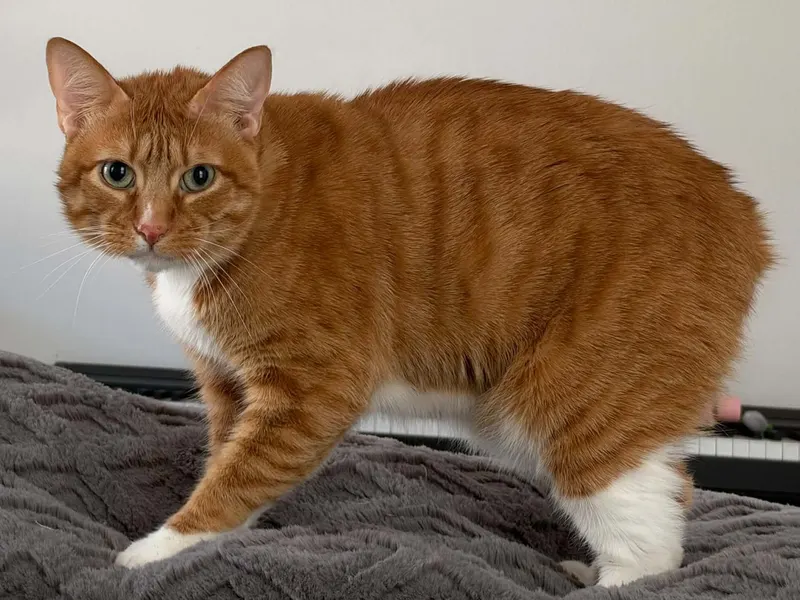
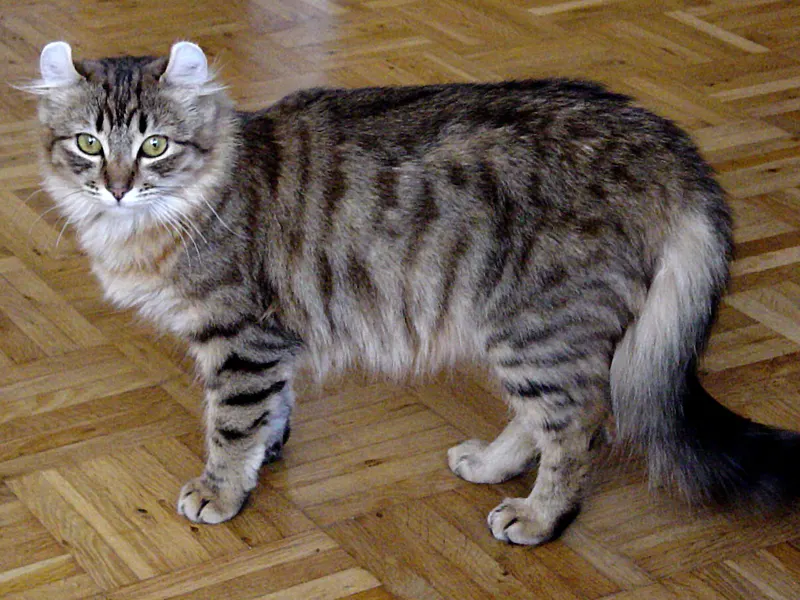
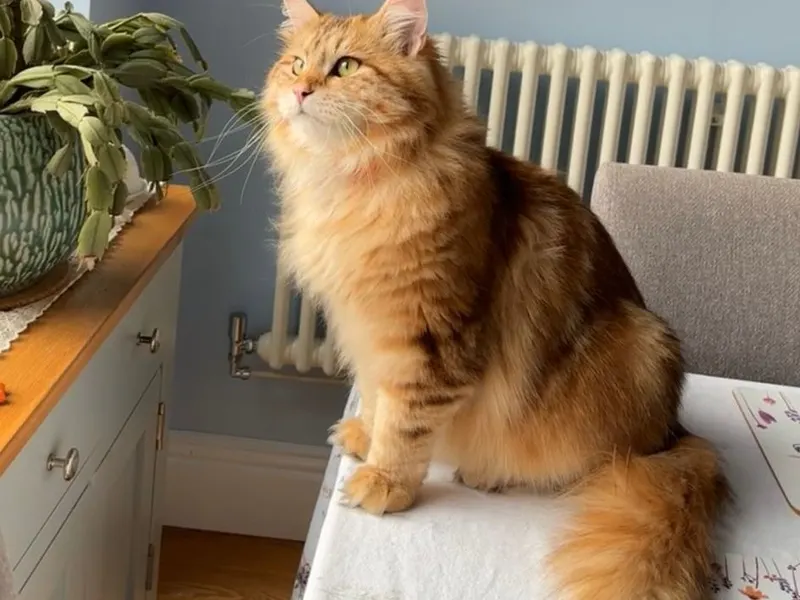
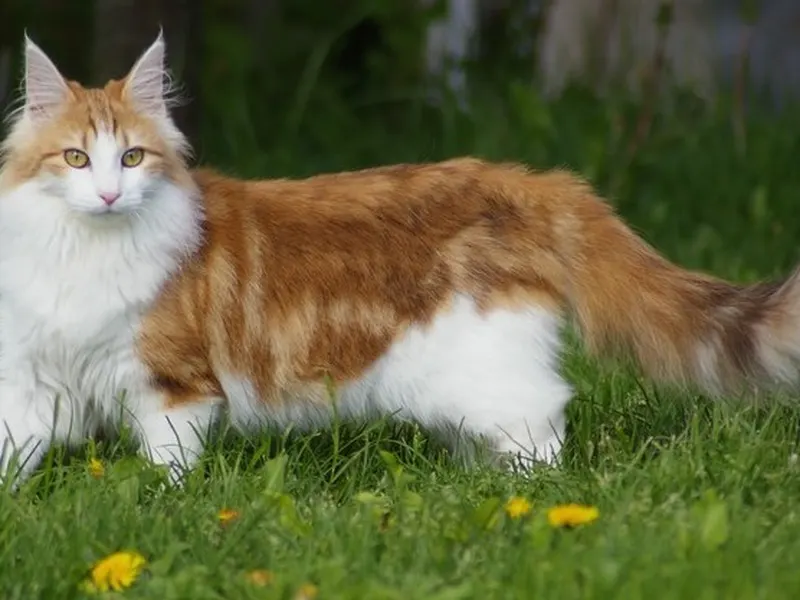
CymricThe tailless Manx in a longer coat
The Cymric is the semi-longhaired form of the Manx: a round, solid cat with a short back, long hind legs and, in its classic form, no tail at all. It is playful, loyal and often dog-like, but the tailless gene comes with real health risks that buyers should understand.
Why people love the Cymric
- Affectionate, loyal and often dog-like
- Even-tempered and generally quiet
- Good with gentle children and cat-friendly dogs
- Powerful jumper and playful companion
- Copes with normal working hours
Things to consider
- Tailless gene carries a risk of spinal defects
- Very rare, with few breeders in the US
- Dense coat needs combing several times a week
- Constipation and arthritis reported in some cats
- Short back makes high jumps harder with age
Health note: this breed is affected by health concerns linked to its body shape or coat. Read the health section and choose a breeder who screens their cats and breeds responsibly.
The Isle of Man and some registries treat the Cymric as a longhaired Manx variety rather than a separate breed (CFA does so).
Is this breed right for you?
10 questions · live resultHistory and Origin
Tailless cats have lived on the Isle of Man, in the Irish Sea, for centuries. The trait comes from a natural dominant mutation that spread easily in a small island population. Long-haired kittens appeared in Manx litters from time to time.
In the 1960s and 1970s breeders in Canada and the US began developing these long-haired Manx as a breed and named them Cymric, from Cymru, the Welsh name for Wales, despite the cats having no Welsh link. TICA recognizes the Cymric as a separate breed, while CFA and some other registries treat it as the Longhair Manx, a coat variety of the Manx.
Size, Tail Types and Colors
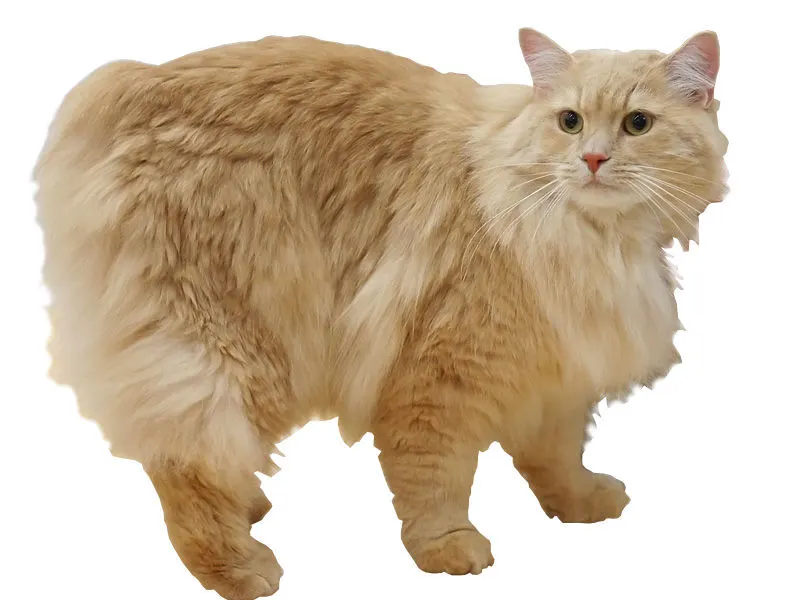
The Cymric is a medium-sized, solid cat weighing about 8 to 12 lb, with males somewhat larger than females. Its overall look is round: a round head with full cheeks, a short back, a broad chest and hind legs longer than the front legs, which raise the rump above the shoulders and give a rabbit-like gait.
Tail length varies even within one litter. Recognized types include:
- Rumpy: no tail at all.
- Rumpy riser: a small rise of bone at the base of the spine.
- Stumpy: a short, often curved or kinked tail.
- Longy: a tail of near-normal length.
The semi-long, double coat is soft, dense and well padded, with britches, a neck ruff and tufts between the toes and in the ears. Almost all colors and patterns are accepted, including tabby, solid, tortoiseshell, calico and bicolor. Pointed colors are not accepted by most registries.
Personality and Temperament
Cymrics are affectionate, even-tempered and playful. Many follow their people, fetch toys and come when called, traits often described as dog-like. They are usually quiet, with soft trills.
- Good with gentle children and cat-friendly dogs
- Loyal to their family, sometimes reserved with strangers
- Can be protective of their territory and alert to unusual noises
Are Cymric Cats Lap Cats?
Many Cymrics are affectionate lap cats, but in their own way. They bond closely with their family, follow people from room to room and enjoy sitting beside or on their favorite person, especially in the evening.
They are also playful and active, so cuddles often come after a game of fetch or chase. Some prefer sitting next to you rather than being held, partly because their compact, short-backed build can make them particular about how they are picked up. Support the chest and rear when lifting. If you want a loyal, people-focused cat that enjoys quiet time together, the Cymric is a good fit.
Can Cymric Cats Live with Dogs?
Yes. Cymrics are often described as dog-like themselves and usually get along well with calm, cat-friendly dogs. They are confident and even-tempered, and many enjoy interactive play.
Introductions should be gradual:
- Separate the animals at first and swap bedding to share scents.
- Use a gate or a leashed dog for early meetings.
- Provide high perches, which Cymrics love thanks to their strong hind legs.
- Keep food and litter boxes out of the dog's reach.
Because some Cymrics have spinal sensitivities, avoid rough play with large or boisterous dogs, and watch for signs that the cat is uncomfortable being chased or pinned.
Is the Cymric Good for First-Time Owners?
A Cymric can be a good first cat in terms of temperament: it is affectionate, even-tempered and adaptable. The main challenges for first-time owners are health awareness and finding a responsible breeder.
New owners should understand Manx syndrome and know what to look for, such as unusual gait, litter box difficulties or constipation. Choose a breeder who keeps kittens until about four months old, is open about health outcomes and includes tailed cats in the breeding program. Plan to comb the dense coat two or three times a week. Adult cats from rescues, whose health is already known, can be a good option for beginners.
Activity, Play and Enrichment
Powerful hind legs make Cymrics excellent jumpers, and they love high perches. Moderate daily play with chase toys and puzzle feeders suits them. Some learn to open doors and cupboards, so childproof latches can help. They do well indoors with a good cat tree.
Grooming and Shedding
The double coat is medium-long, dense and soft. Comb two or three times a week, focusing on the belly, britches and behind the ears, and brush more often during seasonal shedding. Shedding is moderate.
Feeding and Nutrition
Keeping a Cymric lean protects its short spine and joints. Extra weight adds strain to a back already prone to arthritis in some cats, and makes it harder for the cat to groom its rear, which matters for a semi-longhaired cat. Feed measured meals and check body condition by feeling the ribs under the dense coat.
Constipation is reported in some Cymrics, particularly those affected by Manx syndrome. Good hydration helps: offer wet food, a fountain or several water bowls. If your cat strains in the litter box, passes hard stools or goes less often, see your vet, who may recommend a specific diet or treatment.
- Feed adults two or more measured meals a day, and kittens three or four.
- Comb regularly to reduce swallowed hair and hairballs.
- Use puzzle feeders for this clever, playful cat.
- Senior cats with arthritis may need easier access to food, water and litter.
| Adult weight | Indoor, less active | Typical adult | Active or intact |
|---|---|---|---|
| 8 lb | 180 kcal | 220 kcal | 260 kcal |
| 12 lb | 250 kcal | 300 kcal | 350 kcal |
Estimates use the resting energy formula veterinarians work with (70 × body weight in kg0.75) and standard activity factors. Use the feeding guide on your food as a starting point and adjust to body condition. Kittens, seniors, pregnant animals and pets that need to lose weight have different needs, so ask your vet.
Health and Lifespan
Cymrics typically live 8 to 14 years. The key issue is the tailless (Manx) gene:
- Kittens that inherit two copies die before birth, so litters are often small
- Manx syndrome: spinal malformations such as spina bifida, which can cause problems with walking, bladder and bowel control; signs usually appear in the first months
- Arthritis in the shortened spine and constipation are reported in some cats
Responsible breeders do not place kittens until about 4 months old, so early signs of Manx syndrome can show, and they include tailed cats in breeding to reduce risk. Ask about the breeder's approach and the health of previous litters. The tail type (rumpy, riser, stumpy or longy) varies within a litter.
Cymric Price and Cost of Ownership
The Cymric is rare in the US, with few breeders, and there is no reliable typical price range. Prices vary by breeder, region and lines, and rumpy kittens may be priced differently from tailed ones. A good breeder keeps kittens until about four months, so early signs of Manx syndrome can show before a kitten leaves, and is open about the health of past litters.
Adoption is a good option. Manx and Cymric-type cats, including tailless mixes, appear in shelters and rescues, often as adults with known health.
Breed-specific cost drivers include vet care for constipation, arthritis or spinal problems linked to the tailless gene, steps or ramps for senior cats, and grooming tools for the dense coat. Insurance taken out early, before any condition is recorded, is worth comparing.
Is the Cymric Right for You?
A Cymric suits families, multi-pet homes and people who want a playful but not frantic cat that bonds closely. Grooming is moderate, and they cope with normal working hours.
Because the gene carries a welfare risk, buy only from breeders who are open about health outcomes, or consider adult cats from rescues. The breed is rare, and there is no reliable typical US price.
Because a Cymric's back is short, avoid letting it jump down from very high places repeatedly as it ages, and provide ramps or steps to favorite spots for senior cats.
Cymric Traits at a Glance
Cymric FAQ
Is a Cymric the same as a Manx?
It is the longhaired form of the Manx. TICA lists it as its own breed, while CFA calls it the Longhair Manx.
Do all Cymric cats have no tail?
No. Tail length ranges from none (rumpy) to a short stump or a nearly full tail (longy), even in one litter.
What is Manx syndrome?
A set of spinal defects linked to the tailless gene that can affect walking, bladder and bowel control. Signs usually appear in kittenhood.
Do Cymric cats shed?
Yes, moderately. Combing two or three times a week controls loose hair and mats.
How long do Cymric cats live?
Typically 8 to 14 years; cats free of spinal problems often reach the upper end.