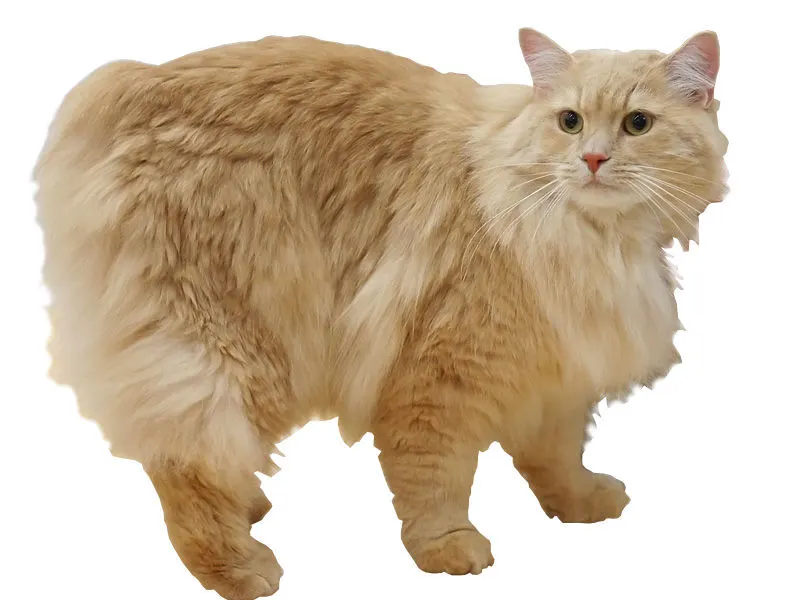
SiberianRussia's sturdy, sociable forest cat
The Siberian is a large, powerful semi-longhaired cat from Russia, built for a cold climate and known for a friendly, steady temperament. It suits families who want a playful but easygoing companion, and it is often discussed by people with cat allergies.
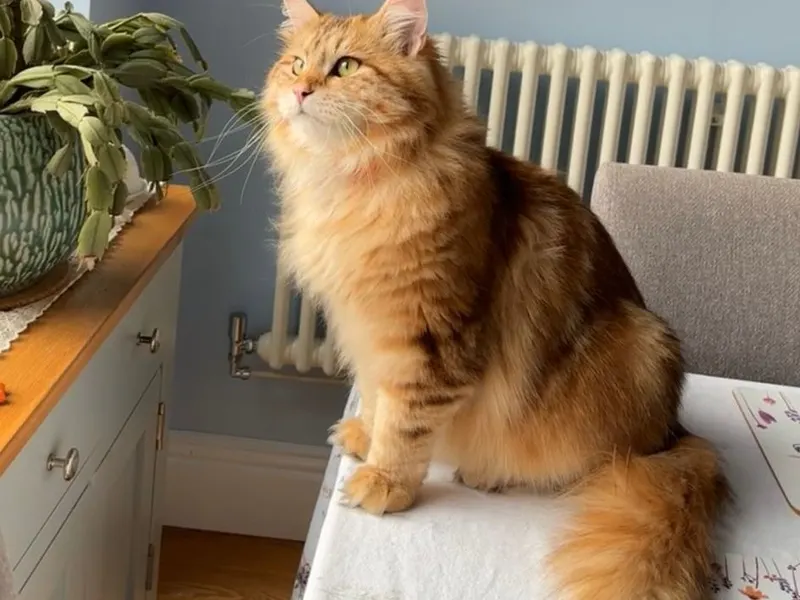
Why people love the Siberian
- Confident, steady cat that handles busy homes well
- Affectionate and social without being clingy
- Usually good with children and cat-friendly dogs
- Playful and athletic well into adulthood
- Quiet voice, mostly trills and chirps
Things to consider
- Heavy seasonal shedding from a dense triple coat
- Not allergen-free, despite marketing claims
- Slow to mature, with kitten energy for years
- Needs sturdy, tall cat furniture
- HCM screening needed in breeding cats
Is this breed right for you?
10 questions · live resultHistory and Origin
Longhaired farm and forest cats have lived in Russia for centuries, adapted to long, harsh winters. Formal breeding of the Siberian began in Russia in the 1980s, when clubs in cities such as Moscow and St. Petersburg wrote standards based on these native cats.
The first Siberians arrived in the United States in 1990. The breed was then recognized by TICA and later by CFA, and in Europe by FIFe and the GCCF. In FIFe, colorpoint Siberians are registered as a separate breed, the Neva Masquerade.
The Siberian is a natural breed, not a designed one, and it remains close to the working cats it came from.
Size, Coat and Colors
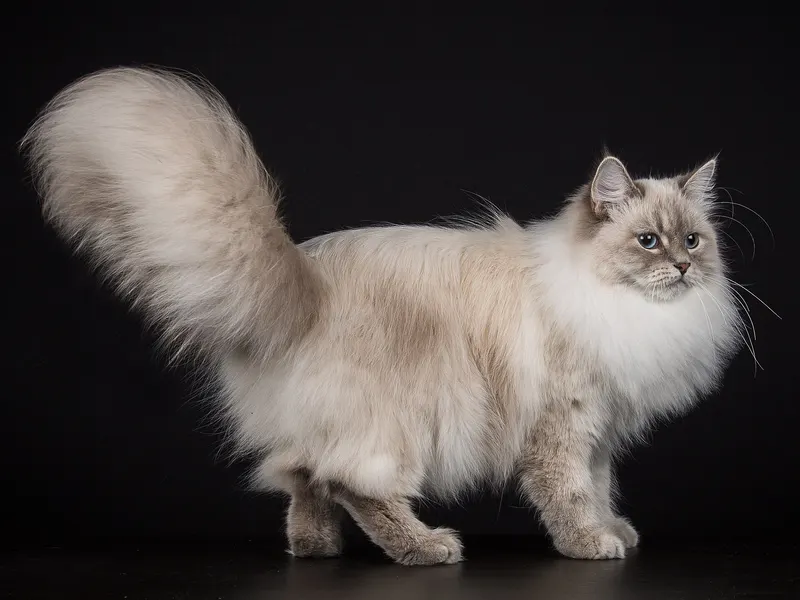
The Siberian is a medium to large, powerfully built cat with a rounded body, strong bone and a sweet expression. Adults weigh about 8 to 17 lb. Males are noticeably larger and heavier than females, often at the top of the range, and they can take up to five years to reach full size.
The head is a modified wedge with rounded contours, a slightly rounded muzzle, medium-large ears with tufts and large, rounded eyes. The hind legs are slightly longer than the front, giving an arched back and agile, powerful jumps.
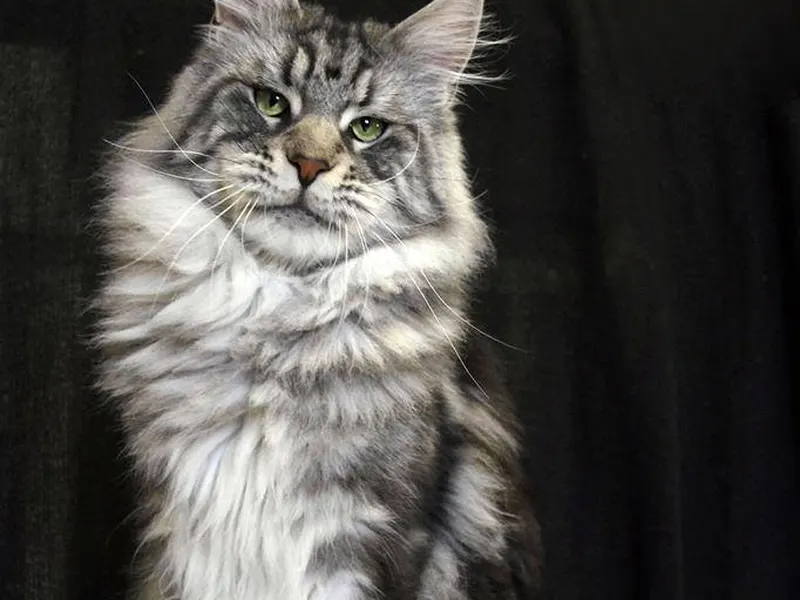
The coat is a triple coat: a dense undercoat, a middle layer and long, water-resistant guard hairs. It forms a ruff around the neck, full britches on the hind legs and a bushy tail. The coat is thicker in winter.
Siberians come in a wide range of colors and patterns:
- Solid, tabby, tortie and smoke
- Silver and golden variations
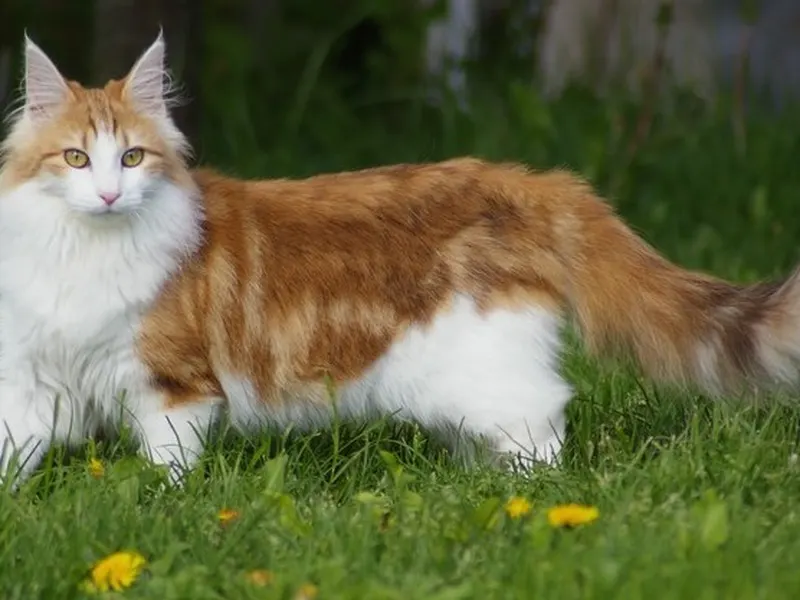
- Bicolor and particolor with white
- Colorpoint, which FIFe registers as a separate breed, the Neva Masquerade
Eye color varies from green to gold, and blue in colorpoints.
Personality and Temperament
Siberians are affectionate without being clingy. They greet you at the door, follow you from room to room and like to be near people, but most are not lap cats on demand.
They are notably steady. Visitors, children and dogs rarely unsettle a well-socialized Siberian, which makes the breed a strong choice for busy family homes. Their voice is quiet, more trills and chirps than meows. Many are fascinated by water and will paw at a dripping tap or join you in the bathroom.
Are Siberian Cats Good for First-Time Owners?
Yes, Siberians are often an excellent choice for first-time cat owners. They are confident, affectionate and adaptable, and they tend to handle busy homes, visitors and changes calmly.
New owners should plan for regular brushing, especially during the spring molt, and sturdy cat furniture for an athletic, heavy cat. Siberians stay playful for years, so daily play sessions are important. Owners hoping for an allergy-friendly cat should spend time with the specific kitten first, as allergen levels vary. With those basics covered, the Siberian is easygoing and rewarding.
Can Siberian Cats Be Left Alone?
Most adult Siberians cope well with a typical workday alone, as they are independent and confident. They are social cats, however, and appreciate company when you are home.
Provide climbing furniture, window perches and puzzle feeders to keep them occupied. Kittens and young cats need more attention and play. For long absences, a cat sitter or a second cat can help. Many Siberians do well in pairs, and their playfulness makes a companion cat a good choice for owners who work long hours.
Should Siberian Cats Be Indoor-Only?
Many owners keep Siberians indoors or provide safe outdoor access, such as a catio or harness walks. The breed's hardy coat suits cold weather, but outdoor risks such as traffic, predators and disease remain.
Indoor Siberians need plenty of stimulation: tall cat trees, window perches, interactive toys and daily play. Their athleticism and curiosity mean a bored Siberian may climb onto shelves or into cabinets. A secure catio gives them fresh air and wildlife watching. Harness training works well for many Siberians, especially if started young.
Activity, Play and Enrichment
Siberians are agile jumpers despite their size, and they stay playful well into adulthood.
- Provide sturdy, tall cat trees; light furniture will wobble under a 15 lb cat.
- Fetch games and chase toys suit them, and many enjoy puzzle feeders.
- They are slow to mature, often not fully grown until around 3 to 5 years, so expect kitten energy for a long time.
A secure catio or harness walks are good outlets if you want to give an indoor Siberian more stimulation.
Grooming and Shedding
The Siberian has a triple coat: a dense undercoat, a middle layer and water-resistant guard hairs. It tangles less than many longhaired coats, but it is still a lot of fur.
- Brush once or twice a week with a wide-toothed comb, focusing on the ruff, belly and behind the ears.
- During the heavy spring molt, brush every day, or you will find clumps around the house.
- Check the fur under the tail for soiling.
Expect real shedding, especially seasonally. Allergy-friendliness, discussed below, is not the same as low shedding.
Feeding and Nutrition
Siberians mature slowly, often taking three to five years to reach full size, so growth should be steady rather than rushed. Feed a complete diet for kittens through the first year, then transition to adult food while monitoring body condition.
The dense coat can hide weight gain, so feel for ribs and a waist regularly. Keeping Siberians lean supports heart health and mobility, especially as HCM has been reported in the breed.
- Feed kittens three to four meals a day and adults two or more measured meals.
- Puzzle feeders and food balls encourage activity in indoor cats.
- Many Siberians are fascinated by water; a fountain can encourage drinking, which supports urinary health.
- Wet food adds moisture to the diet, which many owners combine with dry food.
Regular brushing reduces hair swallowed during grooming, which can help with hairballs. If hairballs are frequent, discuss it with your vet.
| Adult weight | Indoor, less active | Typical adult | Active or intact |
|---|---|---|---|
| 8 lb | 180 kcal | 220 kcal | 260 kcal |
| 12 lb | 250 kcal | 300 kcal | 350 kcal |
| 17 lb | 320 kcal | 390 kcal | 450 kcal |
Estimates use the resting energy formula veterinarians work with (70 × body weight in kg0.75) and standard activity factors. Use the feeding guide on your food as a starting point and adjust to body condition. Kittens, seniors, pregnant animals and pets that need to lose weight have different needs, so ask your vet.
Health and Lifespan
Siberians are generally robust and commonly live 11 to 18 years. Adults weigh about 8 to 17 lb (roughly 4 to 8 kg), with males noticeably larger.
Hypertrophic cardiomyopathy (HCM), a thickening of the heart muscle, has been reported in the breed. There is no reliable DNA test for Siberian HCM, so good breeders have breeding cats screened by echocardiogram (heart ultrasound) by a veterinary cardiologist, repeated over the years. Polycystic kidney disease has been seen occasionally and can be tested for.
About allergies: Some Siberians produce less Fel d 1, the main cat allergen, than average cats, but levels vary widely between individuals and no Siberian is allergen-free. Some breeders have kittens tested; the most reliable approach is to spend time with the specific cat before committing.
Siberian Price and Cost of Ownership
Typical breeder price in the US$1,200 to $3,500
A Siberian kitten from a reputable US breeder typically costs about $1,200 to $3,500. Prices vary by breeder, region and lines, and breeders who offer allergen testing or show-quality kittens may charge more. Ask for HCM echocardiogram results of the parents, repeated over the years, and PKD testing. Be wary of anyone who guarantees a kitten is hypoallergenic.
Siberians occasionally appear in shelters and rescues, though less often than common breeds.
Breed-specific ongoing costs include:
- Sturdy, tall cat trees and furniture
- Grooming tools for the triple coat
- Echocardiograms if HCM is suspected
- Insurance covering heart and kidney conditions
- Catios or harnesses for safe outdoor time
Is the Siberian Right for You?
A good match if you have a family with children or a dog, want a confident, affectionate cat that is not demanding, and do not mind brushing. People with mild allergies sometimes do better with a Siberian, after testing their reaction in person.
Think twice if you want a low-shedding cat, have very little space for climbing furniture, or have severe allergies.
US breeders typically charge about $1,200 to $3,500 for a pet kitten, and prices vary a lot by breeder and region. Be wary of anyone guaranteeing a kitten is hypoallergenic.
Siberian Traits at a Glance
Siberian FAQ
Are Siberian cats hypoallergenic?
No cat is truly hypoallergenic. Some Siberians produce less of the Fel d 1 allergen than typical cats, but it varies by individual, so meet the actual kitten before deciding.
How big do Siberian cats get?
Adults usually weigh 8 to 17 lb, with males at the top of the range. They take up to five years to fully mature.
Do Siberian cats shed a lot?
Yes, especially during the spring molt. Brushing once or twice a week, and daily in shedding season, keeps it under control.
Are Siberian cats good with dogs and kids?
They are one of the best breeds for busy family homes, typically calm, confident and tolerant with gentle children and cat-friendly dogs.
How long do Siberian cats live?
Most live 11 to 18 years. Choose a breeder who screens breeding cats for HCM by echocardiogram.
How much does a Siberian cat cost?
Expect roughly $1,200 to $3,500 for a pet kitten from a US breeder, depending on breeder and region.