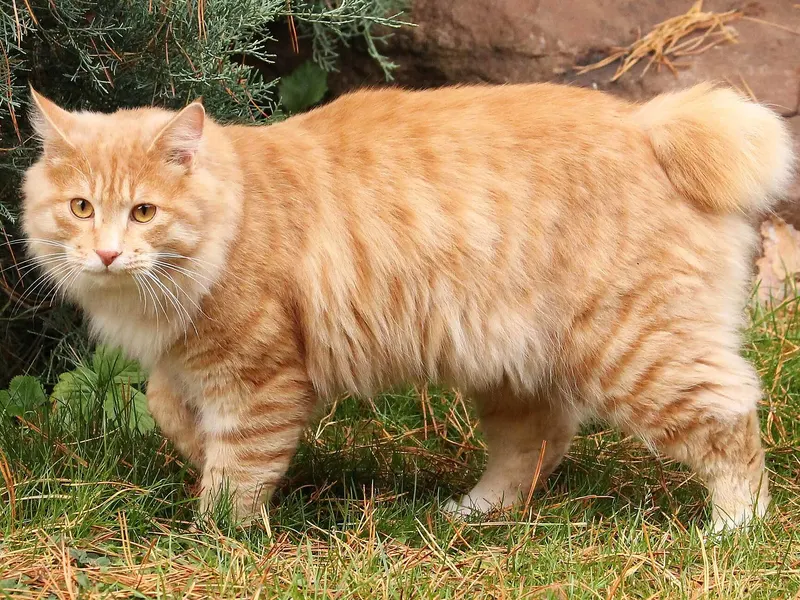
Norwegian Forest CatNordic climber with a weatherproof coat
The Norwegian Forest Cat, or Wegie, is a big, sturdy cat built for Scandinavian winters, with a thick water-resistant coat, a full ruff and a long bushy tail. It is gentle and sociable but not demanding, which makes it a relaxed family cat for people who can handle seasonal shedding and give it room to climb.
Why people love the Norwegian Forest Cat
- Calm, friendly and steady temperament
- Good with children and cat-friendly dogs
- Outstanding climber that enjoys vertical space
- Quiet voice with soft chirps and trills
- Robust natural breed
Things to consider
- Heavy seasonal shedding in spring
- Needs weekly brushing, daily during molt
- Large size needs sturdy cat furniture
- Slow to mature, up to 4 or 5 years
- GSD IV and HCM in the breed
Is this breed right for you?
10 questions · live resultHistory and Origin
Long-coated cats have lived on Norwegian farms for centuries, and they appear in Norse folklore as the skogkatt, or forest cat, including the cats said to pull the goddess Freyja's chariot. These cats developed naturally, shaped by a harsh climate rather than by breeders.
Organized breeding began in the 1930s, but the effort stalled during the Second World War, and by the 1950s and 1960s crossbreeding with other farm cats threatened the type. Norwegian enthusiasts formed a breed club in the 1970s, and FIFe recognized the breed in 1977, with a male named Pans Truls as a key reference cat. The first Wegies reached the US in 1979, and TICA and CFA recognized the breed in the 1980s and 1990s.
Size, Coat and Colors
The Norwegian Forest Cat is a large, sturdy cat with strong bones and a muscular, slightly long body. Adults weigh about 9 to 20 lb, with males clearly larger than females. Full size can take 4 to 5 years to develop.
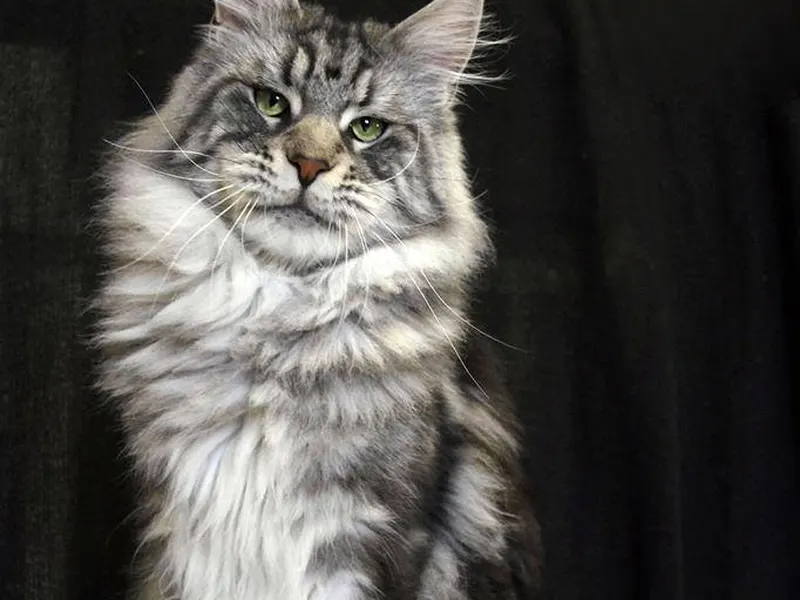
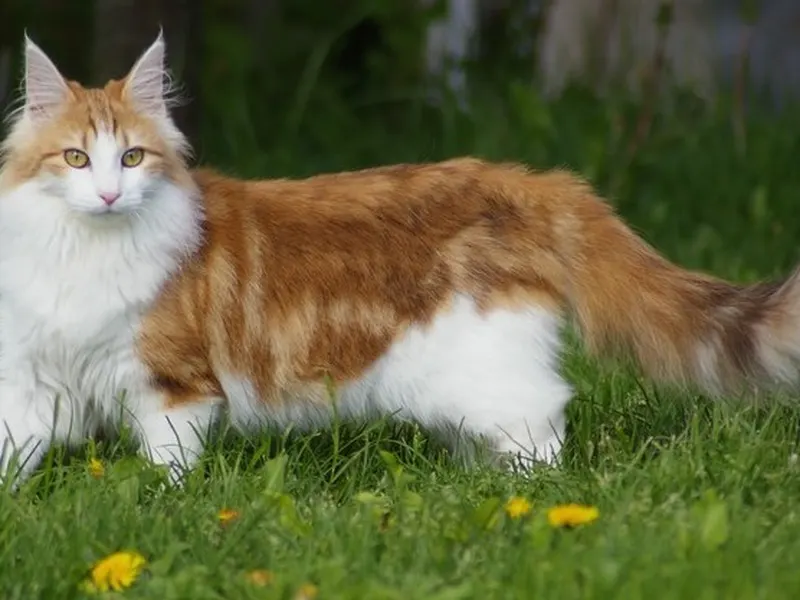
The head is triangular with a straight profile from brow to nose, large almond-shaped eyes and large ears with lynx-like tufts. The hind legs are longer than the front, giving the back a slight rise.
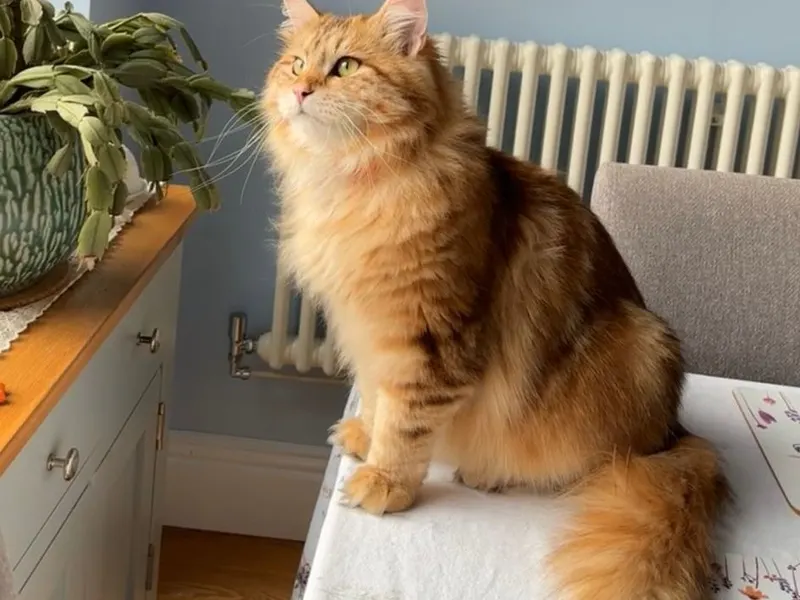
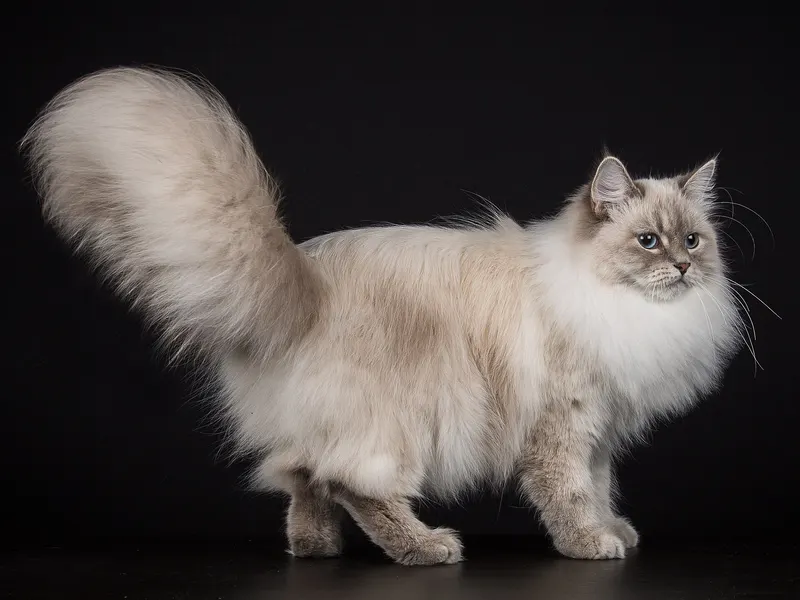
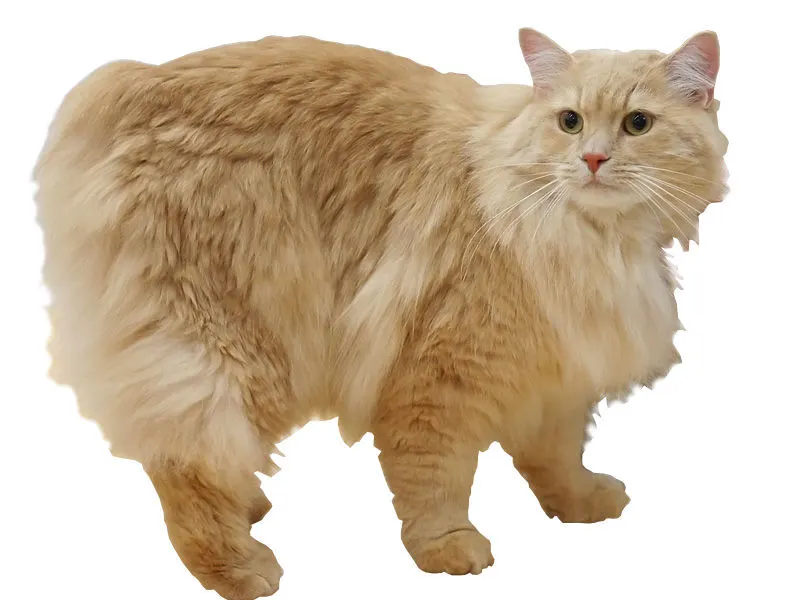
The double coat has a woolly undercoat and long, glossy, water-repellent guard hairs. It forms a full ruff on the neck, britches on the hind legs and a long, bushy tail.
Almost all colors and patterns are accepted, including:
- Brown, silver and red tabby
- Solid black, white, blue and red
- Tortoiseshell and calico
- Bicolor with white
Most registries do not accept pointed, chocolate, lilac, cinnamon or fawn colors. Eye color can be green, gold or copper, and white cats may have blue or odd eyes.
Personality and Temperament
Wegies are friendly, calm and steady. They like to be near their people and often greet family members, but many prefer sitting beside you to being held. They tend to take children, visitors and dogs in stride.
- Even-tempered and good with considerate children
- Usually relaxed with cat-friendly dogs and other cats
- Quiet voice: chirps and trills rather than loud calls
- Can cope with an ordinary working day alone better than many people-focused breeds
Many Wegies are late bloomers socially as well as physically: a reserved kitten often becomes a confident, friendly adult. They tend to choose a favorite resting spot with a view of the room rather than the middle of a lap, and they often greet their people with a soft chirp when they come home.
Are Norwegian Forest Cats Lap Cats?
Most Norwegian Forest Cats are not lap cats. They are affectionate and like to be near their people, but many prefer to sit beside you rather than on you.
Wegies often follow family members from room to room and greet them with chirps. Some individuals do enjoy laps, especially as they mature, but most prefer a perch with a view. Their independence makes them pleasant companions for people who want an affectionate cat that is not demanding. Respecting that preference usually brings more affection, since Wegies tend to approach on their own terms. A nearby cat bed often becomes their favorite spot.
Should Norwegian Forest Cats Be Indoor-Only?
Norwegian Forest Cats can live happily indoors if they have climbing space, but many enjoy safe outdoor access. Their history as farm cats gives them strong outdoor instincts.
An indoor-only Wegie needs tall, sturdy cat trees, window perches and plenty of play. A secure catio or supervised outdoor time on a harness can meet their love of climbing and exploring. Free-roaming outdoors carries risks such as traffic and predators, so many owners choose enclosed outdoor spaces. Because the coat collects burrs and debris outdoors, cats with outdoor access may need extra brushing. Microchipping and an up-to-date ID are wise for any cat with outdoor time.
Is the Norwegian Forest Cat Good for First-Time Owners?
Yes, the Norwegian Forest Cat is often a good choice for first-time owners. Its calm, friendly and adaptable temperament makes it easy to live with.
The main commitments are grooming and space. New owners should be ready for weekly brushing and heavy seasonal shedding. A large cat also needs sturdy furniture and vertical space. Wegies are generally easygoing with children and other pets, which suits many households. Wegies are not overly vocal or demanding, and they tolerate ordinary household routines well. Their slow maturity means kitten energy can last longer than expected, so plan for active play. A breeder who screens for GSD IV and HCM gives a beginner the best start.
Activity, Play and Enrichment
They are moderately active and outstanding climbers. Strong claws and a powerful build let them climb up and head-first down trees, a trait breeders often mention. Indoors, that translates into a love of high places.
- Provide a tall, heavy cat tree that will not wobble under a 15 lb cat
- Wand toys and chase games keep adults fit
- Window perches and a secure catio suit their outdoor instincts
Wegies mature slowly and may not reach full size until 4 or 5 years old.
Grooming and Shedding
The coat has a woolly undercoat and long, glossy, water-repellent guard hairs. Despite its length, it mats less than a Persian coat.
- Brush once or twice a week with a wide-toothed comb and slicker brush
- Check behind the ears, under the arms and the britches, where tangles start
- During the spring molt the undercoat comes out in clumps, so brush daily for a few weeks
Expect noticeable hair around the home during seasonal shedding.
Trim nails every few weeks, because large cats with strong claws can catch them in fabrics. Bathing is rarely needed and is hard work, since the guard hairs repel water.
Feeding and Nutrition
Norwegian Forest Cats mature slowly, often not reaching full size until 4 or 5 years. Feed kittens a growth diet and transition gradually, following your vet's guidance on timing for this slow-maturing breed.
Wegies are large, food-loving cats that can gain weight once growth slows. Measure portions and monitor body condition from early adulthood. Feel for the ribs under the thick coat rather than relying on appearance.
Hypertrophic cardiomyopathy (HCM) occurs in the breed, and extra weight adds strain to the heart. Keeping your cat lean supports long-term health.
Encourage water intake with fountains or wet food, which supports urinary health in large cats.
Feed two or more meals a day, or use timed feeders for portion control. Puzzle feeders and play before meals help keep indoor cats active.
A balanced diet supports coat health. If the coat becomes dull or dry outside of shedding season, discuss it with your vet.
| Adult weight | Indoor, less active | Typical adult | Active or intact |
|---|---|---|---|
| 9 lb | 200 kcal | 240 kcal | 280 kcal |
| 14 lb | 280 kcal | 340 kcal | 390 kcal |
| 20 lb | 370 kcal | 440 kcal | 510 kcal |
Estimates use the resting energy formula veterinarians work with (70 × body weight in kg0.75) and standard activity factors. Use the feeding guide on your food as a starting point and adjust to body condition. Kittens, seniors, pregnant animals and pets that need to lose weight have different needs, so ask your vet.
Health and Lifespan
Norwegian Forest Cats generally live 12 to 16 years and are a fairly robust natural breed. Known inherited concerns include:
- Glycogen storage disease type IV (GSD IV): a rare, usually fatal metabolic disorder; a DNA test lets breeders avoid producing affected kittens
- Hypertrophic cardiomyopathy (HCM): ask about echocardiogram screening of parents
- Hip dysplasia has been reported in some lines
Because they are large and love food, watch their weight from early adulthood.
Norwegian Forest Cat Price and Cost of Ownership
Typical breeder price in the US$1,200 to $2,500
Norwegian Forest Cat kittens from reputable US breeders typically cost about $1,200 to $2,500, depending on breeder, region and lines. Show-quality kittens may cost more. Ask breeders for GSD IV DNA test results and HCM screening for both parents.
Adult Wegies are occasionally available through breed rescues or retired breeding programs.
Ongoing cost drivers include:
- Sturdy cat furniture for a large climber
- Grooming tools for weekly brushing and seasonal shedding
- Insurance covering HCM and other conditions
- Health screening, including heart checks as the cat ages
Food costs are higher than for an average cat because of the breed's size. Pet-quality kittens are usually spayed or neutered before going home or sold on a spay/neuter contract.
Is the Norwegian Forest Cat Right for You?
A Wegie suits families, multi-pet homes and people who want an affectionate but independent cat. They adapt to apartments if given vertical space, though they enjoy a larger home or safe outdoor access.
They are less suited to people who dislike cat hair or cannot commit to regular brushing. Pet-quality kittens in the US typically cost about $1,200 to $2,500, varying by breeder and region.
Norwegian Forest Cat Traits at a Glance
Norwegian Forest Cat FAQ
How big do Norwegian Forest Cats get?
Adults usually weigh 9 to 20 lb (about 4 to 9 kg). Males are clearly larger, and full size can take 4 to 5 years.
Do Norwegian Forest Cats shed a lot?
They shed moderately most of the year and heavily in spring. Weekly brushing, and daily brushing during the molt, keeps it under control.
Are Norwegian Forest Cats hypoallergenic?
No. They produce the usual Fel d 1 allergen and shed plenty of hair, so they are not a good choice for most allergy sufferers.
What is the difference between a Norwegian Forest Cat and a Maine Coon?
Wegies have a triangular head with a straight profile and a double coat that is longer over the chest and britches, while Maine Coons have a more rectangular head and a shaggier coat. Both are large, gentle breeds.
Are Norwegian Forest Cats good with kids and dogs?
Generally yes. Their calm, sturdy nature suits respectful children and cat-friendly dogs.
How long do Norwegian Forest Cats live?
Typically 12 to 16 years.