Kurilian BobtailA sturdy island cat with a pom-pom tail
The Kurilian Bobtail is a solid, medium to large cat from the Kuril Islands with a naturally short, kinked tail. It is calm, adaptable and good-natured, a strong fit for families who want an easygoing cat with a hunter's spirit.
Why people love the Kurilian Bobtail
- Calm, adaptable and good-natured temperament
- Usually gets along with children, dogs and other cats
- Robust, generally healthy breed living 12 to 16 years
- Quiet voice, more likely to trill than meow
- Copes reasonably well with time alone
Things to consider
- Rare in the US; few breeders outside Russia and Europe
- Strong hunting instinct toward small pets
- Semi-longhair variety needs extra brushing when shedding
- Not a highly lap-focused cat
- Solid build makes weight gain easy indoors
Is this breed right for you?
10 questions · live resultHistory and Origin
The breed comes from the Kuril Islands, a chain between Japan's Hokkaido and Russia's Kamchatka Peninsula, and from nearby Sakhalin. Short-tailed cats lived there as natural island cats.
Russian breeders began developing the Kurilian Bobtail as a pedigree breed in the late 20th century, bringing cats from the islands to the mainland. It was later recognized by international registries, including FIFe and TICA. Though it looks somewhat similar, it is a separate breed from the Japanese Bobtail, with a stockier, more compact build.
Size, Tail, Coat and Colors
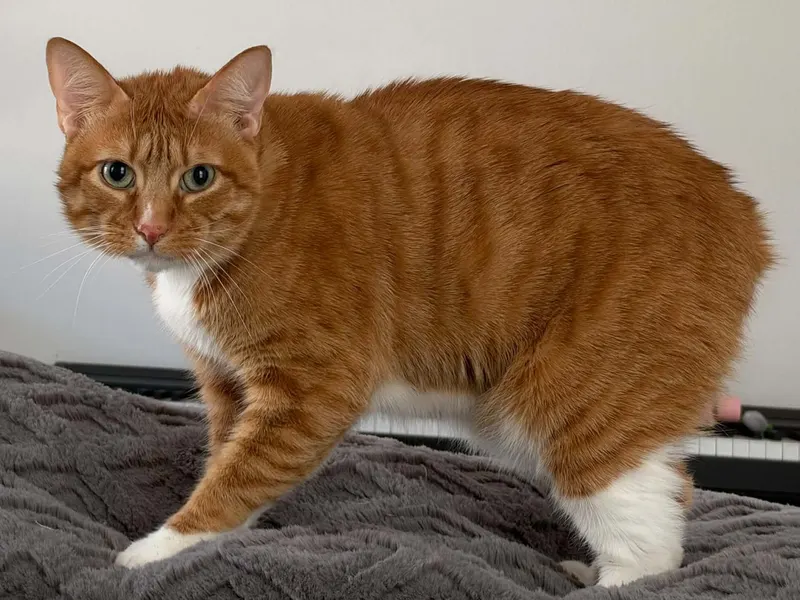
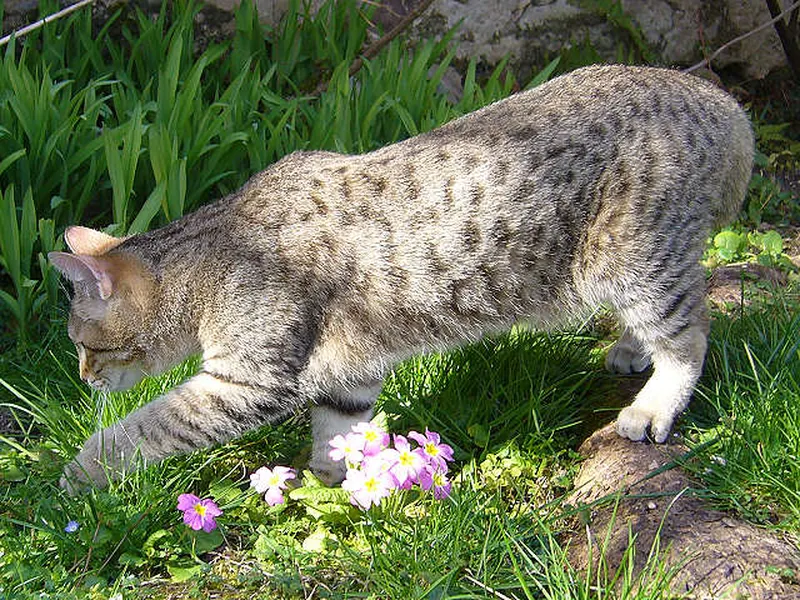
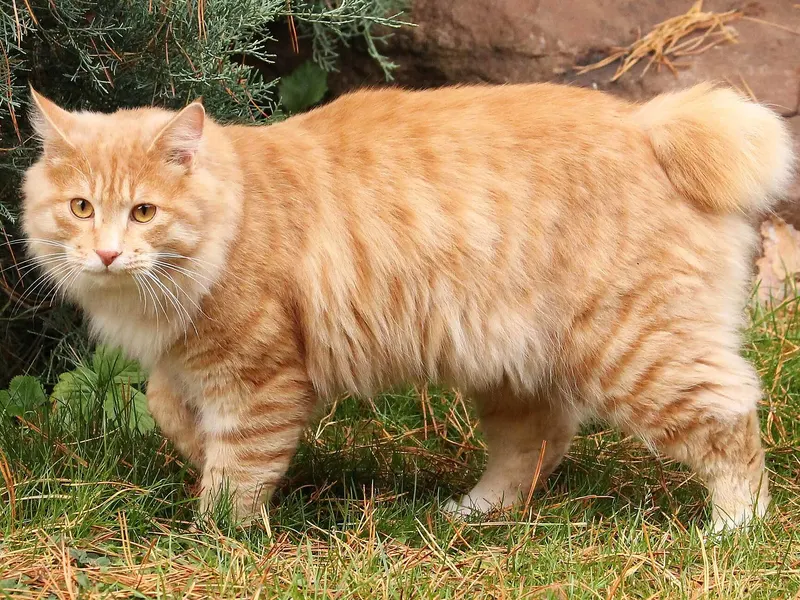
The Kurilian Bobtail is a medium to large, compact, muscular cat with a slightly arched back, hind legs a little longer than the front, a broad, trapezoid-shaped head and walnut-shaped eyes. It looks sturdy and powerful, like a natural island cat.
Adults usually weigh about 7 to 15 lb. Males are noticeably larger and heavier, often with broader heads and cheeks, while females are smaller and lighter.
The tail is short and made of kinked or curved vertebrae, often looking like a pom-pom or brush. Each tail is unique in shape.
There are two coat lengths:
- Shorthair: dense, with a moderate undercoat
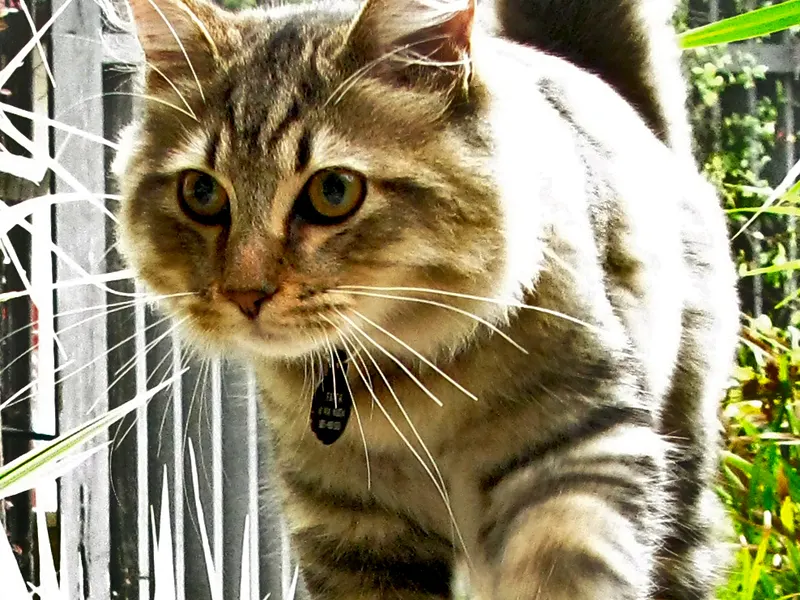
- Semi-longhair: soft and medium-long, with a ruff and britches
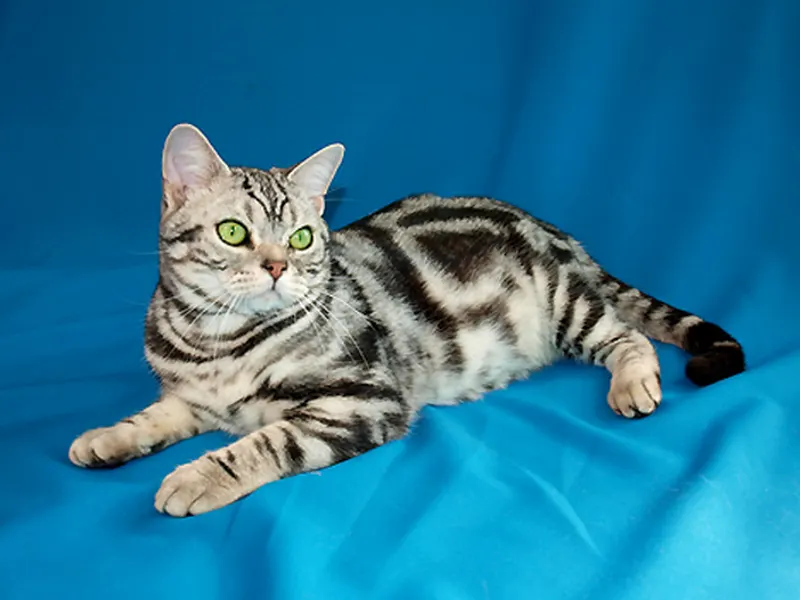
Many colors and patterns are accepted, including solid, tabby, tortoiseshell and bicolor. Pointed patterns and colors such as chocolate, lilac, cinnamon and fawn are generally not accepted.
Personality and Temperament
Kurilians are described as calm, adaptable and good-natured. They usually get along well with children, dogs and other cats, and they are often affectionate without being demanding.
They have a strong hunting instinct and many show a fascination with water. Some can be reserved with strangers at first. They are generally quiet cats, more likely to trill than meow.
Are Kurilian Bobtails Good With Kids?
Yes, Kurilian Bobtails are generally very good with children. They are calm, adaptable and good-natured, and they usually tolerate the noise and activity of family life well.
Children should learn to handle the cat gently, support its weight when lifting and avoid pulling the short, kinked tail. Hunting-style games with wand toys are a great way for kids and cats to play together safely. Supervise young children until they understand the cat's body language, and give the cat high perches where it can retreat. Many Kurilians become relaxed family companions.
Can Kurilian Bobtails Be Left Alone?
Yes, adult Kurilian Bobtails usually cope reasonably well with a normal workday. They are affectionate without being demanding, and they can occupy themselves with toys and climbing furniture.
Provide sturdy cat trees, puzzle feeders and a window perch, and schedule play sessions before and after work. Hunting-style toys that move unpredictably keep their minds busy. A second cat can add company but is not essential for most Kurilians. For trips longer than a day, arrange a pet sitter rather than leaving extra food out, which can encourage overeating in this solidly built breed.
Should Kurilian Bobtails Be Kept Indoors?
Indoor living with safe outdoor access is the best option for most Kurilians. They have a strong hunting instinct and enjoy exploring, so a secure outdoor enclosure, catio or harness walks are appreciated.
Free roaming exposes cats to traffic, predators and disease, and a keen hunter may also harm local wildlife. Indoors, provide climbing space, hunting games and puzzle feeders to satisfy their instincts. Some Kurilians are fascinated by water, so a pet fountain can add enrichment. Because breeders are few, many will ask buyers to keep the cat indoors or in a secure enclosure.
Activity, Play and Enrichment
Activity level is moderate.
- Hunting-style games with wand toys and chase toys suit their instincts.
- Sturdy climbing furniture supports their solid build.
- Puzzle feeders help keep them lean and engaged.
A secure outdoor enclosure is appreciated where possible, as they enjoy exploring.
Grooming and Shedding
The breed comes in shorthair and semi-longhair. Both have a dense coat with a moderate undercoat.
- Shorthairs: brush weekly.
- Semi-longhairs: brush once or twice a week, more during seasonal shedding.
The tail is made of kinked vertebrae and should be handled gently.
Feeding and Nutrition
Kurilian Bobtails are robust, solidly built cats, and indoor adults with moderate activity can gain weight easily. Check body condition regularly: you should feel the ribs under a thin layer of fat and see a slight waist from above.
- Kittens need three or four meals a day of a complete kitten food. Kurilians are slow to mature, often reaching full size around two to three years, so avoid overfeeding to speed growth.
- Adults do well on two or three measured meals a day.
- Use puzzle feeders and hunting-style play before meals to engage their instincts and keep them active.
Many Kurilians enjoy water, so a pet fountain can encourage drinking, which supports urinary health. Wet food adds further moisture. No breed-specific dietary problems are well documented. Limit treats to a small share of the daily intake, avoid free feeding and weigh your cat every few months. Report changes in appetite, thirst or litter box habits to your veterinarian.
| Adult weight | Indoor, less active | Typical adult | Active or intact |
|---|---|---|---|
| 7 lb | 170 kcal | 200 kcal | 230 kcal |
| 11 lb | 230 kcal | 280 kcal | 330 kcal |
| 15 lb | 290 kcal | 350 kcal | 410 kcal |
Estimates use the resting energy formula veterinarians work with (70 × body weight in kg0.75) and standard activity factors. Use the feeding guide on your food as a starting point and adjust to body condition. Kittens, seniors, pregnant animals and pets that need to lose weight have different needs, so ask your vet.
Health and Lifespan
Kurilians are robust cats, usually weighing about 7 to 15 lb, with males larger. They commonly live 12 to 16 years.
No major breed-specific inherited diseases are well documented. The short tail is not associated with the spinal problems known in the Manx. Routine care, weight management and dental checks remain important.
Kurilian Bobtail Price and Cost of Ownership
The Kurilian Bobtail is rare in the US, and there is no reliable typical US price. A few breeders exist in North America, but many kittens come from Russia or elsewhere in Europe, which adds import costs and paperwork. Prices vary by breeder, region and lines. Adoption is unlikely given the breed's rarity.
Breed-specific cost drivers include:
- Import or travel expenses if no breeder is nearby
- Sturdy climbing furniture for a solidly built cat
- A secure outdoor enclosure for a keen hunter
- Extra grooming tools for the semi-longhair variety
The breed is generally robust, so routine veterinary costs are similar to those for other medium to large cats.
Is the Kurilian Bobtail Right for You?
A good match if you want a calm, sociable cat that gets on well with children and other pets and copes reasonably with time alone.
Think twice if you want a highly vocal or lap-focused cat, or need a kitten quickly, as breeders are few outside Russia and Europe.
There is no reliable typical US price because so few kittens are available.
Kurilian Bobtail Traits at a Glance
Kurilian Bobtail FAQ
What is the difference between a Kurilian Bobtail and a Japanese Bobtail?
Both have short, kinked tails, but the Kurilian is stockier and more compact, while the Japanese Bobtail is lean and long-legged.
How big do Kurilian Bobtails get?
Usually about 7 to 15 lb, with males at the upper end.
Are Kurilian Bobtails good with dogs?
They are generally adaptable and often get along well with cat-friendly dogs.
Do Kurilian Bobtails like water?
Many show a fascination with water, a trait often mentioned in breed descriptions.
How long do Kurilian Bobtails live?
Commonly 12 to 16 years.