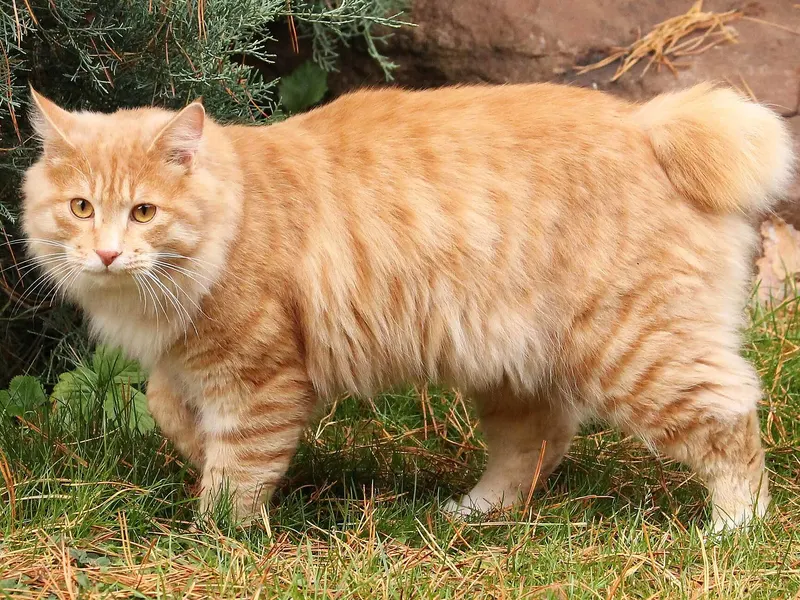
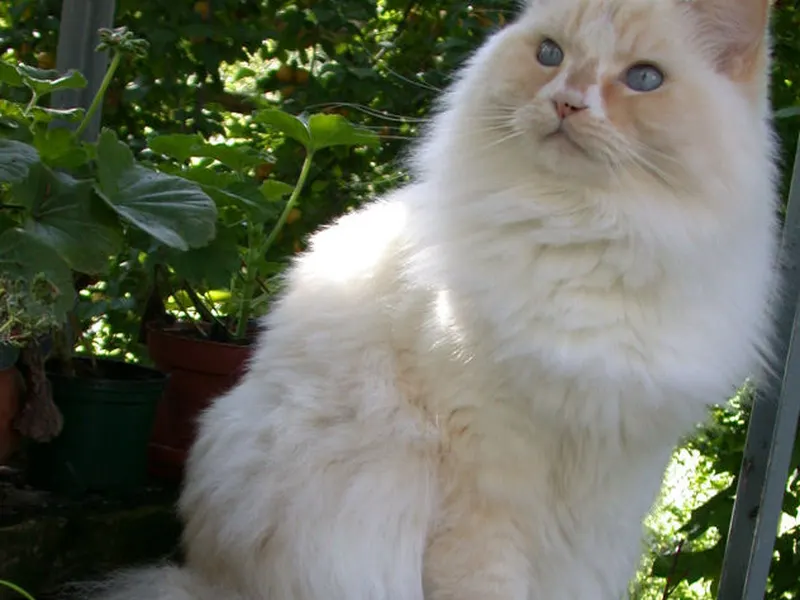
Maine CoonAmerica's gentle giant of the cat world
The Maine Coon is one of the largest domestic cat breeds, with a shaggy, weather-proof coat, tufted ears and a long plumed tail. Behind the rugged look is a sociable, easygoing cat that suits families, multi-pet homes and anyone who wants a companion that follows them from room to room.
Why people love the Maine Coon
- Sociable, dog-like cat that greets people and follows them around
- Patient with respectful children and calm dogs
- Soft chirps and trills instead of loud meowing
- Coat mats less than you might expect for its length
- Playful well into adulthood; many learn to fetch
Things to consider
- Moderate to heavy shedding; not for allergy sufferers
- Higher costs for food, cat trees and carriers
- HCM risk requires heart screening of breeding cats
- Slow to mature; takes 3 to 5 years to reach full size
- Needs brushing two or three times a week
Is this breed right for you?
10 questions · live resultHistory and Origin
The Maine Coon is a natural breed from the northeastern United States, shaped by harsh New England winters rather than by a single breeder. Its ancestors were most likely shorthaired and longhaired cats brought by European settlers and sailors, which then adapted to the climate of Maine. Popular legends about raccoon crosses or Marie Antoinette's cats are just that: legends.
By the late 1800s Maine Coons were shown at farm fairs in Maine, and a brown tabby female named Cosey won at the Madison Square Garden show in New York in 1895. Persians later pushed the breed out of fashion, but dedicated breeders kept it going. CFA granted championship status in 1976, and today the Maine Coon is consistently among the most popular breeds in the US and UK.
Size, Coat and Colors
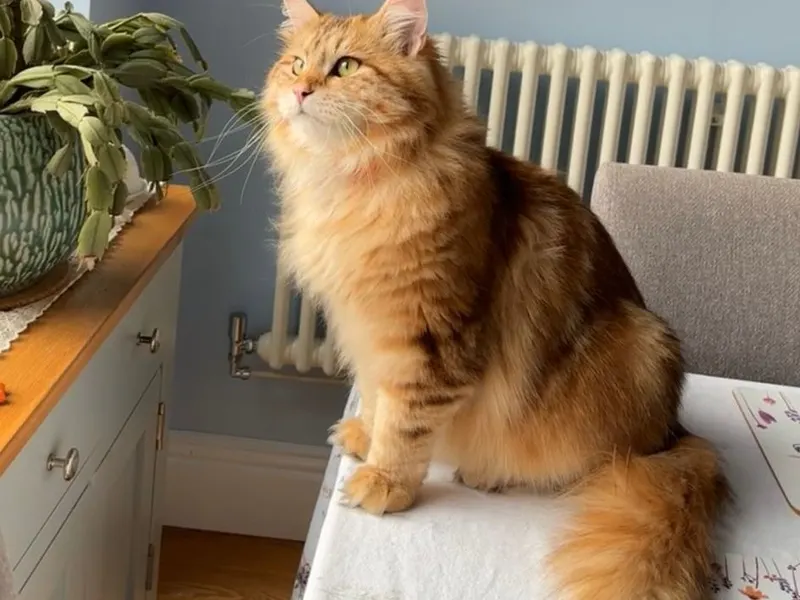
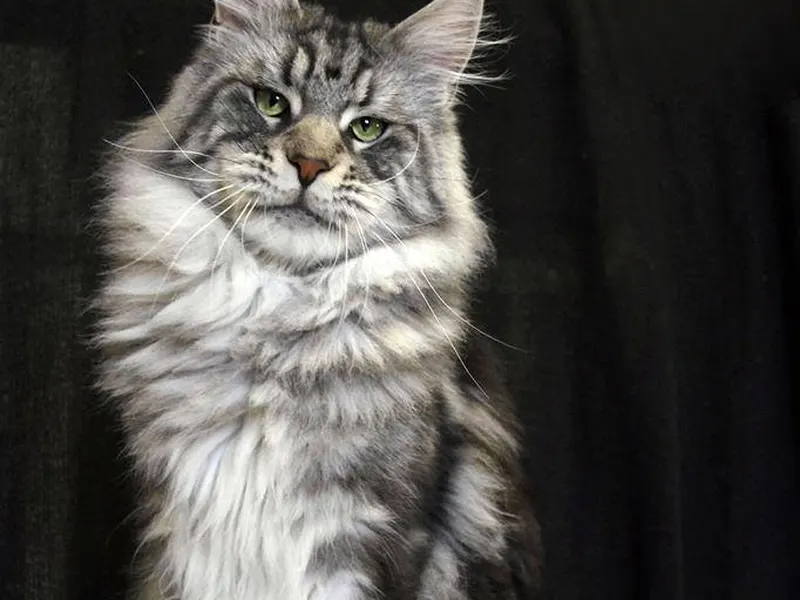
The Maine Coon is a large, muscular, rectangular cat with a broad chest, substantial bone and a long, flowing tail at least as long as the body from shoulder to tail base. Adults weigh 8 to 18 lb, and the sexes differ clearly: males are usually considerably larger and heavier, while females sit at the lower end of the range and look more refined.
Other hallmarks include large, well-tufted ears set high on the head, often with lynx tips, a squarish muzzle, large oval eyes and big, round paws with tufts between the toes. TICA also registers polydactyl Maine Coons, with extra toes, as a separate category.
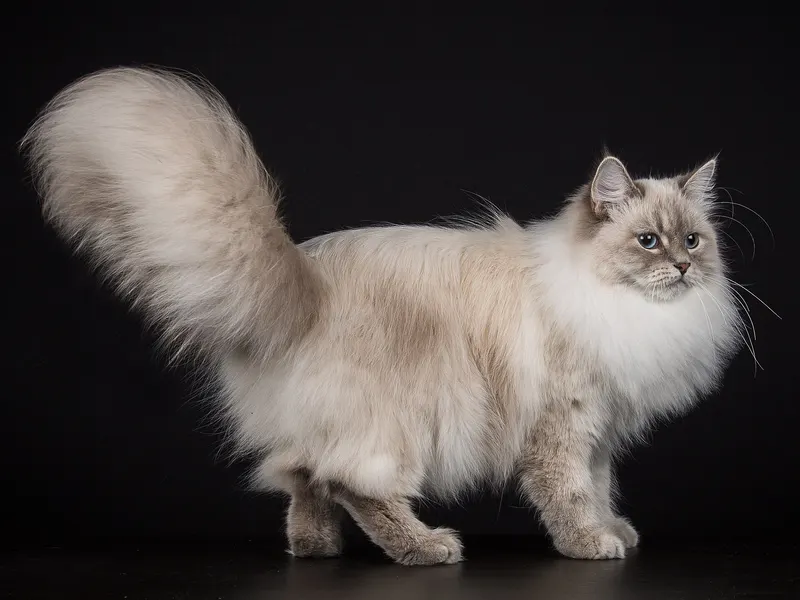
The coat is shaggy and uneven: short on the shoulders, longer on the belly and britches, with a frontal ruff. It is silky and water-resistant.
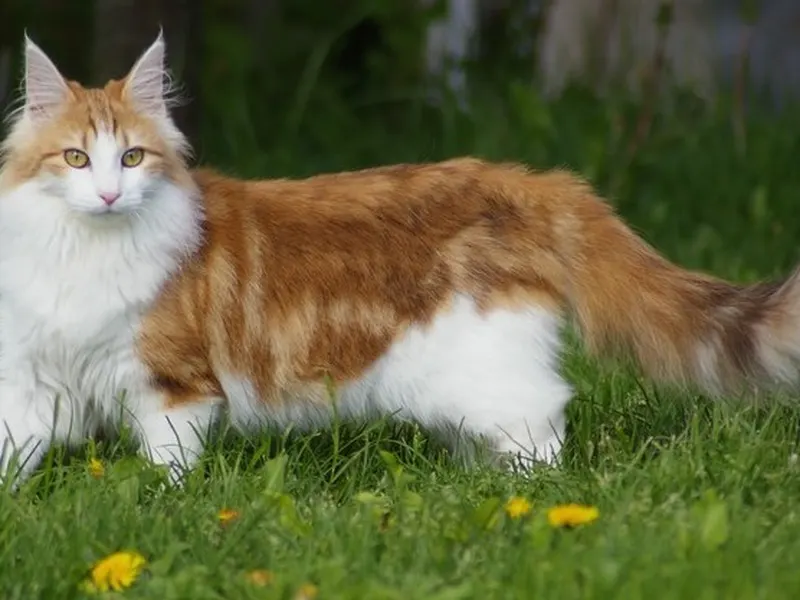
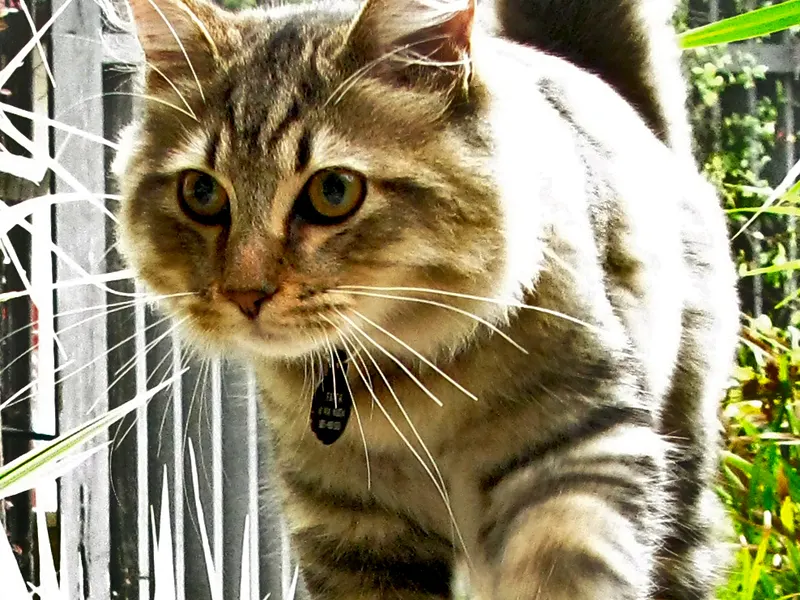
Colors: almost all colors and patterns are accepted, including solids, tabbies, tortoiseshells, bicolors and smokes. Brown tabby is the classic look. Colorpoint patterns and certain dilute colors such as chocolate and lavender are not accepted by the major registries.
Personality and Temperament
Maine Coons are often described as dog-like. They tend to greet people at the door, follow their owners around the house and want to be part of whatever is going on, without demanding to sit on a lap all day. Many prefer to lie next to you rather than on you.
They are generally patient and tolerant, which makes them a good match for respectful children and calm dogs. Visitors are usually met with curiosity rather than suspicion. Their voice is unusual for such a big cat: instead of loud meowing, many Maine Coons communicate with soft chirps and trills.
Are Maine Coons Lap Cats?
Most Maine Coons are not classic lap cats. They prefer to sit beside you, on the arm of the sofa or at your feet rather than curl up on your lap for hours.
This is partly about size: a large, warm Maine Coon often finds a lap uncomfortable, and many owners find a 15 lb cat a little heavy too. The breed is still very affectionate, following people from room to room, greeting them at the door and joining in household activities. Individual cats vary, and some do enjoy lap time, especially in winter or as they age. If you want a dedicated lap cat, ask the breeder about the parents' habits.
Can Maine Coons Be Indoor Cats?
Yes, Maine Coons adapt well to indoor life, provided the home offers enough space, climbing options and daily play to suit a large, active cat.
Because of their size, they need sturdy, tall cat trees with wide platforms, large scratching posts and oversized litter boxes. Interactive play with wand toys twice a day helps burn energy and prevent weight gain, which is a particular concern for indoor Maine Coons. Many enjoy harness walks or a secure catio, which offer safe outdoor stimulation without the risks of roaming, such as traffic and predators. Window perches and bird-watching spots also keep them entertained.
Can Maine Coons Be Left Alone?
Maine Coons can cope with being alone during a normal workday, but they are social cats and are happier with company.
An adult Maine Coon with toys, climbing spaces, a window view and a predictable routine usually manages eight hours alone without problems. Longer or frequent absences, such as trips away for several days, should be covered by a pet sitter who visits at least once a day. Many owners who work full time find that a second friendly cat makes life richer for a Maine Coon. Kittens need more attention and should not be left alone for long periods while they settle in.
Activity, Play and Enrichment
Maine Coons are moderately active and stay playful well into adulthood. They were working barn and ship cats, and the hunting drive is still there.
- Wand toys and toys they can carry around suit them well; some will fetch.
- Choose a tall, heavy cat tree with wide platforms, since flimsy trees wobble under a 15 lb cat.
- Many are fascinated by water and will paw at a dripping tap or play in a shallow bowl.
- Leash training and a secure catio work well for this confident breed.
Because they grow slowly and may not reach full size until 3 to 5 years old, avoid letting young cats get overweight. Extra weight puts stress on joints.
Grooming and Shedding
The coat is long and silky but has less woolly undercoat than a Persian's, so it mats less than you might expect. It is shorter on the shoulders and longer on the belly, britches and tail.
Plan on brushing two or three times a week with a wide-toothed comb, and daily during the seasonal shedding in spring. Pay attention to the belly and the back of the hind legs, where knots form first. Shedding is moderate to heavy, so a Maine Coon is not a good choice for allergy sufferers. Trim nails every few weeks and check that the litter box is big enough for a large cat.
Feeding and Nutrition
Maine Coons are slow-maturing cats that keep growing and filling out until 3 to 5 years old. During this time, aim for steady growth rather than rapid weight gain, and keep young cats lean to protect joints at risk of hip dysplasia. Feed a complete, balanced diet suited to growing kittens until about one year, then move to an adult diet, adjusting portions as the cat develops.
Weight control: a large frame can hide extra fat, and the long coat disguises body shape. Feel for the ribs and check for a slight waist from above. Weigh your cat monthly. Excess weight adds strain to joints and makes grooming of the back end harder.
Heart health: hypertrophic cardiomyopathy is documented in the breed. No diet prevents or cures it, but your vet may recommend specific monitoring or dietary adjustments if your cat is diagnosed.
Meals and hydration: two or three meals a day or measured portions work better than free-feeding. Encourage water intake with wet food, a water fountain or wide bowls, which many Maine Coons like to paw at. Use interactive feeders and count treats in the daily amount.
| Adult weight | Indoor, less active | Typical adult | Active or intact |
|---|---|---|---|
| 8 lb | 180 kcal | 220 kcal | 260 kcal |
| 13 lb | 260 kcal | 320 kcal | 370 kcal |
| 18 lb | 340 kcal | 410 kcal | 470 kcal |
Estimates use the resting energy formula veterinarians work with (70 × body weight in kg0.75) and standard activity factors. Use the feeding guide on your food as a starting point and adjust to body condition. Kittens, seniors, pregnant animals and pets that need to lose weight have different needs, so ask your vet.
Health and Lifespan
Maine Coons typically live 12 to 15 years. They are a sturdy breed, but a few inherited conditions are well documented:
- Hypertrophic cardiomyopathy (HCM): a thickening of the heart muscle. A DNA test exists for one Maine Coon mutation (MYBPC3), but it does not detect every case, so breeding cats should also have regular echocardiograms.
- Spinal muscular atrophy (SMA): an inherited nerve disorder that is easy to screen out with a DNA test.
- Hip dysplasia: more common than in most cat breeds, partly because of their size.
Ask breeders for DNA results and recent heart scans on both parents, and keep your cat at a lean weight.
Maine Coon Price and Cost of Ownership
Typical breeder price in the US$1,000 to $3,000
A pet-quality Maine Coon kitten from a reputable US breeder typically costs around $1,000 to $3,000. Prices vary by breeder, region and lines, with show-quality kittens and cats for breeding priced higher. A responsible breeder will share DNA results for HCM (MYBPC3) and SMA, recent echocardiograms of the parents and hip screening where available.
Adoption is also an option: Maine Coons and Maine Coon mixes appear in shelters and breed-specific rescues.
The main ongoing cost drivers are food for a large cat, sturdy, oversized cat trees, litter boxes and carriers, and regular grooming tools or occasional professional grooming for mats. Insurance is worth considering for heart disease and hip dysplasia, which can involve ongoing medication or specialist visits. Echocardiograms are a periodic expense if your vet recommends heart monitoring.
Is the Maine Coon Right for You?
A Maine Coon is a great fit if you want a friendly, sociable cat that gets on with kids, dogs and visitors and is not overly demanding. It suits families and first-time owners who are ready for regular brushing.
Think twice if you have limited space, want a low-shedding cat or have allergies. Food, vet bills, cat trees and carriers all cost more for a large cat. Maine Coons cope with some time alone but are happier with company, either people at home or another friendly pet.
Maine Coon Traits at a Glance
Maine Coon FAQ
How big do Maine Coon cats get?
Most adults weigh 8 to 18 lb (about 4 to 8 kg), with males usually heavier than females. They grow slowly and can take 3 to 5 years to reach full size.
Are Maine Coon cats hypoallergenic?
No. They produce the main cat allergen, Fel d 1, like other cats and shed a lot, so they are not a good choice for people with cat allergies.
Do Maine Coons shed a lot?
Yes, shedding is moderate to heavy, with a strong seasonal shed in spring. Brushing a few times a week keeps loose hair and mats under control.
How much does a Maine Coon kitten cost?
Pet-quality kittens from US breeders typically cost about $1,000 to $3,000. Prices vary by breeder, region and pedigree.
Are Maine Coons good with kids and dogs?
Yes, they are known for being patient and sociable. Introduce them gradually and teach children to handle the cat gently.
How long do Maine Coon cats live?
Typically 12 to 15 years. Choosing a kitten from parents screened for HCM, SMA and hip dysplasia improves the odds of a long, healthy life.