LykoiThe werewolf look, with a friendly heart
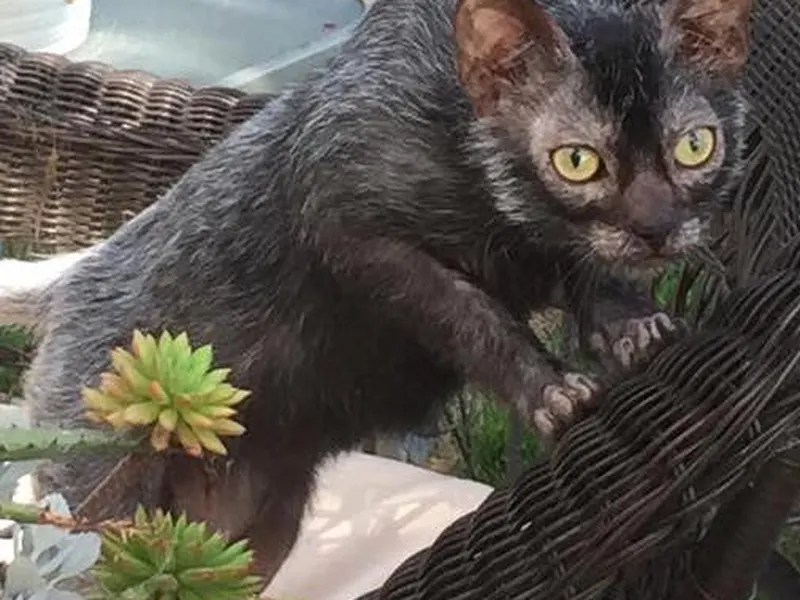
The Lykoi, named after the Greek word for wolves, is a partly hairless cat with a sparse roan coat of mixed black and white hairs and bare patches around the eyes and nose. The eerie look hides a friendly, playful and dog-like temperament that suits active indoor households.
Why people love the Lykoi
- Lively, curious and sociable
- Unusual werewolf-like appearance
- Good with children and cat-friendly dogs
- Clever and keen to play
- Natural mutation, not a cross with hairless breeds
Things to consider
- Strong prey drive; unsafe with birds or rodents
- Sparse coat offers limited sun and cold protection
- Sheds during molts
- Rare, with long waiting lists
- Limited long-term health data
Is this breed right for you?
10 questions · live resultHistory and Origin
The Lykoi comes from a natural mutation found in domestic cats in the United States. In 2010 and 2011, Patti Thomas in Virginia and Johnny and Brittney Gobble in Tennessee began working with partly hairless kittens born to domestic shorthair cats. Before breeding them, the founders had the cats examined by veterinarians and dermatologists to rule out infection, skin disease or other causes.
Genetic testing showed the trait is not caused by the Sphynx or Devon Rex genes. The coat comes from a recessive mutation, and the gene pool is widened by careful outcrossing to black domestic shorthairs. TICA granted championship status in 2017, CFA has also accepted the breed, and it is recognized by the GCCF in the UK.
Size, Coat and Colors
The Lykoi is a medium-sized, lean cat with a slightly long body and fine bones. Adults weigh about 6 to 12 lb, with males larger and more muscular than females.
The head is wedge-shaped with large, pointed ears and large, round eyes, often golden. Hairless areas around the eyes, nose, muzzle and ears create the distinctive wolf-like mask.
The coat is partially hairless and varies with age and season. Some cats are almost fully coated at times, while others look nearly bald during molts. The coat is coarse and roan, with a mix of white and colored hairs.
The standard color is black roan, where black hairs mix with white. Some breeders work with other colors, but black roan is the recognized standard in most registries.
The overall look is of a slender, athletic cat with an unusual, almost wild appearance.
Personality and Temperament
Lykoi are lively, curious and sociable. They often greet people at the door, follow their owners and enjoy interactive games. Many show a strong prey drive and will stalk toys with intense focus.
- Usually good with children and cat-friendly dogs
- May be cautious with strangers at first, then warm up
- Clever and keen to explore new spaces
Their hunting instinct is strong, and many owners say they behave a little like terriers: focused, quick and persistent with toys. They usually bond well with the whole family and enjoy being included in daily activities.
Is the Lykoi Good for First-Time Owners?
The Lykoi can work for first-time owners who want an active, playful cat and can keep it indoors. It is sociable and usually easy to handle.
New owners should be prepared for a few breed-specific needs. The strong prey drive calls for daily hunting-style play, and the breed is unsuitable for homes with pet birds or rodents. The sparse coat means protecting the skin from strong sun and cold, wiping oily skin and cleaning waxy ears. Molts can be surprising, as a Lykoi may look almost bald for a while before the coat returns. Talking with the breeder about what to expect helps a lot.
Can Lykoi Cats Live With Dogs?
Yes, Lykoi usually get along well with cat-friendly dogs. They are confident, curious and playful, and many enjoy chasing games with a calm canine companion.
Introduce them gradually, using a separate room for the cat at first and short, supervised meetings. Provide escape routes, high perches and dog-free feeding areas. A dog with a low prey drive is the best match, since the Lykoi's own hunting games can involve fast movement that excites some dogs. Rough play should be interrupted, as the cat's bare skin scratches more easily than a fully coated cat's.
Can Lykoi Cats Be Left Alone?
Lykoi can handle ordinary working hours alone if they have enough stimulation, but they prefer company and active play.
Before leaving, run a short hunting game with a wand toy, then offer a meal in a puzzle feeder. Rotate toys, provide a tall cat tree and window perches, and consider a second playful cat if you are often out. Keep the home warm and provide a heated or covered bed in cool weather, since the sparse coat gives little insulation. Avoid leaving the cat in a sunny room without shade, as bare skin can sunburn.
Activity, Play and Enrichment
Plan for regular hunting games with wand toys and small balls. Their prey drive makes them unsuitable around pet birds or rodents. A tall cat tree, food puzzles and clicker training keep them engaged.
Indoor living is recommended, since the sparse coat gives limited protection from sun and cold.
Grooming and Shedding
The coat is unusual. Lykoi molt, sometimes losing much of their hair and looking almost bald for a while before it grows back. Coverage changes with season and age.
- Wipe the skin occasionally if it gets oily, and bathe only when needed
- Clean ears regularly, as wax builds up
- Provide warm beds in cool weather and avoid long sun exposure on bare skin
They shed more than you might expect during molts, so they are not a low-shedding cat overall.
Feeding and Nutrition
With a sparse coat, a Lykoi loses more body heat than a fully coated cat, and many need a little more food to hold their weight, especially in cool homes or during heavy molts. Weigh your cat every few weeks and adjust portions to keep a lean, muscular body. Hairless patches make body condition easier to see than in most breeds, which helps.
The breed's strong prey drive makes mealtime a good chance for enrichment. Puzzle feeders, treat balls and several small meals hidden around the home mimic hunting and help prevent boredom.
Bare skin can become oily. A complete diet supports skin health, but persistent greasiness, spots or redness should be checked by a vet rather than treated with diet changes alone.
Encourage water intake with fountains or wet food to support urinary health.
Feed two or more meals a day. Because the breed is young and long-term health data are limited, routine checkups and weight records give your vet a useful baseline. Count treats used in clicker training as part of the daily ration.
| Adult weight | Indoor, less active | Typical adult | Active or intact |
|---|---|---|---|
| 6 lb | 150 kcal | 180 kcal | 210 kcal |
| 9 lb | 200 kcal | 240 kcal | 280 kcal |
| 12 lb | 250 kcal | 300 kcal | 350 kcal |
Estimates use the resting energy formula veterinarians work with (70 × body weight in kg0.75) and standard activity factors. Use the feeding guide on your food as a starting point and adjust to body condition. Kittens, seniors, pregnant animals and pets that need to lose weight have different needs, so ask your vet.
Health and Lifespan
Lykoi typically live 12 to 15 years. Because the breed is young and the gene pool small, long-term health data are limited. Founding cats had cardiac and skin evaluations, and no breed-specific inherited disease is well established so far.
- Bare skin can sunburn or become oily and develop minor skin problems
- Ask breeders about heart screening and general health records of the parents
Lykoi Price and Cost of Ownership
Typical breeder price in the US$1,500 to $3,000
Lykoi kittens from reputable US breeders typically cost about $1,500 to $3,000, depending on breeder, region and lines. Supply is limited, and waiting lists are common, sometimes many months long. Be wary of sellers offering partially hairless kittens without registration, since bare patches can also result from skin disease.
Adoption is rare but occasionally possible through breeder retirements.
Ongoing cost drivers include:
- Skin and ear care products and occasional baths
- Warm bedding, a heated pad and indoor climate control in winter
- Insurance covering skin conditions and general health
- Enrichment for a high-energy hunter, such as wand toys and cat trees
- Heart screening or checkups, since breed health data are still limited
Is the Lykoi Right for You?
A Lykoi suits indoor homes with time for play, people who enjoy an unusual-looking cat and families with children or a cat-friendly dog. It is not suitable for homes with small pets due to the strong prey drive.
Kittens are rare and waiting lists are common. Pet-quality kittens typically cost about $1,500 to $3,000 in the US, varying by breeder and region.
Lykoi Traits at a Glance
Lykoi FAQ
Why is the Lykoi called a werewolf cat?
Its sparse roan coat and bare patches around the eyes, nose and ears give it a wolf-like look. Lykoi is Greek for wolves.
Are Lykoi cats hypoallergenic?
No. Lykoi still produce the Fel d 1 allergen, and they shed during molts.
Is the Lykoi a cross with a Sphynx?
No. The coat comes from a natural mutation in domestic cats, and testing showed it is not the Sphynx or Devon Rex gene.
How much does a Lykoi cat cost?
Kittens typically cost about $1,500 to $3,000 in the US, depending on breeder and region, and supply is limited.
How long do Lykoi cats live?
Around 12 to 15 years, though long-term data for this young breed are limited.