SokokeA rare, marbled cat from Kenya's coast
The Sokoke is a rare, lean, long-legged cat from Kenya's coastal forest, with a distinctive marbled tabby coat. It is active, social and communicative, and it suits experienced owners who can give it room to move and plenty of company.
Why people love the Sokoke
- Active, alert and affectionate with family
- Distinctive marbled tabby coat with very light shedding
- Social with other cats and often with dogs
- Fast, athletic climber that enjoys play
- No breed-specific inherited diseases well documented
Things to consider
- Very rare; kittens usually need importing from Europe
- Needs lots of space, climbing and active play
- More vocal than average
- Can be cautious with strangers
- Small gene pool raises inbreeding concerns
Is this breed right for you?
10 questions · live resultHistory and Origin
The breed is named after the Arabuko-Sokoke Forest on the Kenyan coast, where local people knew these cats as khadzonzo. In 1978, Jeni Slater found a litter of these cats near her home and began breeding them.
In the 1980s, cats were exported to Denmark, where a breeding program developed the breed for the cat fancy. FIFe recognized the Sokoke in the 1990s. It remains very rare, with most breeders in Europe, especially Scandinavia and Italy, and it is not recognized by CFA.
Size, Coat and Pattern
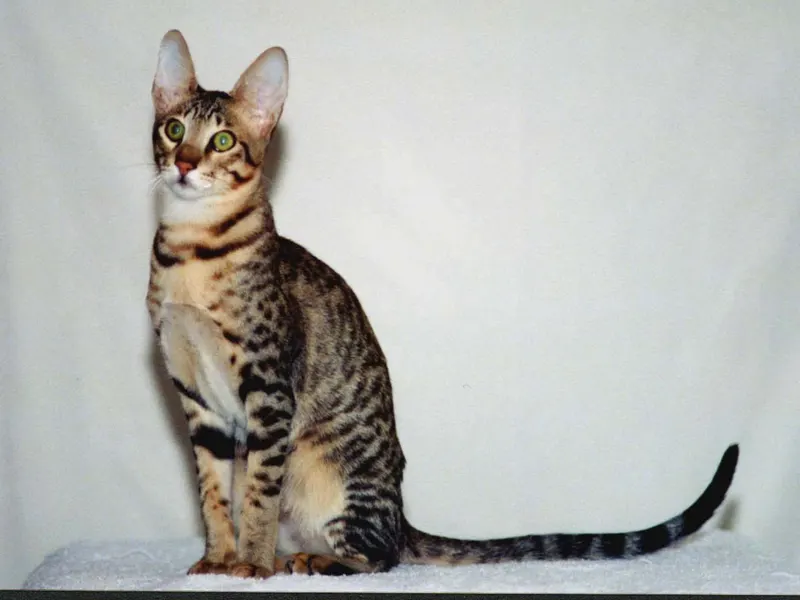
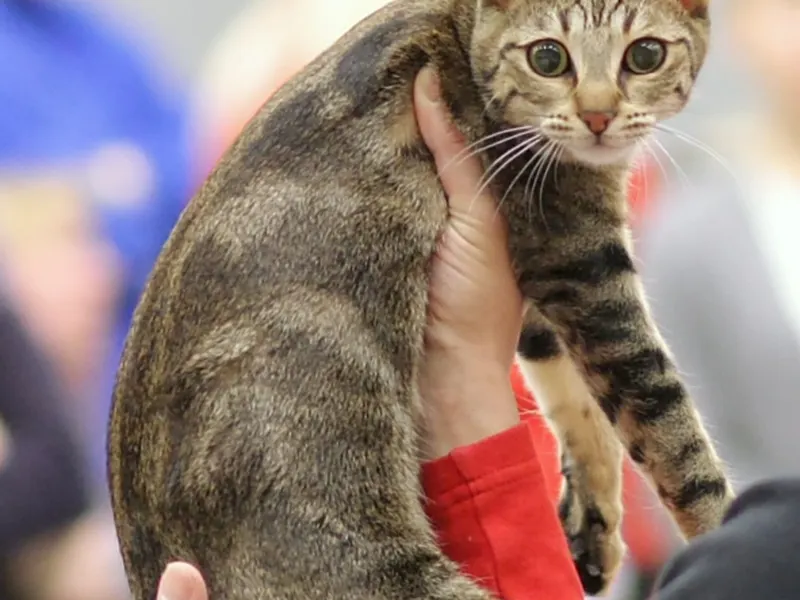
The Sokoke is a medium-sized, lean, long-legged cat with a light build, a relatively small, slightly wedge-shaped head, medium to large ears and almond-shaped eyes that range from amber to light green. The hind legs are longer than the front legs, which gives it a distinctive, almost tiptoe gait.
Adults usually weigh about 5 to 10 lb. Males are slightly larger and more muscular, while females are finer and lighter.
The coat is very short, glossy and close-lying, with little or no undercoat. It feels hard rather than plush.
The Sokoke has one pattern, the African tabby, a brown marbled or blotched tabby. Key features include:
- a warm brown base with darker marbled markings
- ticking within the pattern, which gives the markings a subtle, see-through look
- a tail ringed with dark bands and a dark tip
Some breeders also work with snow (pointed) variations, but these are not accepted by FIFe.
Personality and Temperament
Sokokes are described as active, alert and affectionate with their family. They tend to bond closely and like to stay near their people.
They are often more vocal than average and use their voice to communicate. Many are social with other cats and can live well with dogs, though some are cautious with strangers. They are not suited to a quiet, sedentary home.
Are Sokoke Cats Good for First-Time Owners?
Sokokes can suit first-time owners who are active and patient, but they are not the easiest choice. They are affectionate and easy to groom, which helps, yet their high energy, vocal nature and need for space and company can surprise new owners.
The bigger hurdle is getting one. Most breeders are in Europe, so beginners must handle importing, paperwork and possibly long waits. Owners who already have experience with active breeds such as the Abyssinian or Bengal often adapt more easily. A household with room for climbing, time for daily play and perhaps another active cat is the best fit.
Should Sokoke Cats Be Kept Indoors?
Most breeders and experts recommend keeping Sokokes indoors or giving them access to a secure outdoor enclosure rather than free roaming. They are fast, agile and curious, which makes traffic, predators and getting lost real risks.
An indoor Sokoke needs plenty of vertical space, sturdy cat trees, shelves and daily active play to stay content. A catio, enclosed balcony or harness walks give safe access to fresh air and outdoor stimulation. Because the breed is so rare and difficult to replace, many breeders make indoor living or secure outdoor access a condition of sale.
Can Sokoke Cats Be Left Alone?
They can manage moderate periods alone, but they bond closely with their families and do best with company. A bored Sokoke may become restless or noisy.
A second active cat is often the best solution for owners who work away from home, since Sokokes are typically social with other cats. Provide tall climbing structures, puzzle feeders and rotating toys, and plan active play sessions before leaving and after returning. For trips longer than a day, a pet sitter who spends time playing with the cat is better than leaving extra food.
Activity, Play and Enrichment
Long legs and a light build make Sokokes fast runners and strong climbers.
- Provide tall climbing structures and space to run.
- Daily active play, chasing and hunting games are essential.
- A secure outdoor enclosure is a good option where possible.
Bored Sokokes can become restless, so a second active cat often helps.
Grooming and Shedding
The coat is very short, glossy and close-lying, with little undercoat. The pattern is a brown marbled or blotched tabby, sometimes described as an African tabby, often with ticking within the pattern.
- A weekly wipe with a rubber mitt is enough.
- Shedding is light.
Nails and teeth need routine attention, as with any cat.
Feeding and Nutrition
The Sokoke is a naturally lean, athletic cat, and it should stay that way. A healthy adult has a light build with easily felt ribs and a defined waist.
- Kittens need three or four meals a day of a complete kitten food until about six months.
- Adults do well on two or three measured meals a day, or several small portions spread through puzzle feeders.
- Use hunting-style play and food puzzles to satisfy their instincts, which also keeps them active.
- Adjust portions if activity drops, for example after neutering or in older age.
No breed-specific dietary problems are well documented, but research on the breed is limited. Encourage hydration with several water bowls, a fountain or wet food to support urinary health. Keep treats small. If you import a kitten, ask the breeder what food it is used to and transition gradually over a week or two to avoid digestive upset. Report any appetite or weight changes to your veterinarian.
| Adult weight | Indoor, less active | Typical adult | Active or intact |
|---|---|---|---|
| 5 lb | 130 kcal | 160 kcal | 180 kcal |
| 8 lb | 180 kcal | 220 kcal | 260 kcal |
| 10 lb | 220 kcal | 260 kcal | 300 kcal |
Estimates use the resting energy formula veterinarians work with (70 × body weight in kg0.75) and standard activity factors. Use the feeding guide on your food as a starting point and adjust to body condition. Kittens, seniors, pregnant animals and pets that need to lose weight have different needs, so ask your vet.
Health and Lifespan
Sokokes are medium-sized and lean, usually around 5 to 10 lb. Commonly cited lifespans are around 12 to 15 years.
No breed-specific inherited diseases are well documented. The main concern is a small gene pool, which increases the risk of inbreeding problems. Ask breeders about relatedness and the health history of their lines, and keep up regular vet care.
Sokoke Price and Cost of Ownership
The Sokoke is very rare in the US, and there is no reliable typical US price. Most breeders are in Europe, especially Scandinavia and Italy, so buying a kitten often involves import costs, health certificates and travel or flight-nanny fees. Prices vary by breeder, region and lines. Adoption is very unlikely, given the breed's rarity.
Breed-specific cost drivers include:
- Import expenses and paperwork
- Tall cat trees, shelves and climbing structures
- A secure outdoor enclosure, if you choose to build one
- Possibly a second active cat for company
Grooming costs are minimal, as the very short coat needs only a weekly wipe. Routine veterinary care is similar to other active, medium-sized cats.
Is the Sokoke Right for You?
A good match if you have an active household, room for climbing, perhaps another active cat, and the patience to locate a breeder, likely in Europe.
Think twice if you want a calm lap cat, are away for long hours or need a kitten quickly.
Kittens are rare in the US and there is no reliable typical price; importing from Europe adds cost and paperwork.
Sokoke Traits at a Glance
Sokoke FAQ
Where does the Sokoke cat come from?
From the Arabuko-Sokoke Forest on the coast of Kenya. Breeding for the cat fancy began in Kenya and later Denmark.
Is the Sokoke a wild cat hybrid?
No. It is a domestic cat that developed naturally in Kenya, not a cross with a wild species.
How big do Sokoke cats get?
They are medium-sized and lean, usually around 5 to 10 lb.
Are Sokoke cats rare?
Very. Most breeders are in Europe, and the breed is not recognized by CFA.
Are Sokoke cats good with other pets?
Many are social with other cats and can live with dogs, especially when raised with them.