Japanese BobtailJapan's lively cat with a pom-pom tail
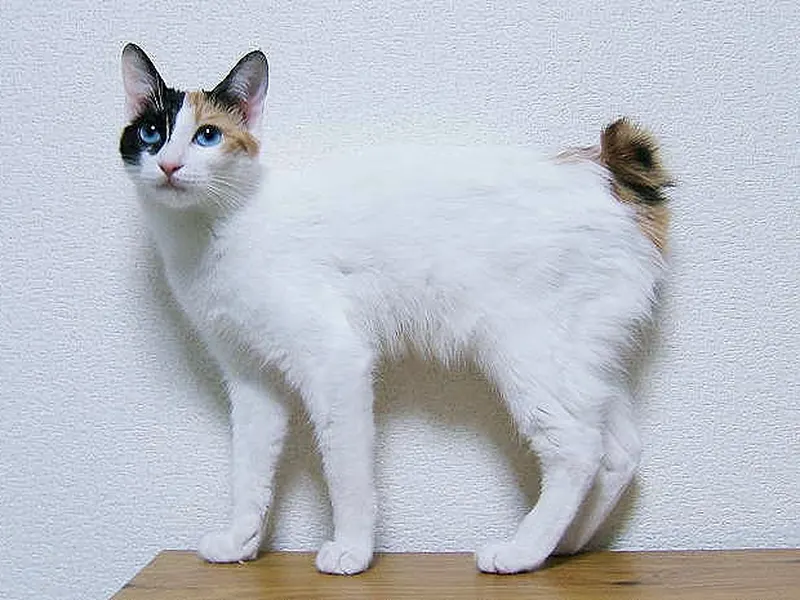
The Japanese Bobtail is a slender, athletic cat with a short, kinked tail that looks like a rabbit's pom-pom, and it is often seen in the tricolor mi-ke pattern. It is a lively, talkative and people-oriented cat that suits active households.
Why people love the Japanese Bobtail
- Active, curious and very people-oriented
- Soft, chirping voice and playful conversation
- Usually confident with visitors, children and dogs
- Silky coat rarely mats, in shorthair or longhair
- Generally healthy with a lifespan of 12 to 16 years
Things to consider
- High energy; not a quiet, lap-focused cat
- Needs daily interactive play and climbing space
- May become bored and mischievous when alone too long
- Relatively rare in the US, with long waits for kittens
- Small gene pool outside Japan
Is this breed right for you?
10 questions · live resultHistory and Origin
Short-tailed cats have been part of Japanese life for centuries and appear in traditional woodblock prints and paintings. The beckoning cat figure, the maneki-neko, is usually shown as a bobtailed cat with one raised paw, and the Gotokuji temple in Tokyo is linked to one well-known legend about it.
The breed reached the United States in 1968, when Judy Crawford, living in Japan, sent cats to breeders in America. CFA accepted the shorthaired Japanese Bobtail for championship in 1976 and the longhair in 1993. It is recognized by TICA, CFA, FIFe and the GCCF.
Size, Tail, Coat and Colors
The Japanese Bobtail is a medium-sized, lean, muscular cat with long, slender legs, hind legs slightly longer than the front, a triangular head with high cheekbones, large upright ears and large oval eyes. Odd-eyed cats, with one blue and one gold eye, are especially prized in white and bicolor cats.
Adults usually weigh about 6 to 10 lb. Males are larger and more muscular, while females are finer and lighter.
The tail is short, usually no more than about 3 inches, with kinks or curves hidden under fluffy fur that makes it look like a pom-pom. No two tails are exactly alike.
Both coat lengths exist:
- Shorthair: soft, silky and close-lying, with no noticeable undercoat
- Longhair: medium to long and silky, with a ruff and feathering on the hind legs
Many colors and patterns are accepted. The classic is mi-ke, white with red and black patches, and bicolor and van patterns are also popular.
Personality and Temperament
Japanese Bobtails are active, curious and social. They like to be involved, often carry toys in their mouths and play fetch. Their voice is soft and varied, and many "sing" or chirp in conversation with their owners.
They tend to be confident with visitors and adapt well to children and dogs. Because they are so people-focused and energetic, they do best with company and plenty to do, and they may be too busy for someone wanting a quiet lap cat.
Owners often notice that Japanese Bobtails carry toys around like retrievers and drop them at their feet to start a game. They also tend to be adaptable travelers and settle quickly in new places, which helps with moves and vet visits.
Are Japanese Bobtails Good With Kids?
Yes, Japanese Bobtails are usually excellent with children. They are confident, playful and social, and many enjoy fetch, chase games and trick training with kids.
Teach children to handle the cat gently and never to pull or straighten the tail, which is made of fused or kinked vertebrae. Give the cat high perches and quiet places to retreat when it needs a break. Their energy matches active families well, and they tend to adapt quickly to busy households with visitors. Supervise very young children until they know how to play safely.
Are Japanese Bobtails Lap Cats?
Not usually. Japanese Bobtails are affectionate and people-oriented, but they are too busy and curious to sit still for long. They would rather follow you around, carry toys to you and join in whatever you are doing.
Many will cuddle briefly, especially in the evening after a good play session, and some enjoy sleeping near their people at night. Owners who want a constant lap companion may be disappointed, but those who enjoy an interactive, conversational cat that is always nearby usually love the breed. Daily play makes them more relaxed and more likely to settle for a cuddle.
Can Japanese Bobtails Be Left Alone?
They can handle a normal workday, but they do best with company. Japanese Bobtails are energetic and social, and long, regular stretches alone may lead to boredom and mischief.
Provide tall climbing furniture, wall shelves, puzzle feeders and a window perch, and rotate toys regularly. A second playful cat is often the best solution for owners who work away from home. Plan a vigorous play session before leaving and when you return. For trips longer than a day, a pet sitter who visits and plays with the cat is better than leaving extra food.
Activity, Play and Enrichment
This is a high-energy breed with long hind legs and strong jumping ability.
- Provide tall climbing furniture and wall shelves.
- Daily wand-toy and fetch sessions are a must.
- They enjoy water play, such as pawing at a dripping tap.
- Trick training suits them, as they learn quickly.
A second playful cat can be a good companion if you work outside the home.
Grooming and Shedding
Both the shorthair and the longhair have a soft, silky coat without a heavy undercoat, so mats are rare.
- Shorthairs: a weekly brush or rubber mitt is enough.
- Longhairs: brush once or twice a week, focusing on the ruff and britches.
Handle the tail gently. It is made of fused or kinked vertebrae and should not be straightened or pulled.
Feeding and Nutrition
Japanese Bobtails are lean, active cats, and most keep a good figure with measured meals and daily play. A healthy adult feels muscular with a slight waist and easily felt ribs.
- Kittens need three or four meals a day of a complete kitten food until about six months.
- Adults do well on two or three measured meals daily, or several small portions in puzzle feeders.
- Use part of the daily ration for trick training and fetch games, which suit this clever, active breed.
- Adjust portions if activity drops with age or after neutering.
Many Japanese Bobtails enjoy playing with water, which can be an advantage: a pet fountain often encourages drinking and supports urinary health. Wet food also adds moisture. No breed-specific dietary problems are well documented, so focus on routine dental care, weight checks and keeping treats under about a tenth of daily intake. Report any changes in appetite or litter box habits to your veterinarian.
| Adult weight | Indoor, less active | Typical adult | Active or intact |
|---|---|---|---|
| 6 lb | 150 kcal | 180 kcal | 210 kcal |
| 8 lb | 180 kcal | 220 kcal | 260 kcal |
| 10 lb | 220 kcal | 260 kcal | 300 kcal |
Estimates use the resting energy formula veterinarians work with (70 × body weight in kg0.75) and standard activity factors. Use the feeding guide on your food as a starting point and adjust to body condition. Kittens, seniors, pregnant animals and pets that need to lose weight have different needs, so ask your vet.
Health and Lifespan
Japanese Bobtails are generally considered a healthy breed and commonly live 12 to 16 years. They usually weigh 6 to 10 lb (about 3 to 4.5 kg).
The bobtail trait is recessive and, unlike the Manx gene, is not associated with spinal or bowel defects. No major breed-specific inherited diseases are well documented, but routine care still matters: dental cleaning, vaccinations and weight checks.
Buy from a breeder who knows the health history of their lines, as the breed's gene pool outside Japan is relatively small.
Japanese Bobtail Price and Cost of Ownership
Typical breeder price in the US$800 to $2,000
A Japanese Bobtail kitten from a reputable US breeder typically costs about $800 to $2,000. Prices vary by breeder, region and lines, and longhairs or kittens in sought-after mi-ke or odd-eyed coloring may cost more. The breed is relatively rare in the US, so waiting lists are common. Adoption is possible but uncommon.
Breed-specific cost drivers include:
- Tall cat trees, wall shelves and climbing furniture for a high-energy breed
- Interactive toys, puzzle feeders and a water fountain
- Possibly a second cat for company
- Travel or shipping costs if the nearest breeder is far away
Grooming costs are low for both coat lengths, and the breed is generally healthy, though routine dental care remains important.
Is the Japanese Bobtail Right for You?
A good match if you have an active household, enjoy interactive play and like a chatty, curious cat. Families with children and cat-friendly dogs are a good fit.
Think twice if you are away much of the day, want a quiet cat, or have no room for climbing furniture.
Each tail is unique, and the colors range widely, though the mi-ke (white with red and black patches) is the classic look. Kittens are relatively rare in the US and typically cost about $800 to $2,000, varying by breeder and region.
Japanese Bobtail Traits at a Glance
Japanese Bobtail FAQ
Why do Japanese Bobtails have short tails?
A natural recessive gene produces a short, kinked or curled tail. Each cat's tail is unique, and the gene is not linked to the spinal problems seen in some tailless breeds.
Are Japanese Bobtails healthy?
They are considered a generally healthy breed with no major well-documented inherited diseases.
How big do Japanese Bobtails get?
Adults usually weigh 6 to 10 lb, with a lean, muscular build.
Are Japanese Bobtails good with dogs?
Usually yes. They are confident and social and tend to adapt well to cat-friendly dogs.
Are Japanese Bobtails vocal?
Moderately. They have a soft, chirping voice with many tones and often "talk" back when spoken to, without the loud yowl of a Siamese.
Do Japanese Bobtails shed?
Lightly. The single coat sheds little and rarely mats.