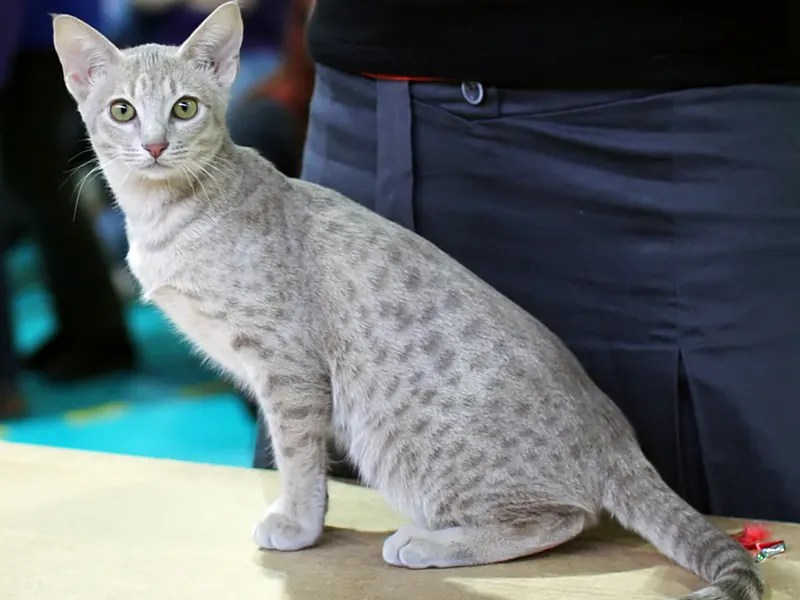
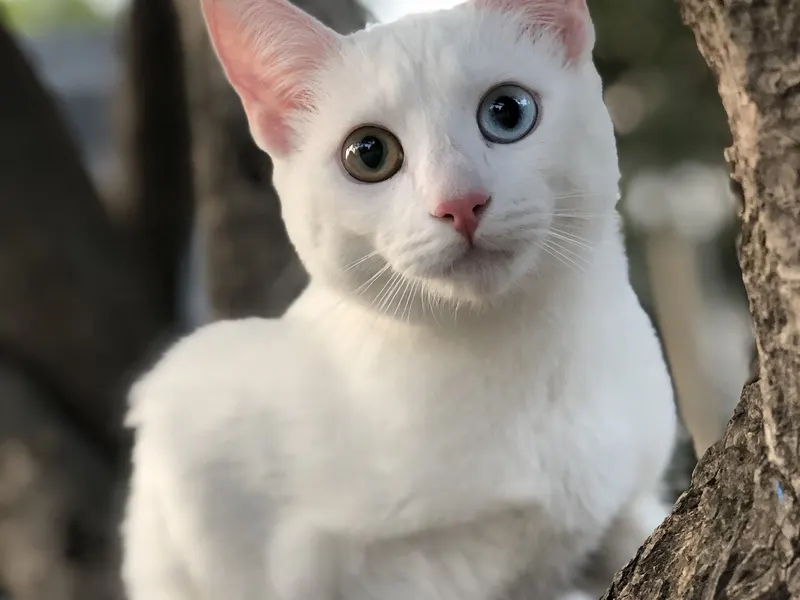
TonkineseThe sociable Siamese-Burmese blend
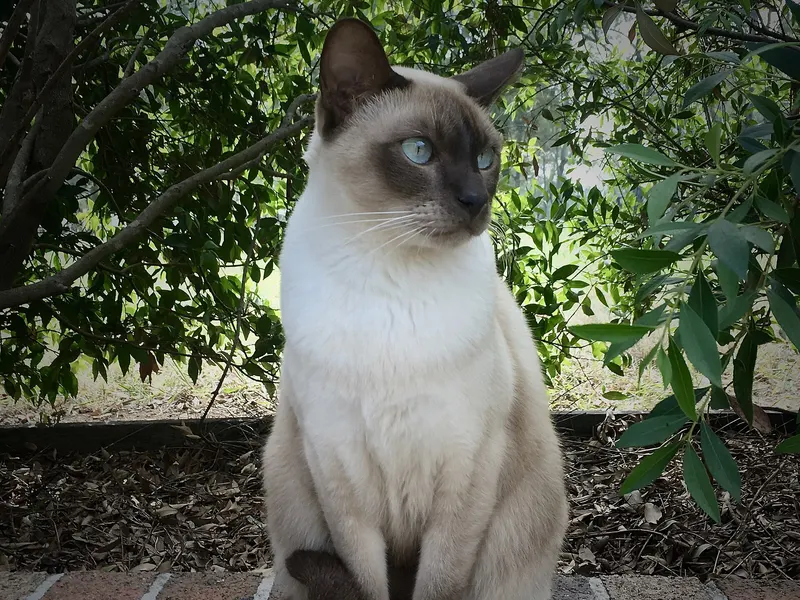
The Tonkinese combines the Siamese and Burmese into a medium-sized, muscular cat with a soft coat and, in the classic mink pattern, aqua eyes. It is affectionate, playful and talkative, and suits households where it can be at the center of family life.
Why people love the Tonkinese
- Affectionate, playful and sociable
- Excellent with children and other pets
- Softer voice than the Siamese
- Easy-care short coat
- Clever and trainable
Things to consider
- Needs company and dislikes being alone
- High energy and curiosity
- Can open doors and cupboards
- Prone to gum disease
- Too trusting to roam outdoors safely
Is this breed right for you?
10 questions · live resultHistory and Origin
Cats that look like Tonkinese were likely part of the original Burmese population: Wong Mau, the cat brought to the United States in 1930 that founded the Burmese breed, is now thought to have been a Siamese-Burmese type cat.
The modern breed was developed in the 1960s by Margaret Conroy in Canada, who crossed Siamese and Burmese, with American breeders such as Jane Barletta working in parallel. The name was originally Tonkanese and was later changed to Tonkinese, a reference to the Tonkin region of Vietnam, though the breed has no link to that area. CFA granted championship status in 1984.
Build, Patterns and Eye Colors
The Tonkinese is a medium-sized cat with a muscular, surprisingly heavy body. Adults weigh about 6 to 12 lb, and males are noticeably larger and more muscular than females.
The build sits between its parent breeds: more rounded than the modern Siamese, less compact than the Burmese. The head is a modified wedge with slightly rounded contours, a gentle stop and medium-sized ears with oval tips. The eyes are open almond-shaped, and the legs are slim but muscular.
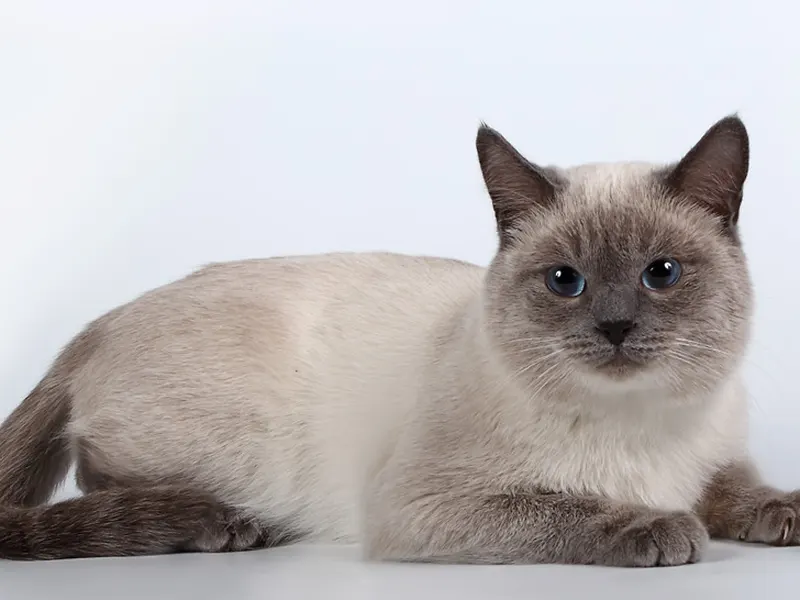
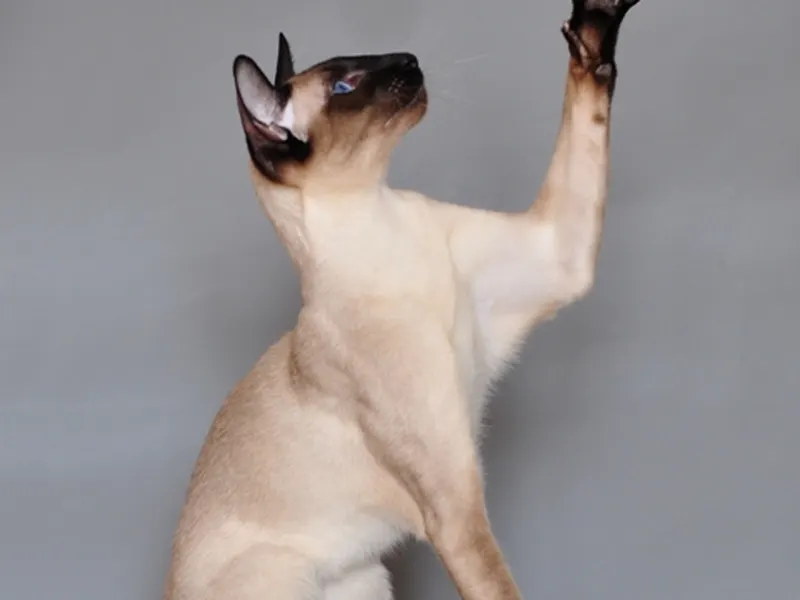
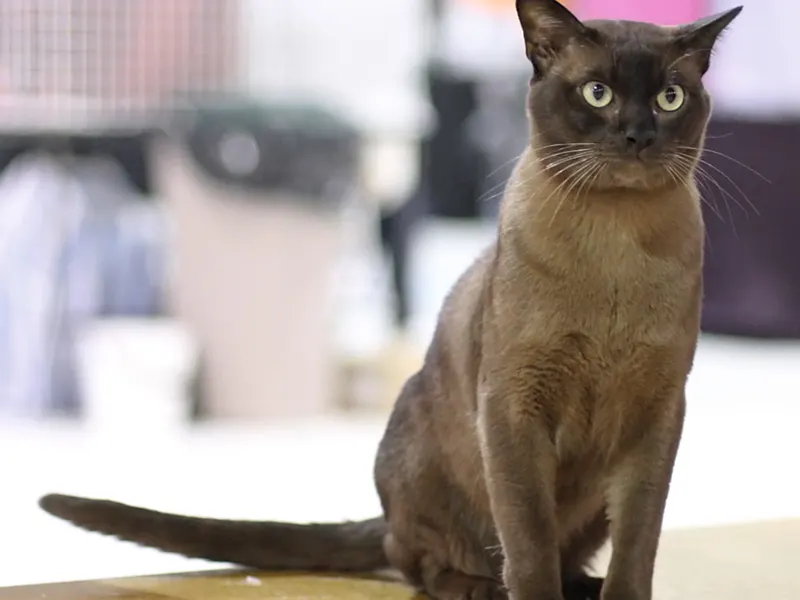
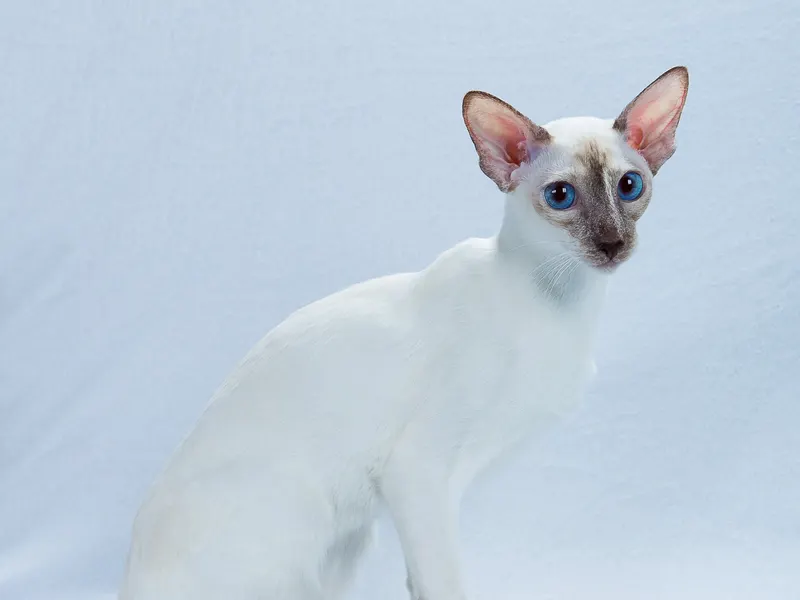
The coat is short, fine and close-lying. The breed's look is defined by three patterns, each with a typical eye color:
- Mink: moderate contrast between points and body, with aqua eyes.
- Pointed: high contrast, like a Siamese, with blue eyes.
- Solid: little contrast, like a Burmese, with green or gold eyes.
Colors include natural (seal), champagne, blue and platinum. Kittens are born lighter, and points develop as they mature. Coat color can darken with age, especially on the body.
Personality and Temperament
Tonkinese are sociable, affectionate and lively. They enjoy laps and attention, follow people around the house and are usually friendly with visitors. Their voice is softer than a Siamese's, but they like to talk.
They tend to be excellent with children and other pets, and they love a playmate. Their strong need for company means they are not suited to being alone for long periods.
Tonks are often described as clowns: they enjoy games of hide and seek, perching on shoulders and joining in household routines. They tend to be quick to forgive and adapt well to new people, which makes them a good choice for families with visitors coming and going.
Are Tonkinese Cats Lap Cats?
Yes, Tonkinese are usually affectionate lap cats. They enjoy physical contact and often climb onto laps or perch on shoulders.
They are also very playful and curious, so lap time often comes between bursts of activity. Many follow their owners from room to room and want to be involved in everything. Their sociable nature means they also enjoy attention from visitors. If you want a cat that seeks closeness and interaction, the Tonkinese is a good match. Owners who are out all day often find that a second cat keeps a Tonk happy until the lap is available again.
Can Tonkinese Cats Live With Dogs?
Yes, Tonkinese often get along well with dogs, especially friendly, cat-safe breeds. Their confident, sociable nature helps them adapt to multi-pet homes.
Introduce them gradually, keeping early meetings short and supervised. Provide high perches and escape routes for the cat, and choose a dog with low prey drive. Many Tonkinese enjoy playing with dogs, and a canine companion can help keep them company when people are out. Another active cat is often the best companion, though, since Tonkinese love to play.
Should Tonkinese Cats Be Kept Indoors?
Yes, Tonkinese are best kept indoors or with secure outdoor access, such as a catio. Their trusting, friendly nature makes them vulnerable outdoors, where they may approach strangers, cars or other animals.
Indoor Tonkinese need plenty of enrichment:
- Climbing trees and shelves.
- Interactive toys and puzzle feeders.
- Daily play and training sessions.
- A second active cat for company.
Many Tonkinese also learn to walk on a harness, which allows supervised outdoor time. Microchipping is still worthwhile, since curious Tonks sometimes slip out through open doors.
Activity, Play and Enrichment
Tonkinese are energetic and clever.
- Fetch, chase games and puzzle toys keep them busy.
- Many learn tricks with clicker training.
- Climbing trees and shelves add vertical territory.
- A second active cat is often the best enrichment of all.
They can learn to open doors and cupboards, so secure anything you do not want explored.
Grooming and Shedding
The short, close-lying coat feels soft like mink. A weekly brush or rub with a grooming mitt is enough, and shedding is light.
There are three patterns: pointed (with blue eyes, like a Siamese), mink (medium contrast with aqua eyes, the signature Tonkinese look) and solid (with green or gold eyes, like a Burmese). Colors include natural (seal), champagne, blue and platinum, with some registries accepting others.
Feeding and Nutrition
Tonkinese are active and muscular, but they can gain weight if overfed or under-exercised. Keep them lean, with ribs easy to feel and a visible waist.
- Feed several small meals a day or use puzzle feeders.
- Kittens need frequent meals of a complete kitten diet.
- Adjust portions after neutering, when energy needs often drop.
Gum disease (gingivitis) is relatively common in the breed. Regular tooth brushing and vet dental checks are the best prevention; food does not replace dental care.
Conditions seen in Burmese, such as diabetes and hypokalemia (low potassium), may occur in some lines. Watch for increased thirst, urination or weakness, and see your vet if they appear. A lean weight is one of the best ways to reduce diabetes risk.
Hydration supports urinary health. Offer fresh water in several places, consider a fountain and include some wet food if your cat drinks little. Tonkinese are food-motivated, so use part of the daily ration for training and puzzle games.
| Adult weight | Indoor, less active | Typical adult | Active or intact |
|---|---|---|---|
| 6 lb | 150 kcal | 180 kcal | 210 kcal |
| 9 lb | 200 kcal | 240 kcal | 280 kcal |
| 12 lb | 250 kcal | 300 kcal | 350 kcal |
Estimates use the resting energy formula veterinarians work with (70 × body weight in kg0.75) and standard activity factors. Use the feeding guide on your food as a starting point and adjust to body condition. Kittens, seniors, pregnant animals and pets that need to lose weight have different needs, so ask your vet.
Health and Lifespan
Tonkinese typically live 12 to 16 years and are considered fairly healthy. Issues reported include:
- Gum disease (gingivitis), which is relatively common; dental care is important.
- Progressive retinal atrophy (PRA) from Siamese ancestry; DNA tests are available.
- Conditions seen in Burmese, such as hypokalemia or diabetes, may occur in some lines.
Ask breeders about genetic testing and the health of related cats.
Tonkinese Price and Cost of Ownership
Typical breeder price in the US$800 to $2,000
A Tonkinese kitten from a reputable US breeder typically costs about $800 to $2,000. Prices vary by breeder, region and lines, and pattern or color may affect price. Ask about PRA testing and the health of related cats, including any history of diabetes or hypokalemia.
Tonkinese occasionally appear in rescues, sometimes listed as Siamese or Burmese mixes.
Many breeders encourage or require buying two kittens for homes where people are out during the day, which doubles the purchase price and ongoing costs.
Breed-specific ongoing costs include:
- Regular dental cleanings and checkups.
- Climbing trees, shelves and interactive toys.
- A second cat or pet sitter for owners who are away often.
- A secure catio for safe outdoor access.
Is the Tonkinese Right for You?
Tonkinese suit families, multi-pet homes and owners who are home often and want an interactive, affectionate cat. They do well indoors with enough play.
They are not a good fit for people who are away for long hours without another pet, or who want a quiet, independent cat. Because they are so trusting, they should be kept indoors or in a secure enclosure.
A pair of Tonkinese, or a Tonk with another active breed, is a common recommendation for working households. Many breeders prefer to place kittens in homes where they will not be the only pet, or where someone is at home most of the day.
Tonkinese Traits at a Glance
Tonkinese FAQ
What color eyes do Tonkinese cats have?
It depends on the pattern: aqua for mink, blue for pointed and green or gold for solid.
Are Tonkinese cats vocal?
Yes, but their voice is softer and less insistent than a Siamese's.
How big do Tonkinese cats get?
Adults typically weigh 6 to 12 lb (about 3 to 5.5 kg), with a surprisingly heavy, muscular build.
Do Tonkinese cats shed?
Shedding is light. A weekly brush is usually enough.
Can Tonkinese cats be left alone?
Not for long. They are very social and are happiest with people or another pet around.
How much does a Tonkinese kitten cost?
Pet-quality kittens in the US typically cost around $800 to $2,000, depending on breeder and region.