ThaiThe traditional Siamese, preserved
The Thai is the old-style Siamese: a pointed, blue-eyed cat with a moderate body and a rounder head than the modern show Siamese. It keeps the Siamese voice and devotion, and suits people who want that personality in a less extreme frame.
Why people love the Thai
- Affectionate, devoted and highly social
- Moderate, traditional Siamese build
- Short coat needs minimal grooming
- Intelligent, enjoys play and training
- Long lifespan, often 12 to 18 years
Things to consider
- Very talkative and demanding of attention
- Dislikes being left alone for long
- Can be mischievous if bored
- Rare in the US, naming varies
- Inherited risks shared with Siamese lines
Is this breed right for you?
10 questions · live resultHistory and Origin
The pointed cats of Thailand, called Wichianmat, are the ancestors of all Siamese. When the Siamese was first shown in the West in the late 1800s and early 1900s, it had a moderate body and head. Over the 20th century, show breeding pushed the Siamese toward a much longer body and a narrow, wedge-shaped head.
Breeders who preferred the original look kept breeding moderate pointed cats, often called old-style or traditional Siamese. In Europe, the WCF recognized them as the Thai, and TICA later accepted the Thai as well. FIFe has also adopted the breed. Some breeders imported cats directly from Thailand to keep the type close to its roots.
Size, Pointed Coat and Colors
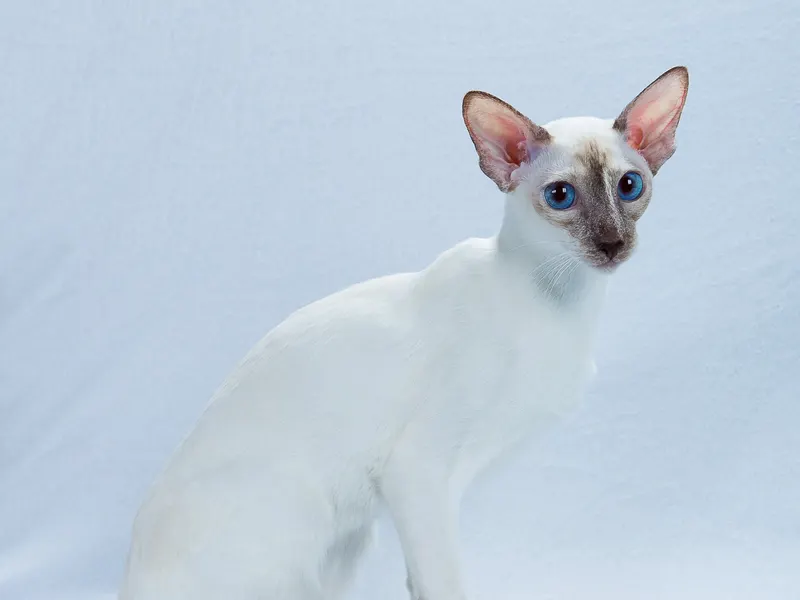
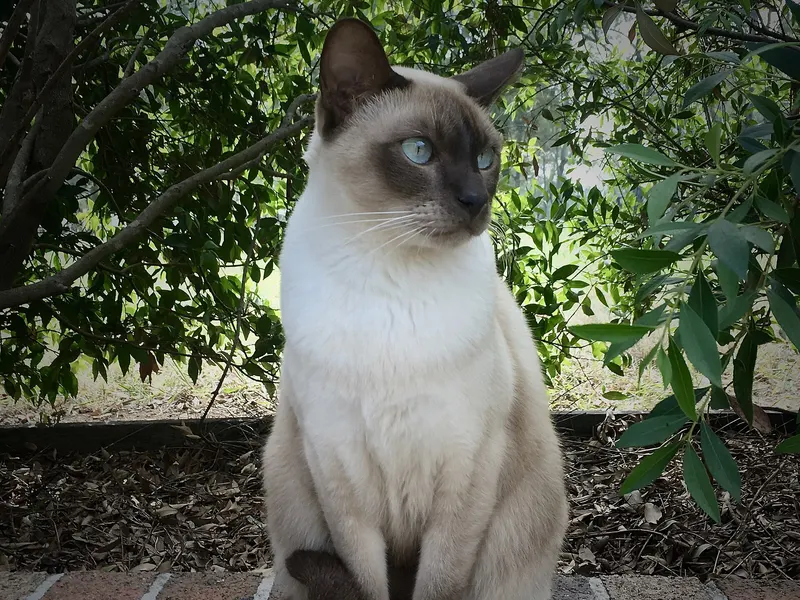
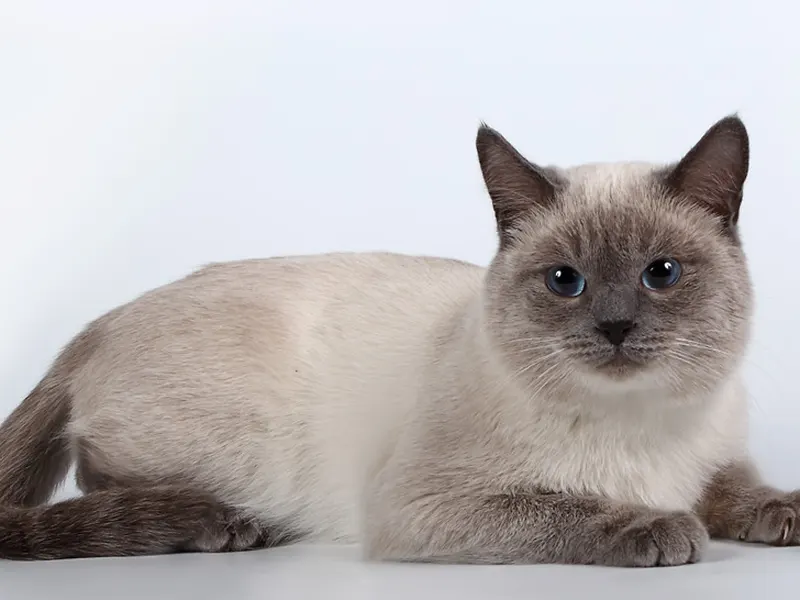
The Thai is a medium-sized, moderately built cat with a rounded wedge-shaped head, medium ears and almond-shaped blue eyes. Adults weigh about 6 to 12 lb. Males are usually larger and more muscular, often at the upper end of the range, while females are smaller and finer.
The body is medium in length, muscular and well balanced, with medium legs and a tail that tapers to a point. Compared with the modern Siamese, the Thai is less extreme: the head is rounder, the ears smaller and the body less elongated.
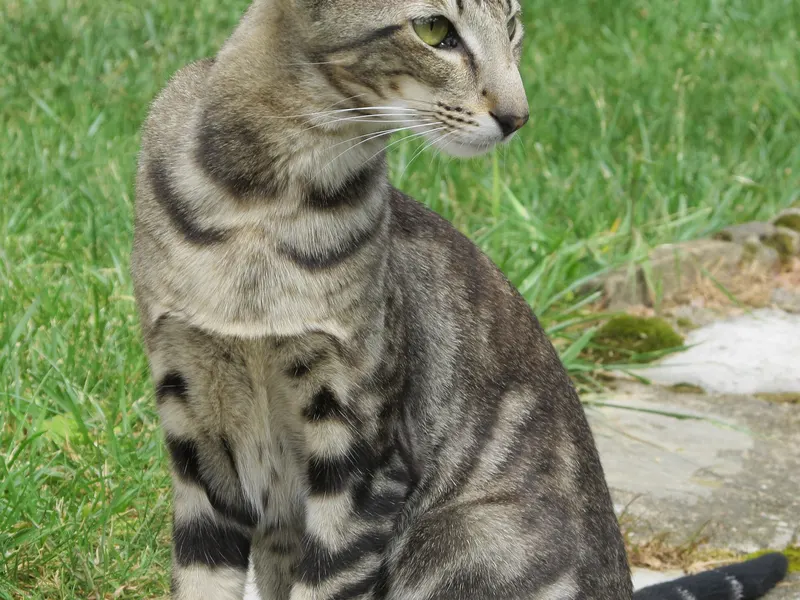
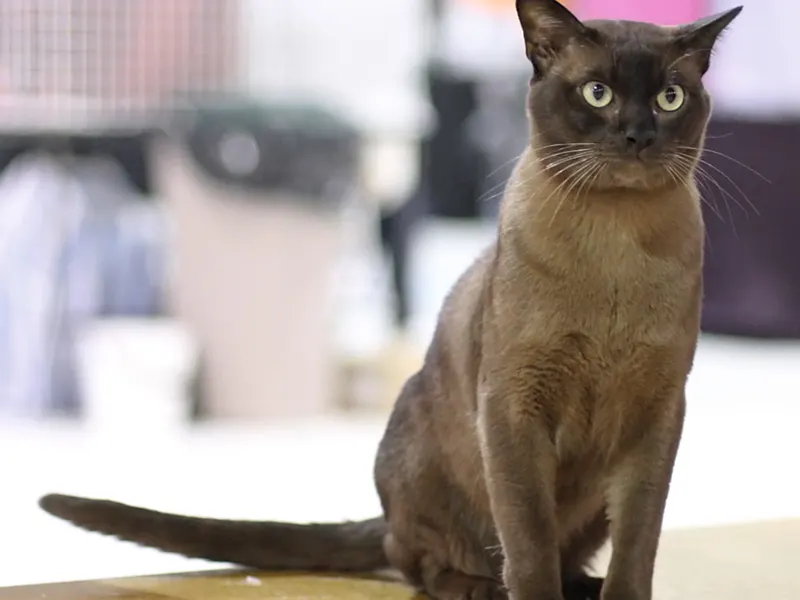
The coat is short, close-lying and fine with little undercoat. The Thai is always pointed: the face, ears, legs and tail are darker than the body. Common point colors include seal, blue, chocolate and lilac, and some registries also accept red, cream, tortoiseshell and tabby (lynx) points. The points darken in cooler areas of the body, and the body coat tends to darken with age. Eyes are always blue.
Personality and Temperament
Thais have the full Siamese temperament: talkative, inquisitive and strongly attached to their people. They follow you around, comment on your activities and want to help with everything.
They are typically outgoing with visitors and good with children and cat-friendly dogs. Being so social, they dislike long periods alone, and a bored Thai will make its feelings known loudly.
Is the Thai Cat a Lap Cat?
Yes, many Thai cats are affectionate lap cats. They seek closeness and enjoy curling up on their people, especially after play.
Thais are also active and curious, so lap time usually comes between bursts of activity. They follow their owners around and want to be involved in everything. If you want a cat that stays close and seeks attention, the Thai is a good choice. Owners who prefer an independent or quiet cat may find the Thai's need for interaction too demanding.
Can Thai Cats Be Left Alone?
Thai cats do not like being left alone for long periods. They are very social and can become bored or vocal when lonely.
A second sociable cat is often the best solution for owners who work long hours. Provide climbing furniture, window perches and puzzle feeders to keep the cat engaged. Interactive play before and after work helps. If you travel often, arrange a pet sitter rather than leaving a Thai alone for extended periods. Owners who are home much of the day suit the breed best.
Is the Thai Cat Good for First-Time Owners?
The Thai can be a good choice for first-time owners who want an interactive, affectionate cat and have time to give attention. Its grooming needs are minimal, and it is generally robust.
Beginners should be ready for a talkative cat that wants company and play every day. Thais are intelligent and enjoy clicker training, puzzle toys and harness walks. Ask breeders about DNA testing for progressive retinal atrophy and the health history of their lines. Because naming varies in the US, look for registered cats if pedigree matters to you.
Activity, Play and Enrichment
Thais are active and clever.
- Plan daily interactive play, including fetch, which many enjoy.
- Provide climbing furniture and window perches.
- Clicker training, puzzle feeders and harness walks suit them well.
A second sociable cat can be a good solution for households where people are out during the day.
Grooming and Shedding
The coat is short and close-lying with little undercoat.
- A weekly rub with a grooming mitt keeps it in good shape.
- Brush teeth regularly and trim nails every couple of weeks.
Shedding is light. As in the Siamese, the point color is temperature-dependent, and the body coat tends to darken with age.
Feeding and Nutrition
Thais are active, lean cats that should stay slim and muscular. Their moderate build is less prone to extreme thinness than the modern Siamese, but weight gain can still occur in indoor cats.
- Feed measured meals and adjust to body condition and activity.
- Kittens benefit from three to four meals a day, moving to two meals for adults.
- Fresh water should always be available, and wet food can increase water intake.
- Dental disease is a known risk in Siamese lines, so regular tooth brushing and dental checks matter.
Thais are clever and food-motivated, which makes puzzle feeders and training with small treats useful. Count treats toward the daily ration. Senior Thais may need adjusted portions as activity decreases, so check weight regularly.
Weigh your Thai every month or two on a home scale, since gradual changes are easy to miss.
| Adult weight | Indoor, less active | Typical adult | Active or intact |
|---|---|---|---|
| 6 lb | 150 kcal | 180 kcal | 210 kcal |
| 9 lb | 200 kcal | 240 kcal | 280 kcal |
| 12 lb | 250 kcal | 300 kcal | 350 kcal |
Estimates use the resting energy formula veterinarians work with (70 × body weight in kg0.75) and standard activity factors. Use the feeding guide on your food as a starting point and adjust to body condition. Kittens, seniors, pregnant animals and pets that need to lose weight have different needs, so ask your vet.
Health and Lifespan
Thais are moderate in build, usually weighing about 6 to 12 lb, and often live 12 to 18 years.
Their more moderate head shape avoids some concerns linked to very extreme types, but because they share ancestry with the Siamese they may carry the same inherited risks:
- Progressive retinal atrophy (rdAc PRA), with a DNA test available.
- Dental disease.
Ask breeders about DNA testing and the health history of their lines.
Thai Price and Cost of Ownership
The Thai is rare in the US under that name, and prices vary too much to give a reliable range. Many similar cats are sold as traditional or old-style Siamese, and naming varies between breeders and registries. Prices vary by breeder, region and lines. Ask breeders about registration, DNA testing for PRA and health history.
Siamese and pointed cats regularly appear in rescues, so adoption is an option for people who want the personality without a registered pedigree.
Breed-specific ongoing costs include:
- Dental care, including cleanings.
- Climbing furniture, puzzle feeders and interactive toys.
- Insurance or savings for eye and dental problems.
- Pet sitters or a second cat for company.
Is the Thai Right for You?
A good match if you love the Siamese personality and prefer a moderate, traditional look, and you are home enough to provide company and play.
Think twice if you want a quiet or independent cat.
In the US, these cats are often sold as "traditional" or "old-style" Siamese, and naming varies between breeders and registries. Prices vary too much to give a reliable range.
Thai Traits at a Glance
Thai FAQ
What is the difference between a Thai and a Siamese?
The Thai keeps the older, moderate Siamese look with a rounder head and medium body, while the modern Siamese is longer and finer with a wedge-shaped head. Temperament is very similar.
Is an applehead Siamese the same as a Thai?
"Applehead" is an informal term for old-style Siamese. Many such cats resemble the Thai, but only registered cats are officially Thai.
Are Thai cats vocal?
Yes. Like Siamese, they are talkative and social.
How big do Thai cats get?
Adults usually weigh 6 to 12 lb.
How long do Thai cats live?
Often 12 to 18 years with good care.