OcicatWild spots, thoroughly domestic heart
The Ocicat is a large, athletic spotted cat that resembles a small wild cat but has no wild ancestry at all. It is outgoing, sociable and trainable, a good match for active households that want a dog-like companion.
Why people love the Ocicat
- Outgoing, sociable and great with families
- Learns tricks, fetch and harness walking
- Short coat sheds lightly
- Usually gets on well with dogs and cats
- Confident and adaptable to change
Things to consider
- Needs daily interactive play
- Dislikes long periods alone
- Moderately vocal
- Can be pushy and demanding of attention
- Dental care is important
Is this breed right for you?
10 questions · live resultHistory and Origin
The Ocicat appeared by accident. In 1964 Virginia Daly of Berkley, Michigan, was trying to breed a Siamese with Abyssinian-colored points. One second-generation kitten, an ivory male with golden spots named Tonga, looked so much like an ocelot that her daughter suggested the name Ocicat.
Tonga was neutered and sold as a pet, but later matings produced more spotted kittens and the breed was developed from them. American Shorthairs were added to increase size and bone and to introduce silver coloring. CFA granted championship status in 1987, and TICA, FIFe and GCCF recognize it as well.
Size, Spots and Colors
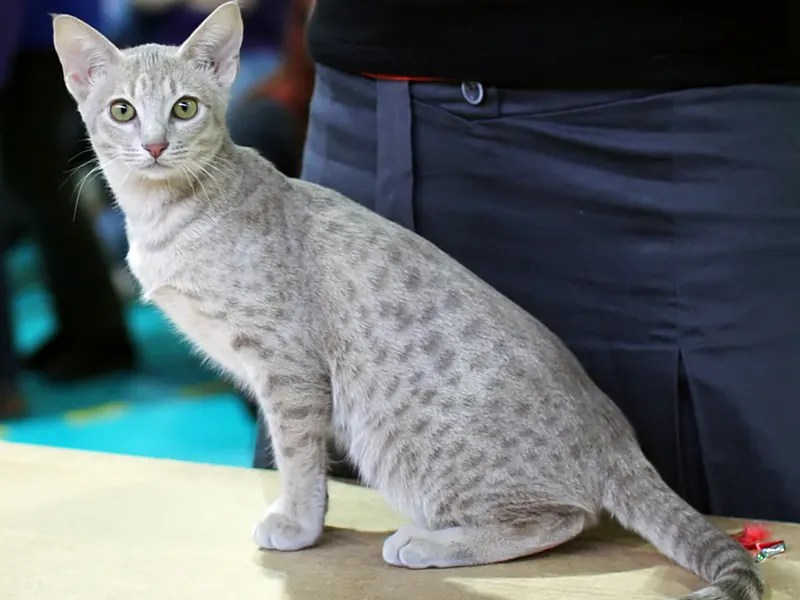
The Ocicat is a medium to large, athletic cat with a muscular body, deep chest and solid bone. Adults weigh 6 to 15 lb. Males are considerably larger than females, often weighing several pounds more and showing broader heads.
The head is a modified wedge with a broad muzzle and large, almond-shaped eyes in any color except blue. The ears are large and alert. The overall look resembles a small wild cat, though the breed has no wild ancestry.
The coat is short, sleek and satiny. Each hair is banded (ticked), and the spots form in a classic tabby pattern, with thumbprint-shaped spots in rows along the spine and a bullseye pattern on the sides. Twelve colors are recognized:
- Tawny, chocolate and cinnamon
- Blue, lavender and fawn
- Silver versions of each of these
Some registries also accept other colors or patterns, but spotted is the defining feature.
Personality and Temperament
Ocicats are confident, outgoing and very people-oriented. They often greet visitors at the door, follow their family around and like to be involved in every activity. Many are moderately vocal, with a voice somewhere between their Siamese and Abyssinian ancestors.
They tend to bond strongly with the whole family rather than a single person, and they usually get on very well with children, dogs and other cats. Because they are so social, long periods alone do not suit them.
Owners often compare Ocicats to dogs because they learn their names, respond to calls and enjoy structured games. They are confident in new situations and usually travel and adapt to house moves better than more sensitive breeds.
Are Ocicats Talkative?
Ocicats are moderately vocal, with a voice somewhere between their Siamese and Abyssinian ancestors.
They use their voice to greet people, ask for attention and communicate during play. Most are not as loud or persistent as Siamese, but they will make their opinions known. Ocicats that are bored or lonely may become more vocal. Daily interactive play, puzzle feeders and company help keep them content. Many owners appreciate the breed's chatty, conversational style.
Some Ocicats also chirp or trill when they see birds through the window or when they want a game.
Can Ocicats Be Left Alone?
Ocicats can handle a normal workday alone, but they do not do well with long, regular absences.
They are highly social and like being involved in everything. Left alone too often, they may become bored and find their own entertainment. Provide climbing spaces, puzzle feeders and window perches. A playful second cat or cat-friendly dog helps a lot. For trips longer than a day, a pet sitter who plays with the cat is better than quick feeding visits.
Rotating toys weekly and leaving a puzzle feeder before you go out keeps an Ocicat busy during the day.
Are Ocicats Good for First-Time Owners?
Yes, Ocicats can be a good choice for first-time owners who want an active, interactive cat.
They are confident, friendly and easy to handle, and their short coat needs little grooming. The commitment is time: Ocicats need daily play and mental stimulation and do not like long periods alone. First-time owners should be prepared for a dog-like cat that follows them around and wants to be part of activities. Choosing a breeder who screens for health issues and socializes kittens well helps ensure a good start.
Activity, Play and Enrichment
This is an active, intelligent breed that thrives on games and learning.
- Many Ocicats learn to fetch, come on cue and walk on a harness.
- Puzzle feeders and treat games satisfy their curiosity.
- Sturdy cat trees and shelves allow them to climb and survey their territory.
- Daily interactive play, ideally twice a day.
A playful second pet, cat or cat-friendly dog, gives them company when the family is out.
Grooming and Shedding
The coat is short, sleek and satiny with ticked hairs that form the spots. Weekly brushing or a wipe with a chamois cloth keeps it shiny. Shedding is light.
Ocicats come in 12 colors, including tawny (brown spotted), chocolate, cinnamon, blue, lavender, fawn and their silver versions. Regular tooth brushing helps prevent gum disease.
Despite the dramatic look, each spot is made up of banded, ticked hairs, the same trait the Abyssinian gave the breed. Spots should be thumbprint-shaped and scattered in rows along the body, with bull's-eye patterns on the sides.
Feeding and Nutrition
Ocicats are muscular, active cats that should stay lean and athletic. Measure meals and adjust portions to activity level, as an indoor Ocicat that plays less may gain weight. Feel for the ribs and a defined waist.
Males grow larger than females and may need more food, while kittens need a complete growth food until your vet advises switching.
- Feed two to three measured meals a day for adults.
- Use food puzzles and treat-based training to keep meals interesting; Ocicats enjoy working for food.
- Encourage water intake with wet food or fountains, which supports kidney health.
- Dental disease is a concern in the breed, so daily tooth brushing matters more than any food choice.
Count training treats in the daily ration, especially for cats that learn tricks.
Because Ocicats are so food-motivated during training, it is easy to overdo rewards without noticing.
| Adult weight | Indoor, less active | Typical adult | Active or intact |
|---|---|---|---|
| 6 lb | 150 kcal | 180 kcal | 210 kcal |
| 10 lb | 220 kcal | 260 kcal | 300 kcal |
| 15 lb | 290 kcal | 350 kcal | 410 kcal |
Estimates use the resting energy formula veterinarians work with (70 × body weight in kg0.75) and standard activity factors. Use the feeding guide on your food as a starting point and adjust to body condition. Kittens, seniors, pregnant animals and pets that need to lose weight have different needs, so ask your vet.
Health and Lifespan
Ocicats are generally healthy and often live 12 to 18 years. Because of their Abyssinian and Siamese heritage, some inherited issues are worth asking about:
- Pyruvate kinase (PK) deficiency and progressive retinal atrophy (PRA), both with DNA tests available.
- Renal amyloidosis, reported in related breeds.
- Hypertrophic cardiomyopathy (HCM) occurs occasionally, as in many breeds.
A good breeder will share DNA results and health history for both parents.
Ocicat Price and Cost of Ownership
Typical breeder price in the US$800 to $2,000
An Ocicat kitten from a reputable US breeder typically costs about $800 to $2,000. Prices vary by breeder, region, color and lines. Good breeders screen for health issues such as kidney and heart conditions.
Ocicats occasionally appear in rescues, though less often than more common breeds.
Breed-specific ongoing costs include:
- Dental cleanings, as gum disease can occur.
- Pet insurance for kidney, heart and dental problems.
- Sturdy cat trees, harnesses and enrichment toys for an active breed.
Food and grooming costs are moderate for a cat of 6 to 15 lb.
Silver colors and show prospects often cost more than standard pet-quality kittens.
Is the Ocicat Right for You?
Ocicats suit active families, multi-pet homes and owners who want to train and play with their cat. They adapt well to indoor life if given enough stimulation.
They are not ideal for people who are out all day with no other pets at home, or for those who want a quiet, independent cat.
An Ocicat will happily become the household's social director. If you enjoy a cat that greets you, joins in, and wants a role in the family, few breeds are as rewarding. Plan time for training: it is one of the best ways to channel their energy.
Ocicat Traits at a Glance
Ocicat FAQ
Is the Ocicat part wild cat?
No. Despite its ocelot-like spots, the Ocicat is fully domestic, developed from Siamese, Abyssinian and American Shorthair cats.
How big do Ocicats get?
Adults typically weigh 6 to 15 lb (about 3 to 7 kg), with males considerably larger than females.
Are Ocicats good with dogs?
Yes. They are known for being sociable and usually get on well with cat-friendly dogs.
Do Ocicats shed?
Shedding is light. A weekly brush keeps the coat in good shape.
How long do Ocicats live?
Typically 12 to 18 years. They are considered a healthy breed overall.
How much does an Ocicat kitten cost?
Pet-quality kittens in the US typically cost around $800 to $2,000, depending on breeder and region.