White CatsGenetics, blue eyes, deafness and care
A white cat is not a breed: an all-white coat can come from the dominant white gene, from very extensive white spotting, or, rarely, from albinism. Dominant white is the most common cause, and it is linked to congenital deafness, especially in cats with blue eyes.
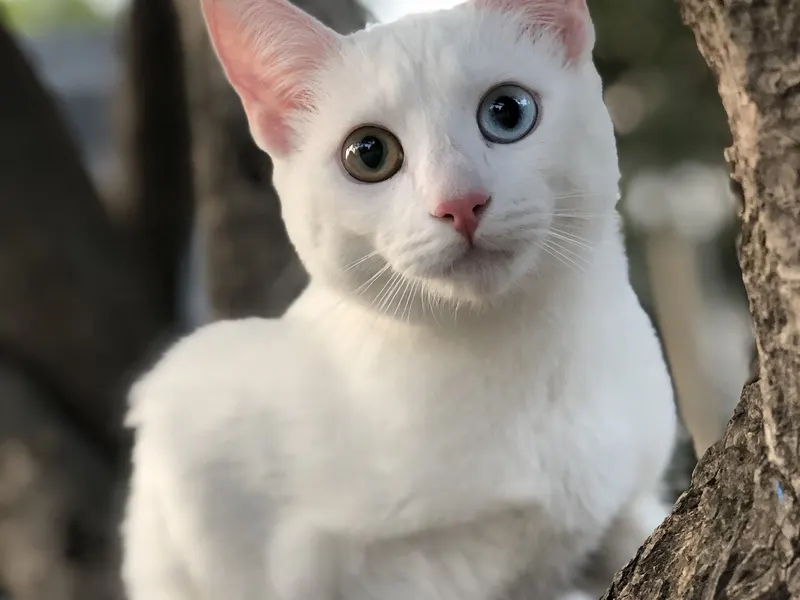
What is a white cat?
A white cat has a coat with no visible colored hairs. It looks simple, but there are three genetically different ways to get there, and they matter for health. White also hides whatever color the cat carries underneath, so a white cat can have kittens of any color.
White cats come in every coat length and occur in mixed-breed cats and many pedigreed breeds. Their eyes can be blue, green, gold, copper or one of each.
White is far less common than tabby, black or bicolor in the general cat population, which is part of its appeal. Because the dominant white gene hides the underlying color, two white parents can surprise their owners with black, tabby or tortie kittens, as long as at least one parent does not carry two copies of white.
A white cat's skin is usually pink, and its nose leather and paw pads are pink as well. That pink skin is the key to several of the health points below.
Three routes to a white coat
Dominant white (W). The most common cause. This gene, a variant of the KIT gene, prevents pigment cells (melanocytes) from migrating into the skin during development. It is dominant and masks every other color and pattern, so a cat needs only one copy to be white. Kittens sometimes show a small smudge of color on the head that fades with age, a hint of the hidden color.
White spotting (S). The gene behind bicolor, tuxedo and calico cats. At its highest grades, the white can cover nearly the whole body, leaving just a few colored hairs, often on the head or tail as in the Turkish Van pattern. Some cats that look all white are really extreme white spotting.
Albinism. A true albino cat has a recessive variant at the color locus (tyrosinase gene) that blocks pigment production. True albinos are rare. They usually have very pale blue or pinkish-tinged eyes and are sensitive to bright light. Partial albinism variants at the same locus produce colorpoint cats like the Siamese, which are pale but not truly white.
Blue eyes and deafness
The link between white cats, blue eyes and deafness is real and well documented.
The dominant white gene can prevent pigment cells from reaching the inner ear, where they are needed for the hearing organ to develop and function. The same lack of pigment cells in the iris produces blue eyes. That is why deafness is most common in white cats with two blue eyes.
Figures often cited from veterinary research suggest roughly:
- 17 to 22 percent of white cats with non-blue eyes are deaf
- about 40 percent of white cats with one blue eye are deaf
- 65 to 85 percent of white cats with two blue eyes are deaf
Exact percentages vary between studies and populations, but the pattern is consistent. Deafness can affect one or both ears and is present from early kittenhood.
Not every blue-eyed white cat is deaf, and not every deaf cat is white. Blue eyes in colorpoint breeds like the Siamese come from a different gene and are not linked to deafness in the same way.
Odd-eyed white cats
Odd-eyed cats, with one blue eye and one green, gold or copper eye, are especially common among white cats and a prized look in breeds like the Turkish Angora, Turkish Van and Khao Manee. The condition is called heterochromia.
When an odd-eyed white cat is deaf in only one ear, it is often the ear on the same side as the blue eye. Deafness in one ear is easy to miss, so a hearing test is worthwhile for any white cat, especially before breeding.
Living with a deaf white cat
Deaf cats adapt remarkably well. They rely on vision, vibration and smell, and many owners do not notice deafness for months. A few practical tips:
- Keep a deaf cat indoors or in a secure enclosure, since it cannot hear traffic or predators
- Approach where the cat can see you, or stamp lightly to send vibrations, so you do not startle it
- Use hand signals and light cues, such as flicking a lamp, to call the cat
- Ask your vet about a BAER test, the standard hearing test for cats
Responsible breeders test white cats for hearing and avoid breeding deaf cats or pairing two dominant white cats.
Sun protection and skin cancer
White fur and pink skin offer little protection against ultraviolet light. White cats, and cats with white ears and noses, are at increased risk of sunburn and of squamous cell carcinoma, a skin cancer that most often appears on the ear tips, nose and eyelids.
- Limit sun exposure, especially in the middle of the day
- Watch for redness, crusting or scabs on the ear tips or nose that do not heal
- Remember that sun through windows can still burn some cats
- Only use sunscreen your vet approves: some human sunscreen ingredients, such as zinc oxide, can be toxic to cats if licked
Caught early, these skin changes are often treatable, so do not wait if you notice a sore that will not heal. Indoor cats that love sunny windowsills benefit from UV-filtering window film or from shaded resting spots.
Breeds that come in white
White is allowed in many breeds. Some where it is especially associated:
- Turkish Angora: historically prized in white, with a long-running conservation program at Ankara Zoo
- Khao Manee: an all-white Thai breed, famous for odd eyes
- Persian: white Persians are a classic show color
- British Shorthair and Scottish Fold: white with blue, copper or odd eyes
- Oriental Shorthair: the blue-eyed Foreign White in the UK
- Maine Coon, Norwegian Forest Cat and Siberian: solid white is accepted
- Devon Rex, Cornish Rex and American Shorthair: white among many colors
History, myth and adopting a white cat
White cats have been admired and mythologized for centuries. In some traditions they are lucky, in others unlucky, and the meaning often changes from country to country. None of these beliefs has anything to do with the cat in front of you.
The same goes for personality: white cats are sometimes called aloof or shy. Any shyness may reflect undetected deafness, since a cat that cannot hear you approach is more easily startled. Otherwise, temperament depends on the individual, not the coat.
White cats regularly turn up in shelters, including deaf cats that make excellent companions in the right home. Ask the shelter whether hearing has been checked, and plan for sun protection if the cat will have outdoor access.
Practical grooming notes: white fur shows dirt and tear staining more readily than darker coats. Wipe gently around the eyes with a damp cloth if staining builds up, and mention persistent tearing to your vet, since it can signal an eye or tear duct problem rather than just a cosmetic issue. Long-haired white cats need regular brushing to keep the coat clean and free of mats.
Cat Breeds That Come in White
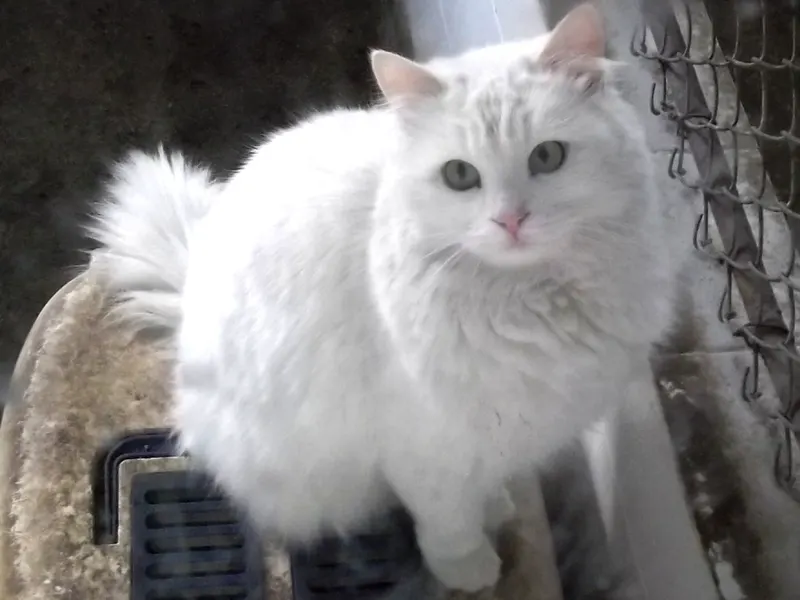 Turkish AngoraSmall · 5–10 lbKhao ManeeMedium · 6–12 lb
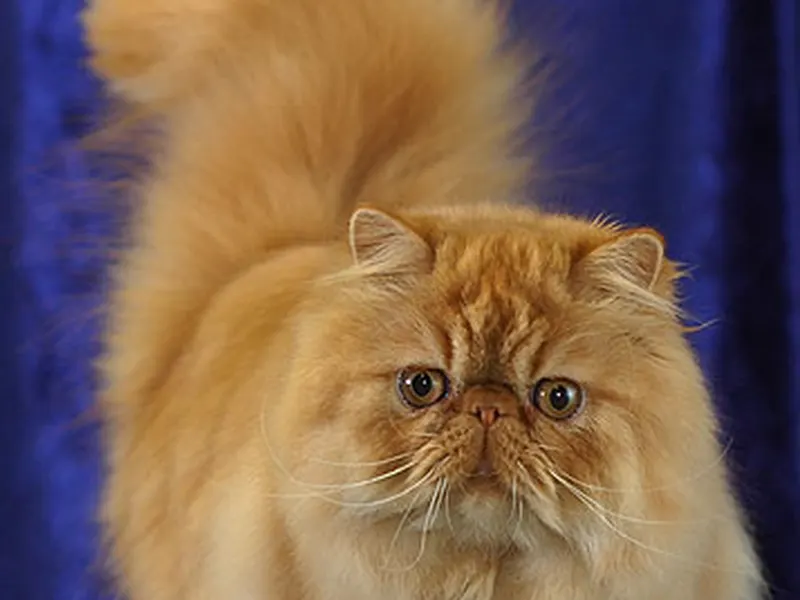 PersianMedium · 7–12 lb
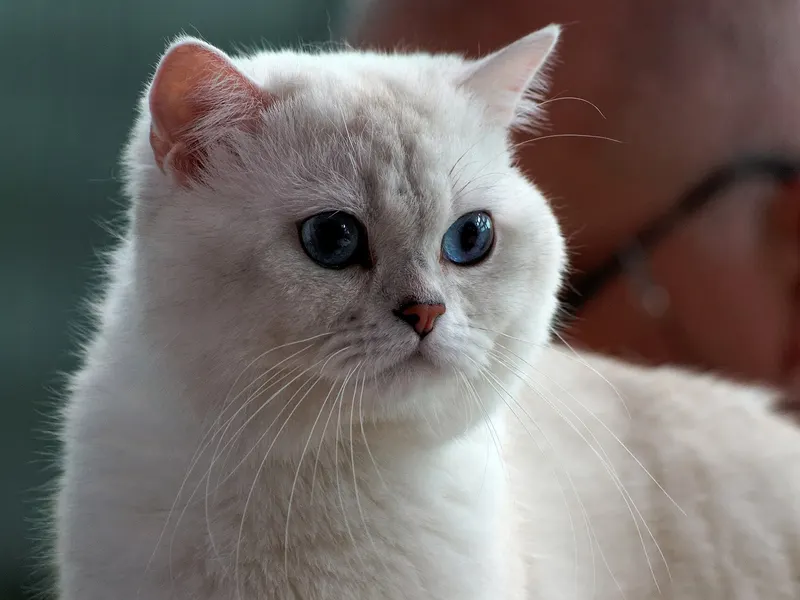 British ShorthairLarge · 7–17 lb
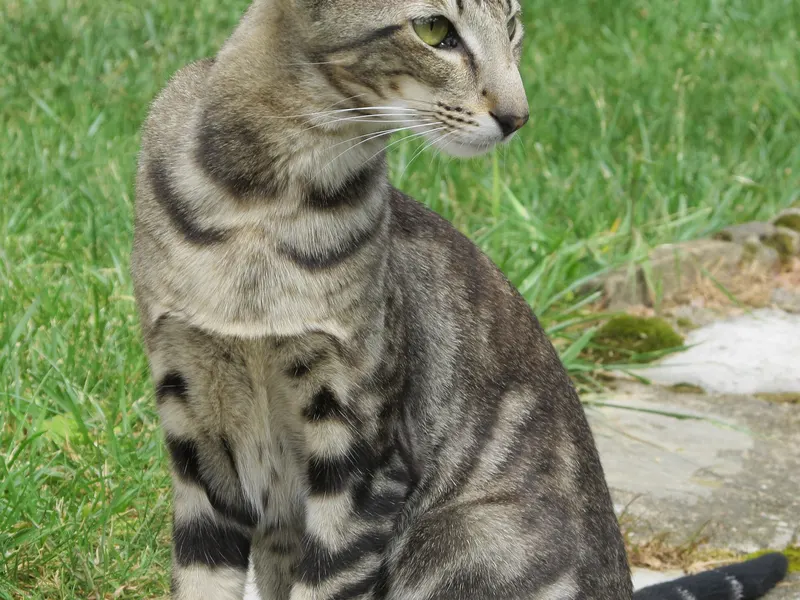 Oriental ShorthairSmall · 5–10 lb
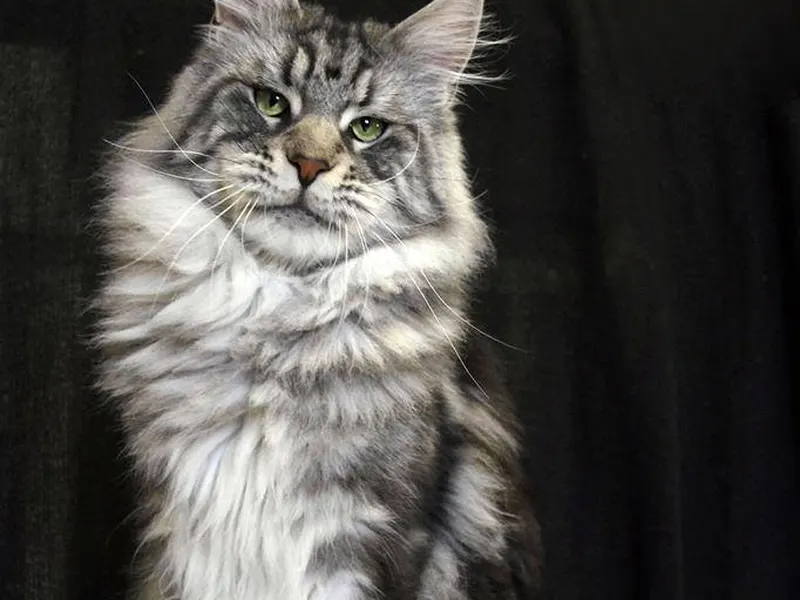 Maine CoonLarge · 8–18 lb
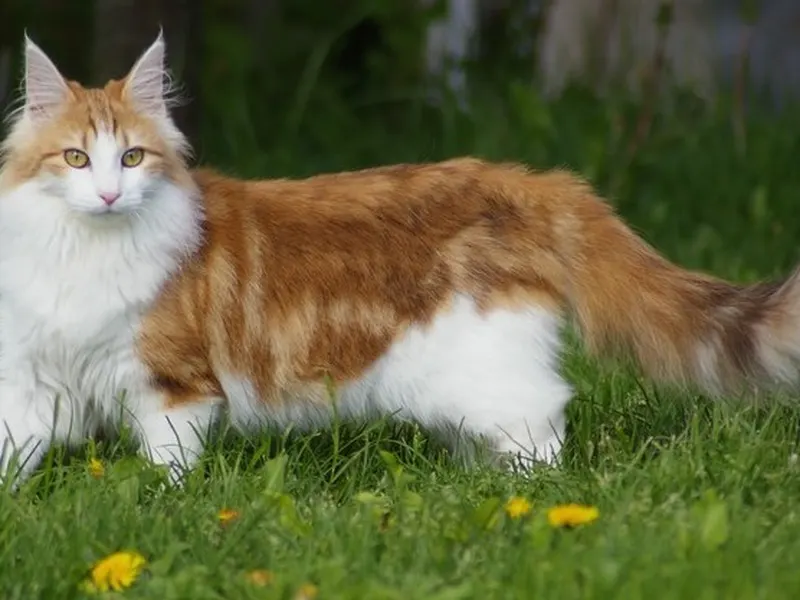 Norwegian Forest CatLarge · 9–20 lb
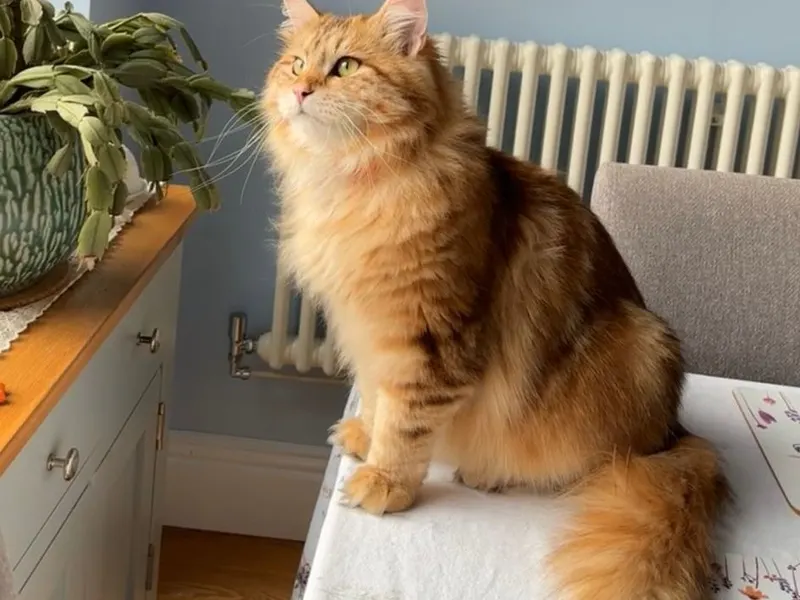 SiberianLarge · 8–17 lb
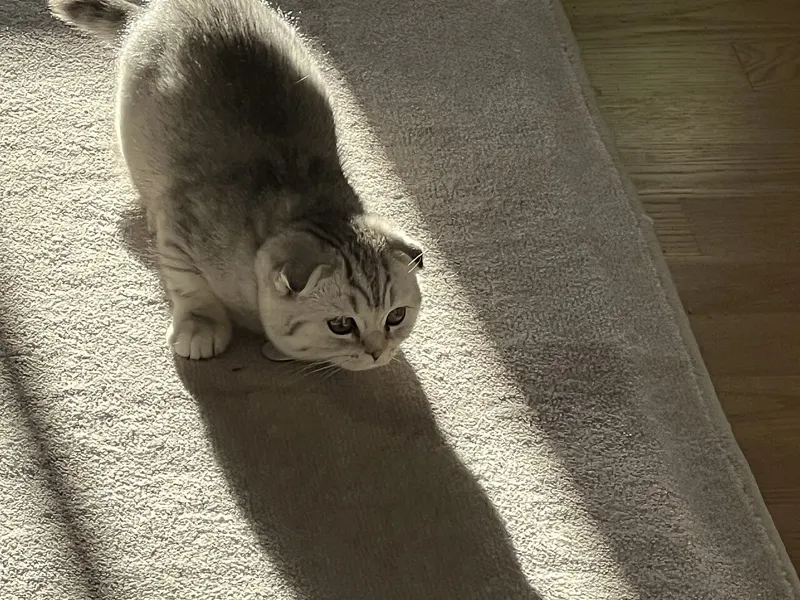 Scottish FoldMedium · 6–13 lb
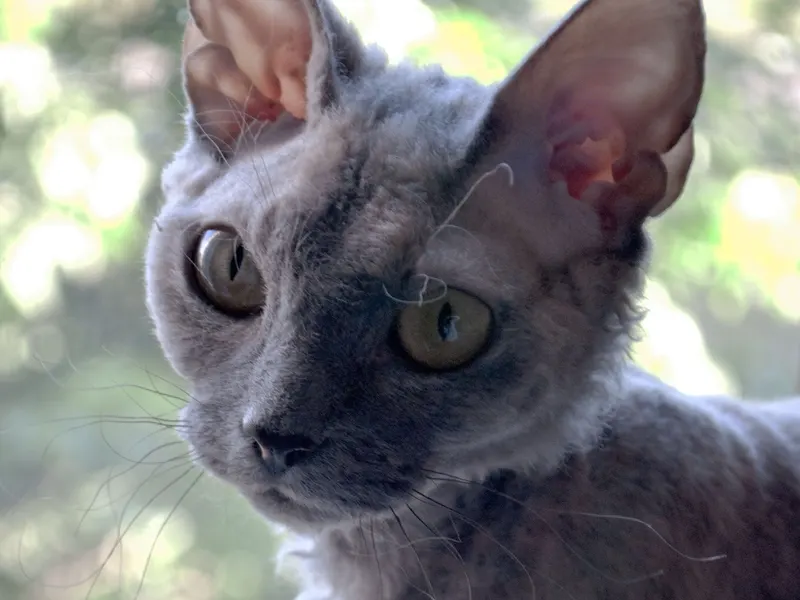 Devon RexSmall · 5–10 lb
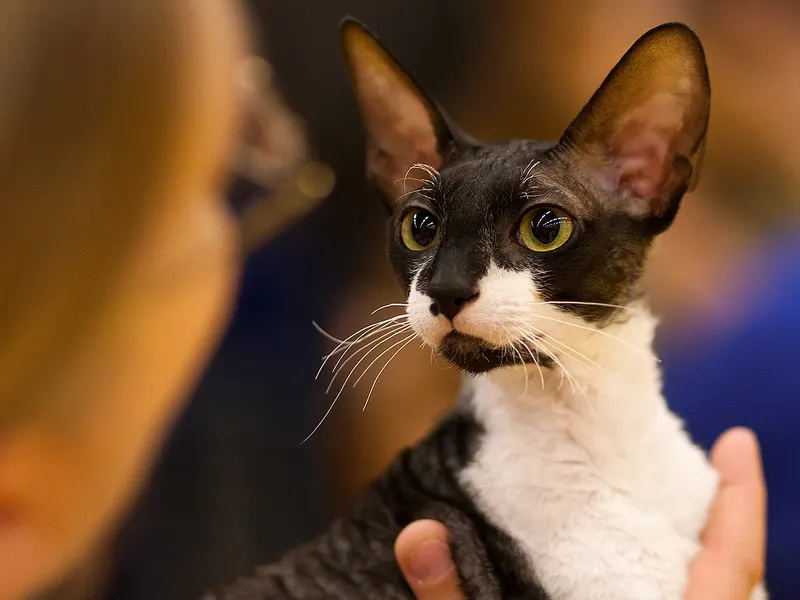 Cornish RexSmall · 6–10 lb
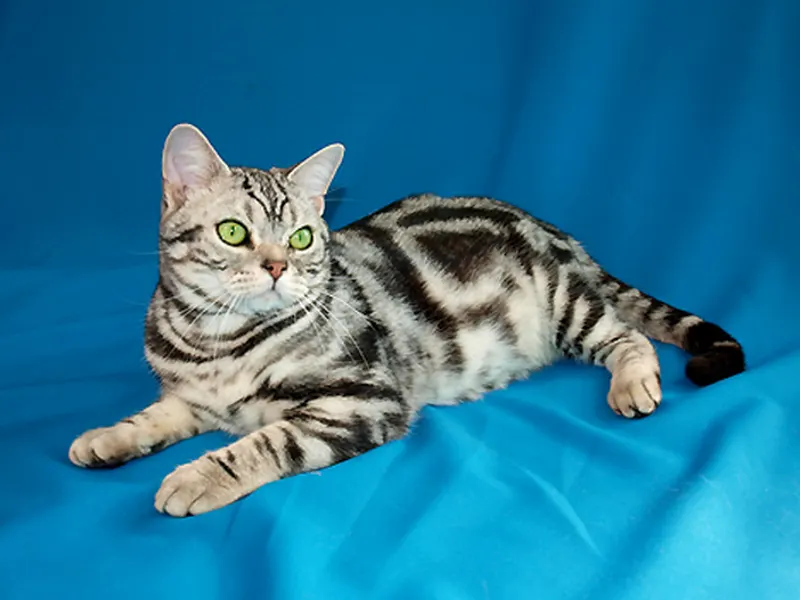 American ShorthairMedium · 7–15 lb
Frequently Asked Questions
Are all white cats deaf?
No. Deafness is linked to the dominant white gene and is most common in white cats with two blue eyes, but many white cats hear normally.
Are white cats albino?
Very rarely. Most white cats carry the dominant white gene. True albinism is a separate recessive trait and is uncommon.
Why do white cats have blue eyes?
The dominant white gene can keep pigment cells out of the iris, leaving it blue. The same effect in the inner ear can cause deafness.
How can I tell if my white cat is deaf?
Watch whether the cat reacts to sounds it cannot see or feel. A vet can confirm hearing with a BAER test.
Do white cats get sunburned?
Yes. White cats with pink ears and noses are prone to sunburn and squamous cell carcinoma, so limit strong sun exposure.
Is a white cat a breed?
No. White is a coat color found in mixed-breed cats and many pedigreed breeds such as the Turkish Angora and Khao Manee.
More About Cat Colors and Patterns
Looking for the right cat?
Answer 10 quick questions and get cat breeds ranked for your home, routine and family.