RottweilerStrong, steady guardian from southern Germany
The Rottweiler started as a drover and butcher's dog in the German town of Rottweil and became one of the first police dogs. Calm and confident, it is a devoted family guardian that needs early socialization, consistent training and an owner who can handle a strong, heavy dog.
Why people love the Rottweiler
- Calm, steady and deeply loyal to its own family
- Natural watchdog that usually barks only with reason
- Short coat needs just weekly brushing outside shedding seasons
- Learns quickly and thrives in obedience, tracking and carting
- Versatile worker used in search, therapy and service roles
Things to consider
- Size and strength demand solid leash training from puppyhood
- Breed restrictions and insurance limits apply in some areas
- Relatively short lifespan with high cancer and joint risks
- Can be pushy with unfamiliar dogs, especially same sex
- Heat-sensitive and prone to weight gain if underexercised
Is this breed right for you?
10 questions · live resultHistory and Origin
Roman armies are believed to have brought mastiff-type dogs over the Alps to drive and guard cattle. In the market town of Rottweil, in what is now Baden-Württemberg, these dogs became the Rottweiler Metzgerhund, or butcher's dog, which drove cattle to market and pulled carts of meat. A popular story says butchers tied their purses to the dogs' collars for safekeeping.
When railways replaced cattle drives in the 1800s, the breed declined until it found new work as a police dog in the early 1900s. The German breed club ADRK, formed in 1921, still sets strict breeding rules. The AKC recognized the breed in 1931, and Rottweilers remain popular as family guardians, service dogs and search dogs.
Size, Build and Coat
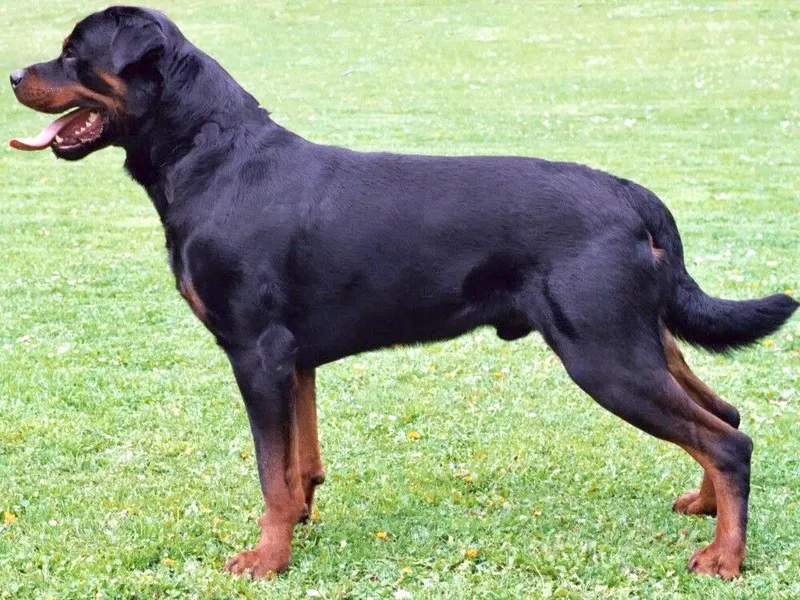
The Rottweiler is a large, powerful dog with a broad head, deep chest and compact, muscular body that is slightly longer than tall. Adults stand 22 to 27 inches at the shoulder and weigh about 80 to 135 lb. Males are noticeably bigger, with heavier bone and a more massive head, while females tend to be at the lower end of both ranges and look less bulky.
There is only one recognized color pattern: black with clearly defined rust to mahogany markings over the eyes, on the cheeks, muzzle, chest and legs and under the tail. The coat is straight, coarse and dense, with an undercoat on the neck and thighs that thickens in cold climates.
Tails differ by country. Docked tails are still common in the US, while the UK and much of Europe ban cosmetic docking, so dogs there carry a natural, often slightly curved tail. Long coats and colors such as red or blue are faults, not rare varieties.
Temperament and Personality
A well-bred Rottweiler is calm, self-assured and affectionate with its family, often following its people and leaning against them. It tends to be aloof with strangers and naturally protective of home and family, usually assessing situations quietly rather than barking constantly.
Rottweilers are strong and can be pushy with other dogs, especially of the same sex. Puppies are boisterous, and adolescents may test boundaries. With children they can be gentle and tolerant, but their weight and strength mean supervision is necessary. Socialization with many people, places and dogs throughout puppyhood is essential for a stable adult.
Are Rottweilers Good for First-Time Owners?
Rottweilers are generally a better fit for people who have trained a dog before, though a committed first-timer with professional support can succeed.
The challenge is not temperament but size and timing. A Rottweiler puppy that pulls, jumps or mouths is cute at 20 lb and a real problem at 100 lb. Owners need a structured plan from day one: puppy classes, broad socialization, and clear household rules. Adolescence, roughly between 6 months and 2 years, is when boundary testing peaks. First-time owners should budget for a trainer experienced with guardian breeds and check local rules and insurance terms before choosing the breed.
Are Rottweilers Easy to Train?
Yes, Rottweilers are intelligent and capable of learning a lot, but they are not mindlessly obedient.
They respond best to calm, consistent handlers and reward-based methods. Many will ask what is in it for them, so food, toys and real-life rewards matter. Harsh corrections tend to create resistance or mistrust rather than compliance. Priorities for this breed are loose-leash walking, a reliable recall, settling on a mat and polite greetings, because those skills make a heavy dog manageable in public. Rottweilers often excel once they have a job, which is why they shine in obedience, tracking, rally and carting.
Are Rottweilers Good with Cats and Other Dogs?
Many Rottweilers live well with a cat or another dog they were raised with, but introductions need care and the outcome depends on the individual.
Same-sex pairs, especially two adult males, are the most likely to clash. An opposite-sex companion of similar size is usually the easier match. With cats, a puppy raised alongside a confident cat often accepts it as family, while an adult with no cat experience may chase. Keep early meetings short and controlled, separate food and toys, and supervise until you are sure of the relationship. Dog parks are often a poor fit for adults.
Exercise and Training
Adult Rottweilers need roughly two hours of activity a day, according to UK veterinary guidance, including walks, play and training. They enjoy obedience, tracking, carting, nosework and protection sports under qualified instruction. Limit strenuous exercise and stairs for young puppies, and take care in hot weather, as this heavy breed overheats easily.
Training should be consistent, fair and reward-based. Rottweilers learn quickly but like to see the point, so short, varied sessions work well. Leash manners are a priority, because a pulling adult is very hard to control. Some countries, states and cities restrict Rottweilers or require muzzles, permits or insurance, so check local rules.
Grooming and Shedding
The short, dense double coat needs weekly brushing, more often in spring and fall when the undercoat sheds. Some Rottweilers drool, especially after drinking or when they expect food. Clean ears regularly, trim nails and keep the dog lean, since excess weight stresses the joints of a heavy breed. Tail docking is banned in the UK and many European countries, so natural tails are now common.
Feeding and Nutrition
Rottweiler puppies grow fast and heavy, so they do best on a complete food formulated for large-breed puppies, with controlled calcium and energy. Growing too quickly can stress developing hips and elbows. Avoid adding calcium supplements and aim for steady, lean growth rather than maximum size. Most puppies stay on a large-breed puppy formula until around 12 to 18 months, depending on your vet's advice.
Adults gain weight easily, particularly after neutering or if exercise drops. Extra pounds add strain to joints already prone to dysplasia and cruciate injuries. You should be able to feel the ribs under a thin layer of fat and see a waist from above.
- Split the daily amount into two meals, which also lowers the risk of bloat in this deep-chested breed.
- Avoid hard exercise for an hour or so before and after meals.
- Count training treats toward the daily ration, and use part of the meal as rewards during training.
Weigh your dog monthly and adjust portions by body condition, not the bag label.
| Adult weight | Less active | Typical adult | Very active |
|---|---|---|---|
| 80 lb | 1,450 kcal | 1,660 kcal | 2,070 kcal |
| 108 lb | 1,810 kcal | 2,070 kcal | 2,590 kcal |
| 135 lb | 2,150 kcal | 2,450 kcal | 3,060 kcal |
Estimates use the resting energy formula veterinarians work with (70 × body weight in kg0.75) and standard activity factors. Use the feeding guide on your food as a starting point and adjust to body condition. Puppies, seniors, pregnant animals and pets that need to lose weight have different needs, so ask your vet.
Health and Lifespan
Hip and elbow dysplasia, cruciate ligament rupture and osteochondritis dissecans (OCD) are the main orthopedic issues. Subaortic stenosis, a heart defect, and hereditary eye conditions also occur. Juvenile laryngeal paralysis and polyneuropathy (JLPP) can be ruled out with a DNA test. Cancer, especially osteosarcoma (bone cancer) and lymphoma, is a leading cause of death.
Choose breeders who score hips and elbows, test for JLPP and screen hearts and eyes. Typical lifespan is 9 to 10 years.
Rottweiler Price and Cost of Ownership
Typical breeder price in the US$1,500 to $3,500
A Rottweiler puppy from a reputable US breeder typically costs about $1,500 to $3,500. Prices vary by breeder, region and lines, with imported European bloodlines and show prospects at the upper end. Good breeders screen parents for hips, elbows, eyes and heart and can show the results.
Rottweilers also come into rescues regularly, and breed-specific rescues can match you with an adult whose temperament is already known.
Ongoing cost drivers for this breed include:
- Large-breed food in quantity, especially during growth.
- Pet insurance, which matters given cancer, cruciate and joint risks.
- Professional training, particularly through adolescence.
- Homeowners or renters insurance, as some policies exclude or surcharge the breed.
- Larger crates, beds and sturdy equipment.
Is the Rottweiler Right for You?
The Rottweiler suits experienced owners who want a loyal, protective companion and are prepared for ongoing training, a secure property and the costs of a large dog. Calm households with older children work well.
It is not ideal for first-time owners, people who cannot physically manage a dog of around 100 lb, or homes where the dog would be isolated for long periods. Check rental and insurance conditions before committing.
Rottweiler Traits at a Glance
Rottweiler FAQ
Are Rottweilers good family dogs?
Well-bred, socialized Rottweilers are loyal and affectionate family dogs. Their strength means they suit families with older children and owners able to train consistently.
How big do Rottweilers get?
Adults stand 22 to 27 inches at the shoulder and weigh about 80 to 135 lb, with females at the lower end.
Do Rottweilers shed?
Yes, they shed moderately year-round and more heavily twice a year. Weekly brushing keeps it manageable.
Are Rottweilers good guard dogs?
Yes, they are naturally watchful and protective. Good training ensures that instinct stays controlled and appropriate.
Are Rottweilers restricted breeds?
In some countries, states and cities, yes. Rules range from muzzle requirements to permits, so check local legislation and insurance terms.
How long do Rottweilers live?
Rottweilers typically live 9 to 10 years. Cancer and joint disease are the most common health concerns.