Berger PicardFrance's scruffy, soulful herding dog
The Berger Picard is a rugged sheepdog from northern France with a shaggy coat, tall natural ears and a playful sense of humor. Loyal and observant but independent, it suits active owners who want a thinking partner and enjoy creative, patient training.
Why people love the Berger Picard
- Loyal, perceptive and playful with its family
- Tousled coat needs no clipping or trimming
- Generally healthy with a moderate, functional build
- Quieter than many herding breeds
- Rugged, natural look with tall ears and J-hook tail
Things to consider
- Independent, may weigh up a command before obeying
- Sensitive to harsh words and rough handling
- Reserved with strangers, needs early socialization
- Rare in the US, waiting lists often long
- Dislikes long hours alone
Is this breed right for you?
10 questions · live resultHistory and Origin
The breed comes from Picardy in northern France, where it herded sheep and cattle for generations. It is considered one of the oldest French herding types and was shown at the first French dog show in 1863.
Picardy was a major battlefield in both World Wars, and the destruction nearly wiped out the breed. A small group of dedicated breeders rebuilt it afterward. Many Americans first saw a Picard-type dog in the 2005 film Because of Winn-Dixie. The AKC fully recognized the Berger Picard in the Herding Group in 2015.
Size, Coat and Colors
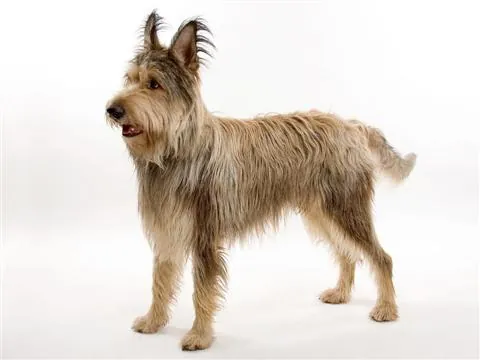
The Berger Picard is a medium-large, sturdy herding dog standing 22 to 26 inches and weighing 51 to 71 lb. It is slightly longer than tall, with a strong, lean, muscular build and a deliberately rustic, unrefined look.
Two features make the breed easy to recognize: tall, naturally erect ears, about 4 to 5 inches long, and a tail that reaches the hock with a slight J-shaped hook at the tip.
Males are larger, typically 23.5 to 25.5 inches under the AKC standard, while females stand 21.5 to 23.5 inches and look more refined.
The coat is harsh and crisp, about 2 to 3 inches long, with a short, dense undercoat. Bushy eyebrows, a light beard and a small mustache give a tousled expression. Accepted colors:
- Fawn, from light to dark, often with darker shading on the ears and muzzle
- Brindle in gray, gray-black, gray-blue, gray-red, light or dark fawn
A small white patch on the chest or toes is permitted. Puppies are often darker and lighten as the adult coat grows in.
Temperament and Personality
Picards are loyal, perceptive and quietly watchful. They are often reserved with strangers at first, then warm up. With family they are affectionate and can be clownish, but they are also sensitive and react poorly to harsh words.
Their herding background shows in their independence. They may weigh up whether your request makes sense before complying. Most do well with considerate children and other pets when raised together, though some try to herd running kids.
Many Picards have a mischievous streak and enjoy stealing socks or inventing games. They also tend to be quieter than many herding breeds, barking mainly when something deserves attention.
Are Berger Picards Good for First-Time Owners?
Berger Picards are generally better suited to owners with some dog experience. They are intelligent and independent, often weighing up whether a request makes sense, and they are sensitive enough that harsh handling damages trust quickly.
A committed first-time owner can still succeed by:
- Choosing a breeder who matches puppy temperament to the home
- Joining reward-based puppy and adolescent classes
- Socializing widely so natural reserve does not turn into suspicion
- Providing about an hour of exercise and some mental work daily
Patience and a sense of humor matter more than experience. If you want instant obedience, a more biddable breed is a better start.
Do Berger Picards Bark a Lot?
No, Berger Picards are quieter than most herding breeds. They tend to bark only when something deserves attention, such as a stranger at the door or an unusual sound at night, and then settle once they have checked it out.
Barking usually increases when a Picard is bored, under-exercised or alone too long. Signs of this include barking at passersby, whining or noisy demands for attention. Daily walks, training games and company keep most Picards quiet indoors. Their watchful nature means they are good at noticing changes, but they are rarely nuisance barkers in a well-run home.
Are Berger Picards Good With Cats?
Berger Picards can live well with cats, especially when raised with them from puppyhood. Their herding instinct may show as stalking, circling or chasing a running cat, but they are not typically intent on harming it.
To set up a peaceful household:
- Introduce the dog on a leash and reward calm behavior
- Give the cat high perches and dog-free rooms
- Interrupt chasing early and redirect to a toy
- Supervise until the relationship is settled
Picards that grow up with a cat often treat it as family. Outdoor cats, squirrels and small animals outside the home may still trigger chasing.
Exercise and Training
Picards need about an hour of exercise daily: long walks, hiking, jogging or play, plus mental work. Herding, tracking, agility and obedience are good outlets.
Training should be varied, fun and fair. Repetitive drills bore them, and heavy-handed methods damage trust. Short sessions with food or play rewards work best. Begin socialization early so the dog's natural reserve does not turn into suspicion. They prefer company and dislike long hours alone.
Grooming and Shedding
The harsh, crisp coat about 2 to 3 inches long is designed to look tousled, and it is surprisingly easy to keep. Brush every week or two, and more during seasonal shedding. Avoid frequent baths and do not trim the coat, which should look natural. Colors range from fawn to gray-brindle. Check the ears and keep nails short.
Feeding and Nutrition
Berger Picards should be lean and muscular. Extra weight strains hips and elbows in a dog of this size, and hip dysplasia has been seen in the breed. The shaggy coat can hide fat, so check condition by feel: ribs should be easy to find, with a clear waist behind them.
Puppies grow steadily into a medium-large frame and often look lanky through adolescence. A diet formulated for large-breed puppies, with controlled calcium and fed in measured meals, supports sound development. Three meals a day until about six months, then two meals for adults, suits most.
As a deep-chested herding dog, the Picard has some risk of bloat:
- Avoid vigorous exercise for an hour before and after meals
- Use a slow feeder for fast eaters
Many Picards are food-motivated but get bored with the same reward. Rotate small treats and toy rewards in training, and count treats in the daily ration.
| Adult weight | Less active | Typical adult | Very active |
|---|---|---|---|
| 51 lb | 1,030 kcal | 1,180 kcal | 1,480 kcal |
| 71 lb | 1,320 kcal | 1,510 kcal | 1,890 kcal |
Estimates use the resting energy formula veterinarians work with (70 × body weight in kg0.75) and standard activity factors. Use the feeding guide on your food as a starting point and adjust to body condition. Puppies, seniors, pregnant animals and pets that need to lose weight have different needs, so ask your vet.
Health and Lifespan
Berger Picards are generally healthy and typically live 12 to 13 years. The breed club recommends hip evaluations and eye examinations for breeding dogs, as hip dysplasia and progressive retinal atrophy have been seen. Choose a breeder who can show these results.
Keep your Picard lean and fit, since extra weight puts strain on hips and elbows in a dog of this size. Regular vet checks and early attention to any changes in vision are sensible for a breed with known eye concerns.
Berger Picard Price and Cost of Ownership
Typical breeder price in the US$2,500 to $4,000
A Berger Picard puppy from a reputable US breeder typically costs about $2,500 to $4,000. Prices vary by breeder, region and lines. The breed is rare, with only a small number of litters each year, so waiting lists of a year or more are common. Some puppies are imported from France or elsewhere in Europe, which adds transport and paperwork costs.
Rescue is uncommon, but the breed club can help rehome adults in need.
Ongoing cost drivers:
- Hip evaluations and eye exams for dogs used in breeding or sports
- Training classes, herding lessons or agility
- Insurance for hip dysplasia and progressive retinal atrophy
Grooming costs are low, since the coat should not be clipped or trimmed.
Is the Berger Picard Right for You?
A Picard could be your dog if you:
- Enjoy daily outdoor activity and training
- Appreciate a dog with a mind of its own and a sense of humor
- Prefer a low-fuss coat that does not need clipping
It is less suited to first-time owners, people away from home all day, or anyone wanting instant obedience.
Picards are still uncommon, so expect to join a waiting list and ask breeders about temperament in their lines as well as health results.
Berger Picard Traits at a Glance
Berger Picard FAQ
Are Berger Picards good family dogs?
Yes, in active families. They are loyal and playful, though they may try to herd small children and need early socialization.
How big do Berger Picards get?
They stand about 22 to 26 inches tall and weigh roughly 51 to 71 lb.
Do Berger Picards shed?
They shed moderately, more in spring and fall. Brushing every week or two is usually enough.
Are Berger Picards hard to train?
They are intelligent but independent and sensitive. Patient, reward-based training with variety works best.
Was the dog in Because of Winn-Dixie a Berger Picard?
Yes, the dogs that played Winn-Dixie were Berger Picards, which brought the breed wider attention in the US.
Are Berger Picards hypoallergenic?
No. They shed moderately and are not a good choice for people with dog allergies.