Dutch ShepherdVersatile brindle working shepherd
The Dutch Shepherd is an athletic, brindle-coated herding dog from the Netherlands, prized today for police, protection and sport work. Intelligent, energetic and very alert, it suits experienced, active owners who can provide daily training and work.
Why people love the Dutch Shepherd
- Highly trainable and eager to work
- Excellent partner for dog sports and working roles
- Protective and loyal to its family
- Generally robust, long-lived herding breed
- Short coat variety is easy to maintain
Things to consider
- Needs about two hours of daily activity and training
- Not suited to first-time owners
- Restless and destructive without a job
- Watchful with strangers; needs broad socialization
- Few breeders, mostly working lines, in the US
Is this breed right for you?
10 questions · live resultHistory and Origin
In the 19th century, Dutch farmers kept versatile dogs to herd sheep, guard the farm, pull carts and keep chickens out of gardens. The breed was formally organized around 1898. Brindle became the defining color to distinguish it from the Belgian and German shepherds.
As farm work declined, the breed found new roles in police, search and rescue and protection sports. The AKC recognized the Dutch Shepherd in 2017.
Because the breed was developed for practical farm work, Dutch Shepherds were selected for intelligence, endurance and versatility rather than appearance. The rough-haired variety is the rarest of the three coat types.
Coat Types, Brindle and Build
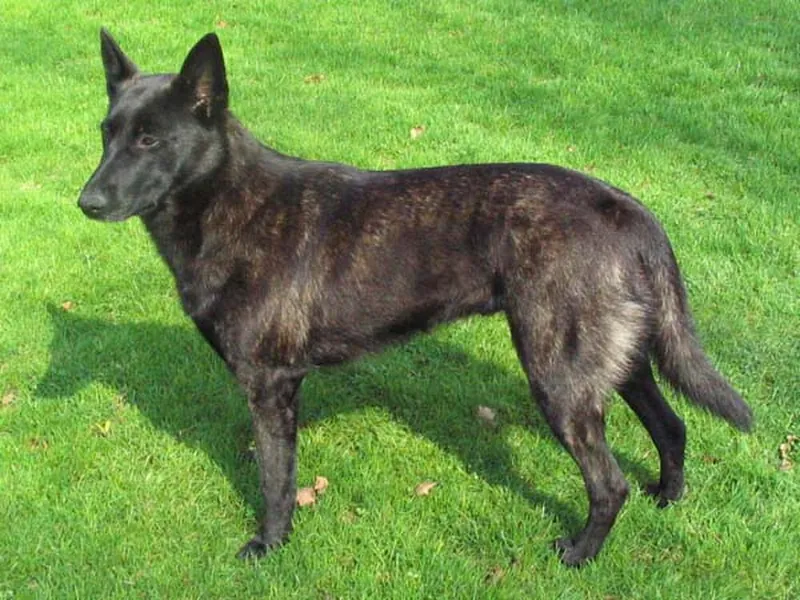
The Dutch Shepherd is a medium-large, athletic herding dog standing 22 to 24 inches at the shoulder and weighing about 42 to 75 lb. The body is slightly longer than tall, well muscled but never heavy, with a wedge-shaped head, upright ears and a tail carried low. Males are larger and usually stronger in head and bone than females.
Three coat varieties are recognized: short-haired, long-haired and rough-haired. The short coat is the most common in working homes. The long coat is straight and harsh with a dense undercoat and feathering on the legs and tail. The rough coat is tousled and wiry, with a beard and bushy eyebrows that give a very distinctive look.
All Dutch Shepherds are brindle, in gold or silver shades. Gold ranges from light sand to chestnut red, silver from light to deep gray. A black mask is preferred. Too much black in the coat or large white markings are faults. The brindle sets the breed apart from the Belgian Malinois, which is fawn with a black overlay.
Temperament and Personality
Dutch Shepherds are loyal, alert and very trainable. They are watchful with strangers and protective of their families.
They are independent and need consistent leadership. Without work they can become restless.
Dutch Shepherds are affectionate and playful with their families and often good with children they know. They are usually confident and outgoing, but they can be reserved with strangers.
They are very intelligent and quickly learn routines, both good and bad. Without enough stimulation, they may invent their own jobs, such as chewing, digging or herding family members.
Their alertness makes them effective watchdogs, and they will bark to announce anything unusual.
Are Dutch Shepherds Good for First-Time Owners?
Usually not. Dutch Shepherds do best with owners who already have experience training an active working breed.
They are intelligent and eager to work, which can sound ideal, but they learn bad habits as quickly as good ones and need a structured daily program. Many US Dutch Shepherds come from working lines bred for police and protection work, with high drive and intense focus. A first-time owner who is very active, has time for daily training and works closely with an experienced trainer can succeed, especially with a calmer puppy chosen with breeder guidance. Without that plan, frustration on both sides is common.
Are Dutch Shepherds Easy to Train?
Yes, for the right handler: Dutch Shepherds are among the most trainable herding breeds and love working with people.
They are fast learners, motivated by toys and food, and capable of high-level work in obedience, tracking, protection sports and detection. The flip side is drive. Training must channel energy, teach impulse control and include calm settling at home, or the dog may become pushy or overexcited. Inconsistent rules are quickly exploited. Positive, structured training with clear rewards suits them better than harsh methods. Expect training to be a daily, lifelong activity rather than a puppy phase.
Are Dutch Shepherds Good with Cats?
Dutch Shepherds can live with cats if raised with them, but success depends on the individual dog and careful management.
As a herding breed, many Dutch Shepherds want to control movement, and a running cat can trigger chasing or herding behavior. Working-line dogs with high prey drive may find it particularly hard to ignore small animals. A puppy raised with a confident, dog-savvy cat often learns to respect it. Introduce an adult dog slowly, with the dog on leash and the cat able to retreat to high places. Teach a solid leave-it and reward calm behavior around the cat.
Exercise and Training
Expect at least two hours of daily physical and mental work. They excel at obedience, agility, tracking and protection sports.
- Socialize early.
- Use positive reinforcement.
The Dutch Shepherd is an excellent choice for dog sports such as agility, obedience, tracking, herding and protection sports. Many enjoy running alongside a bike or canicross.
Training should be consistent, fair and engaging. Dutch Shepherds respond well to positive reinforcement and enjoy learning new tasks.
- Socialize widely with people, dogs and environments from puppyhood.
- Teach impulse control and calm behavior at home.
- Give a daily mental challenge, such as scent games or trick training.
Grooming and Shedding
There are three coat types: short-haired, long-haired and rough-haired. Short coats need weekly brushing; rough coats should be hand-stripped.
Long-haired dogs need brushing several times a week to prevent tangles. Rough-haired dogs have a harsh, tousled coat that should be hand-stripped a few times a year and never brushed out excessively. All varieties shed seasonally.
The brindle coat comes in gold or silver shades.
Feeding and Nutrition
A Dutch Shepherd's food needs depend heavily on how hard it works. A dog doing daily protection training, herding or canicross needs more energy than a family dog with long walks, and needs can change from week to week. Adjust portions by body condition: a fit Dutch Shepherd has a visible waist, ribs easy to feel and a lean, muscular build.
- Puppies grow into a medium-large dog; feed a growth diet suited to their expected adult size and avoid letting them become chubby.
- Feed adults two meals a day. Avoid intense exercise right after eating, as a deep-chested working dog can be at risk of bloat.
- Many trainers use part of the daily food ration as training rewards, which helps prevent weight gain.
Working dogs may need more food on training days and less on rest days. Provide fresh water during and after exercise, and offer the main meal after the dog has cooled down. If a long-haired Dutch Shepherd shows signs of low thyroid such as weight gain without diet changes, ask your vet to check its thyroid before cutting food.
| Adult weight | Less active | Typical adult | Very active |
|---|---|---|---|
| 42 lb | 890 kcal | 1,020 kcal | 1,280 kcal |
| 58 lb | 1,140 kcal | 1,300 kcal | 1,630 kcal |
| 75 lb | 1,380 kcal | 1,580 kcal | 1,970 kcal |
Estimates use the resting energy formula veterinarians work with (70 × body weight in kg0.75) and standard activity factors. Use the feeding guide on your food as a starting point and adjust to body condition. Puppies, seniors, pregnant animals and pets that need to lose weight have different needs, so ask your vet.
Health and Lifespan
Dutch Shepherds typically live 11 to 14 years and are generally robust. Hip dysplasia screening is standard, thyroid issues occur in long-haired dogs, and goniodysplasia occurs in rough-haired dogs.
The breed is generally considered robust. Hip dysplasia is screened in all coat varieties. Thyroid problems have been noted in long-haired dogs, and goniodysplasia, which can lead to glaucoma, in rough-haired dogs.
Choose a breeder who screens hips and elbows and selects for a stable temperament.
Dutch Shepherd Price and Cost of Ownership
Typical breeder price in the US$1,500 to $3,500
A Dutch Shepherd puppy from a reputable US breeder typically costs about $1,500 to $3,500. Prices vary by breeder, region and lines, and puppies from proven working or sport lines often cost more. Breeders are fewer than for German Shepherds or Malinois, so you may need to wait or travel.
Adoption is possible through herding and working-breed rescues, though Dutch Shepherds are less often available than Malinois.
The biggest breed-specific running costs are training and activity: puppy classes, ongoing sports club fees, equipment such as harnesses and long lines, and possibly a professional trainer during adolescence. Food costs rise with workload. Health screening of breeding dogs is reflected in the puppy price. Insurance is still advisable, as an active working dog is more likely to suffer injuries such as torn ligaments or cuts.
Is the Dutch Shepherd Right for You?
The breed suits experienced, active owners.
It is not ideal for first-time owners.
The Dutch Shepherd suits experienced, active owners who enjoy dog sports or working with their dog. It needs plenty of physical and mental exercise and a home with space.
It is not ideal for first-time owners, apartments or people who are away for long hours. Its intelligence and drive can be challenging without consistent training.
Dutch Shepherd Traits at a Glance
Dutch Shepherd FAQ
How big do Dutch Shepherds get?
They stand about 22 to 24 inches tall and weigh 42 to 75 lb.
Are Dutch Shepherds good family dogs?
Yes, for active, experienced families.
How long do Dutch Shepherds live?
Typically 11 to 14 years.
What is the difference between a Dutch Shepherd and a Belgian Malinois?
They are similar in build and work ethic, but Dutch Shepherds are brindle and come in three coat types.
Do Dutch Shepherds shed?
They shed moderately, with heavier seasonal sheds.
How much exercise does a Dutch Shepherd need?
At least two hours of physical and mental activity per day.