Chesapeake Bay RetrieverAmerica's tough, all-weather water retriever
The Chesapeake Bay Retriever was built to retrieve ducks from the icy, rough waters of the Chesapeake Bay, and it still has the power and stamina for the job. More protective and independent than Labs or Goldens, the Chessie is a devoted, serious working dog for active, experienced owners.
Why people love the Chesapeake Bay Retriever
- Outstanding water retriever with tremendous stamina in cold weather
- Loyal, protective bond with its own family
- Waterproof coat sheds dirt and needs little bathing
- Emotionally tough and steady under pressure
- Excellent partner for hunting, dock diving and hunt tests
Things to consider
- More strong-willed than other retrievers, especially in adolescence
- Can be reserved or protective with strangers
- Oily coat has a noticeable smell
- Some are dominant toward unfamiliar dogs
- Needs vigorous daily work, not just walks
Is this breed right for you?
10 questions · live resultHistory and Origin
The breed's story begins in 1807, when two Newfoundland-type puppies were rescued from an English ship that ran aground off Maryland. The dogs, named Sailor and Canton, proved to be outstanding water retrievers and were bred with local dogs, likely including hounds and other retrievers.
Market hunters around the Chesapeake Bay refined the breed to retrieve hundreds of ducks a day in freezing water and heavy chop. The AKC recognized the Chesapeake in 1878, one of its earliest breeds, and Maryland named it its state dog in 1964.
Size, Coat and Colors
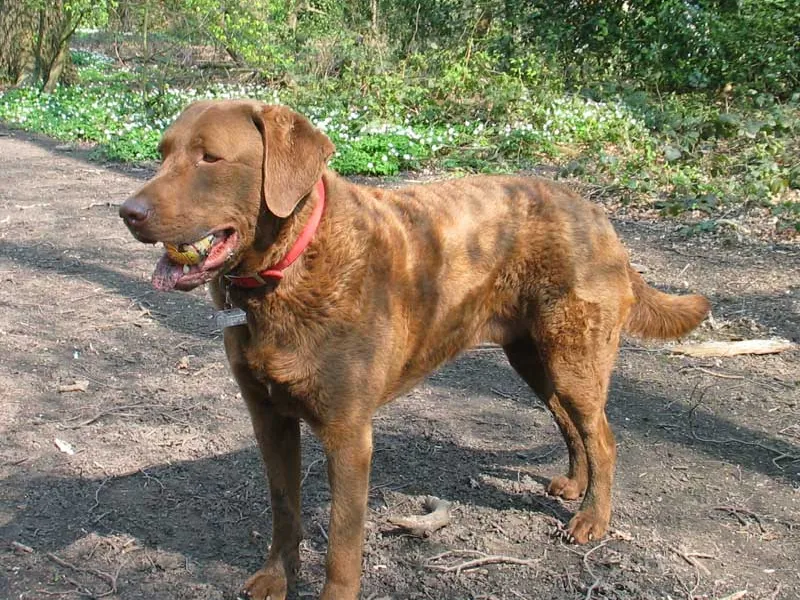
The Chesapeake Bay Retriever is a powerful, medium-large retriever built for strength and endurance in rough water. Adults stand 21 to 26 inches at the shoulder and weigh about 55 to 80 lb. Under the AKC standard, males are 23 to 26 inches and 65 to 80 lb, while females are 21 to 24 inches and 55 to 70 lb, so the sex difference is clear.
The hindquarters are as high or slightly higher than the shoulders, with a broad, round skull, medium-length muzzle and clear amber or yellowish eyes. The chest is strong and deep, and webbed feet help in the water.
The coat is the breed's trademark: a short, harsh outer coat that forms waves on the shoulders, neck, back and loins, over a dense, fine, woolly undercoat. Natural oils make it water-resistant. Any curl or a coat over 1.5 inches long is penalized.
Accepted colors are any shade of brown, sedge (red-gold) or deadgrass (straw to tan). Solid colors are preferred. A small white spot on the chest, belly, toes or back of the feet is permissible.
Temperament and Personality
Chessies are loyal, bright and affectionate with their family, but they are typically more reserved with strangers and more protective than other retrievers. Many are natural watchdogs.
They can be strong-willed and may test their owners, especially in adolescence. Some are dominant toward unfamiliar dogs. A Chesapeake that is raised with clear rules, work and plenty of social exposure is a steady, trustworthy partner.
Chesapeakes are known for their emotional resilience. They recover quickly from setbacks, keep working in cold rain or wind and are famously persistent when retrieving. At home, a well-exercised Chessie is usually calm and content to lie near its people.
Are Chesapeake Bay Retrievers Good for First-Time Owners?
They are a challenging choice for most first-timers. The Chessie looks like a Labrador cousin, but its temperament is tougher, more protective and more willing to question its owner.
A first-time owner can succeed if they are active outdoors, enroll in training from puppyhood and stay consistent through the adolescent phase, which in this slow-maturing breed can last until two or three years. Joining a retriever club or hunt test group provides mentors who know the breed. Those who want an easygoing, sociable dog that greets everyone will usually be happier with a Labrador or Golden Retriever.
Are Chesapeake Bay Retrievers Easy to Train?
They learn quickly but are not push-button dogs. Chessies are intelligent and highly motivated by retrieving, so training around that drive works well, yet they may test rules, ignore a cue they find pointless or dig in under pressure.
What works best:
- Fair, consistent, reward-based training that uses retrieves as rewards
- Short, purposeful sessions rather than endless repetition
- Clear household rules from the start, kept by all family members
- Impulse-control games such as waiting before being sent for a bumper
Harsh corrections tend to backfire, creating a stubborn or wary dog. Patient owners are rewarded with a reliable, hard-working partner.
Are Chesapeake Bay Retrievers Good With Other Dogs and Cats?
Many live well with dogs and cats they grow up with, but they are less universally social than Labradors. Some Chessies, especially males, can be bossy or dominant with unfamiliar dogs of the same sex.
Early socialization with a wide range of calm dogs is essential, and it should continue through the second year. Opposite-sex pairings tend to be easiest in multi-dog homes. Cats raised with a Chessie are often accepted, though outdoor cats and small animals may trigger chase behavior. Structured activities, such as walking together or group training classes, build better manners than unsupervised dog park play.
Exercise and Training
This is a high-energy breed that needs more than walks: plan for well over an hour of vigorous activity daily, ideally swimming, retrieving, hiking or field work. Hunting test and dock diving are excellent outlets.
- Start socialization early and continue it through the second year.
- Use firm but fair, reward-based training; avoid harsh methods with this sensitive but tough dog.
- Give jobs: retrieving, carrying items or scent games all help.
Chessies left alone for long hours without exercise can become destructive.
Chessies mature slowly and often keep a puppyish exuberance until two or three years of age. Structured retrieving sessions, where the dog must sit and wait before being sent, build the impulse control that makes an adult Chesapeake a pleasure to live with.
Grooming and Shedding
The coat is unique: a short, harsh, wavy outer coat over a dense, woolly undercoat, with natural oils that repel water. It comes in shades of brown, sedge and deadgrass. Brush weekly with a rubber curry or undercoat rake, more during seasonal shedding.
Bathe rarely, as frequent shampooing strips the protective oils. The coat can have a distinct, oily smell, which is normal. Dry ears after swimming.
Feeding and Nutrition
A Chesapeake's food needs swing with the seasons. A dog retrieving in icy water through hunting season burns far more energy than the same dog in a quiet summer, so adjust portions to workload and body condition rather than feeding the same amount all year. Feel for ribs under the dense coat, which can hide weight gain.
Puppies should be fed a large-breed puppy diet to support steady, moderate growth. Chessies mature slowly, and keeping them lean through the growth phase protects hips and elbows.
- Feed two meals a day for adults; three or more for young puppies.
- The deep chest carries some bloat risk, so avoid hard exercise right after meals and discourage gulping.
- On hunting days, give a small meal well before work and the main meal after the dog has cooled down and rested.
- Carry fresh water; dogs working in salt water may drink it, which can cause vomiting and diarrhea.
Use part of the daily food as training rewards so retrieving sessions do not add excess calories.
| Adult weight | Less active | Typical adult | Very active |
|---|---|---|---|
| 55 lb | 1,090 kcal | 1,250 kcal | 1,560 kcal |
| 80 lb | 1,450 kcal | 1,660 kcal | 2,070 kcal |
Estimates use the resting energy formula veterinarians work with (70 × body weight in kg0.75) and standard activity factors. Use the feeding guide on your food as a starting point and adjust to body condition. Puppies, seniors, pregnant animals and pets that need to lose weight have different needs, so ask your vet.
Health and Lifespan
Chessies typically live 10 to 13 years. Hip and elbow dysplasia, progressive retinal atrophy and degenerative myelopathy are known in the breed. Exercise-induced collapse (EIC) and von Willebrand disease type 3 can be screened with DNA tests.
Ask breeders for hip and elbow evaluations, eye exams and DNA results for DM, EIC and PRA. Keep the dog lean and well conditioned to protect its joints.
Chesapeake Bay Retriever Price and Cost of Ownership
Typical breeder price in the US$1,500 to $3,000
A Chesapeake Bay Retriever puppy from a reputable US breeder typically costs about $1,500 to $3,000. Prices vary by breeder, region and lines, and proven hunting or field pedigrees may cost more. Ask for hip and elbow evaluations, eye exams and DNA results for degenerative myelopathy, exercise-induced collapse and PRA.
Breed rescue groups and retriever rescues occasionally place adult Chessies, often dogs that needed more structure than their first home provided.
Ongoing cost drivers for this breed include:
- Higher food volume for working and hunting dogs
- Training classes, hunt test entries or retriever club membership
- Hunting gear such as neoprene vests and dog boxes for transport
- Insurance covering joint and inherited neurologic conditions
- Ear care and treatment after frequent swimming
Is the Chesapeake Bay Retriever Right for You?
At 55 to 80 lb and 21 to 26 inches, the Chessie suits hunters, outdoor enthusiasts and experienced owners who want a loyal, protective, hard-working dog. Access to water is a big plus.
It is not a good fit for apartment living, for households away all day, or for owners expecting a Labrador-style social butterfly.
Chesapeake Bay Retriever Traits at a Glance
Chesapeake Bay Retriever FAQ
Are Chesapeake Bay Retrievers good family dogs?
They are loyal and loving with their family, but they are more protective and strong-willed than other retrievers and need active, experienced owners.
How is a Chesapeake different from a Labrador?
Chessies are more reserved with strangers, more protective, tougher in temperament and have a wavy, oily coat built for icy water.
Do Chesapeake Bay Retrievers shed?
Yes, moderately year-round with heavier seasonal shedding.
How much exercise does a Chesapeake Bay Retriever need?
Expect at least an hour or more of vigorous exercise daily, ideally including swimming or retrieving.
How long do Chesapeake Bay Retrievers live?
Usually around 10 to 13 years.
Are Chesapeake Bay Retrievers protective?
Yes, they are more protective than most retrievers and often act as watchdogs, so socialization is important.