Spinone ItalianoItaly's gentle, wire-coated hunting dog
The Spinone Italiano is a sturdy, wire-coated pointer-retriever with a soft, almost human expression and a famously easygoing nature. It suits active owners who want a gentle companion with real stamina and can live with a bit of drool and a damp beard.
Why people love the Spinone Italiano
- Gentle, patient and sociable with children and visitors
- Relaxed indoors once well exercised
- Versatile hunting partner on land and in water
- Weather-resistant wiry coat needs little trimming
- Usually friendly with other dogs
Things to consider
- Needs around two hours of exercise daily
- Noticeable drooling and a wet beard after drinking
- Gains weight easily without measured meals
- Bloat and hip dysplasia occur in the breed
- Can be stubborn and shuts down under harsh handling
Is this breed right for you?
10 questions · live resultHistory and Origin
The Spinone is one of Europe's old hunting breeds, developed in northern Italy, especially the Piedmont region, to find, point and retrieve game. The name is often linked to the pino, a thorny bush the dogs pushed through without hesitation thanks to their tough coat and thick skin.
The breed nearly vanished after World War II, when hunting declined and other pointing breeds became fashionable. Italian enthusiasts rebuilt it. It reached Britain in the 1980s and was fully recognized by the AKC in 2000. In the field it works at a steady, ground-covering trot rather than a gallop and is valued for working in water and dense cover.
Size, Coat and Colors
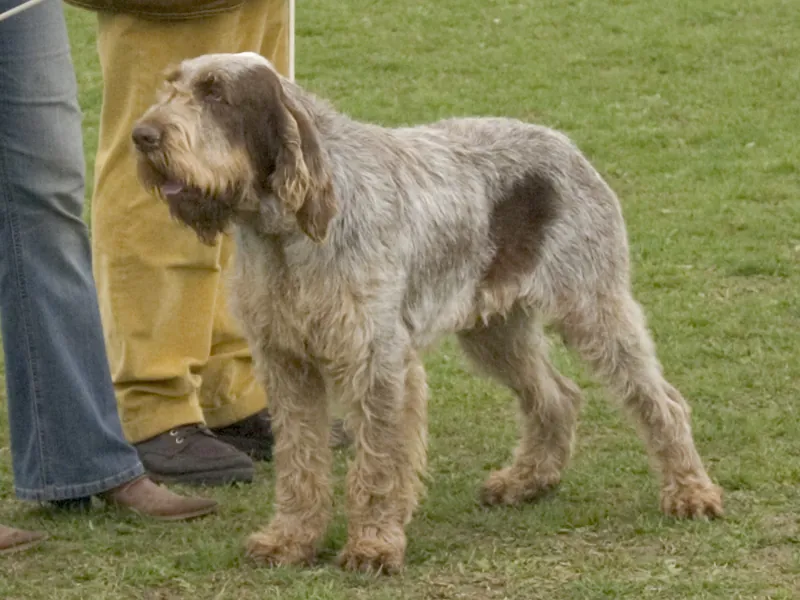
The Spinone Italiano is a large, solidly built pointer with a square outline, strong bone and a long, slightly roman-nosed head. Adults stand about 23 to 28 inches and weigh 62 to 82 lb. Under the AKC standard, males measure roughly 23 to 27 inches and females 22 to 25 inches, and males are noticeably heavier in head and body.
The face is unmistakable: bushy eyebrows, a soft mustache and beard, and a gentle, almost human expression from large, ochre-toned eyes. The ears are long, triangular and hang close to the cheeks.
The coat is wiry, dense and flat-lying, with longer hair on the face. It should look natural and slightly unkempt, never sculpted.
Accepted colors include:
- Solid white
- White with orange or brown markings
- Orange roan or brown roan, with or without markings
Black is not accepted in any form and disqualifies a dog under AKC rules. The skin is thick and fits loosely, especially at the throat, which forms a slight dewlap.
Temperament and Personality
Spinoni are affectionate, patient and sociable. They usually love people, including visitors, and tend to be gentle with children and tolerant of other dogs. Many get along with cats they know, though the hunting instinct can surface with small animals outdoors.
They are not hyper. Indoors a well-exercised Spinone is relaxed and likes to lean on its people. It can be a little stubborn and is sensitive to harsh handling, often shutting down rather than complying.
Spinoni rarely make good guard dogs. Most will bark to announce a visitor and then greet them warmly. They are happiest with a job, whether that is retrieving a dummy in the field or carrying a toy around the house.
Is the Spinone Italiano Good for First-Time Owners?
A Spinone can work for a first-time owner who is genuinely active and patient. Its friendly temperament and lack of aggression make it forgiving, but its size, stamina and stubborn streak still require commitment.
New owners should plan for about two hours of exercise a day, early puppy classes and calm, reward-based training. Spinoni think before they act, so they can seem slow to respond; repeating commands loudly does not help. Drool, a wet beard and muddy paws are part of daily life. If you can provide time outdoors and accept a less tidy home, the Spinone is one of the more forgiving sporting breeds for beginners.
Are Spinoni Good With Cats?
Many Spinoni live peacefully with cats, especially when raised with them from puppyhood. The breed is generally softer and less intense around small animals than many pointing breeds.
Hunting instinct still exists. A Spinone may point or follow a cat that runs, particularly outdoors or with unfamiliar cats. Introduce pets gradually, give the cat escape routes and high resting spots, and supervise until the relationship is settled. Adult Spinoni with no cat experience can learn to accept one, but a rescue organization or breeder can help you choose a dog with a proven record around cats.
Can Spinoni Be Left Alone?
Spinoni can be left for a few hours, but they do not do well with long, regular absences. They are people-oriented and prefer to be near their family.
A well-exercised adult often sleeps through a short absence. Problems such as howling, chewing and destructive behavior usually appear when the dog is both under-exercised and alone for long periods. Exercise before you leave, provide a safe area with chews, and build alone time gradually from puppyhood. If you work full days away from home, plan for a dog walker or daycare. A second friendly dog can help but does not replace human company.
Exercise and Training
Do not let the calm house manners fool you: this is a working gundog with serious stamina. The PDSA recommends at least two hours of exercise a day. Long hikes, free running in safe areas, swimming, tracking and hunting tests all suit the breed.
Training goes well with patience, consistency and food rewards. Spinoni think things over before acting, so short sessions and calm repetition work better than drilling. A reliable recall needs practice because a strong scent can be very distracting.
Grooming and Shedding
The wiry, dense coat is about 1.5 to 2.5 inches long and should look natural, not sculpted. Brush weekly and hand strip dead hair a few times a year. Shedding is moderate.
The beard and mustache soak up water and food, and the loose lips mean noticeable drooling. Keep a towel near the water bowl. Check and clean the long, low-set ears regularly to prevent infections.
Feeding and Nutrition
Spinoni are known for gaining weight easily, even when active. Measure every meal, weigh the dog regularly and adjust portions to body condition. Work days, hunting seasons and lazy weeks all change their needs.
As a deep-chested breed, the Spinone carries a known risk of bloat (gastric dilatation-volvulus). Feed two or more meals a day, avoid strenuous exercise for at least an hour before and after eating, and discourage gulping with a slow-feeder bowl if needed. Learn the warning signs: restlessness, unproductive retching and a swollen abdomen require emergency care.
Puppies of this size should grow at a steady pace. Use a diet suited to large-breed puppies and avoid excess calcium supplements. Keeping young dogs lean protects hips and elbows.
Some Spinoni have allergic skin disease. Persistent itching, ear infections or paw licking may point to an allergy, and any elimination diet should be planned with your vet.
The beard soaks up food and water. Wipe it after meals and place the water bowl on an easy-to-clean mat. Use small treats in training and deduct them from daily meals.
| Adult weight | Less active | Typical adult | Very active |
|---|---|---|---|
| 62 lb | 1,200 kcal | 1,370 kcal | 1,710 kcal |
| 82 lb | 1,480 kcal | 1,690 kcal | 2,110 kcal |
Estimates use the resting energy formula veterinarians work with (70 × body weight in kg0.75) and standard activity factors. Use the feeding guide on your food as a starting point and adjust to body condition. Puppies, seniors, pregnant animals and pets that need to lose weight have different needs, so ask your vet.
Health and Lifespan
Most Spinoni live 10 to 12 years. Conditions seen in the breed include hip dysplasia, bloat (gastric dilatation-volvulus), entropion, allergic skin disease, panosteitis in young dogs, epilepsy and hypothyroidism. A DNA test exists for cerebellar ataxia, an inherited nervous system disease in the breed.
Spinoni gain weight easily, so measure food and keep them lean. Choose a breeder who hip scores and DNA tests breeding dogs.
Spinone Italiano Price and Cost of Ownership
Typical breeder price in the US$1,500 to $3,000
Spinone Italiano puppies from reputable US breeders typically cost about $1,500 to $3,000, depending on breeder, region and lines. The breed is not common, so waiting lists are normal. Ask for hip scores and a DNA test for cerebellar ataxia on both parents. Breed club rescue programs occasionally place adult Spinoni.
Ongoing costs include:
- Food for a large, active dog
- Insurance covering hip dysplasia, bloat surgery, eye problems and allergies
- Grooming: occasional professional hand-stripping if you do not learn it yourself
- Hunting or training gear, hunt test fees or field training if you work the dog
- Larger vehicle space and crate for transport
Is the Spinone Italiano Right for You?
A Spinone fits an active household that wants a sociable, soft-natured dog and has time for two hours of daily exercise. It does not like being left alone for long and is happiest close to its family.
- Good match: hikers, hunters, rural or suburban homes, families with children.
- Think twice: small apartments, owners away all day, very tidy homes that cannot tolerate drool and a wet beard.
Spinone Italiano Traits at a Glance
Spinone Italiano FAQ
Are Spinone Italianos good family dogs?
Yes. They are known for being gentle, patient and affectionate, and usually do well with children and other dogs.
How big do Spinoni get?
Adults stand about 23 to 28 inches tall and weigh roughly 62 to 82 lb.
Do Spinoni drool?
Yes, noticeably. Their loose lips and beard carry water and saliva, especially after drinking.
How much exercise does a Spinone need?
Around two hours a day, including off-leash running or swimming where it is safe.
Are Spinoni hypoallergenic?
No. They shed moderately and are not considered allergy friendly.
How long do Spinoni live?
Typically 10 to 12 years.