English Springer SpanielThe tireless, cheerful flushing spaniel
The English Springer Spaniel is a medium-sized gundog bred to find and flush ("spring") game for hunters. It is cheerful, affectionate and eager to learn, with seemingly endless energy. It suits active families and outdoor people who can give it lots of exercise and company.
Why people love the English Springer Spaniel
- Cheerful, sociable dog that usually loves visitors and other dogs
- Quick learner that enjoys training, retrieving and scent work
- Excellent hiking, running and swimming partner
- Medium size is easy to travel with and handle
- Long lifespan of 12 to 14 years
Things to consider
- Needs around two hours of activity daily, every day
- Feathered coat collects burrs and needs regular trimming
- Long ears prone to infections, especially after swimming
- Strong hunting instinct makes recall around birds unreliable
- Struggles when left alone for long workdays
Is this breed right for you?
10 questions · live resultHistory and Origin
Spaniels have been used in Britain for centuries, and for a long time land spaniels of different sizes came from the same litters. Smaller dogs worked woodcock and became cockers; larger ones sprang game from cover for the net, the falcon and later the gun.
The Boughey family of Aqualate in Shropshire kept a well-known line of springing spaniels from the early 1800s. The Kennel Club recognized the English Springer Spaniel as a separate breed in 1902, and the AKC followed in 1910. Over the 20th century the breed split into heavier, more heavily coated show lines and lighter, faster working lines that dominate field trials.
Size, Coat, Colors and Show vs Field Type
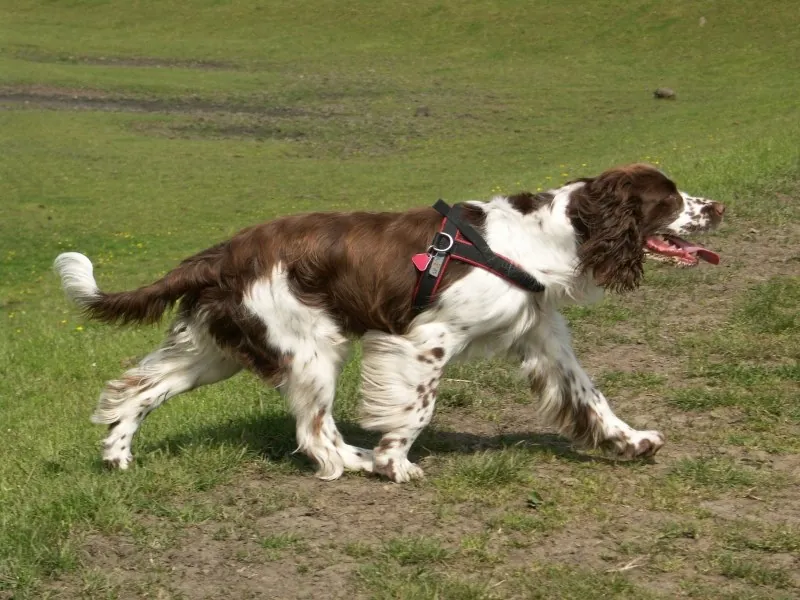
The English Springer Spaniel is a compact, medium-sized gundog with a moderately long neck, a well-sprung chest and long, feathered ears. Adults stand 19 to 20 inches at the shoulder and weigh around 40 to 51 lb. Males are usually at the upper end of both ranges, with a bolder head; females are slightly smaller and lighter boned.
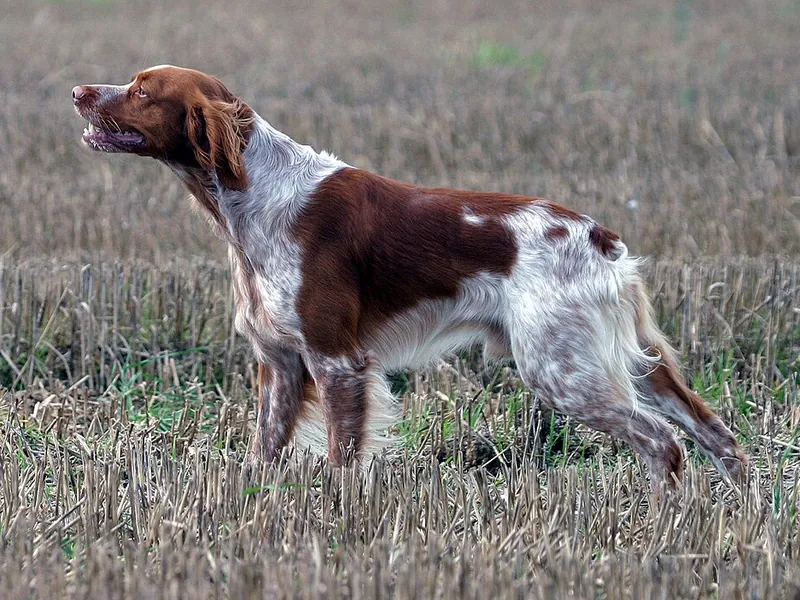
The breed has two distinct looks. Show-bred Springers are heavier, with a fuller head, longer ears and abundant feathering on the ears, chest, legs and belly. Field-bred Springers are lighter and leggier, with a shorter, sparser coat, more white and often a docked or natural tail kept for work in cover.
The outer coat is flat or slightly wavy over a soft undercoat. Accepted colors are:
- Liver and white, or black and white
- Blue roan or liver roan
- Either combination with tan markings, giving a tricolor look
White areas may be ticked. Field lines show more white and ticking, which helps hunters spot the dog in cover.
Temperament and Personality
Springers are friendly, enthusiastic and very people-oriented. They usually welcome visitors and get on well with other dogs. With children they are affectionate, though their bounciness can bowl over toddlers.
Their hunting instinct is strong: birds, rabbits and squirrels attract instant attention. They dislike being left alone for long and may bark, chew or dig if bored. Working-line Springers in particular are intense and need a job.
Springers are usually soft-natured and keen to please, and many carry toys or shoes to greet people at the door. Their sociability makes them popular as detection dogs, where their drive to search and love of reward are put to work.
Are English Springer Spaniels Easy to Train?
Yes, for owners who keep training fun and frequent. Springers are eager to please, food and toy motivated and quick to pick up new cues, which is why they excel in obedience, agility and detection work.
The challenges are energy and nose. An under-exercised Springer struggles to focus, and the sight or scent of birds can override everything it knows. Build recall with a long line, reward the dog for checking in and practice around low-level distractions before moving to fields with game. Field lines are typically the most driven and benefit from gundog training clubs, while show lines are often easier as household pets. Short sessions, several times a day, work better than one long lesson.
Can English Springer Spaniels Be Left Alone?
Only for moderate periods once trained, usually up to about four hours for a well-exercised adult. Springers were bred to work closely with people all day, and many find long stretches alone stressful.
Signs of a dog left too long include barking, chewing doors and furniture, and digging. To help a Springer cope:
- Exercise it hard before you leave, including off-leash running or retrieving.
- Leave a stuffed food toy or lick mat for mental work.
- Practice short absences from puppyhood so being alone is normal.
- Use a dog walker or daycare on long workdays.
If everyone is out full-time, a less people-dependent breed may be a better choice.
Are English Springer Spaniels Good With Cats?
Often yes, especially if they are raised with a cat from puppyhood. Springers are bird and rabbit specialists rather than cat chasers, and many share a sofa happily with a resident cat.
Introductions still matter. A young Springer's enthusiasm can overwhelm a cat, so give the cat high escape routes and a dog-free room, and reward the dog for calm behavior around it. Working-line dogs with a very high prey drive may stay excitable around running animals for life. Outdoor cats, rabbits and backyard chickens are a different story: these remain fair game to most Springers, so supervision is needed outside.
Exercise and Training
The PDSA recommends more than two hours of exercise a day for Springers. Good options include:
- Long walks with off-leash running in safe areas
- Retrieving, swimming and gundog training
- Scent work, agility and flyball
Springers are quick learners and love praise, food and toys. The AKC rates them as very trainable; UK rescue organizations note that their energy and nose can make them more of a challenge than expected. Start recall training early, use a long line in game-rich areas and teach the dog to settle calmly at home.
Grooming and Shedding
The medium-length coat has feathering on the ears, chest, legs and belly, typically liver and white or black and white, sometimes with tan. Brush two or three times a week and check for burrs and seeds after walks. The PDSA suggests a trim roughly every three months to keep feathering tidy. Shedding is moderate.
Long, heavy ears trap moisture, so check and clean them weekly, and dry them after swimming. Some Springers drool a little.
Feeding and Nutrition
Springers are enthusiastic eaters, and weight gain is common in show-line and neutered pets that get less exercise than their appetite suggests. Feed measured portions, weigh the dog every month or two and adjust to body condition rather than the bag. You should be able to feel the ribs easily under the coat, and the feathering can hide a growing waist.
Working-line Springers that hunt, run or do field training several days a week may need noticeably more food during the season and less in quiet months. Scale portions to the actual workload.
- Two meals a day suit most adults; puppies need three or four.
- Use part of the daily ration as training rewards, since Springers learn best with frequent food reinforcement.
- Slow-feeder bowls and scatter feeding give this busy, scent-driven dog useful mental work.
- Use a narrow, deep bowl so the long ears stay out of food and water, which helps keep the ear leather clean.
Keeping a Springer lean is one of the simplest ways to protect hips and elbows over a long, active life.
| Adult weight | Less active | Typical adult | Very active |
|---|---|---|---|
| 40 lb | 860 kcal | 980 kcal | 1,230 kcal |
| 51 lb | 1,030 kcal | 1,180 kcal | 1,480 kcal |
Estimates use the resting energy formula veterinarians work with (70 × body weight in kg0.75) and standard activity factors. Use the feeding guide on your food as a starting point and adjust to body condition. Puppies, seniors, pregnant animals and pets that need to lose weight have different needs, so ask your vet.
Health and Lifespan
Springers typically live 12 to 14 years. Common conditions include:
- Hip and elbow dysplasia
- Progressive retinal atrophy and other eye diseases
- Ear infections due to long, hanging ears
- Phosphofructokinase (PFK) deficiency, an inherited enzyme disorder with a DNA test
Look for breeders who hip and elbow score their dogs, have current eye certificates and DNA test for PFK and relevant PRA forms. Keeping your Springer lean protects its joints.
English Springer Spaniel Price and Cost of Ownership
Typical breeder price in the US$1,500 to $3,000
A Springer puppy from a reputable US breeder typically costs about $1,500 to $3,000. Prices vary by breeder, region and lines; field-trial and hunting pedigrees and well-known show kennels can sit at the upper end. Ask for hip and elbow results, current eye exams and DNA results for PFK deficiency and relevant PRA forms.
Breed-specific rescue groups in the US and UK rehome Springers of all ages, often active young dogs whose owners underestimated the exercise needs.
Ongoing cost drivers include:
- Professional grooming or trimming every two to three months, unless you learn to do it yourself
- Ear care and treatment of recurrent ear infections
- Dog walkers or daycare if you work away from home
- Training classes or gundog clubs to channel the breed's drive
- Insurance that covers hip, elbow and eye conditions
Is the English Springer Spaniel Right for You?
A Springer fits families who love long walks, runners, hikers and hunters with a garden and time to spend with their dog. Choose working lines for field work or dog sports and show lines if you want a slightly calmer house dog.
It is not a good match for apartment living with limited exercise or for households where the dog would be home alone most of the day.
English Springer Spaniel Traits at a Glance
English Springer Spaniel FAQ
Are English Springer Spaniels good family dogs?
Yes, they are typically affectionate and sociable with children and other dogs, provided they get enough exercise and company.
How big do English Springer Spaniels get?
They stand about 19 to 20 inches at the shoulder and weigh around 40 to 51 lb.
How much exercise does a Springer Spaniel need?
Around two hours a day, including off-leash running, retrieving or scent work.
Do Springer Spaniels shed?
Yes, moderately; brushing a few times a week and occasional trimming keep the coat tidy.
What is the difference between show and working Springers?
Show lines are heavier with more coat, while working lines are lighter, faster and usually more intense.
How long do English Springer Spaniels live?
Typically 12 to 14 years.