VizslaHungary's affectionate golden-rust pointer
The Vizsla is a sleek, golden-rust hunting dog from Hungary, known for its athletic build and its strong attachment to its people. It is easy to train and affectionate, but it needs a lot of exercise and company, so it suits active owners who will include it in daily life.
Why people love the Vizsla
- Very affectionate and gentle with its family
- Learns quickly with gentle, reward-based training
- Short, low-odor coat needs only weekly brushing
- Excellent running, hiking and hunting partner
- Usually friendly with strangers, children and other dogs
Things to consider
- Needs more than an hour of vigorous exercise daily
- Prone to separation anxiety and clinginess
- Strong bird and small-animal chasing instinct
- Feels the cold and needs a coat in winter
- Sensitive; harsh corrections backfire
Is this breed right for you?
10 questions · live resultHistory and Origin
Ancestors of the Vizsla likely came with the Magyar tribes who settled the Carpathian Basin over a thousand years ago. Over centuries, Hungarian nobility developed a versatile hunting dog that could point and retrieve on the open plains.
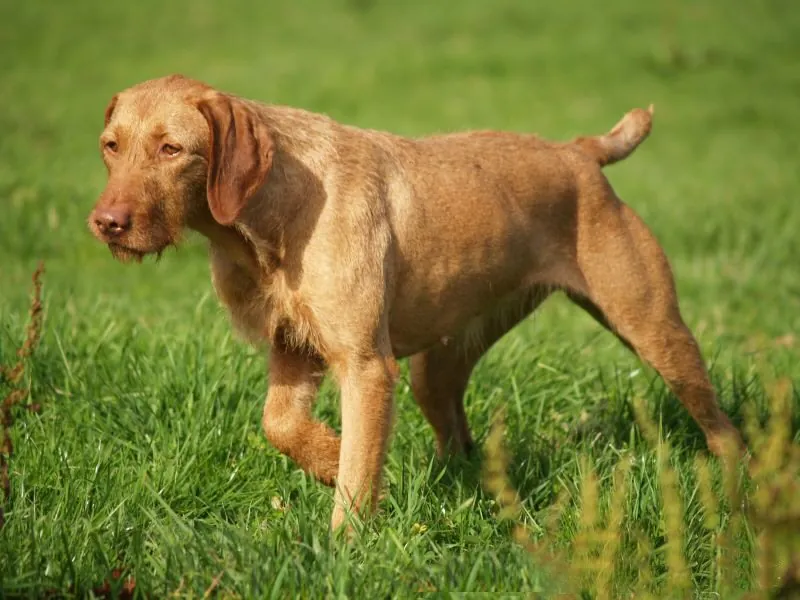
The breed declined after World War I and again after World War II, when Hungarians fleeing the country took dogs with them, helping establish the breed abroad. The AKC recognized the Vizsla in 1960. The Kennel Club calls it the Hungarian Vizsla and places it in the Gundog group. A wirehaired version exists as a separate breed.
The Vizsla is a true versatile hunting dog: it points game, retrieves on land and from water, and tracks wounded game, which explains its stamina and close cooperation with its handler.
Size, Color and Coat
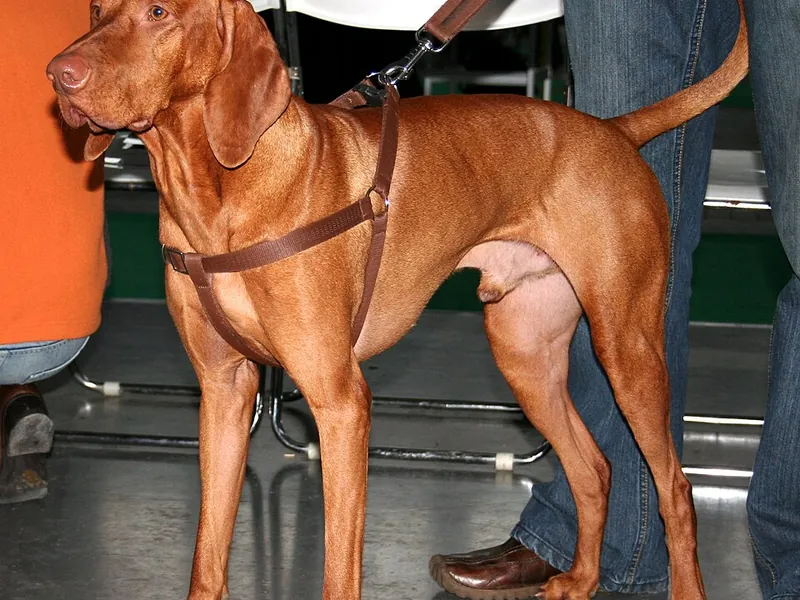
The Vizsla is a lean, light-boned pointer standing 21 to 25 inches at the shoulder and weighing 44 to 60 lb. Males are taller and more muscular, with a slightly broader head; females are noticeably more refined. The outline is elegant and athletic, with a level back and a tail that is docked by one third in the US but left natural in the UK and much of Europe.
The coat is short, smooth, dense and close-lying, with no woolly undercoat. Only one color family is accepted: golden rust in different shades, from light golden to deep russet. Small white marks on the chest and toes are permitted, but extensive white is a fault.
The Vizsla is self-colored: the nose, lips, eye rims and nails blend with the coat, and a completely black nose is a disqualification under the AKC standard. The eyes match or harmonize with the coat. The Wirehaired Vizsla, with a harsh, bearded coat, is a separate breed.
Temperament and Personality
Vizslas are gentle, lively and extremely people-oriented, often nicknamed velcro dogs for how closely they follow their owners. They are typically friendly with strangers, good with children and usually sociable with other dogs.
They are sensitive and respond poorly to harsh handling. Left alone for long periods, many become anxious, vocal or destructive. Their hunting instinct can make birds and small animals irresistible.
A Vizsla usually wants physical contact and will lean against legs, sleep pressed against its owner and follow its people into every room. That closeness is part of the appeal, but it means the breed fits poorly with people who prefer an independent dog.
Is the Vizsla Good for First-Time Owners?
A Vizsla can suit a first-time owner who is very active and home much of the day, but its energy and attachment surprise many beginners.
On the plus side, the breed is eager to please, learns quickly and rarely shows a hard or stubborn streak. The difficulties lie in volume and intensity: a young Vizsla needs long daily runs, mental work and close company, and it can become anxious or destructive without them. Gentle handling is essential, since a scolded Vizsla tends to shut down. Beginners do best with a puppy class, a plan for alone-time training and a realistic weekly exercise schedule.
Can a Vizsla Be Left Alone?
Vizslas tolerate short absences, but they are one of the breeds most prone to separation-related stress and should not be left alone for full workdays.
An adult that has been exercised can usually manage three or four hours. Longer stretches often lead to whining, barking, chewing doors or escaping crates. Start teaching alone time in very short steps during puppyhood, leave a food puzzle and avoid making departures dramatic. Some Vizslas do well with a second dog, but company does not replace exercise. For long working days, a dog walker or daycare is the realistic solution.
Are Vizslas Good with Cats?
Many Vizslas live well with cats, particularly when raised with them, but their bird-dog instincts mean early training matters.
A Vizsla puppy introduced to a calm, confident cat usually learns to treat it as family. Adult dogs without cat experience may chase, and the breed's speed makes this stressful for the cat. Give the cat escape routes and dog-free spaces, introduce them with the dog leashed and reward calm attention. Pet birds, rabbits and rodents are a bigger concern and should be kept securely out of reach, since the hunting instinct is strong.
Exercise and Training
Vizslas need a lot of exercise: often more than an hour of vigorous activity daily, with off-leash running in safe areas, plus mental work. They are excellent partners for running (once fully grown), hiking, field trials, agility and scent work.
- Training is usually easy with positive reinforcement; they want to please.
- Keep a calm, gentle tone to suit their sensitivity.
- Build alone time gradually from puppyhood to prevent separation problems.
- Provide chew toys and puzzle feeders to satisfy a busy mind.
Wait until growth is complete, usually around 18 months, before regular long-distance running.
Grooming and Shedding
The short, smooth coat needs only weekly brushing and has little odor. Shedding is moderate. With a thin coat and little undercoat, Vizslas feel the cold and appreciate a jacket in winter.
Check and clean the ears regularly, as Vizslas are prone to ear infections.
The coat is usually solid golden rust in varying shades, sometimes with small white markings on the chest or toes. The eyes, nose and nails blend with the coat color.
Feeding and Nutrition
Vizslas are naturally lean and muscular, and a healthy adult shows a slight outline of the last ribs. Do not mistake that athletic look for underweight. Equally, a Vizsla with a covered rib cage is carrying too much for its light frame.
Energy needs vary widely between a family pet and a dog running, hunting or doing field trials, so adjust portions to activity and body condition through the seasons. Working dogs may need more food during hunting season and less afterward.
- Feed puppies three or four meals a day and adults two.
- Feed after strenuous exercise rather than just before, and allow a rest period, since deep-chested dogs can develop bloat.
- Use part of the daily ration in food puzzles to occupy a busy mind.
Some Vizslas have skin allergies or digestive sensitivities. If your vet suspects a food component, a supervised elimination trial is more useful than frequent food changes.
Keep treats small: Vizslas train so readily that rewards can add up quickly.
| Adult weight | Less active | Typical adult | Very active |
|---|---|---|---|
| 44 lb | 930 kcal | 1,060 kcal | 1,320 kcal |
| 60 lb | 1,170 kcal | 1,330 kcal | 1,670 kcal |
Estimates use the resting energy formula veterinarians work with (70 × body weight in kg0.75) and standard activity factors. Use the feeding guide on your food as a starting point and adjust to body condition. Puppies, seniors, pregnant animals and pets that need to lose weight have different needs, so ask your vet.
Health and Lifespan
Vizslas typically live 12 to 14 years. Health issues in the breed include hip dysplasia, epilepsy, eye conditions such as entropion, allergies and ear infections.
Choose breeders who hip score the parents and screen eyes, and ask about any history of epilepsy in the lines.
Vizsla Price and Cost of Ownership
Typical breeder price in the US$1,500 to $2,500
A Vizsla puppy from a reputable US breeder typically costs about $1,500 to $2,500. Prices vary by breeder, region and lines, and dogs from proven field or show parents may cost more. Vizsla rescue groups regularly rehome adults, often because previous owners underestimated the breed's needs.
Breed-specific cost drivers include:
- Hip and eye screening in the parents, which adds to puppy prices
- Daycare or dog walkers for owners who work away from home
- Winter coats and a warm, padded bed for a thin-coated dog
- Pet insurance that covers epilepsy and allergies, which can require long-term medication
- Training classes or sports such as agility and field work
Grooming costs are minimal, since the coat needs no trimming.
Is the Vizsla Right for You?
A Vizsla suits active singles or families who want a loving, trainable companion and can provide lots of exercise and company. It does best in homes with outdoor space.
It is less suited to apartments, owners away all day, or households wanting a low-energy dog.
Runners, hikers and hunters often find the Vizsla an ideal, affectionate partner.
Vizsla Traits at a Glance
Vizsla FAQ
Why are Vizslas called velcro dogs?
They tend to stay very close to their owners and follow them from room to room.
How big do Vizslas get?
Vizslas stand about 21 to 25 inches tall and weigh roughly 44 to 60 lb.
Are Vizslas good family dogs?
Yes. They are affectionate and typically gentle with children, provided their exercise needs are met.
How much exercise does a Vizsla need?
Usually more than an hour a day of vigorous activity plus mental challenges.
Do Vizslas shed?
Moderately. Their short coat is easy to care for.
How long do Vizslas live?
Most Vizslas live 12 to 14 years.