Wirehaired Pointing GriffonThe versatile, family-loving gundog
The Wirehaired Pointing Griffon is a versatile hunting dog that points, retrieves and works in water, wrapped in a rough, low-maintenance coat. Gentle and deeply attached to its family, it suits active owners who want a trainable companion with real field ability.
Why people love the Wirehaired Pointing Griffon
- Versatile hunter that points, retrieves and works in water
- Gentle with children and closely bonded to family
- Rough, natural coat needs little grooming
- Stays closer to the hunter than many pointing breeds
- Highly trainable and eager to please
Things to consider
- Needs an hour or more of exercise and mental work daily
- Beard and wet coat bring water and mud into the house
- Struggles with long periods alone
- Bird drive can target small pets
- Breeders are limited, so waitlists are common
Is this breed right for you?
10 questions · live resultHistory and Origin
The breed was developed in the 1870s by Eduard Korthals, a Dutchman who worked in Germany and later France. He aimed to create a versatile gundog that could point, retrieve and handle any terrain, from marsh to woodland.
France holds the FCI patronage, reflecting where the breed was refined. The AKC recognized it in 1887. In the UK, it is known as the Korthals Griffon.
Korthals began his breeding program with a small number of rough-coated dogs, documenting his work carefully. He traveled widely to promote the breed, and it spread quickly among hunters in continental Europe. Breeders in the United States have since maintained it mainly as a hunting dog and family companion.
Size, Coat and Colors
The Wirehaired Pointing Griffon is a medium-sized, slightly longer-than-tall gundog with a strong, rugged build. Adults stand 20 to 24 inches tall and weigh about 35 to 71 lb. Males are larger, typically at the upper end of the height range, while females are smaller and lighter.
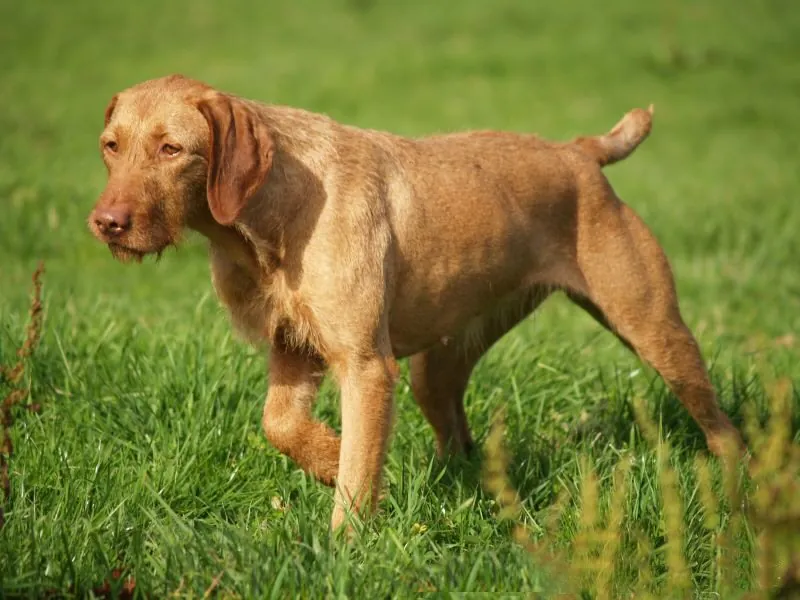
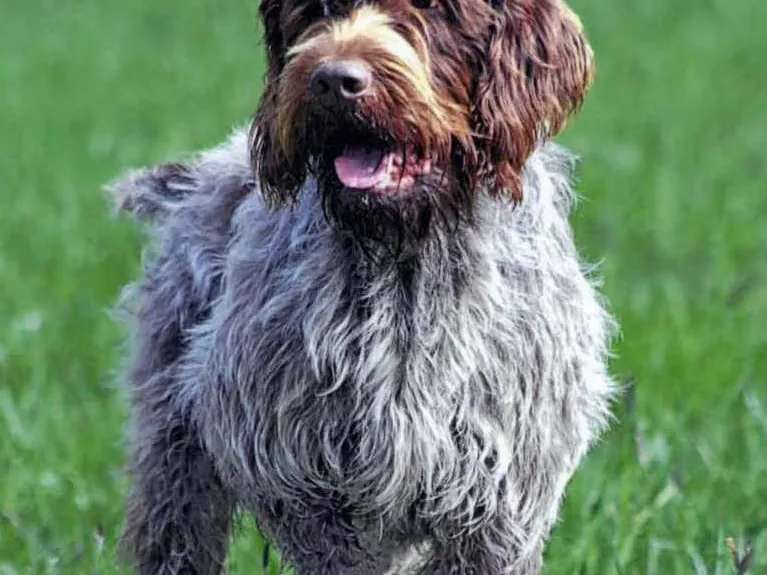
The coat defines the breed. It is medium length, straight and wiry, with a dense, fine undercoat. It should look natural and unkempt rather than sculpted, and it should never be curly or woolly. The beard, mustache and eyebrows give the Griffon its distinctive, wise expression.
Preferred colors are steel gray with brown markings. Other accepted colors include:
- Chestnut brown, often called liver
- Roan
- White and brown
- White and orange
A black coat is a disqualification in the AKC standard. Eyes are yellow or brown and large and rounded, adding to the alert, friendly look. The tail is often docked by one-third to one-half in the US, though natural tails are also seen.
Temperament and Personality
Griffons are affectionate, eager to please and closely bonded to their families. They are known for being gentle with children. They are alert and can be watchful of their territory.
They are happiest when involved in family life and can struggle with long periods alone.
Many Griffons are clownish and playful, and some are referred to as velcro dogs because they like to stay close to their people. They tend to get along with other dogs and can live with cats if raised with them, though their bird-hunting instinct may target small pets.
Is the Wirehaired Pointing Griffon Good for First-Time Owners?
Yes, for active first-time owners. Griffons are gentle, eager to please and trainable, which makes them one of the more forgiving sporting breeds for beginners.
New owners should still be ready for:
- An hour or more of exercise every day, plus training
- A dog that wants company and dislikes long hours alone
- Wet beards, muddy paws and a bit of mess
A first-time owner who hikes, swims or hunts and is home much of the day will usually find the Griffon an easy, rewarding partner. Puppy classes and early socialization help bring out its best.
Is the Wirehaired Pointing Griffon Hypoallergenic?
No dog is truly hypoallergenic, and the Griffon is no exception. That said, its wiry coat sheds less than many sporting breeds, and some people with mild allergies tolerate it better than heavy shedders.
Allergens come mainly from saliva and skin dander, not hair length, so reactions vary from person to person and even from dog to dog. A wet, bearded dog also spreads saliva and dirt around the house.
If allergies are a concern, spend extended time with adult Griffons before committing and ask breeders about the coat type in their lines.
Are Wirehaired Pointing Griffons Good with Cats?
Often, if raised with them. Griffons are generally sociable and gentle at home, and many live peacefully with the family cat they grew up with.
They are still bird dogs with real hunting instinct. A cat that runs can trigger a chase, especially in young dogs, and small pets such as birds, rabbits or rodents are at greater risk.
Introduce a Griffon puppy to cats early, supervise until the relationship is calm, and give the cat high escape routes. Adult Griffons without cat experience need careful, slow introductions.
Exercise and Training
Griffons need plenty of exercise, ideally an hour or more daily, including running, swimming and retrieving. They excel in hunting tests and other dog sports.
They are highly trainable and respond well to positive, consistent training. Mental stimulation is as important as physical exercise.
Griffons usually work at a moderate pace and stay closer to the hunter than many pointing breeds, which makes them popular with walking hunters. Outside hunting season, long walks, swimming, retrieving games and scent work help keep them content.
Early socialization and puppy classes help bring out their best. They tend to be sensitive, so harsh corrections are counterproductive.
Grooming and Shedding
The harsh, wiry coat with a dense undercoat is fairly low-maintenance. Brush weekly and hand-strip occasionally. The coat should look natural. Check ears regularly, especially after swimming.
The coat is typically steel gray with brown markings, or chestnut, and gives the breed its rugged, slightly unkempt look. The beard and eyebrows may need occasional trimming. The coat sheds less than many sporting breeds, but it is not hypoallergenic. Check the beard after meals, as food and water can collect there.
Feeding and Nutrition
Griffons work at a steady pace in all terrain and water, so a hunting dog in season burns much more than a family companion in summer. Adjust portions to activity and body condition, aiming for a lean, muscular dog with ribs easy to feel under the wiry coat.
Puppies grow into medium-to-large dogs. A complete puppy food fed in measured portions helps them grow steadily rather than fast, protecting hips and elbows.
- Feed adults two meals a day, especially in hunting season.
- Avoid heavy exercise immediately before and after meals to reduce bloat risk.
- Carry water on hunts and offer small amounts often.
- Use part of the daily ration for training rewards; Griffons are food-motivated.
A raised or deep water bowl can help limit how much water the beard carries across the floor. Wipe the beard after meals so food residue does not irritate the skin or smell.
| Adult weight | Less active | Typical adult | Very active |
|---|---|---|---|
| 35 lb | 780 kcal | 890 kcal | 1,110 kcal |
| 53 lb | 1,060 kcal | 1,220 kcal | 1,520 kcal |
| 71 lb | 1,320 kcal | 1,510 kcal | 1,890 kcal |
Estimates use the resting energy formula veterinarians work with (70 × body weight in kg0.75) and standard activity factors. Use the feeding guide on your food as a starting point and adjust to body condition. Puppies, seniors, pregnant animals and pets that need to lose weight have different needs, so ask your vet.
Health and Lifespan
Griffons typically live 12 to 15 years. Hip and elbow dysplasia and eye conditions are the main concerns. Breed clubs recommend screening for these. Keep the dog lean and active.
Ear infections can occur, especially in dogs that swim often, so dry the ears after water work. As with all sporting breeds, avoid heavy exercise right after meals to reduce the risk of bloat.
Wirehaired Pointing Griffon Price and Cost of Ownership
Typical breeder price in the US$1,000 to $2,500
A Wirehaired Pointing Griffon puppy from a reputable US breeder typically costs about $1,000 to $2,500. Prices vary by breeder, region and lines, and proven hunting lines often have waitlists. Ask about hip, elbow and eye screening for both parents.
Breed rescue networks exist, and adult Griffons occasionally need new homes, so adoption is possible though less common than for popular breeds.
Breed-specific ongoing costs include:
- Occasional hand-stripping by a groomer familiar with wirehaired breeds
- Hunting tests, training or NAVHDA events if you hunt
- Ear care, especially for dogs that swim often
- Insurance that covers hip and eye conditions
- Towels, washable covers and a dog-friendly car setup
Is the Wirehaired Pointing Griffon Right for You?
A Griffon suits you if you:
- Want an active, affectionate family dog
- Enjoy outdoor activities or hunting
- Can spend time with the dog daily
It is less suited to apartments or owners who are away for long periods.
Griffons can drool a little, especially after drinking, and their beards carry water across the floor. Owners who accept a bit of mess are rewarded with a loyal, gentle and versatile dog.
Wirehaired Pointing Griffon Traits at a Glance
Wirehaired Pointing Griffon FAQ
Are Wirehaired Pointing Griffons good family dogs?
Yes. They are gentle with children and closely bonded to their families.
How big do Wirehaired Pointing Griffons get?
They stand about 20 to 24 inches tall and weigh roughly 35 to 71 lb.
Do Wirehaired Pointing Griffons shed?
They shed moderately. Weekly brushing helps.
Are Wirehaired Pointing Griffons easy to train?
Yes, they are eager to please and highly trainable.
How long do Wirehaired Pointing Griffons live?
Typically 12 to 15 years.
Do Wirehaired Pointing Griffons drool?
Somewhat. They may drool after drinking, and the beard can carry water and food.