Portuguese PointerAn affectionate partridge dog from Portugal
The Portuguese Pointer, or Perdigueiro Português, is a medium-sized, square-headed pointing dog bred for centuries to find partridge. Exceptionally people-oriented and energetic, it suits active households that hunt or want a devoted partner for outdoor sports.
Why people love the Portuguese Pointer
- Extremely affectionate and people-focused
- Usually gentle with children and friendly with visitors
- Short coat is easy to care for
- Keen, capable pointing dog in the field
- Generally robust, living around 12 to 14 years
Things to consider
- Needs one to two hours of exercise daily
- Does not cope well with long periods alone
- Can become pushy without consistent manners training
- Prey drive affects small pets
- Very rare outside Portugal
Is this breed right for you?
10 questions · live resultHistory and Origin
Pointing dogs used to find partridge have been part of Portuguese hunting for centuries, with the type linked to medieval falconry and royal hunting kennels. The name Perdigueiro comes from perdiz, the Portuguese word for partridge.
By the early 20th century the breed had declined, and enthusiasts in northern Portugal began rebuilding it in the 1920s and 1930s, leading to an official standard. Its compact frame, broad head and yellow or chestnut coat set it apart from other pointers. The AKC records it in its Foundation Stock Service, and The Kennel Club in the UK lists it on the Imported Breed Register.
Size, Coat and Colors
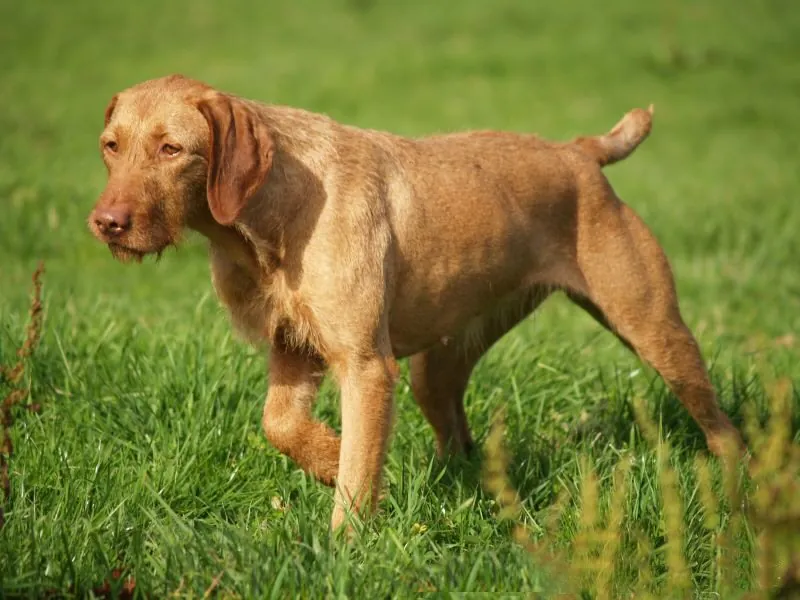
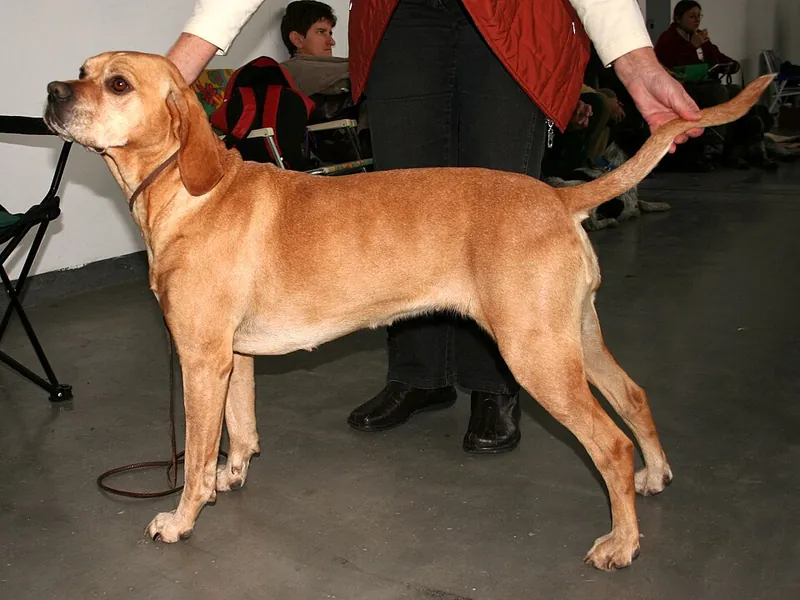
The Portuguese Pointer is a medium-sized, compact and sturdy gundog standing about 19 to 24 inches and weighing roughly 35 to 60 lb. Males are larger and more muscular than females. The body is almost square, with a broad chest, strong back and well-muscled legs suited to long days in rough terrain.
The head is broad and square, with a short, wide muzzle and a defined stop. Eyes are large, oval and brown, and the drop ears are thin and soft. The tail is traditionally of medium length.
The coat is short, dense and strong, lying close to the body, with a softer, finer texture on the head and ears. The standard allows yellow in light, normal or dark shades, and chestnut. White markings are allowed on the head, neck, chest, lower legs and tail tip. Yellow dogs are most common. The overall impression is of a solid, powerful pointer with an expressive, gentle face.
Temperament and Personality
Portuguese Pointers are known for their affection. They tend to follow their people around the house and crave physical contact, earning a reputation as velcro dogs. They are usually gentle with children and friendly with visitors.
In the field, they are keen, intense hunters with a strong pointing instinct. Without guidance, their enthusiasm can turn pushy or demanding, so consistent manners training matters. They do not cope well with long periods alone.
They are not natural guard dogs but will alert you to visitors. Their friendliness makes them poor protectors but good companions for social families.
Are Portuguese Pointers Good for First-Time Owners?
Portuguese Pointers can suit active first-time owners who are home a lot. They are affectionate, eager to please and easy to groom, which makes them more manageable than some hunting breeds.
The challenges are energy and attachment. They need one to two hours of running and mental work every day, and they do not cope well when left alone for long. Without consistent rules, their enthusiasm can turn pushy. A first-time owner who runs, hikes or wants to try field sports, and who can include the dog in daily life, can do well with the breed. Joining a gundog or sport club early gives both of you structure and support.
Can Portuguese Pointers Live in Apartments?
It is possible but challenging. Portuguese Pointers are calm and affectionate indoors once exercised, but their high energy needs make apartment life difficult without excellent access to safe running areas.
An apartment-dwelling owner would need to provide daily off-leash running in secure areas, long walks and mental work such as scent games. Without that, the dog may become restless or vocal. A house with a fenced yard is a better fit, especially if the dog will be alone for part of the day.
Are Portuguese Pointers Good with Cats?
Some are, especially if raised with a cat from puppyhood. Portuguese Pointers have a strong pointing and hunting instinct, so small animals can trigger their prey drive.
Early, calm introductions and supervision help. Many Pointers learn to respect the household cat while still chasing unfamiliar cats outdoors. Give the cat high escape routes and separate feeding areas. Adult dogs without cat experience need slower introductions, and small caged pets or poultry should be kept securely away. Calm, reward-based training around the cat pays off over time.
Exercise and Training
This is a high-energy breed. Plan on at least an hour or two of running and mental work daily, such as field work, hunt tests, canicross, agility or scent games.
Portuguese Pointers learn readily and like to please, but their intensity and attachment mean they need clear rules from puppyhood. Teach calm behavior, polite greetings and a solid recall. Positive methods suit their sensitive nature.
Grooming and Shedding
The short, dense coat needs only weekly brushing. It sheds moderately. Check the drop ears weekly and after field work.
Inspect paws and coat for grass seeds and ticks after outings, and keep nails short.
The coat comes in shades of yellow or chestnut, with or without white markings. Its short, dense texture dries quickly after field work.
Feeding and Nutrition
Portuguese Pointers are active dogs, and their food needs vary with how much they run and hunt. A working dog in season may need considerably more food than a pet with moderate exercise. Feed a complete diet in two meals a day and keep the dog lean and muscular.
Puppies should grow steadily on a diet suited to medium or large-breed growth. Keeping puppies slim supports healthy hips, which breeders are advised to screen.
As a deep-chested sporting dog, sensible bloat precautions apply: two meals a day and no hard running shortly before or after eating.
Portuguese Pointers are very attached to their people and often food-motivated, so food is useful in training. Use small treats or part of the daily ration as rewards. Puzzle feeders and scent games with food help keep the mind busy on days with less running.
| Adult weight | Less active | Typical adult | Very active |
|---|---|---|---|
| 35 lb | 780 kcal | 890 kcal | 1,110 kcal |
| 48 lb | 990 kcal | 1,130 kcal | 1,410 kcal |
| 60 lb | 1,170 kcal | 1,330 kcal | 1,670 kcal |
Estimates use the resting energy formula veterinarians work with (70 × body weight in kg0.75) and standard activity factors. Use the feeding guide on your food as a starting point and adjust to body condition. Puppies, seniors, pregnant animals and pets that need to lose weight have different needs, so ask your vet.
Health and Lifespan
The breed is generally robust. The AKC advises that breeding dogs be evaluated for hip dysplasia, and that breeders be open about seizures, early-onset cancers and autoimmune conditions in their lines. Ask for health records on both parents.
Typical lifespan is around 12 to 14 years.
Portuguese Pointer Price and Cost of Ownership
Portuguese Pointers are very rare in the US, with only a small number of breeders and occasional imports from Portugal. There is no reliable typical price range. Prices vary by breeder, region and lines, and importing a puppy adds transport and paperwork costs. Ask breeders for hip results and information on seizures, early cancers and autoimmune conditions in their lines.
Rescue dogs are rare, but breed enthusiasts sometimes help rehome adults.
Ongoing costs are moderate. Grooming is minimal. Main cost drivers include hunting gear, field training, hunt test entry fees and pet insurance for injuries in the field. Food costs depend on activity level, with working dogs eating more.
Is the Portuguese Pointer Right for You?
This breed suits active families, hunters and sporty owners who are home a lot and want a very affectionate dog. It does well with children and usually with other dogs.
It is not ideal for apartment life without daily running, for owners away all day, or for homes with small pets that might trigger its hunting instinct.
The Portuguese Pointer's attachment to people is its greatest strength, but it requires owners who can provide company, structure and exercise every day.
Portuguese Pointer Traits at a Glance
Portuguese Pointer FAQ
How big do Portuguese Pointers get?
They stand about 19 to 24 inches tall and weigh roughly 35 to 60 lb.
Are Portuguese Pointers good with kids?
Yes. They are typically gentle, affectionate and tolerant with children.
How much exercise does a Portuguese Pointer need?
A lot: at least an hour or two of vigorous activity daily, plus training or scent work.
Can Portuguese Pointers be left alone?
Not for long. They are very attached to their families and may become anxious or destructive.
How long do Portuguese Pointers live?
Typically around 12 to 14 years.
Are Portuguese Pointers easy to train?
They are eager to please and learn quickly, but their intensity requires consistent rules and manners training from puppyhood.