StabyhounThe gentle all-rounder of Friesland
The Stabyhoun is a rare, medium-size Dutch dog from Friesland that served farm families as hunter, watchdog and companion. Gentle, eager to learn and wonderful with children, it suits active families who offer daily exercise and plenty of brain work.
Why people love the Stabyhoun
- Gentle, calm and very good with children
- Versatile hunter that points and retrieves
- Moderate coat that is easy to maintain
- Adaptable, quiet house dog when exercised
- Long-lived for its size, often 13 to 15 years
Things to consider
- Rare in the US; puppies require patience and imports
- Needs an hour or more of exercise plus mental work
- Hunting instinct can override recall
- Soft-natured and shuts down with harsh training
- Dislikes long periods alone
Is this breed right for you?
10 questions · live resultHistory and Origin
The Stabyhoun developed in the forests and farmlands of Friesland in the northern Netherlands, probably from local dogs and spaniel-type hunting dogs. Farmers needed an all-rounder that could point and retrieve game, catch moles and rats, guard the farm and live with the family. The name is commonly explained as coming from the Dutch phrase for stand by me.
The breed was officially recognized in the Netherlands in 1942. It remains rare, and Dutch breed clubs run careful breeding programs to manage its small gene pool. In the US it is in the AKC Foundation Stock Service.
Size, Coat and Colors
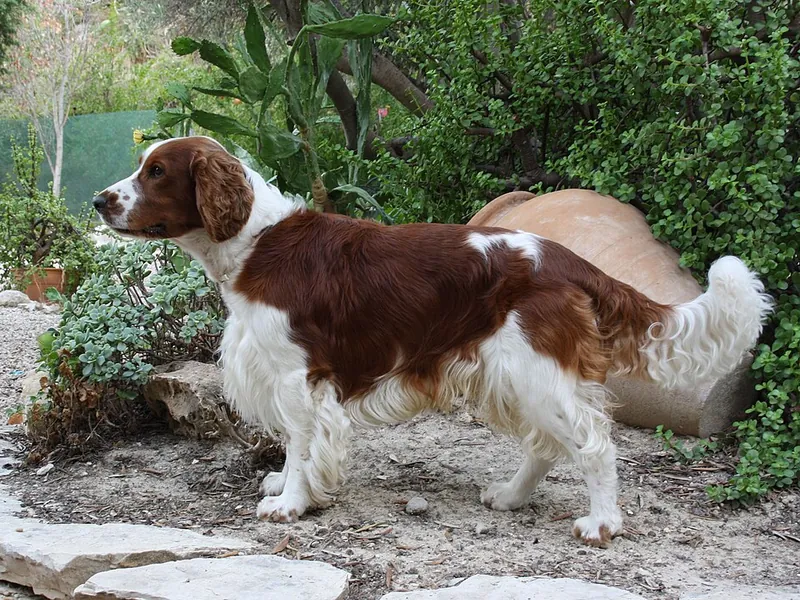
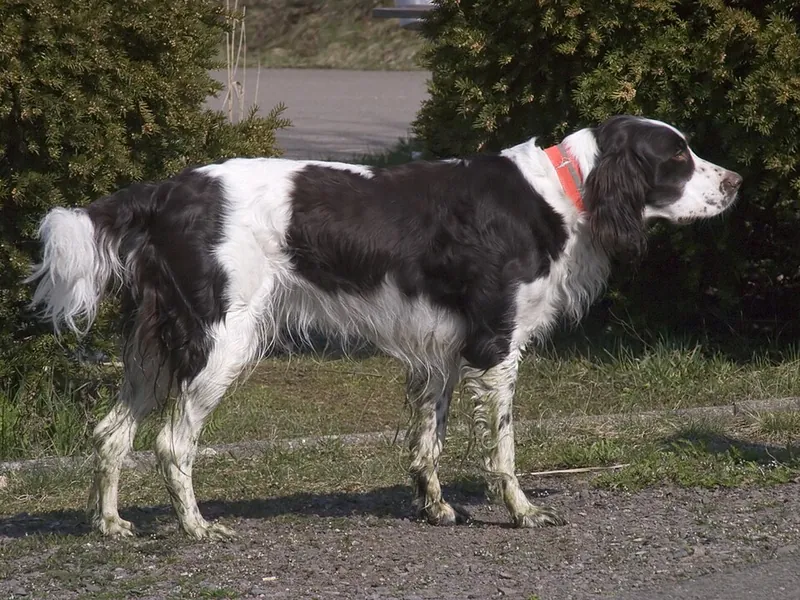
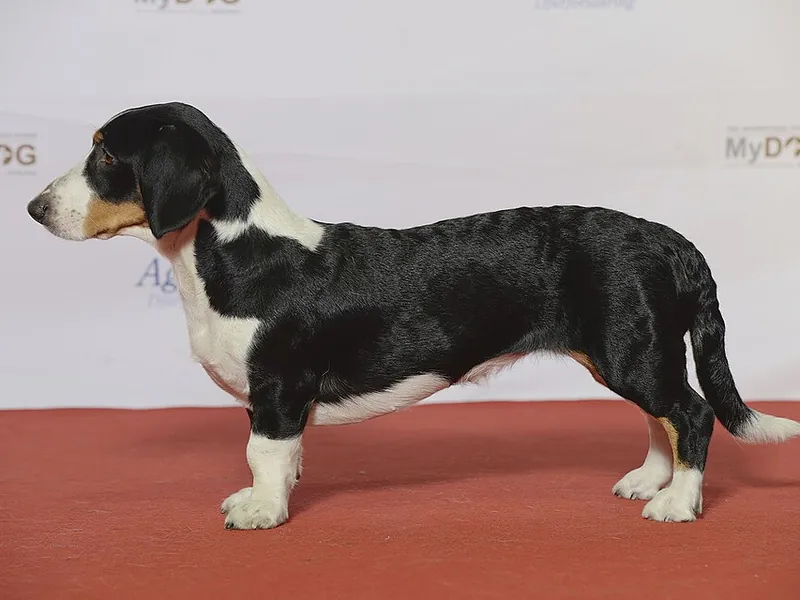
The Stabyhoun is a medium-sized, balanced gundog, slightly longer than tall, with a strong but not heavy build. Adults stand 19 to 21 inches at the shoulder and weigh about 40 to 60 lb. Males are typically around 21 inches and more substantial, while females are closer to 19 to 20 inches.
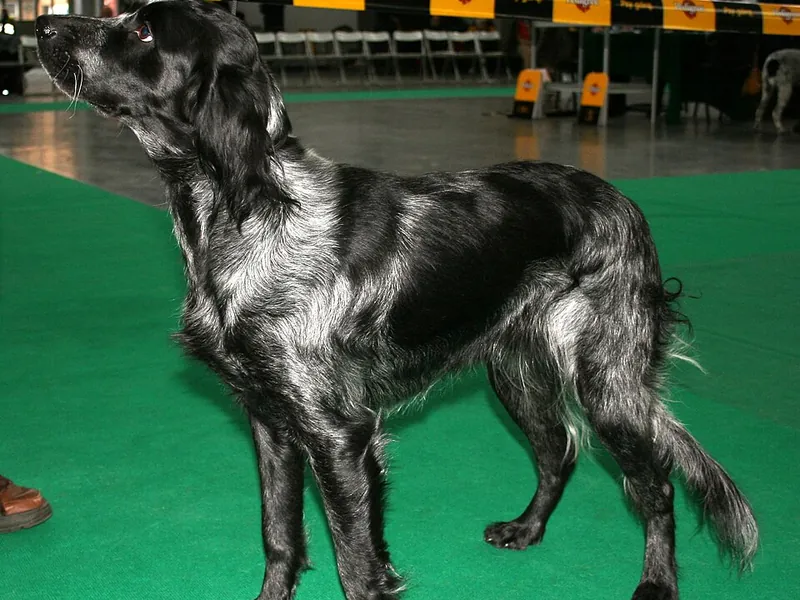
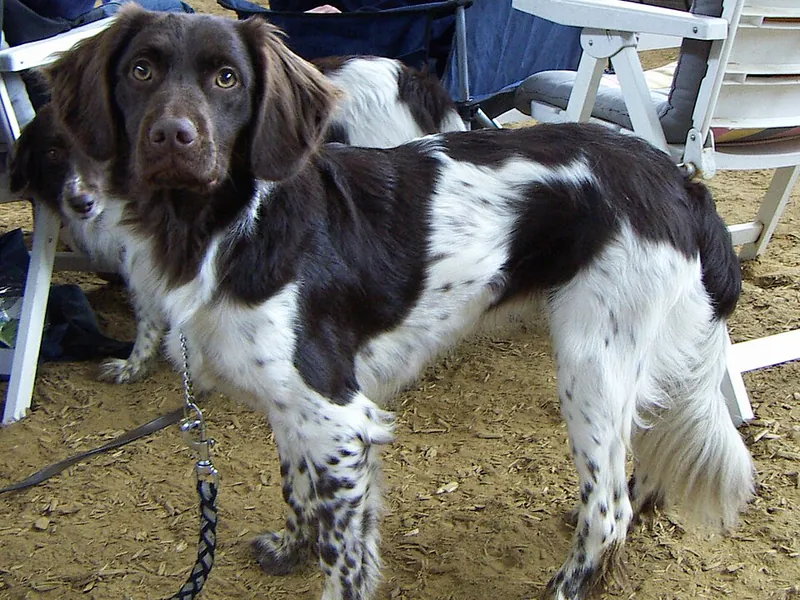
The coat is long and sleek on the body, lying close, with longer feathering on the ears, back of the legs and tail. A slight wave over the croup is acceptable, but curls are not. The ears are covered with feathering only on the upper part, giving a distinctive look.
Accepted colors are:
- Black and white
- Brown and white
- Orange and white
Ticking and roan patterns in the white are allowed and common. Black and white Stabys are the most widespread in the Netherlands, while orange and white is rarer.
The tail is long and carried low, hanging down with an upward curve at the tip, and is never docked. The overall expression is friendly and intelligent.
Temperament and Personality
Stabys are gentle, calm indoors and very good with children, making them excellent family dogs. They are friendly but may be slightly reserved with strangers and will alert you to visitors.
They are soft-natured and sensitive to harsh treatment, often shutting down under pressure. They can also be a little independent and, as hunting dogs, may take off after scent or birds if given the chance. Small pets need care.
At home Stabys are typically quiet, adaptable and affectionate. Most get along well with other dogs and can live with cats when raised together. They like company and do not enjoy being left alone for long periods, which can lead to boredom behaviors such as chewing.
Is the Stabyhoun Good for First-Time Owners?
Yes, often. Stabyhouns are gentle, eager to learn and calm at home, which makes them one of the more beginner-friendly hunting breeds.
First-time owners should still plan for:
- An hour or more of daily exercise plus training
- Patience with an occasionally independent streak
- Recall work, as the hunting drive is real
- A long search for a puppy, often through Dutch breed clubs
A beginner who enjoys outdoor life and positive training can find the Staby an excellent first dog. The biggest obstacle is usually availability, not temperament.
Is the Stabyhoun Easy to Train?
Mostly yes. Stabys are intelligent and keen to work with their owners, and they pick up obedience, retrieving and scent games readily.
Two traits shape training:
- Sensitivity: harsh tones or corrections can make them shut down, so rewards and patience are essential.
- Independence: they sometimes have their own ideas, particularly around scents and birds.
Short sessions, high-value rewards and plenty of variety work best. Many Stabys enjoy hunt tests, tracking, rally and dock diving. Start recall early and practice it regularly in safe areas.
Are Stabyhouns Good with Cats?
Usually, when raised together. Stabyhouns are generally peaceful at home, and many live with family cats without problems.
They were also bred to catch moles and rats, so small rodents and pet birds may trigger hunting behavior. Outdoor cats that run can prompt a chase, especially in young dogs.
Introduce a Staby puppy to cats calmly and early, give the cat high escape routes and supervise until both are relaxed. An adult Staby with no cat experience needs slower introductions, and some individuals may never be fully reliable with cats.
Exercise and Training
A Staby needs daily walks plus off-leash running in safe places and, above all, mental work. Retrieving, scent work, tracking, obedience and hunting tests are all good outlets. About an hour or more a day is typical.
Training goes best with positive reinforcement and patience. Stabys learn readily but may have their own ideas. Building a reliable recall early is important because of the hunting instinct.
Many Stabys love water and swimming, a good low-impact way to burn energy in warm weather.
Grooming and Shedding
The coat is medium length and sleek with feathering on the ears, legs and tail. Weekly brushing keeps it in good shape. Shedding is moderate with seasonal increases. Colors are black, brown or orange with white, often with ticking or roan.
Bathe only when needed, as the coat naturally sheds dirt once dry. Check the ears regularly.
Trim the hair between the pads and keep nails short, especially for dogs that walk mostly on soft ground.
Feeding and Nutrition
Stabyhouns are moderately active dogs that do well on a complete diet fed in measured portions. Working or very active Stabys burn more, while family dogs with an hour of exercise a day can gain weight easily, especially as they age. Aim for a visible waist and ribs you can feel under the coat.
Puppies grow into medium-sized dogs. A complete puppy food fed in measured meals supports steady growth and helps protect hips and elbows, which breeding programs screen for.
- Feed adults two meals a day.
- Avoid vigorous exercise right before and after meals.
- Use part of the daily ration for training rewards; Stabys are food-motivated.
- Swimming dogs may need extra food in summer; adjust as needed.
Because the breed has a small gene pool, ask your breeder whether any food sensitivities have been noticed in the line. Epilepsy, which is screened for in the breed, is managed by a vet; do not change diets for it without veterinary advice.
| Adult weight | Less active | Typical adult | Very active |
|---|---|---|---|
| 40 lb | 860 kcal | 980 kcal | 1,230 kcal |
| 60 lb | 1,170 kcal | 1,330 kcal | 1,670 kcal |
Estimates use the resting energy formula veterinarians work with (70 × body weight in kg0.75) and standard activity factors. Use the feeding guide on your food as a starting point and adjust to body condition. Puppies, seniors, pregnant animals and pets that need to lose weight have different needs, so ask your vet.
Health and Lifespan
Stabyhouns are relatively healthy despite a small population and often live 13 to 15 years. Breeding programs screen for epilepsy, hip and elbow dysplasia, patent ductus arteriosus (a congenital heart defect) and a neurological condition described as cerebral dysfunction.
Ask breeders about health testing, participation in the breed club's program and inbreeding levels.
Stabyhoun Price and Cost of Ownership
Stabyhouns are rare in the US. Few breeders exist, and many puppies are imported from the Netherlands, so prices vary widely and include transport and import costs. Prices vary by breeder, region and lines, and waitlists are common.
Rescue Stabys are very rare, though breed clubs sometimes help rehome adult dogs, and joining a club is the best way to hear about them.
Breed-specific ongoing costs include:
- Import costs, including travel or pet transport, if buying from Europe
- Health screening for hips, elbows, epilepsy and heart if breeding
- Insurance that covers epilepsy and joint conditions
- Training classes, hunt tests or scent work
- Breed club membership, which often helps with puppy access
Is the Stabyhoun Right for You?
A Staby is a wonderful choice for active families who want a gentle, child-friendly dog and enjoy outdoor activities and training. Finding a puppy may require patience and contact with breed clubs.
- Good match: families with children, hikers, rural or suburban homes.
- Think twice: long days alone, homes with pet rodents or birds, owners who prefer strict, harsh training methods.
Contact a national breed club early, as waiting lists for puppies are common.
Stabyhoun Traits at a Glance
Stabyhoun FAQ
Are Stabyhouns good family dogs?
Yes. They are known for being gentle, calm at home and very good with children.
How big do Stabyhouns get?
They stand about 19 to 21 inches tall and weigh roughly 40 to 60 lb.
Do Stabyhouns shed?
Yes, moderately, with seasonal increases. Weekly brushing helps.
How much exercise does a Stabyhoun need?
About an hour or more a day, plus mental tasks such as retrieving or scent work.
Are Stabyhouns rare?
Yes. The breed is rare worldwide, and breed clubs carefully manage its small gene pool.
How long do Stabyhouns live?
Typically 13 to 15 years.