Swedish VallhundSweden's cheerful, short-legged cattle herder
The Swedish Vallhund is a small, sturdy herding spitz from western Sweden, with short legs, a wolf-gray coat and a cheerful, busy mind. It is friendly, eager to learn and good with children. It suits active families who enjoy training and can live with seasonal shedding.
Why people love the Swedish Vallhund
- Compact, sturdy herding dog with a cheerful outlook
- Quick learner that shines in agility, herding and obedience
- Generally friendly with children and visitors
- Weather-resistant coat that shrugs off dirt and wet
- Healthy for its size, living 12 to 15 years
Things to consider
- Heavy seasonal shedding
- Heel nipping and herding of children or pets need redirection
- Alert barker that announces visitors
- Long back and short legs need weight control
- Rare in the US, so puppies take time to find
Is this breed right for you?
10 questions · live resultHistory and Origin
The Vallhund comes from Västergötland in southwestern Sweden, where farm dogs of this type herded cattle, caught vermin and guarded farms for centuries. It is often associated with the Viking era.
By the 1940s the breed was nearly extinct. Count Björn von Rosen and K.G. Zettersten found remaining dogs and revived it, and the Swedish Kennel Club recognized it in 1943. The AKC added it to the Herding Group in 2007.
The breed is sometimes compared with the Pembroke Welsh Corgi because of its similar shape, and the two may share ancient ancestry, though the exact link is debated. Vallhunds were valued as all-round farm dogs, driving cattle by nipping at their heels and keeping barns free of rats.
The Kennel Club in the UK recognized the breed after it was imported in the 1970s, and it now sits in the Pastoral group. Some Vallhunds are born with natural bobtails or stub tails, while others have full curled tails.
Size, Coat, Tail Types and Colors
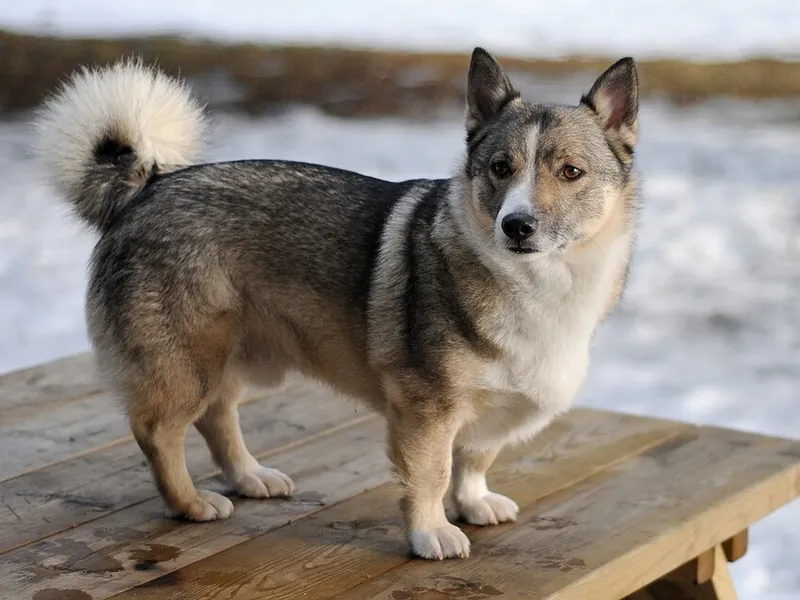
The Swedish Vallhund is a small, powerful, low-set herding dog with a body about 1.5 times as long as it is tall. Adults stand roughly 12 to 13 inches at the shoulder and weigh about 20 to 31 lb. Males sit at the upper end of the ranges, while females are slightly shorter and lighter.
The head is wedge-shaped with medium pointed, erect ears and oval eyes. The chest is deep, the legs short and strong, and the movement is effortless with good reach.
Tails vary more than in most breeds. Puppies can be born with a full tail, often curled over the back, a natural bobtail or a stub tail, and all are acceptable in the US standard.
The coat is medium short, with a harsh, close topcoat and a soft, dense undercoat, a little longer on the neck, chest and backs of the hind legs. Color is sable in shades of gray, grayish brown, grayish yellow, reddish yellow or reddish brown, with darker hairs on the back and sides. Lighter harness markings, a light mask and lighter belly and legs are typical. White should be limited to small markings.
Temperament and Personality
Vallhunds are friendly, alert and playful. They are good with children and usually sociable with people. Some herd by nipping at heels, which should be redirected.
They are usually affectionate with their family and adaptable to different households. Vallhunds are alert and will bark to announce visitors, though they are not typically excessive barkers when kept busy.
The herding instinct is real. Some try to herd children, other pets or even bicycles, and may nip at heels. Teach alternative behaviors early and give the dog legitimate jobs, such as herding balls or dog sports.
Do Swedish Vallhunds Bark a Lot?
They are vocal but not usually excessive barkers when their needs are met. Vallhunds were farm dogs that alerted to visitors and moved cattle, so they will announce arrivals, unusual sounds and exciting moments. Many also make a range of chatter, yips and "talking" noises.
Boredom raises the volume. A Vallhund without daily exercise and mental work may bark at passing people or other animals. Teaching a quiet cue early, rewarding calm behavior at windows and providing jobs such as herding balls or nose work keep barking under control. Neighbors in apartments may still notice the alert barking at doors.
Can a Swedish Vallhund Live in an Apartment?
Yes, if the owner commits to daily exercise and mental work. The Vallhund's compact size and moderate grooming make it more apartment-friendly than most herding breeds.
Practical points to plan for:
- An hour of activity daily, with walks, play and training
- Ramps or careful lifting to limit repeated stair and furniture jumping during growth
- Regular vacuuming during the heavy seasonal sheds
- Work on alert barking so neighbors are not disturbed
Apartment Vallhunds thrive when they have outlets such as agility, herding instinct classes or rally. Without them, the energy shows up as barking and nipping.
Are Swedish Vallhunds Good With Other Pets?
Usually yes. Vallhunds are generally sociable with other dogs and can live well with cats, especially when raised with them. Their prey drive is moderate, reflecting a history of ratting on farms, so rodents and small caged pets should be kept secure.
The most common issue is herding behavior: a Vallhund may circle, chase or nip at the heels of other dogs or cats. This is instinct, not hostility, but it can frustrate housemates. Teach a reliable leave-it and settle cue, give the dog legitimate herding outlets and supervise early interactions until the pets have worked out their routines.
Exercise and Training
An hour of daily activity plus mental work keeps a Vallhund content. They excel at agility, herding and obedience, and are generally easy to train.
- Daily walks, play and a short training session keep a Vallhund balanced.
- Herding, agility, rally and nose work are excellent outlets.
- Use positive reinforcement; Vallhunds learn fast and can get bored with repetition.
- Limit repeated jumping off furniture for puppies, given the long back and short legs.
- Avoid leaving it alone for many hours; boredom leads to barking.
Grooming and Shedding
The double coat sheds heavily, especially seasonally. Weekly brushing, daily during sheds.
The medium-length, harsh topcoat and soft, dense undercoat repel dirt and water well. During seasonal coat blows, an undercoat rake helps manage the volume of hair. Bathe occasionally and trim nails regularly.
Feeding and Nutrition
The Vallhund's long back and short legs make body weight especially important. Extra pounds increase strain on the spine and joints, so keep the dog lean, with a defined waist when viewed from above and ribs easy to feel under the coat.
Vallhunds are typically food motivated and efficient eaters. Measure meals, weigh the dog regularly and adjust portions when activity drops, for example in winter or after neutering. Many owners are surprised how quickly a busy Vallhund gains weight once its routine changes.
- Feed puppies three to four meals a day and adults two.
- Use part of the daily food for training; Vallhunds learn fast and enjoy working for rewards.
- Food puzzles and snuffle mats provide the mental work this herding breed craves.
- Choose a diet appropriate to a medium-energy, medium-sized dog rather than a high-performance formula unless the dog is truly working.
A healthy coat depends on a complete, balanced diet; unusually heavy shedding outside the normal seasonal blows can be worth a vet check.
| Adult weight | Less active | Typical adult | Very active |
|---|---|---|---|
| 20 lb | 510 kcal | 590 kcal | 730 kcal |
| 31 lb | 710 kcal | 810 kcal | 1,020 kcal |
Estimates use the resting energy formula veterinarians work with (70 × body weight in kg0.75) and standard activity factors. Use the feeding guide on your food as a starting point and adjust to body condition. Puppies, seniors, pregnant animals and pets that need to lose weight have different needs, so ask your vet.
Health and Lifespan
Vallhunds typically live 12 to 15 years. Known concerns include a breed-specific retinopathy and hip dysplasia. The short legs and long back mean weight control matters.
- Swedish Vallhund retinopathy: a breed-specific eye disease; a DNA test exists and eye checks are recommended.
- Hip dysplasia: screening of breeding dogs is advised.
Keep the dog lean to protect its back and joints, and choose a breeder who screens eyes and hips.
Swedish Vallhund Price and Cost of Ownership
Typical breeder price in the US$1,500 to $2,500
A Swedish Vallhund puppy from a reputable US breeder typically costs about $1,500 to $2,500. Prices vary by breeder, region and lines. The breed is rare in the US, with relatively few litters a year, so expect to contact the national breed club and join a waiting list. Ask for hip evaluations, eye exams and DNA results for Swedish Vallhund retinopathy.
Rescue Vallhunds are uncommon, but breed club rescue networks occasionally place adult dogs.
Breed-specific ongoing costs include:
- Undercoat rakes or professional deshedding during coat blows
- Dog sport or herding instinct classes
- Ramps or steps to reduce jumping strain
- Annual eye checks where recommended
- Insurance covering hips and back problems
Is the Swedish Vallhund Right for You?
The Vallhund suits active families who want a small, trainable herding dog. It is not ideal for those away all day or bothered by shedding.
The Vallhund is a good choice for families, first-time owners willing to train, and dog sport enthusiasts. Its compact size makes it manageable in smaller homes if it gets daily exercise.
It is less suited to owners who dislike dog hair or want a dog that can be left alone for long hours. Talk to breeders about eye testing and the temperament of both parents.
Swedish Vallhund Traits at a Glance
Swedish Vallhund FAQ
How big do Swedish Vallhunds get?
They stand about 12 to 13 inches tall and weigh roughly 20 to 31 pounds.
Are Swedish Vallhunds good family dogs?
Yes. They are friendly and good with children.
Do Swedish Vallhunds shed?
Yes, heavily, especially seasonally.
How long do Swedish Vallhunds live?
About 12 to 15 years.
Are Swedish Vallhunds related to Corgis?
They look similar and may share distant ancestry, but they are separate breeds with different origins.
Are Swedish Vallhunds easy to train?
Yes. They learn quickly and enjoy working with their owners.