Blue Picardy SpanielGentle blue gundog from northern France
The Blue Picardy Spaniel is a gentle, blue-ticked pointing dog from northern France, built for hunting woodcock and snipe in marshes. Calm, affectionate and great with children, it suits active families who can give it daily exercise.

Why people love the Blue Picardy Spaniel
- Calm, gentle and excellent with children
- Easy to train with gentle, positive methods
- Loves water and retrieving
- Quiet and relaxed indoors when exercised
- Sociable with other dogs
Things to consider
- Needs at least an hour of exercise daily
- Sensitive; harsh handling backfires
- Feathering collects burrs and seeds
- Very rare in the US with few breeders
- Strong hunting instincts around birds
Is this breed right for you?
10 questions · live resultHistory and Origin
The breed was developed in the early 20th century in Picardy, near the Somme Bay in northern France. Local hunters crossed the Picardy Spaniel with English setters, especially blue belton types, producing a dog suited to wetlands and marshes where woodcock and snipe were plentiful.
The Blue Picardy was recognized in France in 1938. It is still rare outside France, with a small following in Canada and the United States. The FCI lists it in Group 7, and the AKC records it in its Foundation Stock Service.
The Picardy Spaniel, the Blue Picardy's ancestor, is one of the oldest French spaniel types. The blue variety was developed by crossing these dogs with English setters, especially those with blue belton coloring, which gave the breed its distinctive speckled gray-blue coat.
Size, Coat and Color
The Blue Picardy Spaniel is a medium-sized, well-built pointing dog standing about 22 to 24 inches at the shoulder and weighing roughly 44 to 55 lb. Males are slightly taller and heavier than females, with a broader head.
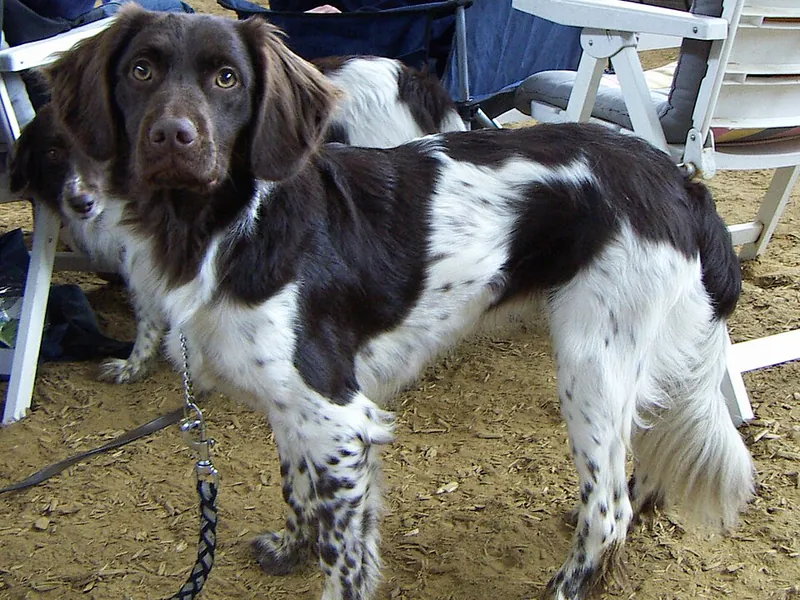
The body is strong and slightly longer than tall, with a deep chest and solid bone. The head is oval with a moderately long muzzle and dark eyes. Ears are set low, fairly long and framed with silky, wavy hair.
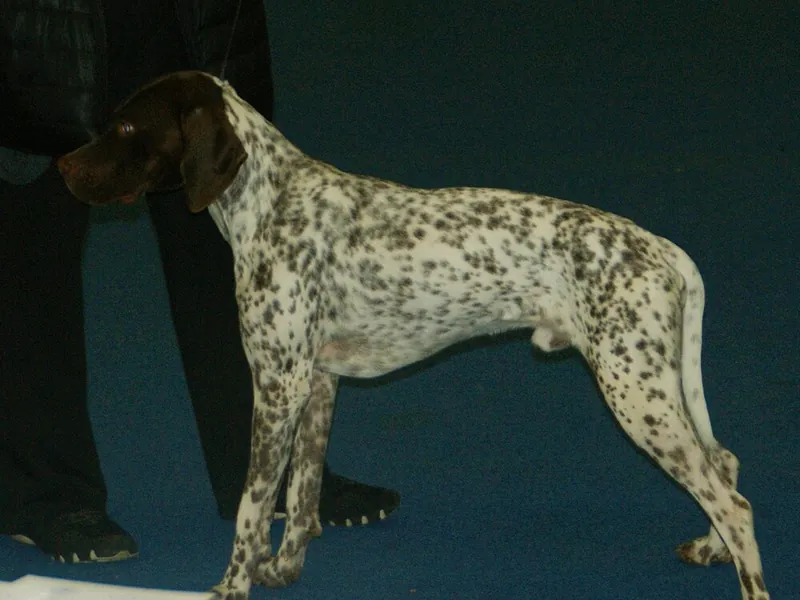
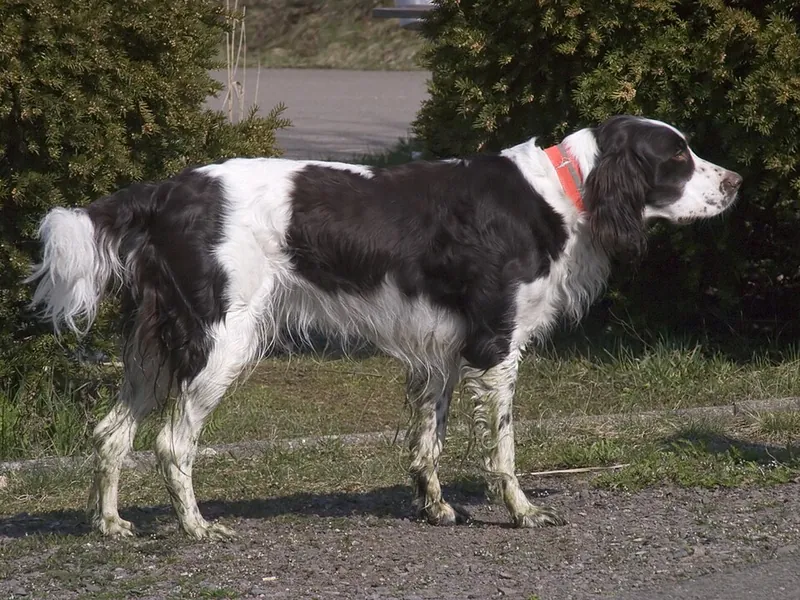
The coat is flat or slightly wavy and of medium length, with feathering on the ears, legs and tail. The color is the breed's signature:
- Blue-gray roan: black and gray hairs mixed to create a bluish speckled effect
- Black patches on the body and head
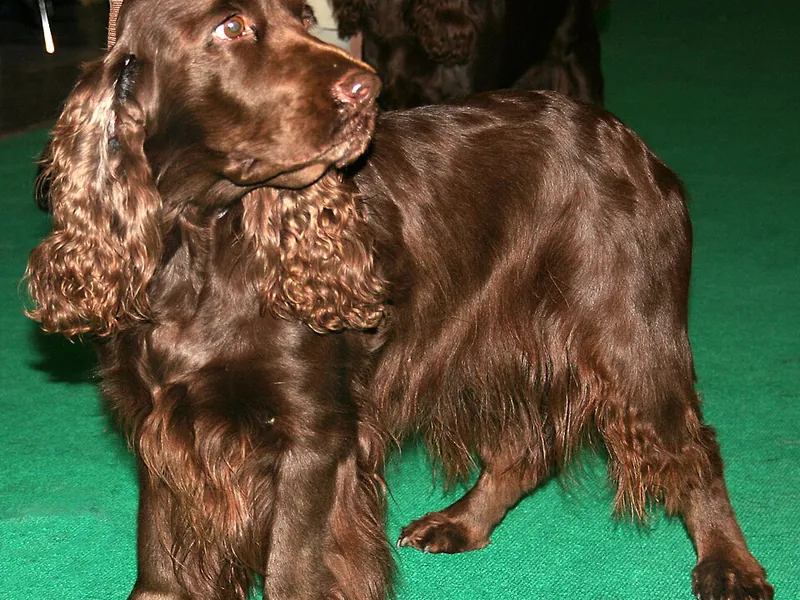
Unlike the related Picardy Spaniel, which is brown and white, the Blue Picardy never shows brown in its coat. The overall look reflects its English setter influence: elegant, athletic and built for marshland hunting.
Temperament and Personality
Blue Picardys are known for being calm, gentle and sociable. The FCI standard describes them as never aggressive, and they are often excellent with children and other dogs.
They are eager to please and sensitive, and they form close bonds with their families. In the field, they are keen hunters with good noses.
Blue Picardys tend to be quiet indoors and relaxed when exercised well. They enjoy being near their people and often follow family members from room to room.
Are Blue Picardy Spaniels Good with Cats?
Many Blue Picardy Spaniels live peacefully with cats, particularly when raised with them, but their bird-hunting instinct means introductions need care.
The breed is gentle and sociable, and the FCI standard stresses its gentle, even nature. A puppy that grows up with a cat usually accepts it. Adults with no cat experience may show interest in chasing, so introduce slowly and supervise. Pet birds are a different matter: as a dog bred to point game birds, a Blue Picardy should not be left unsupervised with them.
Can a Blue Picardy Spaniel Live in an Apartment?
A Blue Picardy Spaniel can live in an apartment if it gets plenty of daily exercise, but a house with a yard is easier.
Indoors, the breed is calm and quiet when well exercised. The challenge is its need for at least an hour of activity a day, ideally including off-leash running and swimming. Access to parks, fields or lakes makes apartment life much more manageable. Without enough exercise, a Blue Picardy may become restless. Rinse and dry the coat after swims to keep odors under control in smaller spaces.
Is the Blue Picardy Spaniel a Good Pet for Non-Hunters?
Yes, the Blue Picardy Spaniel can be a good pet for non-hunters who provide enough exercise and outlets for its nose.
Its calm temperament and gentleness with children make it suitable for family life. Non-hunting owners can replace field work with long walks, swimming, scent games, retrieving and dog sports such as hunt tests or tracking. The key is consistency: a bored Blue Picardy may start hunting on its own. Breeders often ask non-hunting buyers how they plan to meet the dog's needs before placing a puppy.
Exercise and Training
Plan on at least an hour of exercise daily, including off-leash running in safe areas and opportunities to swim. Field work, hunt tests, scent work and long hikes all suit it.
The breed is easy to train with gentle, positive methods. Its sensitive nature responds poorly to harsh handling.
Their love of water reflects their marshland origins. Many enjoy retrieving from water, and swimming is excellent low-impact exercise for them.
Grooming and Shedding
The flat or slightly wavy coat of medium length needs weekly brushing to remove debris and loose hair, with extra attention to the feathering on the ears, legs and tail.
Shedding is moderate. Check and clean ears regularly, especially after swimming.
The coat is speckled black and gray, giving a bluish appearance, often with black patches. The feathering can pick up burrs and seeds, so check carefully after field work.
Feeding and Nutrition
Blue Picardy Spaniels are active hunting dogs whose energy needs vary with workload. Dogs working in marshes during hunting season burn far more energy than family dogs on daily walks, so adjust portions accordingly. Check body condition regularly by feeling for the ribs under the feathered coat.
Puppies should eat a complete puppy food suited to medium to large breeds, with steady rather than rapid growth.
- Feed two meals a day for adults, three or four for young puppies.
- The breed is deep-chested, so avoid strenuous exercise and swimming right before and after meals to reduce bloat risk.
- Carry water on long outings, especially in warm weather.
- Use food rewards for training and count them in the daily ration.
Reduce portions in the off-season or as the dog ages to prevent weight gain.
| Adult weight | Less active | Typical adult | Very active |
|---|---|---|---|
| 44 lb | 930 kcal | 1,060 kcal | 1,320 kcal |
| 55 lb | 1,090 kcal | 1,250 kcal | 1,560 kcal |
Estimates use the resting energy formula veterinarians work with (70 × body weight in kg0.75) and standard activity factors. Use the feeding guide on your food as a starting point and adjust to body condition. Puppies, seniors, pregnant animals and pets that need to lose weight have different needs, so ask your vet.
Health and Lifespan
No breed-specific health issues are documented in the sources we checked. As with most medium-sized gundogs, screening for hip dysplasia and eye conditions is sensible. Ask breeders for health results on both parents.
Typical lifespan is about 11 to 12 years.
Blue Picardy Spaniel Price and Cost of Ownership
Blue Picardy Spaniels are very rare in the US, with most dogs found in France and a smaller population in Canada. Puppies are hard to find in the US, and many owners import from Canada or Europe, which adds travel and paperwork costs. Prices vary by breeder, region and lines.
Rescue placements are extremely rare.
Breed-specific ongoing costs include:
- Hunting gear, training dummies and hunt test fees for working dogs.
- Tick and flea prevention for dogs active in fields and marshes.
- Ear cleaning supplies, especially after swimming.
- Pet insurance for hip dysplasia and injuries.
Food costs are moderate for a dog of 44 to 55 lb, rising with activity.
Is the Blue Picardy Spaniel Right for You?
The Blue Picardy is ideal for hunters and active families looking for a gentle, affectionate companion that is good with children and other pets.
It is less suited to apartment life without daily exercise or to owners who are away most of the day.
Their calm, gentle nature makes them suitable for first-time owners who are active and willing to learn about gundog needs. They do best when included in family activities.
Blue Picardy Spaniel Traits at a Glance
Blue Picardy Spaniel FAQ
How big do Blue Picardy Spaniels get?
They stand about 22 to 24 inches tall and weigh roughly 44 to 55 lb.
Are Blue Picardy Spaniels good family dogs?
Yes. They are gentle, calm and usually excellent with children.
Do Blue Picardy Spaniels shed?
Yes, moderately. Weekly brushing keeps their coat in good condition.
Are Blue Picardy Spaniels easy to train?
Generally yes. They are eager to please and respond well to gentle training.
How long do Blue Picardy Spaniels live?
Typically about 11 to 12 years.
How much exercise does a Blue Picardy Spaniel need?
At least an hour a day, ideally with off-leash running in safe areas and swimming.