Field SpanielBritain's rare, gentle spaniel
The Field Spaniel is a sturdy, medium-sized gundog with a docile, affectionate temperament and a glossy coat, usually black or liver. Rare but rewarding, it suits active families who want a loving companion with real field ability.
Why people love the Field Spaniel
- Sweet, gentle and usually excellent with children
- Steadier and less frantic than many spaniels
- Eager to please and responds well to kind training
- Versatile in hunting tests, tracking, rally and obedience
- Moderate size suits many family homes
Things to consider
- Needs well over an hour of exercise daily
- Rare, so puppies can mean long waiting lists
- Sensitive and shuts down with harsh handling
- Long ears are prone to infections
- Feathering carries mud and burrs indoors
Is this breed right for you?
10 questions · live resultHistory and Origin
Field Spaniels were developed in England in the 19th century from the same stock as the Cocker and Sussex Spaniels; at first, size alone separated cockers from fields. Show fashion in the late 1800s pushed the breed toward an exaggerated, very long and low body, which hurt its usefulness and popularity.
In the early 20th century breeders worked to restore a balanced, functional dog, using English Springer and Cocker Spaniels. The breed nearly vanished after World War II and was rebuilt from a small number of dogs. The Kennel Club lists it as a vulnerable native breed, and it remains rare in the United States as well.
Size, Colors and Coat
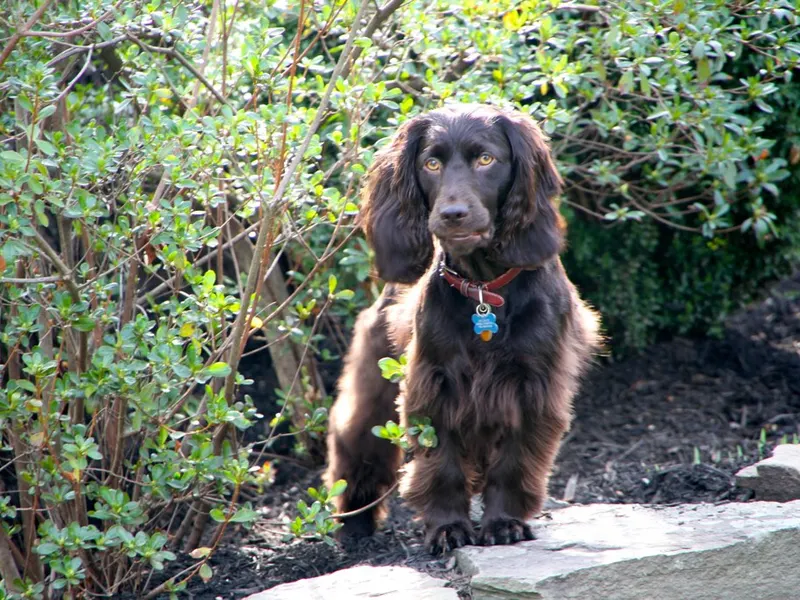
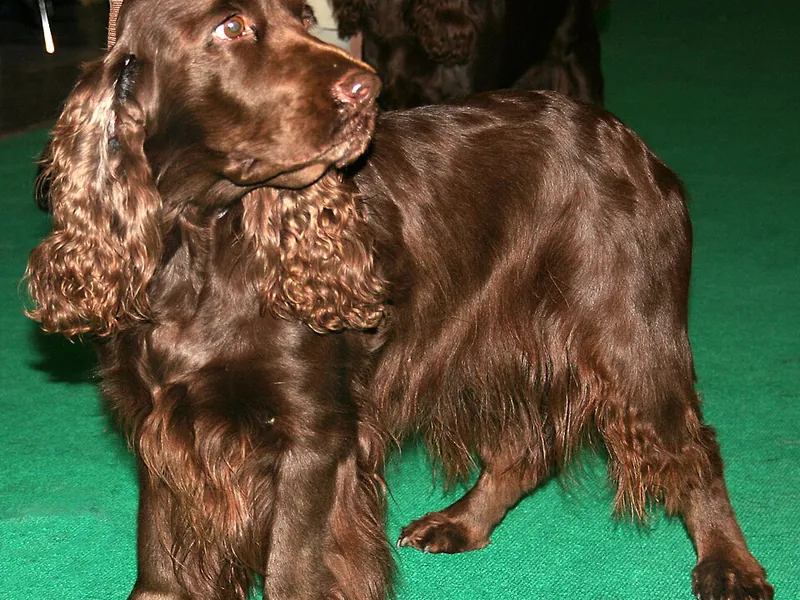
The Field Spaniel is a well-balanced, somewhat longer-than-tall spaniel with a noble, chiseled head, long low-set ears and a grave, gentle expression. It is solidly built and moderately heavy in bone, designed for endurance in rough cover rather than speed. Adults stand about 17 to 18 inches and weigh roughly 40 to 55 lb. Under the AKC standard males measure about 18 inches and females about 17 inches, and males have a slightly bolder head.
The single coat is flat or slightly wavy, dense and water-repellent, with moderate feathering on the ears, chest, belly and backs of the legs. It should never be curly or excessively long.
The AKC accepts solid black, liver and golden liver, each with or without tan points, as well as roan and ticked patterns. A small amount of white on the chest or throat is allowed on solid-colored dogs. Most pet Field Spaniels are black or liver.
Temperament and Personality
Field Spaniels are sweet, gentle and very attached to their families. They are generally excellent with children and get along with other dogs. Some are reserved with strangers at first and can be sensitive, so a calm approach brings out their best.
They retain a genuine hunting drive and love to follow scent. Many are happiest when they have both a job outdoors and a sofa to share indoors.
Field Spaniels are usually less frantic than some spaniel breeds. Many have a thoughtful, steady way of working and settle well at home once exercised. Their quiet, sensitive side means they respond best to praise and patience.
Are Field Spaniels Good for First-Time Owners?
Yes, Field Spaniels are a good choice for many first-time owners, provided they are active. The breed is gentle, eager to please and generally easier to live with than more intense sporting dogs, and it responds well to praise and food rewards.
Beginners should know what they are signing up for: well over an hour of daily exercise, regular ear checks, weekly brushing and a sensitive dog that does poorly with harsh corrections. Field Spaniels can also be reserved with strangers at first, so steady socialization helps. Because the breed is rare, first-time buyers should contact the breed club early and expect to wait for a puppy.
What Is the Difference Between a Field Spaniel and a Cocker Spaniel?
The two breeds share early ancestry, and in the 1800s they were separated mainly by weight, but today they are clearly different. The Field Spaniel is larger, at about 17 to 18 inches and 40 to 55 lb, while American and English Cockers are smaller and lighter.
Field Spaniels are longer in the body, with a flatter coat and less profuse feathering, and their colors are mainly solid black or liver. Cockers come in a wider range of colors and, especially the American Cocker, carry a much heavier coat. In temperament, Field Spaniels are often calmer and more thoughtful. They are also far rarer than either Cocker breed.
Can Field Spaniels Be Left Alone?
Only for moderate periods. Field Spaniels are very attached to their families, and long days alone often lead to barking, chewing or sadness. A well-exercised adult can usually manage a few hours, but a full workday every day is too much for most.
Build alone time gradually from puppyhood, starting with short absences and increasing slowly. A long walk or a retrieving session before you leave, a stuffed food toy and a quiet resting space help the dog settle. If you work away from home, a midday walk, a dog walker or a family member at home for part of the day makes a big difference.
Exercise and Training
Field Spaniels need plenty of exercise; The Kennel Club suggests more than two hours a day for this breed. Long walks, retrieving, swimming and scent work all suit them, and they do well in hunting tests, tracking, rally and obedience.
They are eager to please and quick to learn with gentle, reward-based training. Harshness makes them shut down. Being alone for long periods does not suit them, and boredom can lead to barking or chewing.
Grooming and Shedding
The flat or slightly wavy single coat with feathering on the ears, chest, belly and legs needs brushing once or twice a week. Trim around the ears and feet for tidiness. Check the long ears weekly for wax and moisture, especially after swimming. Shedding is moderate.
The coat color is most often black or liver, sometimes roan or with tan points. Field Spaniels are not hypoallergenic, and wet feathering can carry mud into the house, so a towel by the door is handy.
Feeding and Nutrition
Field Spaniels love food and can gain weight easily, which puts extra strain on their hips and elbows, both of which are screened in the breed. Their feathering hides the outline, so check by feel: the ribs should be easy to find and there should be a visible tuck at the waist when the coat is wet.
Hypothyroidism has been reported in the breed. If your dog gains weight without eating more, or seems unusually tired, ask your vet to test thyroid function before reducing food drastically.
Puppies do well on three meals a day until about six months, then two meals. A complete food for medium-sized breed puppies supports steady, not rapid, growth. Working and very active dogs may need larger portions during hunting season and less in quieter months.
Long ears often dip into food and water bowls. A narrow, deep bowl or a snood keeps them cleaner and drier, which helps prevent ear infections. Use small training treats and count them in the daily ration.
| Adult weight | Less active | Typical adult | Very active |
|---|---|---|---|
| 40 lb | 860 kcal | 980 kcal | 1,230 kcal |
| 55 lb | 1,090 kcal | 1,250 kcal | 1,560 kcal |
Estimates use the resting energy formula veterinarians work with (70 × body weight in kg0.75) and standard activity factors. Use the feeding guide on your food as a starting point and adjust to body condition. Puppies, seniors, pregnant animals and pets that need to lose weight have different needs, so ask your vet.
Health and Lifespan
Field Spaniels typically live 12 to 13 years. The Kennel Club and breed clubs recommend hip and elbow dysplasia screening and eye examinations for breeding dogs. Ear infections can occur with the pendulous ears. With a small population, choose a breeder who health-tests and manages genetic diversity carefully.
Keep an eye on weight, as Field Spaniels enjoy food and extra pounds strain the joints. Hypothyroidism has also been reported in the breed, so ask your vet to check thyroid function if your dog gains weight or becomes lethargic for no clear reason.
Field Spaniel Price and Cost of Ownership
Field Spaniels are rare in the US, with a small number of litters each year, so published price ranges are not reliable enough to quote. Prices vary by breeder, region and lines, and most reputable breeders work through the breed club and keep waiting lists. Expect breeders to have hip and elbow scores and eye examinations for both parents. Adult Field Spaniels occasionally need new homes through breed rescue.
Ongoing costs are moderate for a medium-sized dog. Grooming can be done at home with weekly brushing and tidying, though some owners book a professional trim of the ears, feet and feathering every couple of months.
Breed-specific cost drivers include ear cleaning supplies and treatment of ear infections, thyroid testing and medication if needed, and activities such as hunting tests or tracking classes that meet the breed's exercise needs.
Is the Field Spaniel Right for You?
A Field Spaniel is a good fit if you:
- Want a gentle, family-friendly dog of moderate size
- Enjoy long walks and outdoor activities
- Have someone at home for much of the day
Be prepared to wait for a puppy, as litters are few. Not ideal for owners who are away all day.
Field Spaniel Traits at a Glance
Field Spaniel FAQ
Are Field Spaniels good with kids?
Yes. They are known for gentle, affectionate temperaments and usually do very well with children.
How big do Field Spaniels get?
They stand about 17 to 18 inches tall and weigh roughly 40 to 55 lb.
How much exercise does a Field Spaniel need?
A lot. Plan for well over an hour daily, with The Kennel Club suggesting more than two hours.
Do Field Spaniels shed?
Moderately. Weekly brushing keeps the coat and feathering in good condition.
Why is the Field Spaniel so rare?
Show exaggerations in the 1800s and losses after World War II left only a small population, which is still recovering.
Are Field Spaniels hypoallergenic?
No. They have a moderate-shedding coat and are not suitable for people with dog allergies.