BrittanyAn eager, high-energy French bird dog
The Brittany is a compact, athletic pointing dog from France, prized by bird hunters for its nose and stamina. Friendly, sensitive and eager to please, it makes a loving family dog for people who can give it serious daily exercise.
Why people love the Brittany
- Manageable medium size for an athletic sporting dog
- Learns fast and wants to work with people
- Friendly with children and visitors
- Excellent hiking, running and bird-hunting partner
- Coat needs only weekly brushing
Things to consider
- Needs one to two hours of activity daily
- Strong bird drive tests recall
- Sensitive to harsh handling
- Can develop separation stress when left alone
- Not suited to sedentary or apartment lifestyles
Is this breed right for you?
10 questions · live resultHistory and Origin
The breed developed in Brittany, in northwest France, where farmers and hunters needed a versatile, close-working gun dog. In the 19th century, local spaniel-type dogs were likely crossed with English setters and pointers, adding pointing instinct to a compact frame.
The breed was officially recognized in France in the early 1900s. The AKC registered it in 1934 as the Brittany Spaniel and dropped the word Spaniel in 1982, since the breed points like a setter rather than flushing like a spaniel. The Kennel Club lists it in the Gundog Group.
Size, Colors and Coat
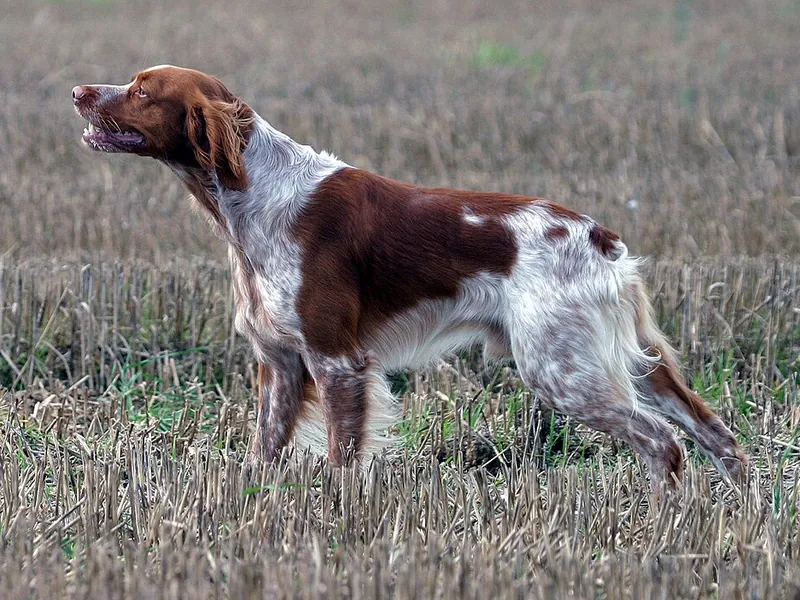
The Brittany is a compact, leggy pointing dog standing 19 to 20 inches at the shoulder and weighing 31 to 40 lb. Its body is roughly square, as long as it is tall, giving it a quick, springy gait. Males and females are close in size, with males slightly heavier and broader in the head.
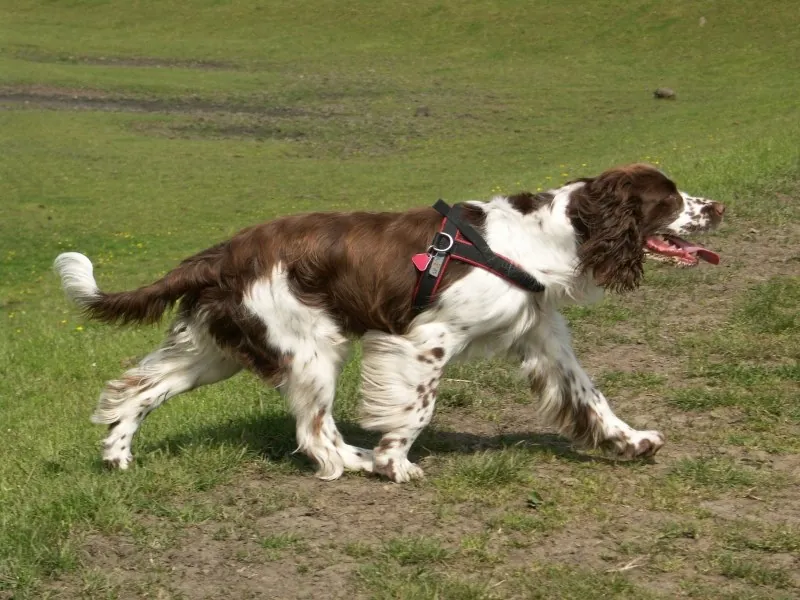
The coat is dense, flat or wavy, never curly, with modest feathering on the legs and belly. Accepted colors differ by registry:
- AKC: orange and white or liver and white, in clear or roan patterns, plus tricolor (liver and white with orange markings). Black is a disqualification.
- FCI: the same colors plus black and white, black roan and black tricolor.
This difference is why some breeders in the US market French Brittanys, which follow the French standard and tend to be slightly smaller.
Some puppies are born with a natural bob tail; otherwise tails are docked to about 4 inches in the US.
Temperament and Personality
Brittanys are happy, alert and affectionate, with a strong desire to work with people. They are usually friendly with strangers and good with children, making them popular family dogs in active households.
They are also sensitive: harsh corrections can make them anxious or shut down. Their bird drive is strong, so small pets like birds or rabbits are at risk, and they may chase wildlife if not trained. Many dislike being left alone and can develop separation issues.
A Brittany at work quarters a field quickly, holds a point when it finds birds and usually stays within range of its handler. That cooperative style makes it popular with hunters on foot, and it also translates into a dog that wants to know where its family is at all times.
Is the Brittany Good for First-Time Owners?
A Brittany can be a good first dog for an active owner, but it is a lot of dog in a medium-sized package.
Beginners benefit from its eagerness to please and quick learning. The challenges are energy and drive: a young Brittany needs long daily runs and becomes restless and mischievous without them. Recall is also hard work, since birds will tempt it away. First-time owners who hike, run or want to try hunt tests often love the breed. Those hoping for a calm house dog after a short walk would find another breed easier.
Are Brittanys Easy to Train?
Yes, Brittanys are generally easy to train because they are bright, food-motivated and bred to work closely with a handler.
They pick up basic cues quickly and excel at obedience, agility and hunt tests. Two things matter most. First, keep training positive and upbeat; Brittanys are soft and can become anxious with harsh corrections. Second, work on recall and impulse control constantly, using a long line in open areas. The breed's natural pointing instinct can be shaped into a reliable stop, which is useful even for pet dogs that never hunt.
Are Brittanys Good with Cats?
Many Brittanys live peacefully with cats, especially when raised with them from puppyhood.
The breed's prey drive is focused mainly on birds, and most Brittanys learn to treat the family cat as part of the household. Adult dogs with no cat experience may chase at first, so introduce them gradually with the dog leashed and the cat able to escape to high places. Reward calm behavior around the cat. Pet birds, rabbits and other small animals are a bigger risk and should be kept well out of reach.
Exercise and Training
This is one of the more energetic sporting breeds. Plan on at least one to two hours of activity daily, including off-leash running in safe areas, fetch, hiking or field work. Hunt tests, agility and canicross are great outlets.
- Train recall early and practice it constantly around birds and distractions.
- Use positive, upbeat methods; Brittanys learn fast with praise and food.
- Build alone time gradually to prevent separation stress.
Grooming and Shedding
The coat is flat or wavy, of medium length, with light feathering on legs and belly. Colors include orange and white and liver and white, sometimes roan or tricolor. Brush weekly and check for burrs and seeds after field work.
Shedding is moderate. Clean the drop ears after swimming or bathing to prevent infections. Some Brittanys are born with a naturally short tail.
Feeding and Nutrition
Brittanys are lean, athletic dogs, and they should stay that way. A fit Brittany has an obvious waist and ribs that are easy to feel. Extra weight strains the hips, which are the breed's main orthopedic concern.
Energy needs vary a great deal. A dog that runs miles in the field during hunting season may need noticeably more food than in the off-season, while a family pet with moderate exercise needs less than the bag suggests. Adjust portions monthly based on body condition.
- Feed puppies three or four meals a day and adults two.
- Give the main meal after exercise and allow time to rest before vigorous activity.
- On long hunting days, small snacks can help keep energy steady.
- Use part of the daily ration for training rewards.
Hypothyroidism occurs in the breed and can cause weight gain or a dull coat. If your Brittany puts on weight without a change in food or activity, ask your vet to check thyroid function.
| Adult weight | Less active | Typical adult | Very active |
|---|---|---|---|
| 31 lb | 710 kcal | 810 kcal | 1,020 kcal |
| 40 lb | 860 kcal | 980 kcal | 1,230 kcal |
Estimates use the resting energy formula veterinarians work with (70 × body weight in kg0.75) and standard activity factors. Use the feeding guide on your food as a starting point and adjust to body condition. Puppies, seniors, pregnant animals and pets that need to lose weight have different needs, so ask your vet.
Health and Lifespan
Brittanys typically live 12 to 14 years. Conditions reported in the breed include hip dysplasia, epilepsy, hypothyroidism and cataracts. Ear infections can occur if ears stay damp.
Look for breeders who screen hips and eyes, and ask about any family history of seizures. Keep the dog lean and fit to support joint health.
Brittany Price and Cost of Ownership
Typical breeder price in the US$1,000 to $2,000
A Brittany puppy from a reputable US breeder typically costs about $1,000 to $2,000. Prices vary by breeder, region and lines, and puppies from field-trial champions or French Brittany imports may cost more. Brittany rescue groups regularly rehome adults, including retired hunting dogs.
Breed-specific cost drivers include:
- Hip and eye screening of the parents, reflected in puppy prices
- Training classes, hunt tests or gundog training
- GPS or tracking collars for dogs that run off leash in the field
- Vet care for field injuries such as cuts, torn nails and grass seeds
- Pet insurance that covers epilepsy and joint disease
Grooming costs are low, since the coat needs brushing rather than professional trims.
Is the Brittany Right for You?
At 31 to 40 lb and 19 to 20 inches, the Brittany is a manageable size for active families, hunters and runners. It does best with a yard and access to open spaces.
It is not well suited to apartment life, sedentary owners or households where it would be alone most of the day. Its intense drive means boredom quickly becomes trouble.
Brittanys from field lines tend to be more intense than those from show lines, so ask breeders about the energy level of their dogs. Either way, a Brittany is happiest when it can run, sniff and work with you most days.
Brittany Traits at a Glance
Brittany FAQ
Are Brittanys good family dogs?
Yes, for active families. They are affectionate, friendly with children and eager to please.
Is a Brittany a spaniel?
It was called the Brittany Spaniel in the US until 1982, but it works as a pointing dog, so the AKC now uses simply Brittany.
How much exercise does a Brittany need?
At least one to two hours of vigorous exercise a day, with running and mental work.
Do Brittanys shed?
They shed moderately. Weekly brushing keeps the coat tidy.
How big do Brittanys get?
They stand about 19 to 20 inches tall and weigh roughly 31 to 40 lb.
How long do Brittanys live?
Most live around 12 to 14 years.