PointerClassic English bird dog
The Pointer is a lean, athletic gundog famous for freezing in a dramatic point when it scents birds. Friendly and even-tempered, it needs huge amounts of running and suits active, outdoorsy owners.
Why people love the Pointer
- Friendly, gentle and even-tempered
- Usually gets along well with other dogs
- Calm indoors when properly exercised
- Short coat that is very easy to groom
- Superb athlete for running, hunting and field trials
Things to consider
- Needs at least two hours of vigorous daily exercise
- Strong hunting drive and wide-ranging off leash
- Thin coat gives little protection from cold
- Deep chest brings bloat risk
- Restless and destructive when under-exercised
Is this breed right for you?
10 questions · live resultHistory and Origin
Pointers were developed in England from the 17th century. Hunters wanted dogs that could locate game and hold a point to show its position. Early pointers were used to find hares for greyhounds; later, as shotguns improved, they became bird dogs.
Breeders combined various hounds and gundogs to produce speed, stamina and a strong pointing instinct. The Westminster Kennel Club in New York, founded in 1877, uses a Pointer in its logo. The AKC recognized the breed in 1884.
Through the 18th and 19th centuries, British sportsmen refined the breed for speed and style in the field. The Pointer became a key bird dog on large estates in Britain and later in the American South, where it was used for quail hunting and became a fixture of field trials.
Size, Colors and Coat
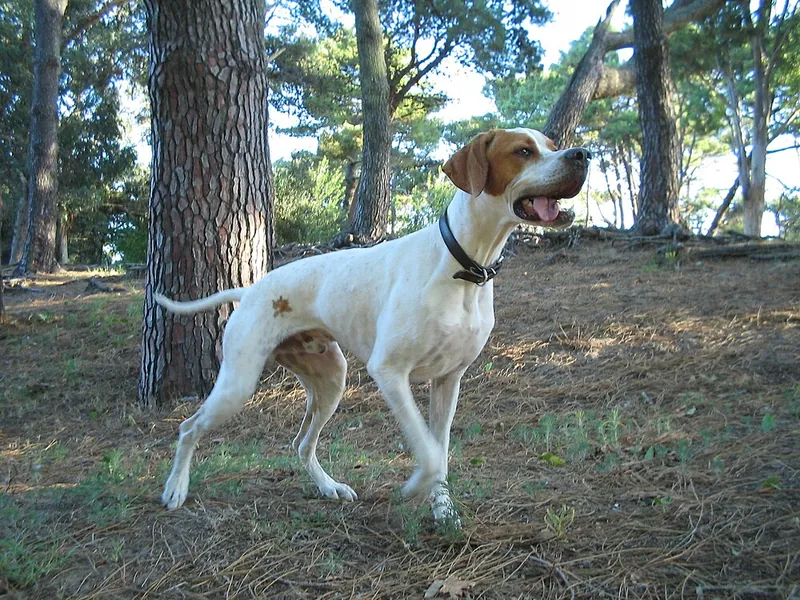
The Pointer is a lean, muscular sporting dog built for speed and endurance, with a long neck, deep chest and a chiseled head that often shows a slightly concave, dish-shaped muzzle. It stands about 24 to 27 inches at the shoulder and weighs roughly 55 to 66 lb. Males are taller and heavier than females, with stronger heads and more substance; the AKC standard sets males at 25 to 28 inches and females at 23 to 26 inches.
The coat is short, dense and smooth with a sheen. Accepted colors are:
- Liver, lemon, black or orange, combined with white
- The same colors as solids
Ticking is common in white areas. Many US field dogs, often registered as English Pointers through the Field Dog Stud Book, are smaller and lighter than show-bred Pointers, with a higher tail and more intense pointing style. Show dogs are usually larger, with more pronounced heads.
Temperament and Personality
Pointers are friendly, gentle and loyal. They are usually good with other dogs and people. Indoors, an exercised Pointer is calm.
The hunting drive is very strong. Birds and small animals easily capture their attention, and they range widely when off leash.
Pointers bond closely to their families and usually get along well with children, though their energy and size can overwhelm toddlers. They are not natural guard dogs but will bark to announce visitors.
Many retain a strong pointing instinct from puppyhood, freezing with a raised foreleg when they spot birds. They are sensitive dogs that do not respond well to harsh handling.
Is the Pointer Good for First-Time Owners?
Usually not, unless the first-time owner is a runner, hunter or very outdoorsy person. The Pointer's temperament is friendly and gentle, which is easy to live with, but its exercise needs are among the highest of any breed.
Beginners often struggle with recall, as a Pointer on a scent can range far and fast, and with an energetic adolescent that needs hours of running. A first-time owner who still wants the breed should consider an adult dog from a Pointer rescue, join a field or running club and plan secure, enclosed areas for off-leash exercise.
Are Pointers Easy to Train?
Pointers are intelligent and willing, but training takes patience. The pointing instinct is largely inborn, so many puppies point birds without being taught. The challenge is everything that competes with that instinct.
Recall around birds, loose-leash walking and calm behavior indoors require consistent practice. Sessions work best when short and positive, since Pointers are sensitive and shut down with harsh handling. Exercise before training helps them focus. Many owners find the breed easiest to train when its natural drive is channeled into hunting, field trials or canicross.
Can Pointers Be Left Alone?
For a few hours, yes, if they have been well exercised first. Pointers are calm indoors after a long run, but they do not cope well with full workdays alone without an outlet.
An under-exercised Pointer left alone may chew, bark or try to escape. A long morning run, a midday walk from a dog walker and a stuffed food toy make alone time easier. Crate training from puppyhood gives the dog a safe resting spot. A second dog can provide company, though it does not replace exercise for this high-energy breed.
Exercise and Training
Pointers need at least two hours of vigorous daily exercise. Running, field trials, hunting and canicross suit them.
- Train recall early, especially near birds.
- Use positive reinforcement and patience.
- Teach calm behavior indoors.
This is a breed built to cover ground at speed for hours. A brief walk around the block will not satisfy it. Many Pointers thrive running beside a bike or horse, in field trials, or simply in long off-leash runs in a safe, enclosed area.
Without enough exercise, Pointers become restless and destructive. Use a long line until recall is reliable, and train around birds gradually.
Grooming and Shedding
The short, smooth coat is easy to care for. Brush weekly. Shedding is moderate.
Check feet and skin after runs in rough terrain.
The short coat offers little protection from cold, so provide a coat in winter and a warm bed indoors. Their thin skin is prone to cuts and scrapes in the field, so check them after exercise.
Keep nails trimmed and ears clean.
Feeding and Nutrition
A Pointer's food needs depend heavily on its workload. A dog hunting or running for hours during the season burns far more than in a quiet summer month. Adjust portions by body condition: a fit Pointer shows a slight outline of the last ribs and a clear waist.
- Puppies grow into a large, athletic frame. Feed a large-breed puppy diet in three or four meals and avoid overfeeding; lean growth protects developing hips.
- Feed adults two meals a day, and on hunting days give the main meal after work rather than before.
- Offer water often during long sessions in the field, especially in warm weather.
As a deep-chested breed, the Pointer has a bloat risk. Avoid one large meal, slow down fast eaters with a puzzle bowl, and rest the dog after meals. A Pointer in heavy work may look thin to people used to other breeds; ask your vet to assess condition rather than adding food unnecessarily.
| Adult weight | Less active | Typical adult | Very active |
|---|---|---|---|
| 55 lb | 1,090 kcal | 1,250 kcal | 1,560 kcal |
| 66 lb | 1,250 kcal | 1,430 kcal | 1,790 kcal |
Estimates use the resting energy formula veterinarians work with (70 × body weight in kg0.75) and standard activity factors. Use the feeding guide on your food as a starting point and adjust to body condition. Puppies, seniors, pregnant animals and pets that need to lose weight have different needs, so ask your vet.
Health and Lifespan
Pointers typically live 12 to 15 years. Conditions include hip dysplasia, bloat, progressive retinal atrophy, cataracts, entropion, hypothyroidism and Wobbler syndrome.
Choose breeders who screen hips and eyes.
As a deep-chested breed, the Pointer is at risk of bloat. Feed several smaller meals, avoid exercise right after eating and learn the warning signs.
Ask breeders for hip scores and eye exams for both parents.
Pointer Price and Cost of Ownership
Typical breeder price in the US$800 to $2,500
A Pointer puppy from a reputable US breeder typically costs around $800 to $2,500. Prices vary by breeder, region and lines. Field-bred dogs from hunting kennels often sit at the lower end, while show-bred puppies or proven field trial bloodlines can cost more.
Pointer rescues regularly rehome dogs, often adults from hunting homes, which can be a good option for active owners.
Breed-specific ongoing cost drivers include:
- Hip and eye exams, plus treatment for conditions such as entropion
- Emergency bloat surgery or a preventive gastropexy
- Training for the field, hunting licenses and field trial entry fees
- Vet visits for cuts and scrapes from fieldwork
- Winter coats and a GPS tracking collar for off-leash work
Is the Pointer Right for You?
The Pointer suits hunters and very active owners with access to open space.
It is not suited to apartments or sedentary owners.
Pointers make excellent family companions for active people who enjoy outdoor life and can provide plenty of daily exercise. They suit homes with a large, securely fenced yard.
They are not ideal for people who work long hours away from home or who want a quiet indoor companion.
Pointer Traits at a Glance
Pointer FAQ
How big do Pointers get?
They stand about 24 to 27 inches tall and weigh 55 to 66 lb.
Are Pointers good family dogs?
Yes, with active families. They are friendly and gentle.
How much exercise does a Pointer need?
At least two hours of vigorous exercise daily.
How long do Pointers live?
Typically 12 to 15 years.
Do Pointers shed?
They shed moderately. Their short coat needs only weekly brushing.
Are Pointers good with other dogs?
Yes, they usually get along well with other dogs, but small pets may trigger their hunting instinct.