German Wirehaired PointerRugged all-weather versatile hunting dog
The German Wirehaired Pointer, known in Germany as the Deutsch Drahthaar, is a rugged, versatile hunting dog with a weatherproof wiry coat and a distinctive beard. It has high energy, strong prey drive and a big work ethic, and suits hunters and very active owners.
Why people love the German Wirehaired Pointer
- Highly versatile hunting dog for land, water and tracking
- Weatherproof coat handles cold, wet and thorny cover
- Loyal, affectionate and devoted to its family
- Good alarm dog that is reserved with strangers
- Long lifespan for a large sporting breed
Things to consider
- Needs two or more hours of exercise daily
- Strong prey drive; cats and small pets need management
- Can be independent and tests recall around wildlife
- Some are intolerant of same-sex dogs
- Coat needs occasional hand-stripping
Is this breed right for you?
10 questions · live resultHistory and Origin
German hunters of the late 19th century wanted one dog that could do everything: point and retrieve birds, track wounded game, work in water and handle thorny brush in all weather. They crossed wire-coated pointers with breeds such as the Griffon, Pudelpointer and German Shorthaired Pointer to produce the Drahthaar.
The breed club Verein Deutsch-Drahthaar was founded in 1902 and remains one of Germany's largest hunting dog organizations. Its focus has always been performance over looks, and German breeding dogs must pass hunting tests. The AKC recognized the breed in 1959, and American breeding also emphasizes field ability, though show and companion lines exist.
Size, Colors and Wire Coat
The German Wirehaired Pointer is a medium-large, sturdy pointer standing 22 to 27 inches at the shoulder and weighing 51 to 71 lb. Males are larger and more heavily boned; females are smaller and lighter, typically at the lower end of both ranges. The body is slightly longer than tall, with a deep chest built for endurance.
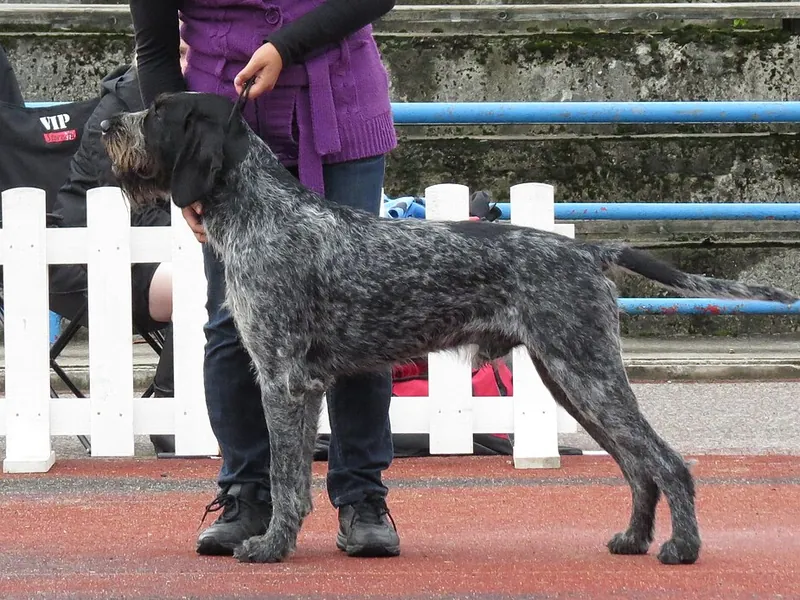
The defining feature is the wire coat: a harsh, flat-lying outer coat roughly 1 to 2 inches long over a dense undercoat that thickens in winter and thins in summer. Bushy eyebrows and a short beard protect the face from brush.
Common colors include:
- Liver and white, often roan or ticked with liver patches
- Solid liver
- Black and white roan, accepted in German Drahthaar breeding
Coat length varies within litters. Dogs with too little or too much furnishing are less weather-resistant, which matters to breeders who select for work. Tails are customarily docked in the US.
Temperament and Personality
German Wirehaired Pointers are self-confident, loyal and affectionate with their family. They are often more reserved with strangers than their shorthaired cousins and can be protective of home, which makes them good alarm dogs.
Their prey drive is very strong, and some do not get along with other dogs of the same sex. Cats and small pets require careful management. Without enough work, they become restless and may invent their own activities.
Many bond closely with one person, typically the one who works and trains with them. They are usually good with children in their own family, but young dogs are boisterous and strong.
Is the German Wirehaired Pointer Good for First-Time Owners?
Generally no. The German Wirehaired Pointer is better suited to experienced owners, especially those who hunt or train dogs seriously.
The breed needs two or more hours of activity a day, structured training and an owner who can manage strong prey drive and occasional independence. Young dogs are strong, boisterous and quick to find their own entertainment. A committed first-time owner with a rural lifestyle and a good trainer can succeed, particularly with a calmer companion-line dog. Anyone without time for daily field work, tracking or demanding sports should consider a less intense breed.
Are German Wirehaired Pointers Good with Cats?
Some German Wirehaired Pointers live peacefully with cats, but the breed's strong prey drive makes this less predictable than with many other sporting dogs.
Success is most likely when a puppy is raised with a confident adult cat that does not run. Even then, the dog may still chase unfamiliar cats outdoors. Introduce the animals gradually, keep the dog leashed at first and give the cat safe, high escape routes. Never leave a young dog and a cat unsupervised. Rabbits, guinea pigs and birds are at higher risk and should be kept fully separated.
Can a German Wirehaired Pointer Be Left Alone?
An adult German Wirehaired Pointer can usually handle a few hours alone, but only after hard exercise and with practice from puppyhood.
The breed is bred to work all day with its handler, and boredom shows quickly. Dogs left for long periods without enough activity may dig, chew, bark or try to escape fencing. Build alone time gradually, provide a long morning outing before you leave and offer chews or food puzzles. A securely fenced yard is helpful but no substitute for exercise. For long workdays, a dog walker or a second exercise session is important.
Exercise and Training
Expect to provide two or more hours of exercise every day, including off-leash running in safe areas, swimming, retrieving and scent work. Hunting is the ideal outlet, but tracking, field trials, canicross and nosework can help.
Training should be consistent and start early. These dogs are intelligent but independent, and they respond best to clear rules and rewards. Practice recall on a long line, as wildlife can override commands.
Grooming and Shedding
The wiry outer coat is harsh and weather-resistant, with a dense undercoat in winter. Brush once a week and hand-strip occasionally to remove dead hair. Check the beard after meals and inspect for burrs and ticks after outings. Shedding is moderate.
Coat quality varies: some dogs have a tight, short wire coat, while others have longer, softer furnishings that need more brushing. Keep the hair around the ears and paws tidy to reduce the chance of grass seeds lodging in the skin.
Feeding and Nutrition
Energy needs swing widely in this breed. A Drahthaar working in cold water and heavy cover through hunting season burns far more than the same dog in summer, so adjust portions with the season and the workload. Aim for a lean, muscular dog with an easily felt rib cage.
German Wirehaired Pointers are deep-chested and listed as at risk of bloat. Feed at least two meals a day, avoid feeding right before hard work and allow rest afterward. Learn the warning signs: a swollen belly, retching without vomiting and restlessness require immediate vet care.
- Feed large-breed growth food to puppies and avoid pushing growth with extra calories.
- On long hunting days, give a small snack rather than a full meal mid-day.
- Clean the beard after meals to prevent odor and skin irritation.
- Use part of the daily ration as rewards in field and obedience training.
Skin allergies and hypothyroidism occur in the breed; persistent itching or weight changes deserve a vet check rather than repeated food switches.
| Adult weight | Less active | Typical adult | Very active |
|---|---|---|---|
| 51 lb | 1,030 kcal | 1,180 kcal | 1,480 kcal |
| 71 lb | 1,320 kcal | 1,510 kcal | 1,890 kcal |
Estimates use the resting energy formula veterinarians work with (70 × body weight in kg0.75) and standard activity factors. Use the feeding guide on your food as a starting point and adjust to body condition. Puppies, seniors, pregnant animals and pets that need to lose weight have different needs, so ask your vet.
Health and Lifespan
GWPs typically live 14 to 16 years. Concerns include:
- Hip dysplasia
- Bloat (gastric dilatation-volvulus)
- Von Willebrand disease
- Skin allergies and hypothyroidism
- Entropion
Choose a breeder who screens hips and eyes and tests for von Willebrand disease. Ear infections can occur in dogs that swim or work in wet cover, and hunting dogs face cuts, torn nails and grass seeds, so check ears and paws after outings.
German Wirehaired Pointer Price and Cost of Ownership
Typical breeder price in the US$1,000 to $2,000
A German Wirehaired Pointer puppy from a reputable US breeder typically costs about $1,000 to $2,000. Prices vary by breeder, region and lines, and puppies from Verein Deutsch-Drahthaar breeding in North America often follow their own testing requirements and placement policies. Rescue groups for pointing breeds occasionally have adults.
Breed-specific cost drivers include:
- Hip, eye and von Willebrand disease screening of the parents
- Training: hunt tests, tracking or field training classes
- Vet care for field injuries such as cuts, torn nails and grass seeds
- GPS collars and secure fencing for a dog with strong drive
- Pet insurance that covers bloat surgery
Grooming costs are modest if you learn to hand-strip at home.
Is the German Wirehaired Pointer Right for You?
A GWP suits hunters and very active owners in rural or suburban settings who can provide daily work. It is not a fit for apartments, sedentary owners or homes with small pets. In Germany, many breeders place puppies only with hunters.
Outside hunting homes, owners who commit to tracking, nosework or other demanding dog sports can also give this breed a fulfilling life.
German Wirehaired Pointer Traits at a Glance
German Wirehaired Pointer FAQ
How big do German Wirehaired Pointers get?
They stand about 22 to 27 inches tall and weigh roughly 51 to 71 lb.
Are German Wirehaired Pointers good family dogs?
They are loyal and affectionate but need a lot of exercise and training, so they are best for active families.
Do German Wirehaired Pointers shed?
Moderately. The wiry coat sheds less than many breeds but needs weekly brushing.
Are German Wirehaired Pointers hypoallergenic?
No. They shed less than many breeds, which some allergy sufferers find helpful, but no dog is free of allergens.
How much exercise does a German Wirehaired Pointer need?
Two or more hours of activity daily, ideally including scent work or hunting.
How long do German Wirehaired Pointers live?
Typically 14 to 16 years.