German Shorthaired PointerAthletic, friendly all-round hunting dog
The German Shorthaired Pointer is an athletic, enthusiastic hunting dog that is equally happy pointing birds in a field or playing with children at home. It needs a lot of exercise and mental work, and suits active families, runners and hunters.
Why people love the German Shorthaired Pointer
- Genuine all-round hunter: points, retrieves and tracks
- Affectionate with family and usually great with children
- Short coat needs only a weekly brush
- Excels at running, canicross, dock diving and scent work
- Eager learner that responds well to reward-based training
Things to consider
- Needs one to two hours of hard exercise daily
- High prey drive puts cats and small pets at risk
- Can jump or climb surprisingly high fences
- Short hairs shed and weave into fabric
- Deep chest means a real bloat risk
Is this breed right for you?
10 questions · live resultHistory and Origin
German hunters in the 19th century wanted one dog that could do everything on a hunt: find and point birds, retrieve on land and from water, and track wounded deer or boar. They combined old German pointing dogs, heavier and slower types descended from Spanish pointers, with lighter breeds including the English Pointer to add speed, nose and elegance.
The breed was standardized in Germany in the late 1800s, and Prince Albrecht zu Solms-Braunfels is often credited with promoting its development. The AKC recognized the German Shorthaired Pointer in 1930. Today it is one of the most popular sporting breeds in the United States and widely used as a hunting dog in Germany.
Size, Coat and Liver Colors
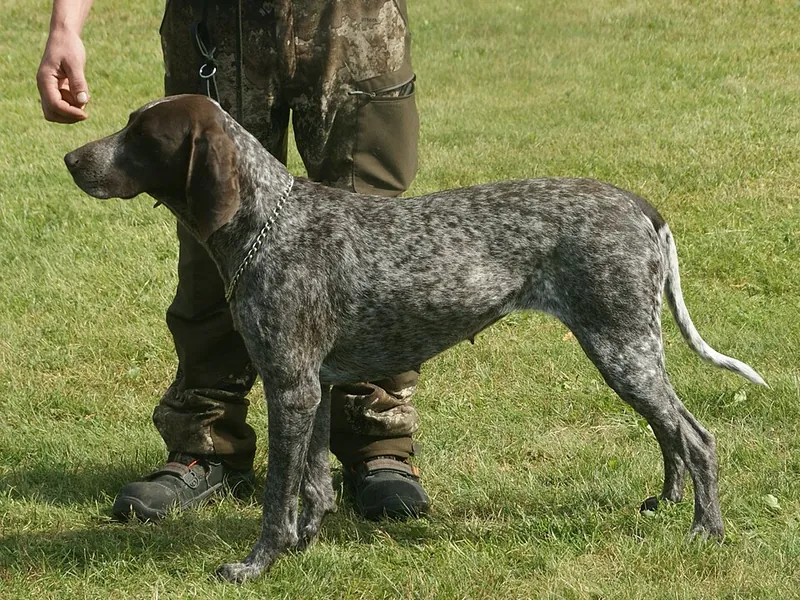
The German Shorthaired Pointer is a lean, athletic dog of medium to large size, standing about 23 to 26 inches and weighing roughly 44 to 71 lb. Males are noticeably taller and more muscular than females, with a heavier head and deeper chest. The body is slightly longer than tall, built for speed and stamina, with a strong back, well-sprung ribs and hard, compact feet.
The coat is short, flat and firm to the touch, with a dense undercoat that becomes thicker in cold weather. Under the AKC standard the color is solid liver or liver and white in various combinations: patched, ticked, spotted or roan. Liver roan with liver patches is the most familiar look. Black and white or black roan dogs exist and are accepted in Germany and by the FCI, but black is a disqualification in the AKC show ring. Eyes are brown, and the nose matches the coat color. In the US the tail is traditionally docked, while in the UK docking is restricted to certain working dogs.
Temperament and Personality
GSPs are friendly, intelligent and affectionate with their family. They usually love children and want to be part of everything going on in the house, often following their people from room to room. Most are friendly with strangers and other dogs, though some are alert watchdogs that bark at unusual sounds.
Their prey drive is high, so cats, poultry and small pets may be at risk unless the dog is raised with them and carefully supervised. A GSP without enough exercise often becomes restless, destructive, noisy or an escape artist that can clear surprisingly high fences.
Many GSPs are sensitive to being left out and like physical closeness at the end of a busy day.
Is the German Shorthaired Pointer Good for First-Time Owners?
A GSP can work for a first-time owner who is genuinely active, but it is not an easy beginner's dog. The friendly, people-loving temperament forgives mistakes, and the coat is simple to care for. The challenge is energy and drive.
Young GSPs need daily running, structured training and impulse control around birds and squirrels, often for two or three years before they settle. Newcomers do best if they join a puppy class early, find a local field or sport club and plan the week around the dog's exercise. If you rarely run, hike or train, a calmer sporting breed is a safer first choice.
Can a German Shorthaired Pointer Be Left Alone?
Adult GSPs can usually manage a few hours alone, but long workdays without company are a poor fit. This is a people-focused breed that often follows its owners from room to room, and boredom quickly turns into chewing, howling or escape attempts.
Build alone time gradually from puppyhood, starting with short absences and a chew or food puzzle. A hard run or training session before you leave helps far more than a quick walk. If you work full days away from home, plan for a dog walker, daycare or a family member who can break up the day. Crate training is useful for safety while the dog is young.
Are German Shorthaired Pointers Easy to Train?
Yes, in the sense that GSPs learn quickly and enjoy working with people, but their enthusiasm makes them a handful in the teenage phase. They pick up basic cues fast and shine in retrieving, field work and scent sports.
The hard parts are focus and self-control. A bird, deer or rabbit can override any cue, so build recall on a long line in many locations before trusting it off leash. Short, varied sessions with food, toys and retrieves work better than repetition. Harsh corrections tend to make this sensitive breed worried rather than obedient. Expect real progress in calm house manners once the dog is physically and mentally tired.
Exercise and Training
GSPs need at least one to two hours of vigorous exercise a day, ideally including off-leash running in safe areas. Once fully grown, they make excellent partners for running, cycling, hiking and swimming. They excel at hunting, field trials, agility, dock diving, canicross and scent work.
They are smart and eager learners, but young GSPs are energetic and easily distracted. Use positive reinforcement and plenty of play. Teach a calm settle on a mat early, practice recall on a long line, and build impulse control around wildlife. Mental work such as nosework helps tire them out without endless running.
Grooming and Shedding
The short, dense coat is water-resistant and easy to care for. A weekly brush with a rubber mitt or bristle brush keeps it shiny. Shedding is moderate, and the short hairs can weave into fabrics. Check ears, paws and coat for ticks, grass seeds and small injuries after outings, and keep nails trimmed.
Feeding and Nutrition
A working GSP burns a lot of energy, so feed an adult a complete diet sized for its actual activity rather than the bag's average. Dogs that hunt or run daily may need noticeably more food in season and less in quieter months. Check body condition every few weeks: you should feel the ribs easily and see a clear waist.
Puppies grow quickly into a large, athletic frame. A diet formulated for large-breed growth helps keep calcium and growth rate in a sensible range, and lean puppies develop sounder joints than chubby ones.
Because the breed is deep-chested and at risk of bloat, split the daily ration into two meals, avoid hard exercise for about an hour before and after eating, and discourage gulping with a slow feeder if needed. Some GSPs have skin allergies; if itching or ear problems persist, work with your vet on an elimination trial rather than switching foods at random. Training treats add up fast with such an active learner, so use part of the daily ration as rewards.
| Adult weight | Less active | Typical adult | Very active |
|---|---|---|---|
| 44 lb | 930 kcal | 1,060 kcal | 1,320 kcal |
| 58 lb | 1,140 kcal | 1,300 kcal | 1,630 kcal |
| 71 lb | 1,320 kcal | 1,510 kcal | 1,890 kcal |
Estimates use the resting energy formula veterinarians work with (70 × body weight in kg0.75) and standard activity factors. Use the feeding guide on your food as a starting point and adjust to body condition. Puppies, seniors, pregnant animals and pets that need to lose weight have different needs, so ask your vet.
Health and Lifespan
GSPs typically live 10 to 12 years. Health concerns in the breed include:
- Hip dysplasia
- Bloat (gastric dilatation-volvulus), a risk in deep-chested breeds
- Von Willebrand disease, a bleeding disorder with a DNA test
- Skin allergies
- Lymphedema, swelling caused by poor lymph drainage
- Cardiomyopathy
Look for breeders who screen hips and eyes and run available DNA tests. Avoid heavy exercise right after meals to reduce bloat risk.
German Shorthaired Pointer Price and Cost of Ownership
Typical breeder price in the US$1,000 to $2,500
A German Shorthaired Pointer puppy from a reputable US breeder typically costs about $1,000 to $2,500. Prices vary by breeder, region and lines: puppies from proven field champions or show lines often sit at the upper end, while some hunting-focused breeders charge less. Expect the breeder to show hip and eye results and DNA tests, including von Willebrand disease, on both parents.
GSPs regularly come into rescue, often as adolescents that turned out too energetic for their first home, so adoption is a realistic option.
Ongoing costs are driven by appetite and activity rather than grooming. A busy GSP eats more than its size suggests, and field dogs need training equipment, hunting gear and sometimes club or entry fees. Pet insurance is worth considering for bloat surgery, injuries from running in the field and allergy treatment. Grooming costs are minimal.
Is the German Shorthaired Pointer Right for You?
GSPs suit active families, runners and hunters with a securely fenced yard and time for daily exercise. They are great family dogs for households that spend much time outdoors. They are not ideal for apartments, sedentary owners or long hours alone. If you are not a hunter, plan for dog sports or regular scent work to keep this intelligent breed happy.
German Shorthaired Pointer Traits at a Glance
German Shorthaired Pointer FAQ
How big do German Shorthaired Pointers get?
They stand about 23 to 26 inches tall and weigh roughly 44 to 71 lb.
Are GSPs good family dogs?
Yes, for active families. They are affectionate and usually great with children.
How much exercise does a GSP need?
At least one to two hours of vigorous activity each day.
Can German Shorthaired Pointers live in apartments?
It is rarely a good fit. Their energy level makes a home with a secure yard and easy access to open space far more practical.
Do German Shorthaired Pointers shed?
Yes, moderately, despite the short coat.
How long do German Shorthaired Pointers live?
Typically 10 to 12 years.