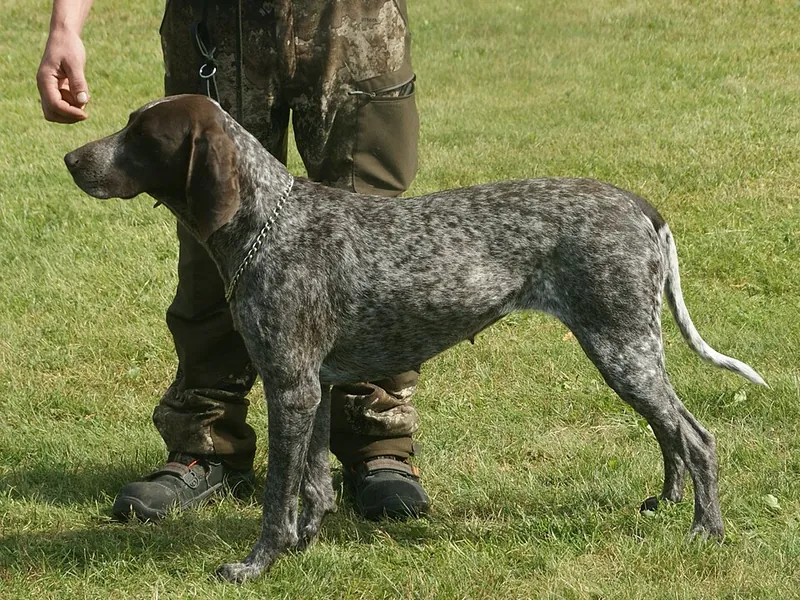
WeimaranerSilver-gray German hunting dog with stamina
The Weimaraner was developed at the court of Weimar as a versatile hunting dog, and its silver-gray coat earned it the nickname Grey Ghost. It is energetic, affectionate and deeply attached to its people, and it needs active owners who can provide hours of exercise and company.

Why people love the Weimaraner
- Devoted, affectionate dog that wants to be included
- Excellent running, hiking and hunting partner
- Short coat is easy to keep clean
- Alert watchdog that announces visitors
- Quick learner with consistent training
Things to consider
- Needs about two hours of exercise daily
- Prone to separation anxiety and destructive chewing
- Strong prey drive toward cats and small pets
- Deep chest brings a real bloat risk
- Large, strong and boisterous for small children
Is this breed right for you?
10 questions · live resultHistory and Origin
The Weimaraner was developed in the early 19th century at the court of Grand Duke Karl August of Saxe-Weimar-Eisenach. Nobles wanted a fast, intelligent dog to hunt big game such as boar, deer and bear. When big game declined, the breed adapted to bird hunting as a versatile pointer and retriever.
The German breed club controlled breeding strictly, and dogs were rarely sold outside Germany. The first Weimaraners reached the US in the late 1920s, and the AKC recognized the breed in 1943. A longhaired variety also exists and is recognized by The Kennel Club and the FCI.
The breed was originally kept as a closely guarded secret of German hunters and the Weimaraner club, which required buyers to be members. Its unusual gray color and light amber or blue-gray eyes made it distinctive in the field.
Size, Gray Coat and Varieties
The Weimaraner is a large, athletic gundog with an aristocratic head, long ears set high and an unusual eye color: light amber, gray or blue-gray. It stands 22 to 28 inches tall and weighs about 55 to 88 lb. Under the AKC standard, males measure about 25 to 27 inches and females about 23 to 25 inches, and males are clearly heavier and more muscular.
The signature color is solid gray, from mouse-gray to silver-gray, often with lighter shading on the head and ears. A small white mark on the chest is allowed. The coat can appear to change shade in different light, which adds to the Grey Ghost reputation. Puppies are born with tiger stripes that fade within days, and their eyes start out blue.
Most Weimaraners have a short, smooth, sleek coat. A longhaired variety with soft feathering on the ears, legs and tail is recognized by the FCI and The Kennel Club, but the AKC standard treats a long coat as a disqualification. A blue-gray color seen in some lines is also not accepted by the AKC.
Temperament and Personality
Weimaraners are affectionate, playful and eager to be with their people. They often follow owners everywhere and want to be involved in all activities. They are alert and will bark at strangers, making them good watchdogs.
Prey drive is strong, and many chase cats and small animals. Weimaraners often suffer from separation anxiety and can become destructive when left alone. With children, they are usually friendly, but their size and energy can be overwhelming.
Weimaraners are often described as Velcro dogs because they stay so close to their people. They thrive on involvement and can be surprisingly sensitive to changes in routine. Many are vocal when excited or frustrated, so teaching calm behavior is important.
Is the Weimaraner Good for First-Time Owners?
The Weimaraner is usually not the easiest first dog. It is affectionate and smart, but its energy, size and need for company demand more time and structure than many beginners expect.
A committed novice can succeed if the household is active and someone is home most of the day. Start a puppy class early, focus on impulse control and calm behavior indoors, and practice short separations from the first weeks. Owners who hunt, run or hike daily often find the breed rewarding. Those who want a dog that settles after a short walk are better served by another breed.
Can Weimaraners Be Left Alone?
Weimaraners do not cope well with long periods alone. The breed is known for separation anxiety, and a stressed Weim may bark, howl, chew door frames or try to escape crates and yards.
Most adults can handle a few hours if they are well exercised beforehand and have been taught to settle from puppyhood. Build alone time in small steps, use a crate or safe room the dog sees as a retreat, and leave a long-lasting chew. For full workdays, plan for a dog walker or daycare. If anxiety appears, involve a vet or qualified behavior professional early, because it rarely fixes itself.
Are Weimaraners Good With Cats?
Some Weimaraners live peacefully with cats, but many do not. The breed was developed to hunt and has a strong prey drive, so a running cat can trigger a chase.
The best chance comes from raising a puppy with a confident, dog-savvy cat and supervising every interaction until you are sure of the dog's behavior. Teach a solid leave-it and give the cat dog-free rooms and high perches. Adult Weimaraners with no history of living with cats are a risk in a cat household. Small pets such as rabbits, guinea pigs and birds should be kept fully separate.
Exercise and Training
Plan for at least two hours of exercise a day, including running and off-leash time in secure areas. Weimaraners enjoy hunting, tracking, agility, running and swimming. Mental tasks such as scent work are also important.
Weimaraners are quick learners but can be headstrong. Positive, consistent training works best. Teach impulse control, recall and calm behavior at home early. Practice gradual alone time from puppyhood.
Grooming and Shedding
The short, sleek coat is easy to care for with weekly brushing using a rubber mitt. Weimaraners shed moderately. Check the floppy ears weekly and trim nails regularly. Longhaired Weimaraners need more frequent brushing.
The thin coat offers little protection in cold, wet weather, so many Weimaraners appreciate a dog coat in winter. After hunting or running through brush, check for cuts, thorns and ticks.
Feeding and Nutrition
Bloat prevention is the top feeding concern for a Weimaraner. The breed is deep-chested and appears among those most often affected by gastric dilatation-volvulus, a life-threatening emergency.
- Feed at least two measured meals a day rather than one large one.
- Avoid vigorous exercise for about an hour before and after meals, and discourage gulping with a slow-feeder bowl if needed.
- Learn the signs of bloat: a swollen belly, unproductive retching and restlessness need emergency veterinary care.
For puppies, steady growth matters. The breed is linked to hypertrophic osteodystrophy, a painful bone disease of fast-growing young dogs, so use a large-breed puppy diet and keep the puppy lean rather than plump.
Active adults need enough energy to hold condition through hunting season or long runs, while less active dogs gain weight easily. Adjust portions to body condition and the season. Use part of the daily ration for training rewards, since Weims are food-motivated and quick to beg.
| Adult weight | Less active | Typical adult | Very active |
|---|---|---|---|
| 55 lb | 1,090 kcal | 1,250 kcal | 1,560 kcal |
| 88 lb | 1,560 kcal | 1,780 kcal | 2,220 kcal |
Estimates use the resting energy formula veterinarians work with (70 × body weight in kg0.75) and standard activity factors. Use the feeding guide on your food as a starting point and adjust to body condition. Puppies, seniors, pregnant animals and pets that need to lose weight have different needs, so ask your vet.
Health and Lifespan
Hip dysplasia and bloat are among the main health concerns. Weimaraners are deep-chested, so feed smaller meals and avoid exercise right after eating. Other conditions include certain cancers and distichiasis, extra eyelashes that can irritate the eye.
Choose a breeder who screens hips and eyes. Weimaraners typically live 10 to 13 years.
Other issues reported in the breed include hypertrophic osteodystrophy (a painful bone condition of fast-growing puppies), von Willebrand disease and spinal dysraphism, a spinal cord defect. Puppies benefit from a steady growth rate and limited high-impact exercise.
Weimaraner Price and Cost of Ownership
Typical breeder price in the US$1,200 to $2,500
A Weimaraner puppy from a reputable US breeder typically costs about $1,200 to $2,500. Prices vary by breeder, region and lines, with proven hunting or show parents often at the top. Ask for hip and eye results and a thyroid screen on both parents.
Weimaraner rescue groups across the US regularly place adolescents and adults, often dogs given up because of energy or separation issues.
Breed-specific cost drivers include:
- Insurance or savings for bloat surgery, which is costly.
- A sturdy crate, durable toys and possibly daycare or dog walkers.
- Training classes to manage energy and alone time.
- Food for a large, very active dog.
Is the Weimaraner Right for You?
The Weimaraner suits active owners, hunters and families who can provide plenty of exercise and company. A home with a yard and access to open spaces is ideal.
It is not suited to apartments, homes with small pets or owners away all day. PDSA advises against apartments for the breed.
Owners who enjoy hunting, running, cycling or canicross often find the Weimaraner a superb partner. Those who want a calm dog after a short walk should look at other breeds.
Weimaraner Traits at a Glance
Weimaraner FAQ
Are Weimaraners good family dogs?
Yes, they are affectionate and playful with families who can meet their exercise needs. Supervise around small children due to their energy.
How big do Weimaraners get?
Adults stand 22 to 28 inches and weigh about 55 to 88 lb.
Do Weimaraners shed?
They shed moderately. Weekly brushing keeps their coat healthy.
How much exercise does a Weimaraner need?
At least two hours a day, combining running with mental tasks.
Why are Weimaraners called Grey Ghosts?
The nickname comes from their silver-gray coat and their quiet, stealthy hunting style.
How long do Weimaraners live?
Weimaraners typically live 10 to 13 years.