Rhodesian RidgebackAthletic African hound with a ridge
The Rhodesian Ridgeback was developed in southern Africa to track lions and hold them at bay for hunters, and it is named for the stripe of hair along its back that grows against the rest of the coat. It is dignified, athletic and loyal, with a strong prey drive and an independent mind that suit experienced, active owners.
Why people love the Rhodesian Ridgeback
- Quiet dog that barks mostly with good reason
- Calm, dignified adult indoors once exercised
- Low-maintenance short coat with little odor
- Excellent running and hiking partner
- Loyal and often gentle with its own family
Things to consider
- Strong prey drive toward cats and small animals
- Independent and sometimes stubborn in training
- Slow to mature and boisterous for years
- Notorious counter-surfer around food
- Dermoid sinus and other inherited issues need screening
Is this breed right for you?
10 questions · live resultHistory and Origin
European settlers in southern Africa crossed their dogs, including mastiffs, greyhounds and terriers, with the half-wild ridged dogs kept by the Khoikhoi people. The result was a hardy hunting dog able to cope with heat, thorny bush and long distances. In the 1870s the Reverend Charles Helm brought ridged dogs to what was then Rhodesia, where the big-game hunter Cornelius van Rooyen used them to track lions and keep them at bay until the hunter arrived.
In 1922 a group of breeders met in Bulawayo and drew up the first breed standard, based on the Dalmatian standard. The breed was recognized in South Africa in 1927, and the AKC accepted it in 1955. Ridgebacks do not kill lions; their job was to find, bay and distract them with agility and courage.
Size, Ridge and Colors
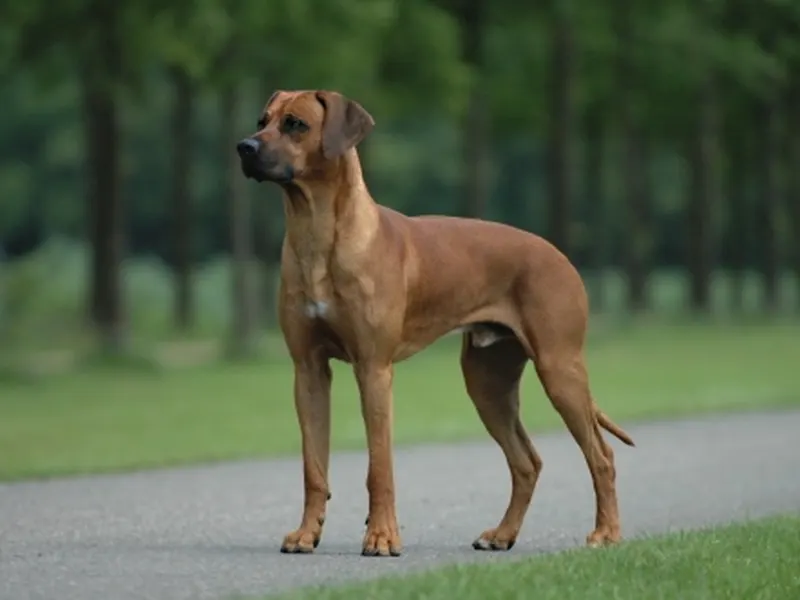
The Rhodesian Ridgeback is a large, muscular hound built for endurance. Adults stand 24 to 27 inches at the shoulder and weigh about 71 to 82 lb. Males are usually 25 to 27 inches and noticeably heavier and broader through the head and chest, while females are 24 to 26 inches and more refined.
The defining feature is the ridge along the back: a band of hair growing in the opposite direction to the rest of the coat. In the standard it starts behind the shoulders with two identical whorls, called crowns, directly opposite each other, and tapers toward the hips. Ridgeless puppies are born in some litters and make perfectly good pets, though they cannot be shown.
The coat is short, dense and glossy. Color ranges from light wheaten to red wheaten, with small white markings allowed on the chest and toes. The nose is black or brown, and a brown (liver) nose comes with amber eyes.
Temperament and Personality
Ridgebacks are affectionate and loyal to their family but often reserved with strangers. They are quiet dogs that usually bark only with reason, which makes them effective watchdogs. Many are playful and clownish at home while remaining calm and dignified in public.
Prey drive is strong, and many chase cats, wildlife and small animals. They can live with pets they are raised with, but supervision is wise. Ridgebacks are independent thinkers and can be stubborn. With children, they are usually patient and gentle, but adolescent dogs are powerful and boisterous.
Ridgebacks mature slowly and may not settle until two or three years old. Adults are often calm couch companions indoors once their exercise needs are met, which surprises owners who only saw the energetic adolescent.
Are Rhodesian Ridgebacks Aggressive?
Ridgebacks are not typically aggressive, but they are protective, reserved with strangers and strong enough that behavior must be managed. A well-socialized Ridgeback tends to watch newcomers calmly rather than rush at them.
Issues usually appear in poorly socialized dogs or adolescents that were never taught impulse control. Some Ridgebacks, especially males, can be intolerant of unfamiliar dogs of the same sex. Early puppy classes, regular exposure to visitors and calm, reward-based training produce a stable adult. Harsh methods tend to backfire with this sensitive, independent hound.
Are Rhodesian Ridgebacks Good for First-Time Owners?
They can work for a well-prepared first-time owner, but most breeders prefer homes with large-dog experience. The breed is not difficult in temperament, but it is powerful, independent and slow to mature.
The hardest years are roughly six months to three years, when a Ridgeback is strong, bouncy and selective about listening. First-time owners should plan for puppy and adolescent classes, a secure fence, management of food on counters and a lot of patience. Owners who enjoy running or hiking and accept a dog that thinks for itself often find the breed very rewarding.
Are Rhodesian Ridgebacks Good With Cats?
Some are, but it depends heavily on the individual and its upbringing. Ridgebacks are sighthound-type hunters with a strong instinct to chase anything that runs.
A puppy raised with a confident indoor cat often learns to accept it as family. Even then, many Ridgebacks still chase outdoor or unfamiliar cats. Adult Ridgebacks without cat experience are a risk, and introductions should be slow, leashed and supervised, with escape routes and high perches for the cat. Rescues sometimes cat-test adult dogs, which is useful information if you already share your home with cats.
Exercise and Training
Plan for about two hours of exercise each day. Ridgebacks enjoy running, hiking and lure coursing and make good jogging partners once fully grown. Off-leash time should be in secure areas, because the breed may take off after wildlife. A tall, solid fence is important.
Training requires patience and consistency. Ridgebacks respond best to calm, reward-based methods and may ignore commands that seem pointless. Early socialization, recall work and impulse control are essential. Many counter-surf, so keep food out of reach.
Grooming and Shedding
The short, sleek coat is easy to maintain. Brush weekly with a rubber mitt or hound glove. Ridgebacks shed moderately and do not have a strong doggy odor. Trim nails regularly and check ears. Their short coat offers little protection in cold weather, so a coat may help in winter.
Feeding and Nutrition
Ridgebacks grow quickly and mature slowly, so puppy feeding needs care. Use a diet formulated for large-breed puppies and keep them lean. Rapid growth and excess weight in the first year or two strain developing hips and elbows. Ask your vet when to switch to adult food, which is often around 12 to 18 months.
As a deep-chested breed, the Ridgeback is at risk of bloat (gastric dilatation-volvulus). Sensible precautions include:
- Two or more meals a day rather than one large one.
- No hard exercise for at least an hour before and after meals.
- Slow-feeder bowls for dogs that gulp.
Adults vary widely in appetite. Active dogs that run daily may need far more than a calm house dog. Ridgebacks are opportunistic eaters and skilled counter-surfers, so store food securely to prevent stolen meals and possible ingestion of harmful items. Keep training treats small and count them in the daily ration. If your dog has hypothyroidism, your vet may adjust its feeding plan.
| Adult weight | Less active | Typical adult | Very active |
|---|---|---|---|
| 71 lb | 1,320 kcal | 1,510 kcal | 1,890 kcal |
| 82 lb | 1,480 kcal | 1,690 kcal | 2,110 kcal |
Estimates use the resting energy formula veterinarians work with (70 × body weight in kg0.75) and standard activity factors. Use the feeding guide on your food as a starting point and adjust to body condition. Puppies, seniors, pregnant animals and pets that need to lose weight have different needs, so ask your vet.
Health and Lifespan
Dermoid sinus is a congenital defect linked to the ridge: a tube-like opening under the skin along the spine, which can become infected. Puppies should be checked by the breeder and a vet before going to new homes. Other conditions include hip and elbow dysplasia, bloat, hypothyroidism, juvenile myoclonic epilepsy and certain cancers. A DNA test is available for juvenile myoclonic epilepsy.
Choose a breeder who checks puppies for dermoid sinus, scores hips and elbows and uses available DNA tests. Ridgebacks typically live 10 to 12 years.
Rhodesian Ridgeback Price and Cost of Ownership
Typical breeder price in the US$2,000 to $3,500
A Ridgeback puppy from a reputable US breeder typically costs about $2,000 to $3,500. Prices vary by breeder, region and lines. Ridgeless puppies are usually sold as pets, sometimes at a lower price. A good breeder checks every puppy for dermoid sinus, screens parents' hips and elbows and uses the DNA test for juvenile myoclonic epilepsy.
Breed rescues and shelters occasionally have Ridgebacks and Ridgeback mixes, often adolescents.
Ongoing cost drivers specific to this breed:
- Food for a large, active dog.
- Pet insurance that covers bloat surgery and possible dermoid sinus treatment.
- Tall, solid fencing to contain a strong hound.
- Training classes through adolescence.
Is the Rhodesian Ridgeback Right for You?
The Ridgeback suits active, experienced owners with secure outdoor space and time for daily exercise. Families with older children often find the breed a devoted companion.
It is less suited to apartments, homes with small pets or first-time owners who want a highly obedient dog. Owners must be confident handling a strong, independent hound.
Rhodesian Ridgeback Traits at a Glance
Rhodesian Ridgeback FAQ
Are Rhodesian Ridgebacks good family dogs?
Yes, they are loyal and often gentle with children. Their size, strength and prey drive require training and supervision.
How big do Rhodesian Ridgebacks get?
Adults stand 24 to 27 inches at the shoulder and weigh around 71 to 82 lb.
Did Rhodesian Ridgebacks hunt lions?
They were used to track lions and keep them at bay for hunters, not to kill them.
Do Rhodesian Ridgebacks shed?
They shed moderately. Their short coat needs only weekly brushing.
What is the ridge on a Rhodesian Ridgeback?
It is a strip of hair along the spine that grows in the opposite direction to the rest of the coat. It is linked to dermoid sinus, a congenital condition.
How long do Rhodesian Ridgebacks live?
Ridgebacks typically live 10 to 12 years.