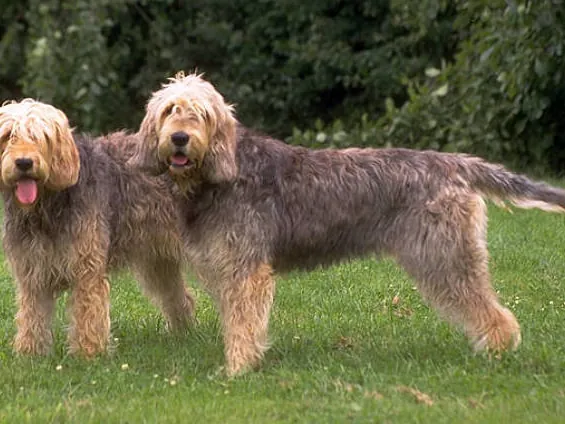
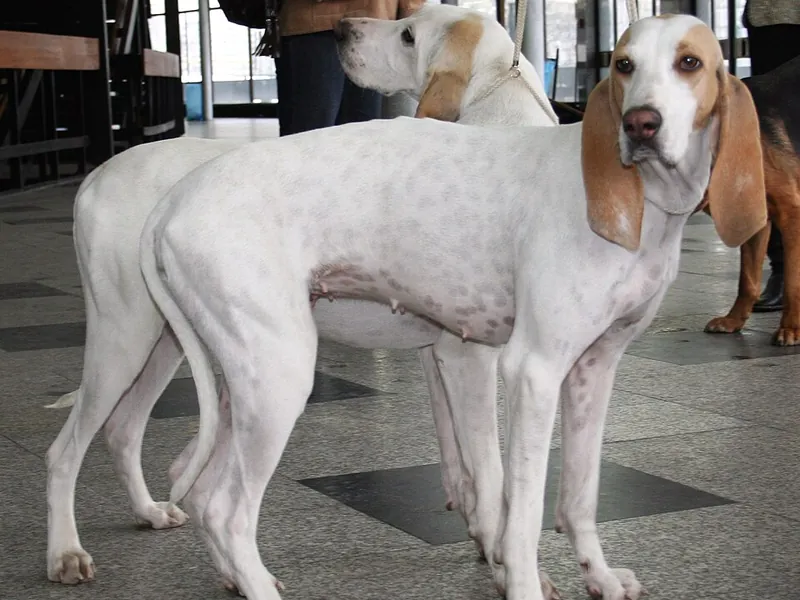
CoonhoundAmerica's night-hunting scent hounds
Coonhounds are American scent hounds bred to trail raccoons at night and hold them up a tree, baying until the hunter arrives. The AKC recognizes six coonhound breeds, and all share a powerful nose, a big voice and an easygoing nature at home. They suit owners who can handle a loud, determined hound that follows its nose.
Why people love the Coonhound
- Friendly, sociable with people and dogs
- Mellow and affectionate indoors
- Easy-care short coat
- Often patient with children
- Many available through shelters and rescues
Things to consider
- Loud baying and howling
- Strong scent drive; unreliable recall
- Prone to weight gain
- Some drool and have a hound smell
- Needs secure fencing; some climb or dig
Is this breed right for you?
10 questions · live resultHistory and Origin
Raccoon hunting at night was a popular rural pastime in the American South and Appalachia from colonial times onward. Hunters needed dogs that could follow a cold trail, keep going through the dark, and then "tree" the raccoon and announce it with a distinctive change of voice. Most coonhounds descend from English and French foxhounds and bloodhound-type dogs brought by settlers, adapted over generations to American terrain and game.
The AKC currently recognizes six coonhound breeds in the Hound Group:
- Black and Tan Coonhound, the first to be recognized, in 1945
- Plott Hound, descended from German hunting dogs brought to North Carolina by the Plott family in the 1750s, recognized in 2006
- Bluetick Coonhound and Redbone Coonhound, both recognized in 2009
- American English Coonhound, recognized in 2011
- Treeing Walker Coonhound, recognized in 2012
Other treeing dogs, such as the Treeing Tennessee Brindle and American Leopard Hound, are recorded in the AKC Foundation Stock Service. The United Kennel Club has long been the main registry for working coonhounds. None of the coonhound breeds is in The Kennel Club's main breed list in the UK.
Coonhound Breeds, Size and Colors
Coonhound is a family name for several American scent hound breeds. They range widely in size, from about 20 to 27 inches at the shoulder and 40 to 110 lb, depending on breed and sex. All share a strong, athletic build, long hanging ears, a deep chest and a short, dense coat.
Each breed has its own colors:
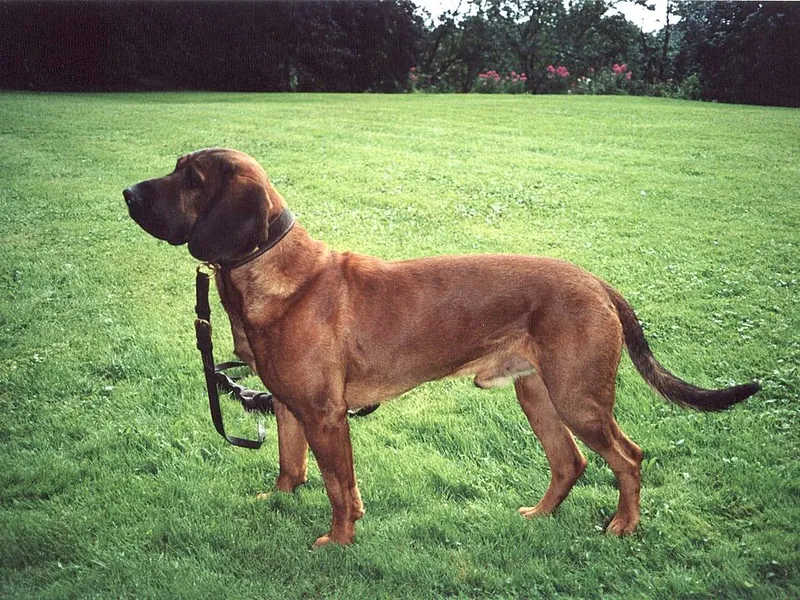
- Black and Tan: black with tan markings, the largest and heaviest.
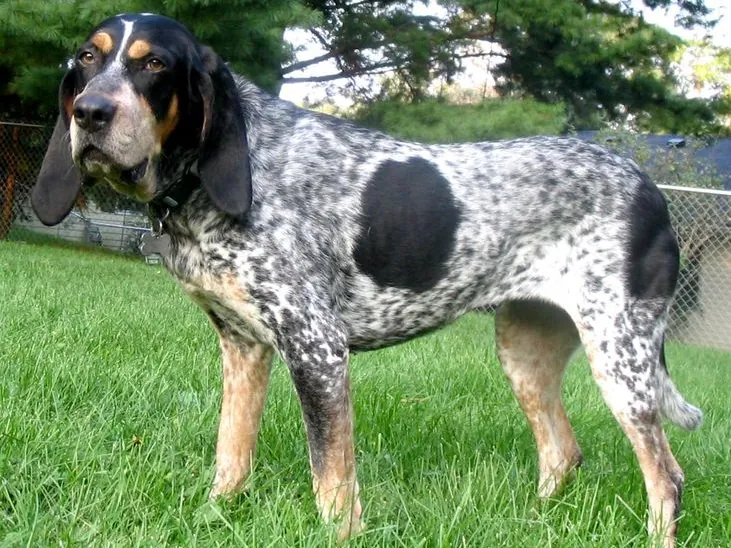
- Bluetick: white so heavily ticked with black it looks blue, often with black patches and tan points.
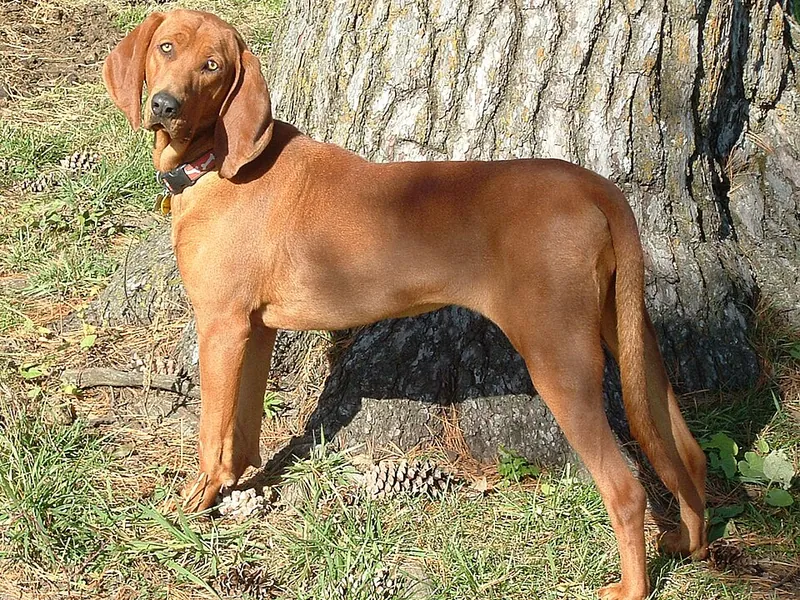
- Redbone: solid red, sometimes with small white markings.
- Treeing Walker: tricolor, usually white-based with black and tan.
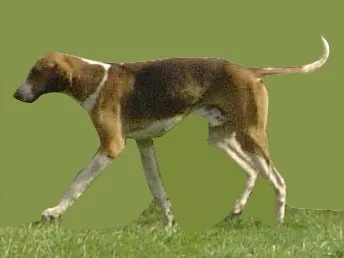
- American English: red and white or blue ticked, tricolor or other combinations.
- Plott: brindle in various shades, sometimes with black saddle.
Males are generally larger and heavier than females.
Temperament and Personality
Off the trail, most coonhounds are mellow, sociable and affectionate. They usually get along very well with other dogs, a legacy of hunting in packs, and many are friendly with strangers. The Black and Tan, Redbone and Treeing Walker in particular are known for being patient with children.
Two traits define living with any coonhound. First, the voice: coonhounds bay, bawl and chop, and the sound carries a long way. Second, the nose: once a coonhound catches a scent, it may ignore everything else, including you. Cats can be accepted if the dog is raised with them, but small pets and backyard wildlife trigger strong prey drive.
A lonely or underexercised coonhound often fills its time with howling, so they are rarely a good fit for attached housing with thin walls.
Are Coonhounds Good for First-Time Owners?
Coonhounds can suit first-time owners who are patient and ready for a vocal, nose-led hound, but they are not the easiest choice.
Their friendly, mellow nature indoors is a plus. The challenges are the loud voice, strong scent drive and unreliable recall. A first-time owner with a securely fenced yard, tolerant neighbors and time for long walks on a long line can do well. Many coonhounds in shelters are adults with known temperaments, which can make adoption a good option for beginners.
Are Coonhounds Easy to Train?
Coonhounds are moderately difficult to train. They are smart and food-motivated, but independent and easily distracted by scents.
Training works best with short, upbeat sessions, high-value food rewards and patience. Basic manners are achievable, but recall is often the hardest skill. Scent work, tracking and nose work channel their instincts. Harsh corrections tend to backfire. Start training early and stay consistent.
Breed differences matter too: a laid-back Black and Tan and an energetic Treeing Walker can feel very different in training. Group classes help with distractions, and a long line lets you practice recall safely outdoors.
Are Coonhounds Good with Cats?
Coonhounds can accept cats they are raised with, but backyard wildlife and unfamiliar cats trigger strong prey drive.
Many coonhounds live peacefully with household cats, especially when introduced as puppies. Adult hounds without cat experience need slow, supervised introductions. Small caged pets should be kept securely out of reach. Outdoor cats and wildlife may be chased.
Give the cat high perches and escape routes, keep early meetings short and reward the hound for calm behavior. Adopted adult hounds can sometimes be cat-tested by the rescue before placement, which is worth asking about.
Exercise and Training
Coonhounds were bred to work for hours, so expect at least an hour of exercise a day, with the Treeing Walker and Bluetick at the more energetic end. Long walks on a long line, jogging, tracking and scent games all work well. Many relax happily on the couch once their needs are met.
Off-leash walks are risky in unfenced areas: recall is often the weakest part of a coonhound's training. A secure fence is essential, and some hounds climb or dig. Training goes best with patience, food rewards and short sessions. These hounds are smart but independent, and they were bred to make decisions on the trail without help.
Grooming and Shedding
Most coonhounds have a short, dense coat that needs only a weekly rub with a grooming mitt or rubber brush. Shedding is moderate. The bigger task is the ears: long, hanging ears trap dirt and moisture, so check and clean them weekly to prevent infections.
Some coonhounds drool, especially the heavier-lipped Black and Tan, and many have a noticeable "hound" smell. Occasional baths help, but it is part of the package.
Feeding and Nutrition
Coonhounds love food and gain weight easily, especially when not working. Feed measured portions and check body condition often: the ribs should be easy to feel and the waist visible from above. Store food securely, as many will raid counters and trash cans.
- Feed puppies three or four meals a day and adults two meals.
- As deep-chested dogs, coonhounds have some bloat risk. Avoid vigorous exercise for about an hour before and after meals.
- Use part of the daily ration as training rewards.
Large coonhounds such as the Black and Tan need a large-breed puppy diet to support steady growth. Hunting dogs may need more food during the season. Keeping the dog lean protects hips and elbows. Food puzzles and scatter feeding give the nose a workout.
Weigh the dog regularly, since a few extra pounds are easy to miss on a hound.
| Adult weight | Less active | Typical adult | Very active |
|---|---|---|---|
| 40 lb | 860 kcal | 980 kcal | 1,230 kcal |
| 75 lb | 1,380 kcal | 1,580 kcal | 1,970 kcal |
| 110 lb | 1,840 kcal | 2,100 kcal | 2,630 kcal |
Estimates use the resting energy formula veterinarians work with (70 × body weight in kg0.75) and standard activity factors. Use the feeding guide on your food as a starting point and adjust to body condition. Puppies, seniors, pregnant animals and pets that need to lose weight have different needs, so ask your vet.
Health and Lifespan
Typical life expectancy ranges from about 10 to 15 years depending on the breed, with the large Black and Tan at the lower end. Common concerns include hip and elbow dysplasia, ear infections and, in these deep-chested dogs, bloat (gastric dilatation-volvulus). Many coonhounds gain weight easily when not working.
Hunting hounds can also develop coonhound paralysis, an acute nerve inflammation linked in many cases to raccoon saliva. Most dogs recover with veterinary care. Choose a puppy from a breeder who health-tests breeding dogs, or adopt: coonhounds are common in shelters and rescues in the US.
Coonhound Price and Cost of Ownership
Typical breeder price in the US$500 to $1,500
A coonhound puppy from a reputable US breeder typically costs about $500 to $1,500, depending on the breed, breeder, region and lines. Puppies from proven hunting lines may cost more.
Adoption is a very good option. Coonhounds are common in US shelters and rescues, especially in the South and Midwest, and many adults are available.
Breed-specific ongoing costs include secure fencing, ear cleaning supplies and treatment for ear infections. Food costs vary with size, from moderate for smaller breeds to higher for the Black and Tan. Hunting dogs may need treatment for coonhound paralysis or injuries from the field. Insurance that covers bloat and hip dysplasia is worth comparing.
Is the Coonhound Right for You?
A coonhound may suit you if you:
- live in a house with a securely fenced yard and tolerant neighbors
- enjoy long walks, hiking or scent work, or hunt
- want a friendly, dog-social companion that is calm indoors
A coonhound is a hard fit for apartments, for owners who want reliable off-leash obedience, or for homes with small caged pets. Compare the individual breeds: a Treeing Walker needs far more running than a laid-back Black and Tan.
Coonhound Traits at a Glance
Coonhound FAQ
How many coonhound breeds does the AKC recognize?
Six: the Black and Tan, Bluetick, Redbone, Treeing Walker, American English Coonhound and the Plott Hound.
Are coonhounds good family dogs?
Many are gentle and good with children and other dogs. Their loud voice, strong nose and need for exercise mean they do best with active families in a house with a fenced yard.
How big do coonhounds get?
Most stand 20 to 27 inches at the shoulder and weigh 40 to 80 lb. Large male Black and Tans can reach about 110 lb.
Are coonhounds loud?
Yes. Coonhounds bay and howl, and their voice carries far. Bored or lonely hounds are often the loudest.
Can coonhounds be off leash?
Usually not safely in open areas. When a coonhound picks up a scent it tends to follow it, so use a long line or a securely fenced space.
How long do coonhounds live?
About 10 to 15 years depending on the breed, with smaller breeds such as the Redbone at the longer end.