Redbone CoonhoundThe mellow, mahogany-red American coonhound
The Redbone Coonhound is a sleek, solid-red American scent hound bred to tree raccoons, famous from the novel Where the Red Fern Grows. Indoors it is easygoing and affectionate; outdoors it is a determined, loud-voiced tracker. It suits active families with a fenced yard and a tolerance for baying.
Why people love the Redbone Coonhound
- Easygoing, affectionate and patient with children
- Usually good with other dogs
- Short coat needs only weekly brushing
- Great companion for runners and hikers
- Relaxed indoors when well exercised
Things to consider
- Loud baying and howling, especially when bored
- Nose takes over, unreliable off leash
- Needs at least an hour of exercise daily
- Some drooling and long ears prone to infection
- Matures slowly, puppyish until about two
Is this breed right for you?
10 questions · live resultHistory and Origin
Red foxhounds brought by Scottish immigrants to Georgia in the late 18th century, and later Irish foxhounds, are considered the foundation of the breed. Hunters in Tennessee and the American South selected for a faster, hot-nosed hound that could work swamps and mountains and stay on a raccoon until it treed.
The name is often linked to Peter Redbone, a Tennessee hunter credited with promoting the type. Early dogs often had black saddles, but breeders selected for the solid red coat. The UKC registered the breed early in the 20th century, and the AKC recognized it in 2009. Wilson Rawls' 1961 novel, featuring two Redbones named Old Dan and Little Ann, made it a household name.
Size, Red Coat and Build
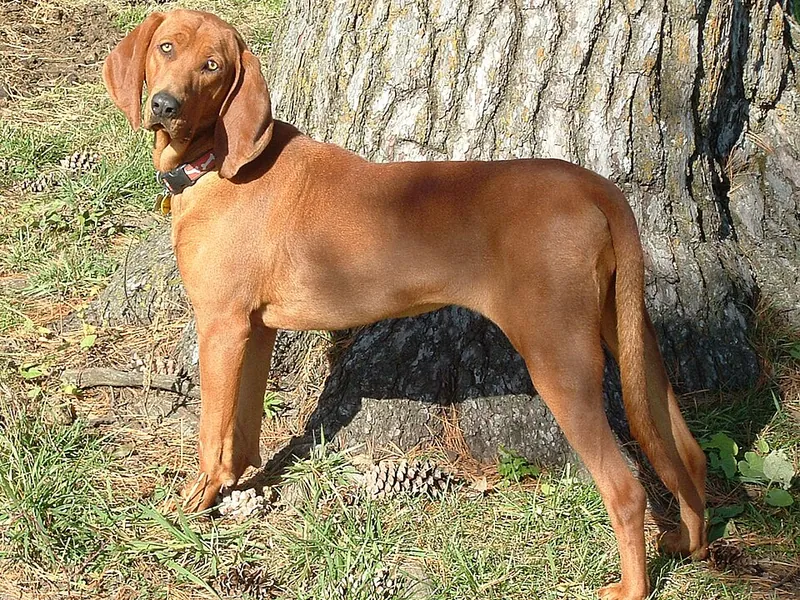
The Redbone Coonhound is a sleek, muscular scent hound with a balanced, athletic build, long drop ears and a pleading expression. It stands 21 to 27 inches tall and weighs about 44 to 71 lb. Under the AKC standard, males are 22 to 27 inches and females 21 to 26 inches, and males are typically heavier with more substance.
The body is well proportioned, with a deep chest, strong back and powerful legs built for long hunts through swamps and mountains. The tail is medium length, carried up with a slight curve. Movement should be easy and ground-covering.
The coat is short, smooth and coarse enough to protect the dog in rough terrain. The defining color is solid red, often described as rich mahogany. A dark muzzle is acceptable, and small amounts of white on the chest and feet are allowed but not desired. Eyes range from dark brown to hazel. Early Redbones often had black saddles, but breeders selected for the solid red coat seen today.
Temperament and Personality
Redbones are friendly, even-tempered and affectionate. They are usually excellent with children and get along with other dogs, a legacy of working alongside other hounds. At home many are happy to lounge on the couch.
Once outside, the nose takes over. A Redbone on a fresh scent will follow it and ignore calls. It is also vocal, with a sweet but powerful bay, and it may howl when bored or lonely.
Redbones are sensitive and do not respond well to harsh handling. Many are clowns at home and enjoy being part of family activities.
Is the Redbone Coonhound Good for First-Time Owners?
The Redbone Coonhound can suit first-time owners who are active and tolerant of noise. It is friendly, even-tempered and affectionate, which makes daily life easier than with many hounds.
The challenges for beginners are the voice, the nose and the exercise needs. Redbones bay and howl, especially when bored, and they follow scents with little regard for recall. Plan for at least an hour of daily exercise, a fenced yard and patient, reward-based training. If you can meet those needs, a Redbone is a rewarding first dog with a gentle temperament.
Can a Redbone Coonhound Live in an Apartment?
A Redbone can live in an apartment, but it is not ideal. Indoors, a well-exercised Redbone is often calm and happy to lounge, but its baying voice can disturb neighbors.
Apartment owners need to commit to long daily walks, jogs or hikes, plus scent games to tire the mind. Teach a quiet cue early and avoid leaving the dog alone for long periods, which can trigger howling. Thick walls and access to parks or trails help. A house with a fenced yard and some distance from neighbors is usually easier for this vocal hound.
Are Redbone Coonhounds Easy to Train?
Redbones are clever and eager to please, but their noses make training a challenge. Once they catch a scent, it is hard to get their attention back.
Training works best with food rewards, short sessions and a lot of patience. Start early with recall, leash manners and calm behavior at home. Many Redbones excel at tracking, scent work and coonhound events, which channel their instincts. Harsh handling is counterproductive, as the breed is sensitive. Even well-trained Redbones should stay on leash or in secure areas outdoors.
Exercise and Training
Plan on at least an hour of daily exercise. Long walks, jogging, hiking and scent work are ideal, and many Redbones enjoy swimming.
- Always walk on leash or long line outside fenced areas.
- Use food rewards and short sessions; Redbones are clever but easily distracted.
- Start recall and leash manners early.
- Teach a quiet cue and give enough exercise to reduce nuisance howling.
Coonhound events, tracking tests and scent work are excellent ways to channel their instincts. Redbones mature slowly and may act like puppies until about two years old.
Grooming and Shedding
The short, smooth coat needs only a weekly brush with a hound mitt. Shedding is moderate. Check and clean the long ears weekly, since they are prone to infection. Expect some drool, and wipe the mouth after drinking.
Redbones are relatively odor-free for a hound if brushed regularly. Keep nails short, and wipe the lips after meals to reduce drool on furniture.
Feeding and Nutrition
Redbones are prone to weight gain if under-exercised or overfed, and they are deep-chested, so feeding should focus on lean condition and bloat prevention.
- Feed puppies three or four meals a day, then two meals for adults.
- Avoid one large meal, discourage gulping and allow rest before and after hard exercise.
- Adjust portions to activity: hunting dogs need more energy in active seasons than family companions.
- Lean condition supports the hips, since hip dysplasia screening is recommended for breeding dogs.
Redbones are food-motivated and opportunistic, so keep food and trash out of reach and count training treats as part of the daily ration. Wipe the lips after meals to reduce drool, and provide fresh water after long outings.
Redbones mature slowly, so keep young dogs lean and growing steadily rather than quickly. Learn the warning signs of bloat, such as a swollen belly and unproductive retching, which need emergency care.
| Adult weight | Less active | Typical adult | Very active |
|---|---|---|---|
| 44 lb | 930 kcal | 1,060 kcal | 1,320 kcal |
| 58 lb | 1,140 kcal | 1,300 kcal | 1,630 kcal |
| 71 lb | 1,320 kcal | 1,510 kcal | 1,890 kcal |
Estimates use the resting energy formula veterinarians work with (70 × body weight in kg0.75) and standard activity factors. Use the feeding guide on your food as a starting point and adjust to body condition. Puppies, seniors, pregnant animals and pets that need to lose weight have different needs, so ask your vet.
Health and Lifespan
Redbones typically live 12 to 15 years and are generally healthy. VCA recommends hip dysplasia screening for breeding dogs. Everyday issues include:
- Ear infections, due to long, hanging ears.
- Weight gain if under-exercised or overfed.
Choose a breeder who screens hips and can share the parents' health history.
Keep the dog lean, feed measured meals and avoid strenuous exercise right after eating to reduce bloat risk, as with other deep-chested hounds.
Redbone Coonhound Price and Cost of Ownership
Typical breeder price in the US$500 to $1,200
A Redbone Coonhound puppy from a reputable US breeder typically costs about $500 to $1,200. Prices vary by breeder, region and lines, and puppies from proven hunting or show lines may cost more. Many breeders are in the South and Midwest.
Redbones regularly appear in shelters and coonhound rescues, often surrendered when owners underestimate their voice and exercise needs, so adoption is a strong option.
Breed-specific ongoing costs include:
- Secure fencing and long lines for safe exercise.
- Ear cleaning supplies and vet visits for ear infections.
- Insurance or savings for bloat and hip problems.
- Tracking equipment, coonhound event fees or scent work classes.
Is the Redbone Coonhound Right for You?
The Redbone suits active families with children, a fenced yard and neighbors who will not mind some baying. It is a good companion for runners and hikers.
It is less suited to apartments, owners who want a quiet dog, or those who expect off-leash obedience.
Many Redbones are surrendered to rescues when owners underestimate their voice and exercise needs. Coonhound rescue groups can be a good source of adult dogs whose temperament is already known.
Redbone Coonhound Traits at a Glance
Redbone Coonhound FAQ
Are Redbone Coonhounds good family dogs?
Yes. They are friendly, patient with children and usually good with other dogs.
How big do Redbone Coonhounds get?
They stand about 21 to 27 inches tall and weigh roughly 44 to 71 pounds.
Do Redbone Coonhounds bark a lot?
They bay and howl, especially when on a scent or bored.
Do Redbone Coonhounds shed?
Moderately. Weekly brushing keeps it under control.
What dogs are in Where the Red Fern Grows?
Old Dan and Little Ann, two Redbone Coonhounds.
How long do Redbone Coonhounds live?
About 12 to 15 years.