Basset HoundGentle scent hound with a legendary nose
The Basset Hound is a heavy, short-legged scent hound with long ears, a mournful expression and a remarkably good nose. It is easygoing, friendly and great with families, but also stubborn, vocal and drooly, and its body shape brings specific health considerations.
Why people love the Basset Hound
- Patient and friendly with children and other dogs
- Exceptional scent ability for tracking and nose games
- Moderate exercise needs suit relaxed households
- Short coat is simple to brush
- Rarely suspicious of people, so easy with visitors
Things to consider
- Stubborn and unreliable off leash once on a scent
- Drools and can have a noticeable hound odor
- Loud baying and howling may bother neighbors
- Long ears and skin folds need regular cleaning
- Long back and heavy body prone to weight problems
Is this breed right for you?
10 questions · live resultHistory and Origin
Short-legged hounds, known as bassets from the French word bas, meaning low, were bred in France to hunt rabbits and hares on foot. Their short legs kept them slow enough for hunters to follow without horses. In the 1870s, dogs imported from France formed the basis of the breed in England, where breeders developed the heavier modern type.
The Kennel Club recognized the breed in the 1880s and the AKC in 1885. The FCI lists Great Britain as its country of origin. Bassets still hunt in packs in some areas, but most are family dogs.
Size, Build and Colors
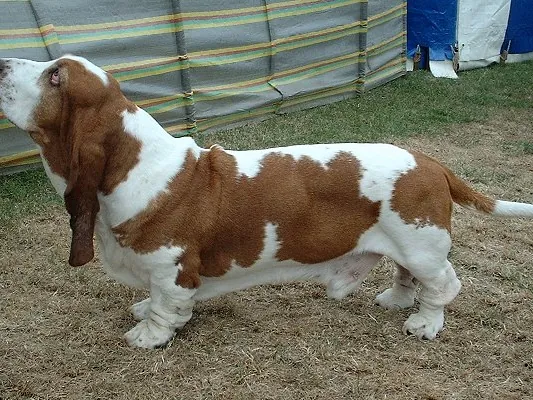
The Basset Hound is a heavy dog on short legs. Adults stand only 13 to 15 inches at the shoulder yet weigh about 55 to 71 lb, thanks to heavy bone, a deep chest and a long body. The AKC standard counts a height over 15 inches as a disqualification. Males are usually heavier and have a bigger head, while females are a little finer.
Signature features include very long, velvety ears that reach beyond the nose when drawn forward, loose skin that forms wrinkles on the brow, and droopy lower eyelids that show some haw. The tail is carried high with a slight curve.
The coat is short, hard and dense. Any recognized hound color is acceptable, and the most common are:
- Tricolor: black, white and tan
- Red and white
- Lemon and white
Some dogs show ticking in the white. Very wrinkled, extreme types with excess skin are less healthy than moderate dogs, so many breeders now favor a more functional build.
Temperament and Personality
Bassets are mellow, good-natured and patient, typically excellent with children and sociable with other dogs, as befits a pack hound. They are not aggressive guardians, though their deep bay will announce visitors.
They are also notoriously stubborn. Once a Basset finds a scent, its nose takes over, and recall often fails. They dislike being alone and may howl when bored or lonely. They are also known for raiding counters and bins.
Bassets are surprisingly strong and heavy for their height, so a determined Basset on a scent can pull hard. Their calm, steady nature makes them a popular choice for families who want a relaxed rather than athletic dog.
Are Basset Hounds Good for First-Time Owners?
Yes, Basset Hounds can be a good choice for first-time owners who want a relaxed, sociable dog and accept that training will be slow.
Their gentle temperament and moderate exercise needs make daily life manageable. The challenges are practical: a strong nose that overrides commands, drooling, ear care and a tendency to gain weight. Owners need patience, food rewards and a secure fence, plus a plan for lifting a heavy dog in and out of cars, since jumping strains the back. If you expect quick obedience, a Basset may frustrate you. If you enjoy a laid-back, comical companion, it is forgiving of beginner mistakes.
Are Basset Hounds Good Apartment Dogs?
Basset Hounds can live in apartments, but their voice and their back make some homes a poor match.
Indoors they are calm and happy to sleep much of the day, so space is not the main issue. Noise is. A bored or lonely Basset may bay or howl, which carries through walls. Stairs are the other concern: frequent climbing strains the long spine, so an elevator or ground-floor home is better, especially for puppies and seniors. Daily sniffing walks, food puzzles and company for most of the day keep apartment Bassets content and quiet.
Are Basset Hounds Good with Cats?
Most Basset Hounds get along with cats, especially when they grow up together.
As a pack hound bred to follow scent rather than chase by sight, a Basset is generally less likely to hunt a household cat than many terriers or sighthounds. Still, some will follow a running cat out of curiosity, and their size can intimidate a timid cat. Introduce them slowly, give the cat high escape routes, and feed pets separately, since many Bassets will happily eat the cat's food. Outdoors, prey drive toward rabbits and squirrels remains strong, so keep the dog leashed.
Exercise and Training
Bassets need moderate exercise: one or two leisurely walks a day with plenty of time to sniff. Scent games and tracking are ideal mental work.
- Keep them on leash or in fenced areas; they follow their nose, not your voice.
- Use food rewards and short, patient sessions; harsh methods backfire.
- Limit stairs and jumping, especially in puppies, to protect the long back.
- Keep them lean: extra weight strains joints and spine.
Many Bassets enjoy scent tracking and mantrailing classes, which give their exceptional noses a real job. Use a harness rather than a collar to protect the neck and spine.
Grooming and Shedding
The short, dense coat needs weekly brushing and sheds moderately. The bigger tasks are ears, wrinkles and drool. Clean the long ears weekly and keep them dry, as they are prone to infections. Wipe facial folds and lips, and keep a towel handy for drool.
Bassets can have a distinct hound odor. Regular baths with a gentle shampoo help, as does keeping skin folds clean and dry.
Long ears can drag through food and water, so a narrow, deep bowl helps.
Feeding and Nutrition
Bassets are food-motivated, accomplished counter surfers and prone to obesity. Extra weight is a serious problem in this breed because it strains the long back, the short legs and the elbows. Measure every meal, keep food out of reach and judge condition by feel: you should be able to feel the ribs and see a slight waist.
The deep chest puts Bassets among the breeds at higher risk of bloat. Practical steps help:
- Feed two or more smaller meals rather than one large meal.
- Use a slow-feeder bowl if your dog gulps food.
- Avoid vigorous play for about an hour after eating.
A narrow, deep bowl helps keep long ears out of food and water. Wipe the ears and lips after meals to reduce infections and odor.
Puppies grow heavy bone quickly, so feed a complete puppy food suitable for their expected adult weight and avoid extra calcium. Use small treats for training and subtract them from the daily ration.
| Adult weight | Less active | Typical adult | Very active |
|---|---|---|---|
| 55 lb | 1,090 kcal | 1,250 kcal | 1,560 kcal |
| 71 lb | 1,320 kcal | 1,510 kcal | 1,890 kcal |
Estimates use the resting energy formula veterinarians work with (70 × body weight in kg0.75) and standard activity factors. Use the feeding guide on your food as a starting point and adjust to body condition. Puppies, seniors, pregnant animals and pets that need to lose weight have different needs, so ask your vet.
Health and Lifespan
Bassets typically live 12 to 13 years. Several conditions are linked to their exaggerated body shape, including elbow dysplasia, intervertebral disc disease (IVDD), skin fold inflammation and droopy eyelids. Other concerns include bloat, glaucoma and obesity.
UK veterinary charities point out that some problems are caused by exaggerated features. Look for breeders who favor moderate conformation, with less skin and sturdier legs, and who screen eyes for glaucoma.
Basset Hound Price and Cost of Ownership
Typical breeder price in the US$1,000 to $2,500
A Basset Hound puppy from a reputable US breeder typically costs about $1,000 to $2,500. Prices vary by breeder, region and lines. Responsible breeders screen for hip and elbow problems and eye conditions such as glaucoma.
Breed rescues place Bassets every year, often adults surrendered because of size or noise, so adoption is a good option.
Breed-specific ongoing costs include:
- Ear cleaning supplies and vet visits for ear infections.
- Pet insurance covering back problems, glaucoma and bloat surgery.
- Ramps or steps to protect the back.
- Weight management, which keeps vet bills lower over time.
Food costs are moderate for a dog of 55 to 71 lb, but Bassets should be fed to stay lean rather than to their appetite.
Is the Basset Hound Right for You?
A Basset suits relaxed families that want a gentle, kid-friendly companion and can accept drool, hound vocals and stubbornness. It does well in a house with company most of the day.
It is less suited to people who want an obedient off-leash dog, close neighbors sensitive to howling, or homes with many stairs.
Basset Hound Traits at a Glance
Basset Hound FAQ
Are Basset Hounds good family dogs?
Yes. They are typically patient, friendly and great with children and other dogs.
How big do Basset Hounds get?
Bassets stand only 13 to 15 inches tall but are heavy, usually weighing 55 to 71 lb.
Do Basset Hounds drool?
Yes. Their loose lips mean drooling is common, especially after eating and drinking.
Are Basset Hounds hard to train?
They are intelligent but stubborn and easily distracted by scents. Patience and food rewards help.
Do Basset Hounds howl?
Many do. They have a loud, deep bay and may howl when bored or left alone.
How long do Basset Hounds live?
Most live 12 to 13 years.