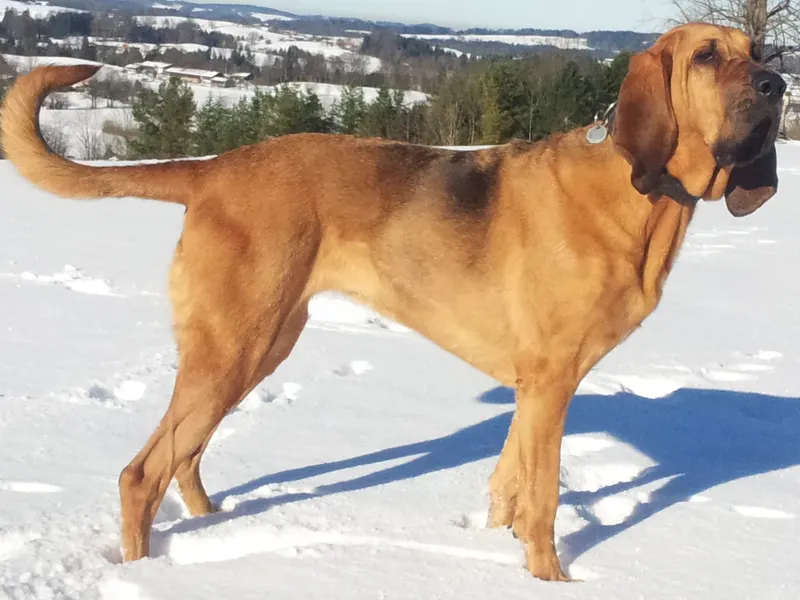
Black and Tan CoonhoundAmerica's mellow night-trailing scent hound
The Black and Tan Coonhound is a large American scent hound bred to trail raccoons through the night and bay them up a tree. At home it is easygoing and gentle, but outdoors its nose is in charge. It suits patient owners with space, a secure yard and tolerance for a big, musical voice.
Why people love the Black and Tan Coonhound
- Easygoing, gentle house dog once exercised
- Typically tolerant and kind with children
- Sociable with other dogs, bred to hunt in company
- Short coat that needs only weekly brushing
- Superb cold nose for tracking and coonhound events
Things to consider
- Loud, deep baying carries far and bothers close neighbors
- Follows scent for miles and ignores recall
- Large size and strength, up to 110 lb
- Drool and long ears that need weekly cleaning
- Slow to mature, with a long goofy adolescence
Is this breed right for you?
10 questions · live resultHistory and Origin
The breed developed in the Appalachian and Blue Ridge regions of the US from foxhounds and bloodhound-type dogs brought by European settlers. Hunters wanted a hound with a cold nose, able to follow an old trail, and the stamina to work rough country at night.
Its job is to track a raccoon until the animal climbs a tree, then stay at the trunk baying until the hunter arrives. In 1945 it became the first coonhound breed recognized by the AKC, and it is still used by hunters as well as kept as a companion.
Size, Coat and Color
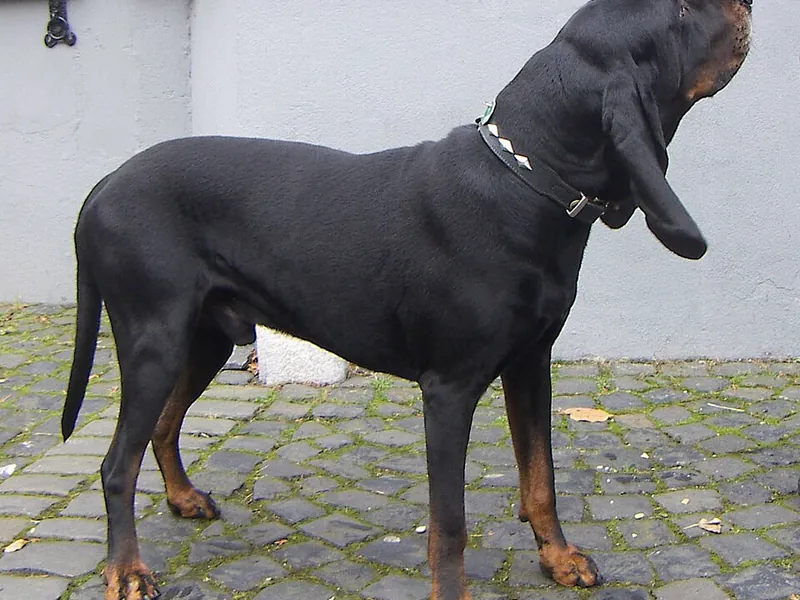
The Black and Tan Coonhound is a large, powerful scent hound with an athletic, rhythmic gait built to cover rough ground at night. Adults stand 23 to 27 inches at the shoulder and weigh about 64 to 110 lb. Males are noticeably larger, usually 25 to 27 inches, while females typically stand 23 to 25 inches and carry less bone.
The coat is short, dense and weather-resistant. As the name says, there is only one color pattern: coal black with rich tan markings. The tan appears above the eyes, on the sides of the muzzle, chest, legs and breeching, with black pencil markings on the toes. A small amount of white on the chest is tolerated, but larger white areas are a fault.
The ears are the breed's most dramatic feature. They are long, thin and velvety, set low and hanging in graceful folds, often reaching past the tip of the nose when drawn forward. The head is long and the expression alert and kindly, with loose skin around the neck and lips.
Temperament and Personality
Indoors, the Black and Tan is relaxed, friendly and often happy to sleep through the afternoon. It usually gets along with children and other dogs and is more likely to greet a stranger than guard against one.
Outdoors it changes. Once it finds a scent, it can follow it for miles and ignore calls. It is independent rather than defiant, and it makes its opinions known with deep, carrying bays.
Some Black and Tans are slightly reserved with strangers and sensitive to harsh words. They respond best to a calm, kind household, and many become real couch companions in the evening.
Is the Black and Tan Coonhound Good for First-Time Owners?
It can be, if the household fits the hound. Black and Tans are gentle, low-drama dogs indoors, and their friendly nature forgives beginner mistakes.
First-time owners need to be ready for:
- A big, strong dog that pulls toward scents
- Baying that neighbors will hear
- A leash or long line on nearly every walk
- Drool and ear care
Rural or suburban owners with a secure yard, patience and a sense of humor often find this hound a relaxed first dog. City apartment dwellers usually struggle.
Are Black and Tan Coonhounds Easy to Train?
Basic manners are achievable, but obedience is not this breed's strong suit. Black and Tans are independent thinkers bred to follow a trail on their own, often far from the hunter.
Training works best with:
- High-value food rewards, which hounds love
- Short sessions with lots of variety
- Early leash manners before the puppy becomes heavy
Expect recall to fail once the nose takes over, no matter how well trained. Many owners find scent-based activities, such as tracking tests or nose work, far more satisfying than formal obedience, and the dog finds them more rewarding too.
Are Black and Tan Coonhounds Good with Cats?
Many live peacefully with cats they grew up with, but caution is wise. The breed was developed to trail and tree raccoons, so a running cat can trigger the urge to chase and bay.
Indoors, a Black and Tan that was raised with a cat is often relaxed around it. Outdoors, especially in the yard, the same dog may treat the cat or neighborhood cats as quarry.
Introduce puppies early and calmly, give the cat high escape routes and supervise until you are confident. Adult coonhounds from hunting homes may not be suited to living with cats at all.
Exercise and Training
An hour or so of daily exercise, ideally including long walks where it can sniff, keeps this breed content. Tracking and scent work are perfect outlets.
- Walk on a leash or long line; only free-run in securely fenced areas.
- Train with food and patience. Short, varied sessions work better than drilling.
- Start recall and leash manners early, before it grows to full size and strength.
- Teach a quiet cue, but accept that baying is part of the breed.
Many owners enjoy coonhound events such as nite hunts and tracking tests, which give the breed a sanctioned way to do what it was bred for. Puppies are slow to mature, so expect adolescent silliness until around two years of age.
Grooming and Shedding
The short, dense coat needs a weekly brushing with a hound mitt. Shedding is moderate. The long, hanging ears trap moisture and dirt, so check and clean them weekly to avoid infections. Expect some drool and wipe the jowls after meals and drinks.
Feeding and Nutrition
Black and Tans range from 64 to 110 lb, and their activity varies from hard night hunting to long afternoon naps on the couch. Feed for the individual dog and the season. A hunting hound in fall and winter may need considerably more than in summer, while a pet that mostly sniffs on leash can gain weight easily.
Puppies grow into large dogs and mature slowly. Feed a complete large-breed puppy food in measured meals so they grow steadily rather than quickly, which protects developing hips.
- As a deep-chested breed with bloat risk, feed two or three smaller meals a day instead of one large one.
- Avoid hard exercise for about an hour before and after eating.
- Hypothyroidism occurs in the breed; unexplained weight gain or lethargy deserves a vet check.
- Use a deep, narrow bowl so the long ears stay out of the food, or clip them back with a snood.
Food-motivated hounds may raid counters and trash cans, so store food securely.
| Adult weight | Less active | Typical adult | Very active |
|---|---|---|---|
| 64 lb | 1,230 kcal | 1,400 kcal | 1,750 kcal |
| 87 lb | 1,540 kcal | 1,760 kcal | 2,200 kcal |
| 110 lb | 1,840 kcal | 2,100 kcal | 2,630 kcal |
Estimates use the resting energy formula veterinarians work with (70 × body weight in kg0.75) and standard activity factors. Use the feeding guide on your food as a starting point and adjust to body condition. Puppies, seniors, pregnant animals and pets that need to lose weight have different needs, so ask your vet.
Health and Lifespan
Black and Tans are generally sturdy and live about 10 to 12 years. The AKC recommends that breeding dogs be screened for:
- Hip dysplasia
- Cataracts and other eye problems
- Thyroid disease
Ear infections are the most common everyday issue. As a large, deep-chested hound it may also be at risk of bloat, so feed measured meals and avoid hard exercise right after eating.
Black and Tan Coonhound Price and Cost of Ownership
Typical breeder price in the US$500 to $1,500
A Black and Tan Coonhound puppy from a reputable US breeder typically costs about $500 to $1,500. Prices vary by breeder, region and lines, with hunting and show lines differing. Ask for hip and eye screening results for both parents.
Coonhounds of all types are common in shelters and hound rescues, especially in the South and Midwest, so adoption is a very realistic option.
Breed-specific ongoing costs include:
- Treatment of ear infections, the most common everyday problem
- Secure, tall fencing and long lines
- Insurance that covers hip dysplasia, eye disease and bloat surgery
- Coonhound event or nite hunt fees if you participate
- Food for a large dog that can exceed 100 lb
Is the Black and Tan Coonhound Right for You?
This breed suits families with older or younger children, rural or suburban homes with secure fencing, and owners who enjoy long walks or hunting. It is a calm house dog once exercised.
It is a poor fit for apartments, close neighbors, or owners who want off-leash reliability. If you value a gentle, low-key companion with a hunter's nose and voice, it is hard to beat.
Black and Tan Coonhound Traits at a Glance
Black and Tan Coonhound FAQ
Are Black and Tan Coonhounds good family dogs?
Yes. They are typically gentle and tolerant with children and calm indoors when well exercised.
How big do Black and Tan Coonhounds get?
They stand about 23 to 27 inches tall and weigh roughly 64 to 110 pounds, with males larger.
Do Black and Tan Coonhounds bark a lot?
They bay and howl, especially when bored or on a scent. The voice is loud and carries a long way.
Can Black and Tan Coonhounds be off leash?
Only in securely fenced areas. Their tracking instinct overrides recall.
How long do Black and Tan Coonhounds live?
About 10 to 12 years.
Are Black and Tan Coonhounds good with other dogs?
Usually yes. They were bred to hunt alongside other hounds and are generally sociable with dogs.