Bluetick CoonhoundA hardy, musical-voiced night hunter
The Bluetick Coonhound is a muscular American scent hound with a dark blue mottled coat and a big, bawling voice. It is devoted to its family and relentless on a raccoon's trail. It suits active, patient owners with secure fencing.
Why people love the Bluetick Coonhound
- Affectionate, loyal and often gentle with family
- Cold-nosed tracker with great endurance
- Short coat needs only a weekly brush
- Usually enjoys the company of other dogs
- Considered a robust breed
Things to consider
- Loud bawling voice that carries far
- Very strong prey drive; small pets at risk
- Independent; recall is unreliable on a scent
- Distinctive hound odor
- Gains weight easily if under-exercised
Is this breed right for you?
10 questions · live resultHistory and Origin
The Bluetick developed in Louisiana and the American South from French hounds such as the Grand Bleu de Gascogne, crossed with English Foxhounds and other hounds. Hunters wanted a cold-nosed dog that could follow an older scent trail and stay on it through the night.
For years Blueticks were registered as English Coonhounds. In 1945 breeders split away to preserve their slower, cold-nosed type. The AKC recognized the breed in 2009. A Bluetick named Smokey is the well-known mascot of the University of Tennessee.
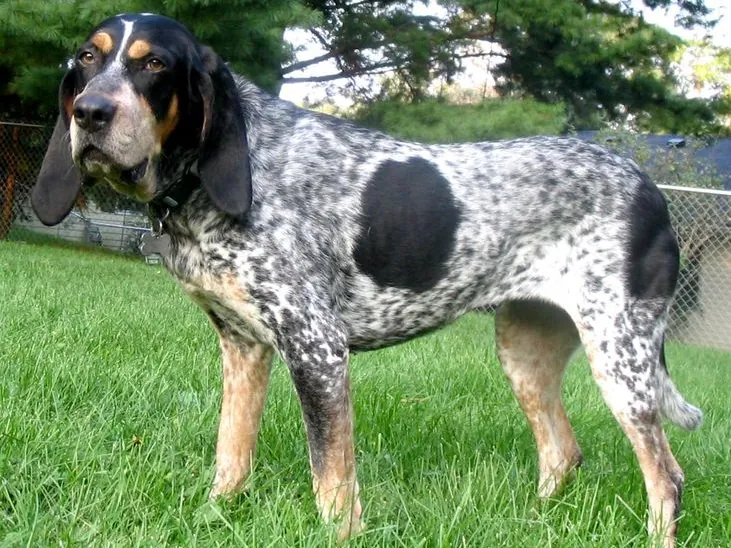
The Bluetick's coat is a dark blue base covered in black spots and ticking, often with tan markings on the face and legs. Breeders favored a dog with endurance, a cold nose and a distinctive bawl that hunters could recognize at a distance.
Size, Coat and Blue Ticking
The Bluetick Coonhound is a large, athletic hound standing about 21 to 27 inches and weighing roughly 44 to 79 lb. Males are larger and heavier, typically 22 to 27 inches, while females are 21 to 25 inches and lighter in build. The body is muscular and slightly longer than tall, with a deep chest, strong hindquarters and a well-arched neck.
The head is broad, with long, low-set drop ears, large brown eyes and a pleading hound expression. The tail is carried high when the dog is working.
The coat is short, glossy and coarse to the touch. The breed's signature color is dark blue, thickly mottled with black spots on the back, ears and sides. The head and ears are predominantly black. Tan markings over the eyes, on the cheeks, chest and below the tail are allowed, and red ticking on the feet and lower legs is common. More black than white is preferred. The ticking pattern gives the coat its distinctive blue appearance from a distance.
Temperament and Personality
Blueticks are affectionate, loyal and often gentle with their families. They can be friendly with visitors, though they announce them loudly.
Their prey drive is very strong, and small pets may be seen as quarry. Indoors they can be calm when exercised; when bored they may howl, dig or chew.
Blueticks are generally good with children who respect them, and many enjoy the company of other dogs. They can be sensitive and dislike harsh handling. Some are more reserved with strangers until they get to know them.
Most Blueticks are happiest with a job, whether that is hunting, tracking or long daily walks that let them use their nose.
Can Bluetick Coonhounds Live in Apartments?
It is rarely a good fit. Blueticks are often calm indoors when well exercised, but their voice is the main problem in shared buildings. A Bluetick's bawl is loud and carries far.
Blueticks also need an hour or more of exercise daily, ideally with time to sniff and track. Apartment dwellers would need to provide long walks every day and still manage howling when the dog is bored or alone. A house with a yard in a rural or suburban area with understanding neighbors suits the breed much better.
Are Bluetick Coonhounds Good with Cats?
Sometimes, but caution is needed. Blueticks have a very strong prey drive and were bred to tree raccoons, so running or climbing cats can trigger a chase.
A Bluetick raised with a household cat often learns to coexist peacefully, though it may still chase unfamiliar cats outdoors. Introductions should be slow and supervised, with escape routes and high perches for the cat. Adult Blueticks without cat experience pose a higher risk. Small pets such as rabbits or rodents should be kept securely away.
Can Bluetick Coonhounds Be Left Alone?
Adult Blueticks can manage a few hours alone if well exercised, but long stretches lead to howling, digging and chewing. They are pack hounds that like company.
A long walk or tracking session before you leave helps a lot. Crate training from puppyhood keeps a young dog safe. Many Blueticks are happier with another dog at home. Avoid leaving a Bluetick alone in a yard for hours: it is likely to bawl at anything that moves, and its voice can upset neighbors. For full workdays, a dog walker is a good investment.
Exercise and Training
An hour or more of daily exercise is needed, ideally including long walks with time to sniff, or tracking sessions.
- Use a leash or long line outside fenced areas.
- Train with patience and rewards; Blueticks are smart but independent.
- Practice recall in low-distraction areas first.
- Avoid long hours alone, which lead to howling.
Nose work, coonhound events and tracking tests are excellent ways to channel their instincts. Puppies mature slowly, so expect a lively adolescence.
Grooming and Shedding
The short, glossy coat needs a weekly brush. Shedding is moderate. Clean and check the long ears weekly. Blueticks can have a distinctive hound odor, which regular brushing and occasional baths help control.
Keep nails short, since many Blueticks spend a lot of time on soft ground and nails do not wear down naturally. Wipe the lips after meals if your dog drools.
Feeding and Nutrition
Blueticks love food and gain weight easily, especially if they get less exercise than their hunting ancestors. Feed a complete diet in two measured meals a day and adjust portions to activity. A hunting dog in season may need more; a pet in winter may need less.
Keeping a Bluetick lean protects its joints, where hip dysplasia is a concern, and helps it stay active into old age. You should be able to feel the ribs easily.
The breed is deep-chested, so bloat precautions are important: two meals a day, no hard exercise for about an hour before and after eating and a slow feeder for dogs that gulp.
Blueticks are expert counter-surfers and trash raiders. Keep food out of reach and secure trash cans. Use small treats or part of the daily ration in training, since food is a strong motivator for this independent breed. Wipe the lips after meals if your dog drools.
| Adult weight | Less active | Typical adult | Very active |
|---|---|---|---|
| 44 lb | 930 kcal | 1,060 kcal | 1,320 kcal |
| 62 lb | 1,200 kcal | 1,370 kcal | 1,710 kcal |
| 79 lb | 1,440 kcal | 1,640 kcal | 2,050 kcal |
Estimates use the resting energy formula veterinarians work with (70 × body weight in kg0.75) and standard activity factors. Use the feeding guide on your food as a starting point and adjust to body condition. Puppies, seniors, pregnant animals and pets that need to lose weight have different needs, so ask your vet.
Health and Lifespan
Blueticks typically live 11 to 12 years and are considered robust. Known concerns include:
- Bloat (gastric dilatation-volvulus): the deep chest raises the risk. Feed measured meals and avoid exercise right after eating.
- Ear infections from the long, hanging ears.
- Hip dysplasia, which breeders should screen for.
Blueticks love food and can become overweight if under-exercised. Keeping them lean protects their joints and helps them stay active into old age.
Bluetick Coonhound Price and Cost of Ownership
Typical breeder price in the US$500 to $1,000
A Bluetick Coonhound puppy from a reputable US breeder typically costs about $500 to $1,000. Prices vary by breeder, region and lines, with puppies from proven hunting or show lines often costing more. Ask breeders for hip screening results on both parents.
Blueticks and coonhound mixes are common in Southern shelters and hound rescues, so adoption is a realistic and often rewarding option.
Ongoing costs are moderate. Grooming is minimal, though regular ear cleaning is important. Main cost drivers include hunting gear, GPS tracking collars, secure fencing and pet insurance for bloat surgery, ear infections and field injuries. Food costs are moderate for a large, food-loving hound.
Is the Bluetick Coonhound Right for You?
Blueticks suit rural or suburban homes with yards, active owners and hunters. They are not ideal for apartments, noise-sensitive neighbors or homes with small pets.
A well-exercised Bluetick is a loyal, affectionate and relatively easy-care companion. If you enjoy long walks, the outdoors and a dog with a hunter's voice, it can be a great fit.
Think carefully about neighbors before bringing one home. A Bluetick left alone in a yard is likely to bawl, and its voice carries far.
Bluetick Coonhound Traits at a Glance
Bluetick Coonhound FAQ
How big do Bluetick Coonhounds get?
They stand about 21 to 27 inches and weigh roughly 44 to 79 pounds.
Are Bluetick Coonhounds good family dogs?
Yes, with active families. They are loyal and affectionate but need exercise and patient training.
Do Bluetick Coonhounds howl?
Yes. Their bawling voice is part of the breed.
How long do Bluetick Coonhounds live?
About 11 to 12 years.
Do Bluetick Coonhounds shed?
Moderately. Weekly brushing keeps loose hair under control.
Are Bluetick Coonhounds easy to train?
They are intelligent but independent. Patience, food rewards and short sessions work best.